
How to manage pets in an apartment is mostly a space-planning problem: protect quiet rest, create predictable toilet and exercise routines, use vertical space for cats, and prevent noise or doorway habits from becoming daily conflict. Dogs Trust flat-living guidance, accessed 2026 emphasizes enrichment, alone-time skills, barking management, and pet-proofing windows and balconies.
For cats, the FelineVMA indoor-cat position statement, 2025 says an indoor environment should provide safe resting places, vertical territory, play, hunting or foraging opportunities, and appropriate toileting resources. Square footage matters less when the usable environment is organized well.
How to Manage Pets in an Apartment: Build Zones
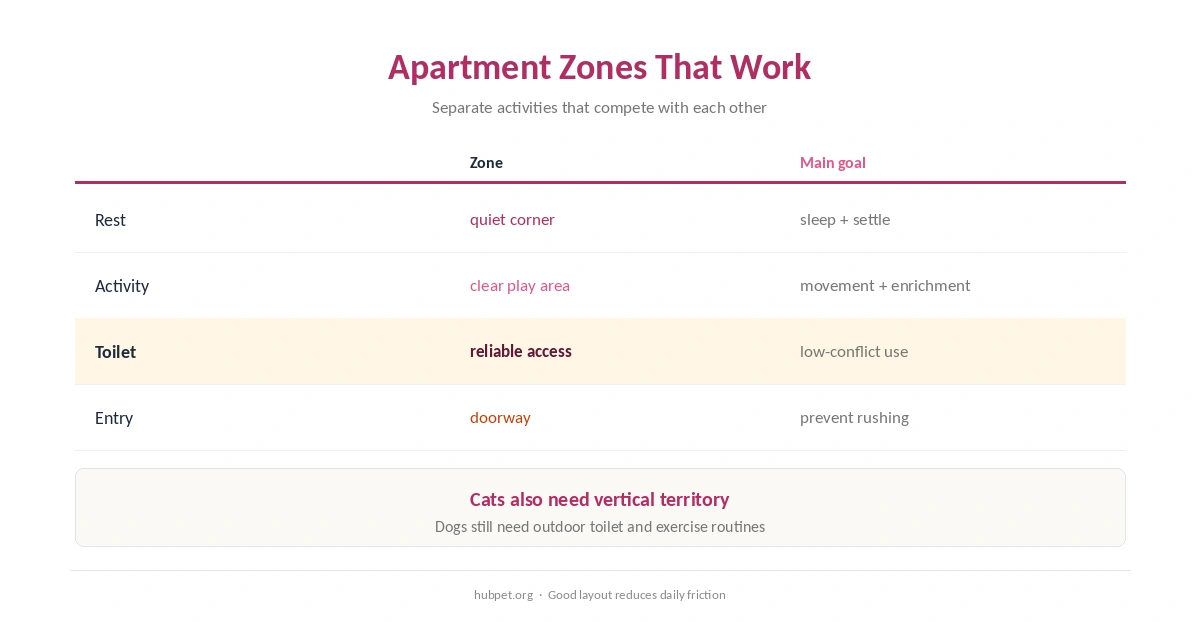
Give each major activity a predictable place. Resting areas should not sit in the busiest traffic path. Feeding areas should be easy to supervise in multi-pet homes. Cats need accessible litter areas away from food, while dogs need a reliable route to outdoor toilet breaks.
Use height as usable territory for cats. The FelineVMA 2025 statement supports vertical space and safe resting areas for indoor cats. Start with safe cat climbing spaces and indoor-cat stimulation rather than filling the floor with more objects.
| Apartment zone | Dog need | Cat need |
|---|---|---|
| Rest | Quiet bed or mat | Protected bed or perch |
| Activity | Walks, training, enrichment | Play, climbing, foraging |
| Toilet | Predictable outdoor access | Clean, accessible litter area |
| Entry | Doorway routine | Escape-proof threshold |
| Window/balcony | Secure barrier | Secure barrier plus safe view |
How to Manage Pets in an Apartment Without Creating Noise Problems
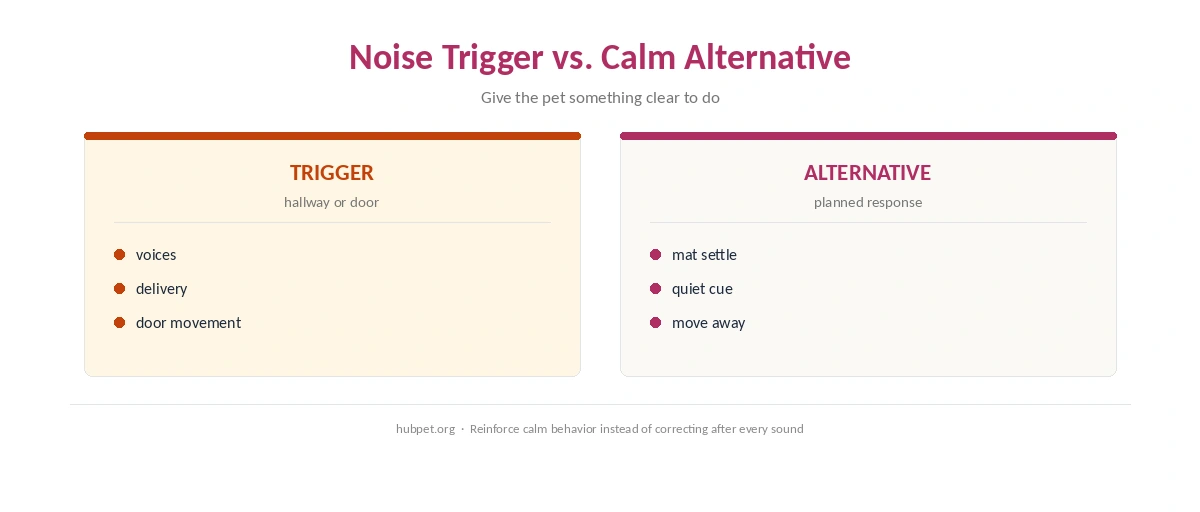
For dogs, plan exercise and enrichment before predictable busy periods in the hallway or building. If door sounds trigger barking, use the door-barking guide and the delivery-driver guide rather than correcting the dog after every sound.
Teach a calm default away from the entrance. Mat-settle training gives the dog a clear place to relax, while the quiet-cue guide helps you reinforce a pause in barking. Keep practice easy enough that the dog can respond.
Indoor activity does not have to mean constant high-energy play. Combine indoor dog activities with balanced play and rest. For both species, the weekly enrichment checklist helps spread stimulation across the week. This is part of how to manage pets in an apartment without turning every quiet period into a high-energy session.
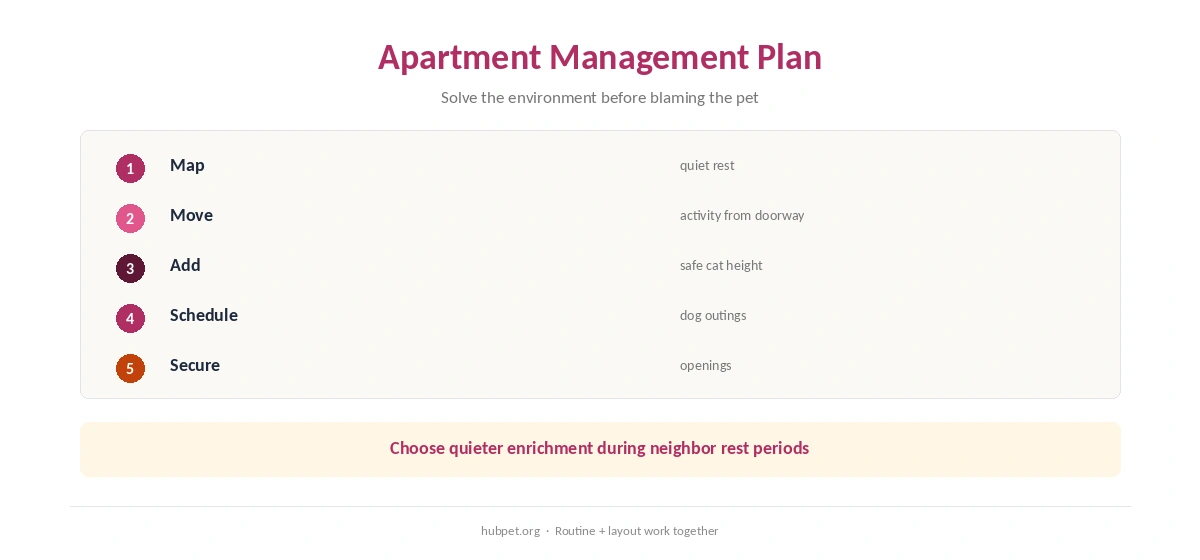
- Map a quiet rest area before deciding where toys and activity happen.
- Keep doorways and hall traffic from becoming the center of the pet’s day.
- Use vertical territory and hiding options to expand usable space for cats.
- Schedule dog toilet access and walks so urgency does not create avoidable stress.
- Choose quiet enrichment when neighbors are most likely to be resting.
- Recheck balcony, window, and door security after furniture or screen changes.
Apartment Safety and Multi-Pet Management
Windows and balconies deserve physical barriers, not supervision alone. Use the window-and-balcony guide and the cat-specific balcony guide before allowing access to elevated openings.
If more than one pet shares the apartment, duplicate and separate important resources. The multi-pet household checklist can help with feeding, resting, and retreat space. For a new arrival, use the introduction checklist instead of forcing immediate shared access. Resource separation is also part of how to manage pets in an apartment when animals have different social preferences. For the matching checklist, see apartment Living with Pets Checklist.
When you leave, manage doors, trash, windows, food, and enrichment with the home-alone safety checklist. A smaller home can work well when the pet has choice, predictable access to resources, and enough opportunities for species-appropriate behavior.
How We Research
HubPet reviewed these sources on October 11, 2026. We used Dogs Trust guidance on keeping a dog in a flat, accessed 2026, the FelineVMA indoor-cat position statement, 2025, and the environmental-needs framework described in our research process.
Create separate functional zones and use safe vertical space for cats. Usable territory and resource placement matter more than filling the floor with equipment.
Yes, if the dog’s exercise, toilet, rest, enrichment, and alone-time needs are met and building noise is managed thoughtfully.
Treating indoor safety as enough. Cats also need hiding, climbing, play, foraging opportunities, and clean toileting resources.
Manage predictable triggers, provide appropriate activity, and reinforce a calm alternative such as settling away from the door.
Not automatically. Elevated openings need secure physical containment before they become usable pet space.
The Bottom Line on How to Manage Pets in an Apartment
How to manage pets in an apartment comes down to useful zones, predictable routines, species-appropriate enrichment, quiet rest, and secure boundaries. Organize the environment around what the pet needs to do, not around the size of the floor plan alone.