
This article is general information, not veterinary advice. If your pet seems unwell, is in pain or may have eaten something harmful, contact your vet or an animal poison control line right away. Read our vet disclaimer.
A summer pet safety checklist should reduce heat exposure before a pet shows signs of heat illness. The AAHA heatstroke guidance, updated May 2026 says heatstroke can develop quickly in hot or humid conditions when pets lack enough shade, water, ventilation, or rest. A useful companion care page is how to Keep a Pet Cool Indoors in Summer.
The AVMA warm-weather guidance, accessed 2026 also advises unlimited fresh water, shade outdoors, parasite prevention, and never leaving a pet in a parked car. Use this checklist alongside the heatstroke guide before the hottest part of the season.
Summer Pet Safety Checklist: Heat, Water, and Shade
Plan outdoor time around the pet in front of you, not around a fixed clock. AAHA 2026 recommends extra caution in hot or humid weather and notes that pets cool differently from people. Keep water available, provide shade, and move activity to cooler conditions when the day becomes uncomfortable.
Check walking surfaces before a dog spends time on them. AVMA guidance, accessed 2026, warns that hot pavement can injure paws and contribute to overheating. For routine paw care after outdoor time, use the paw-cleaning guide rather than applying unverified home remedies.
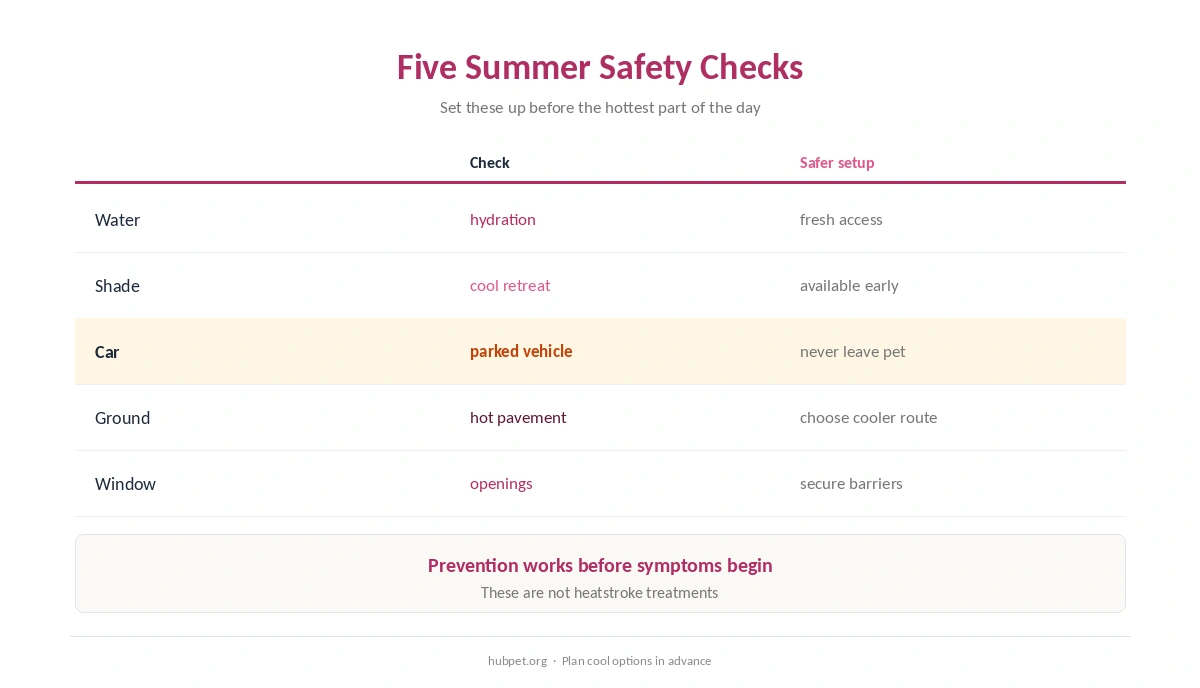
| Check | Safer summer setup | Why it matters |
|---|---|---|
| Water | Fresh water always available | Supports hydration in heat |
| Shade | Reliable shaded or indoor retreat | Reduces direct heat load |
| Vehicle | Pet never left alone in parked car | Cars can overheat rapidly |
| Pavement | Choose cooler surfaces and times | Hot ground can burn paws |
| Windows | Secure screens and barriers | Open windows can become fall routes |
Summer Pet Safety Checklist for Home and Travel
Never leave a pet alone in a parked vehicle, even with cracked windows. The ASPCA hot-car safety update from July 2026 says parked vehicles can become dangerously hot and cause fatal heatstroke. For trips, prepare with the dog car-anxiety guide and keep travel decisions centered on safety.
Secure windows, balconies, and doors before relying on extra ventilation. Use the balcony-and-window safety guide and the cat balcony guide for physical barriers. Open unscreened windows are also listed as a summer hazard by ASPCA guidance, accessed 2026.
Keep outdoor chemicals and seasonal plants out of reach. Review toxic houseplants, foods toxic to dogs, and foods toxic to cats before gatherings. ASPCA hot-weather guidance, accessed 2026, also recommends caution with insecticides and products not labeled for pets.
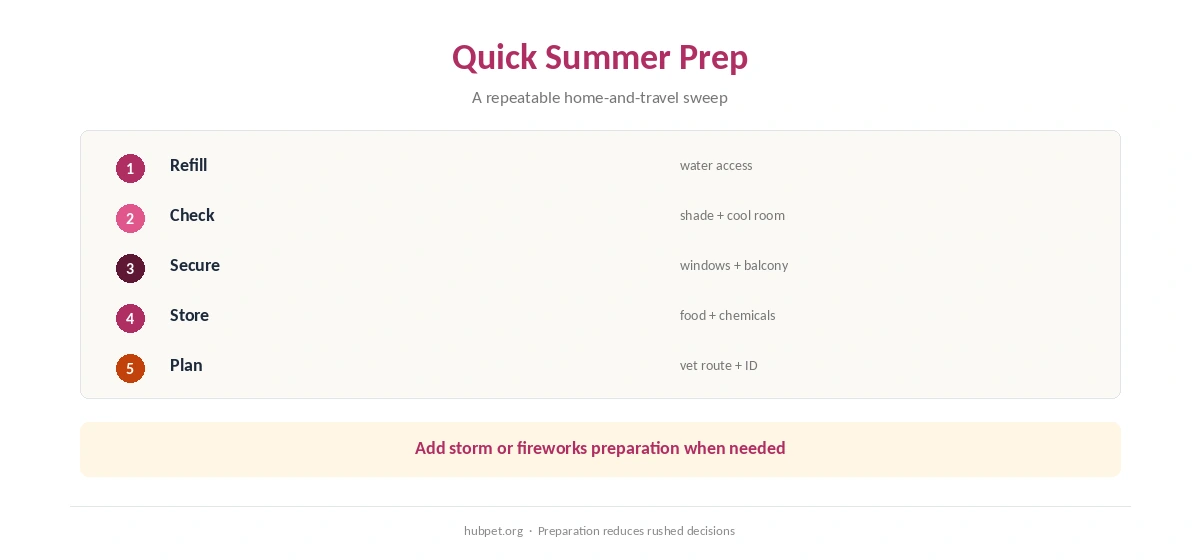
- Refill fresh water and confirm every pet can reach it without competition.
- Provide a cool indoor option or dependable shade before outdoor time begins.
- Avoid leaving any pet in a parked vehicle, including for a brief errand.
- Check pavement and other walking surfaces before a dog stays on them.
- Inspect window screens, balcony barriers, doors, and gates for escape routes.
- Store fertilizers, insecticides, human food, and unsafe plants out of reach.
- Keep identification details current before travel, visitors, storms, or fireworks.
- Know the nearest veterinary option before a heat emergency happens.
When to Call Your Vet During Summer
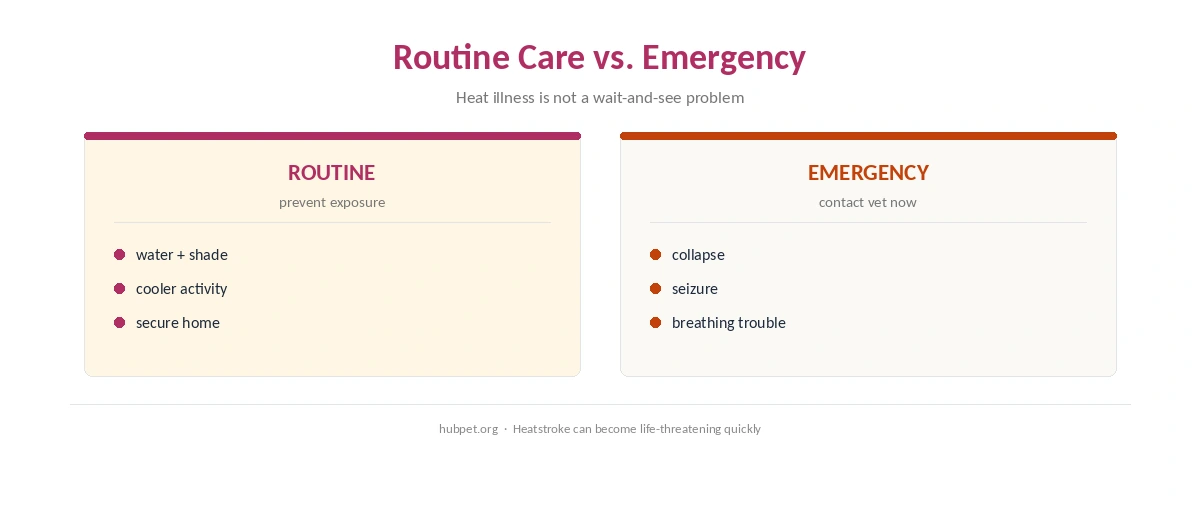
This summer pet safety checklist cannot treat heat illness. AAHA 2026 lists warning signs that can include excessive panting, drooling, weakness, vomiting, diarrhea, confusion, collapse, or seizures. If heatstroke is possible, contact a veterinarian immediately and use the emergency signs guide for the go-now threshold.
Difficulty breathing, collapse, or seizures are emergencies. Do not delay care while trying home treatments. Use the pet first-aid preparation checklist to keep transport and contact information ready, and follow veterinary instructions during the trip.
For outdoor routines that reduce overexertion, combine shorter activity with balanced play and rest. If summer storms or fireworks are part of your season, prepare with the storm and fireworks checklist before noise begins. Used consistently, a summer pet safety checklist also makes seasonal noise and travel changes easier to plan before they become urgent.
How We Research
HubPet reviewed these sources on October 11, 2026. We used AAHA heatstroke guidance, updated 2026, AVMA warm-weather pet safety, accessed 2026, and ASPCA hot-weather safety guidance, accessed 2026. Our research process treats suspected heatstroke as a veterinary emergency.
Fresh water, shade or a cool indoor option, no parked-car exposure, safer walking surfaces, secure openings, stored hazards, current identification, and an emergency plan.
No. AVMA and ASPCA guidance says not to leave pets alone in parked vehicles, even with windows cracked.
Avoid surfaces that are very hot and choose cooler times or routes. Paw injury and overheating are both reasons to reduce exposure.
Excessive panting, heavy drooling, weakness, vomiting, diarrhea, confusion, collapse, seizures, or breathing difficulty need urgent veterinary attention.
No. AAHA 2026 describes heatstroke as dangerous and potentially fatal, so contact a veterinarian immediately.
The Bottom Line on a Summer Pet Safety Checklist
A summer pet safety checklist works best before the day gets hot: water, shade, secure spaces, safer travel, and an emergency plan should already be in place. If heat illness is possible, stop treating the situation as routine summer care and contact a veterinarian immediately.