
This is general pet-care and product-fit information, not a diagnosis. A pet with pain, weakness, falls, or sudden difficulty jumping needs veterinary advice. Follow the exact product instructions and never force a frightened pet to climb. Read the veterinary disclaimer.
A dog sofa ramp needs more than a length label and an attractive fabric finish. The upper end must meet a safe landing next to the couch, the bottom must stay still on the floor, and the dog needs room to approach without making a sharp turn. A sofa ramp is also different from a bed ramp because cushions compress, armrests interrupt routes, and people may move furniture. This guide focuses on practical furniture fit and comfort rather than promising that every dog should use a ramp.
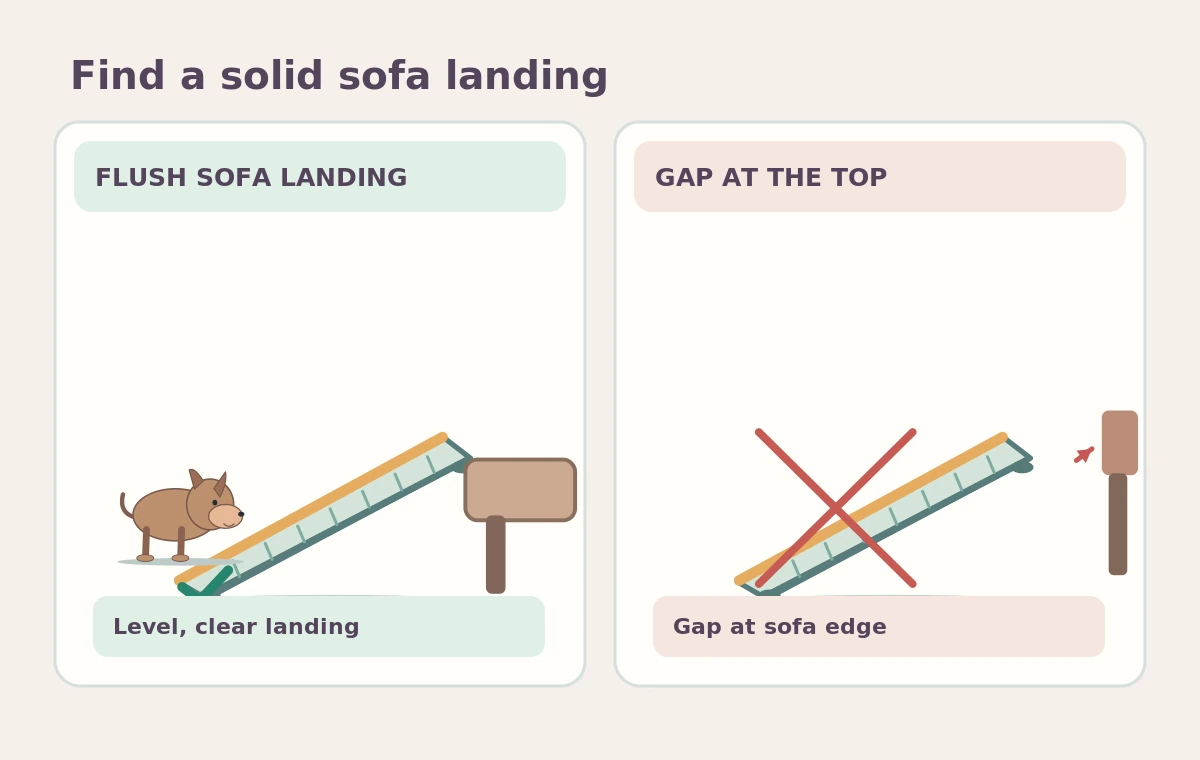
Identify a usable landing at cushion height
Look at the side of your sofa with cushions in their normal position. A stable attachment area or flat supported top is essential; a soft cushion edge by itself may sink away from the ramp as the dog steps up. Some ramps rest against a rigid sofa frame, while others use manufacturer-approved attachments or platforms. Follow the specified support location. Do not wedge the top into loose pillows. Test whether a paw can step onto a firm surface without catching in a gap.
Measure the available floor run
Take the height from the floor to the true landing, not merely the decorative armrest. Then mark how far the ramp can project into the room before crossing a walkway or blocking a door. A longer run often gives a gentler approach but also takes away floor space. Check whether the dog must turn immediately at either end. If the ramp can only fit at a steep angle, consider another placement, a lower resting place, or advice about an appropriate aid.
Choose a walking surface, not decoration
Your dog needs traction across the full walking path. Look for carpet-like treads, a bonded high-grip mat, or another surface approved for the ramp. Run a hand along the edges to find loose fibers, tacks, raised strips, or seams that might catch claws. Thick plush fabric can look inviting but hide irregular footholds; an extremely rough surface may be unpleasant. Test the actual product while clean and again after laundering as the instructions allow. Replace peel-up grip material instead of covering it with loose blankets.

Control base movement on living room floors
Smooth hardwood, vinyl, or tile can let narrow ramp feet move when a dog accelerates. Confirm that every support pad rests firmly on the floor and has intact non-marking grip. The feet should not sit on an uneven rug edge, an extension cord, or a folded mat. Press the ramp side-to-side and at the center before use. Also consider protecting delicate flooring from grit beneath the pads. A ramp that feels secure on carpeting may behave differently on polished tile.
Give the dog a comfortable approach
Plan a straight walking lane toward the lower end. Move a coffee table, plant stand, or basket rather than expecting the dog to twist at the last moment. Leave clear room at the upper landing so the dog can pause before stepping onto the couch. A dog that wants to run down the ramp may need calmer practice and a less exciting setup. Put treats where a controlled walk is rewarded. Do not encourage diving off the opposite side of the sofa.
Match the ramp to your dog’s movement
Width matters for the dog’s shoulder and body alignment, not just its weight. Watch the paws as the dog walks and turns: a wide animal should not have to place feet at the very edges. Raised side lips can provide a visual boundary but cannot prevent every fall. Dogs with joint pain, weakness, or reduced sight may have different needs and deserve a veterinarian-guided decision. A dog that actively avoids the couch may simply prefer a lower bed.
Introduce the ramp at floor level first
Give the pet time to sniff the surface and take treats near it without pressure. If the ramp can safely be placed nearly flat, reward stepping across a short distance. Gradually move to the intended slope only after the dog appears relaxed. Always offer a clear way to turn back. Use a harness if extra gentle guidance is needed, but never pull a pet up by its neck. Short, successful sessions matter more than finishing in one day.
Check the furniture whenever it moves
A sofa may shift when someone vacuums, repositions the rug, or moves a recliner. Confirm the upper support and base again afterward. Make sure a reclining footrest, door, or drawer cannot strike the ramp. If the design uses a strap or latch, inspect it frequently and keep it away from chewing pets. Clean crumbs from the top contact point, and replace worn traction promptly. Do not allow children to play on pet ramps, regardless of the advertised weight limit.

Decide when the sofa is no longer the goal
A safe choice may be a comfortable floor bed, especially for a dog in pain or unwilling to use an incline. If your dog begins missing the landing, dragging a limb, or refusing normal walks, get veterinary advice rather than adjusting the ramp repeatedly. The aim is comfortable access where appropriate, not unlimited climbing. Your room layout and pet’s needs may change over time; reassess them together.
How We Research
We compared veterinary mobility guidance and manufacturer setup instructions, focusing on support points, landing security, paw traction, and voluntary learning. These are selection and fit checks rather than hands-on product test results. We have not examined your pet or tested the model you own. We reviewed independent animal welfare advice alongside model-specific directions and avoided universal claims about weight ratings, angles, or clinical benefits. Learn about HubPet editorial research.
Sources
VCA Animal Hospitals — Creating a Comfortable Home for Your Mobility Compromised Dog
VCA Animal Hospitals — Helping Your Dog With Osteoarthritis
PetSafe — Acclimate and Train Your Pet to Use a Telescoping Ramp
Use only the contact surface specified by the manufacturer. A cushion can compress or slide, leaving a dangerous gap at the landing.
A longer ramp can ease the incline but requires a clear floor run. It must not block a walkway or force a sharp turn at either end.
Check every foot, non-slip pads, frame movement, and grit that could scratch the floor. Retest after moving the sofa or cleaning.
No. Introduce it gradually with rewards, starting on low or flat ground if the design permits. Never force a reluctant dog up an incline.
A lower resting area is reasonable when the dog dislikes ramps, has mobility trouble, or cannot reach the sofa safely despite a stable setup.