
A reliable shake begins when your dog offers a paw by choice. Learn a gentle progression from an open hand to a brief greeting. Begin with your dog in a familiar, quiet space and keep the task optional. Mark the action you want to repeat and deliver a small appropriate reward promptly. Avoid force, painful restraint, intimidation, and long repetitive drills. This is an enrichment and skill-building activity, not a treatment for pain, fear, or aggression. If your dog is physically uncomfortable or becomes unusually worried, stop and consult an appropriate professional. Read the HubPet veterinary disclaimer for health-related limits.
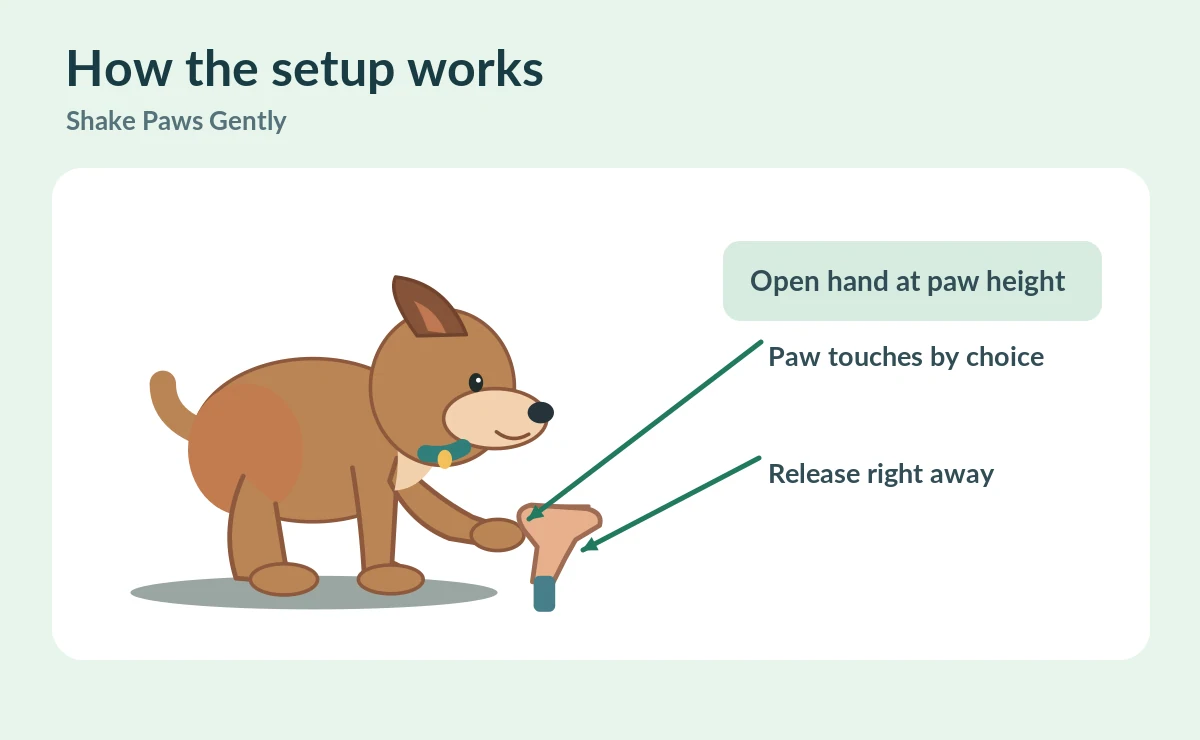
What a comfortable shake actually looks like
A dog should be free to place a paw into an offered hand and withdraw it when ready. The handler supports the paw lightly rather than lifting a leg at the shoulder or tugging at the toes. One brief touch is enough for a beginner. Watch for a relaxed body, a loose face, and continued interest in the reward. A dog that moves away, tucks the paw beneath the chest, or repeatedly turns the head should be allowed to stop. This is an optional greeting trick, not a test of obedience.
Prepare a stationary, low-pressure session
Choose a nonslip rug with room for the dog to stand or sit naturally. Have several tiny food rewards within easy reach, but do not make the dog balance on an unstable surface. Face your dog at an angle and hold one open hand low, close to a comfortable paw height. Your other hand delivers rewards after the behavior. You can use a consistent word such as “yes” to mark the precise moment of contact. Sessions of a few easy repetitions are more useful than holding a paw until the dog resists.
Capture interest before asking for contact
Show your open hand without pushing it into the dog’s chest. A curious glance, sniff, or gentle shift in weight may be the starting point. Initially reward attention toward the hand, then wait for a small lift of the paw. If a dog naturally paws at the hand, mark that contact promptly and give a treat away from the hand so the paw can return to the floor. Do not grab the paw to create the movement. Some dogs prefer offering a paw while sitting; others balance better standing.
Build a resting paw rather than a scratch
A quick tap can become an uncomfortable rake if you reward frantic swiping. Present the palm flat and low. Mark the moment the paw settles softly for a fraction of a second, then reward and reset. If claws scrape your hand, make the task easier or change the height and angle. Never hold the foot tightly to force a longer duration. Gradually ask for a calm one-second placement only if the dog is comfortable. The reward should follow the soft placement, not repeated scratching.
Add a cue only after the behavior is predictable
Once the dog consistently places a paw when the hand appears, say a short cue such as “paw” immediately before you present the palm. Keep that word distinct from everyday chatter. Do not repeat it rapidly if the dog pauses. Instead, offer the simpler open-hand signal and reward a success. Practice in a second quiet room before trying the trick with visitors. Ask guests to keep their hands still and avoid pulling, squeezing, or shaking the dog’s leg.

Teach a clean finish and avoid demanding both paws
After a light contact, lower your hand and let the paw return to the floor. Deliver the reward at the dog’s nose level so the dog can reset without twisting. If you want a second paw later, train it as a separate skill rather than assuming the dog will switch automatically. Keep the support hand near the paw, not at shoulder height. Avoid this trick when a dog has sore joints, injured paws, or an orthopedic restriction. Voluntary cooperation matters more than symmetry.
Compare a gentle greeting with a forced one
In a cooperative attempt, the dog initiates contact and can move away at any time. An unsuitable version begins when a person picks up a front leg, lifts it too high, or holds it through signs of discomfort. The picture may look similar for a moment, but the experience is different. Children should not grab a dog’s paws, and an adult should guide any practice. If the dog retreats, calmly end the session. This trick does not replace training for polite four-paw greetings.
Troubleshoot paw reluctance and overexcited jumping
If your dog does not lift a paw, reward smaller steps such as looking at your hand or shifting weight. You can also try a low hand target near a front foot. If the dog jumps or mouths your fingers, lower your hand and take a break. Avoid concealing food in a fist that encourages frantic digging. Pawing a person for attention can become an unwanted habit, so ask for the trick only with a clear signal and reinforce calm waiting between requests.

Know when to stop and seek advice
Do not practice through limping, toe licking, swelling, stiffness, or sensitivity to touch. A reluctance to offer one paw can be a physical issue rather than a motivation problem. Consult your veterinarian for new discomfort. For a dog that is fearful of handling, a credentialed reward-based trainer can help shape an even smaller beginning. A good session ends with the dog willing to approach your hand again, not with a forced final repetition.
How We Research
We drew this guide from published reward-based training resources and translated those principles into observable steps. The setups here are educational exercises, not claims that we tested particular equipment or trained every type of dog. Watch your own dog’s posture, interest, and willingness to participate. Progress depends on prior learning, physical comfort, environment, and reward preference. See the HubPet editorial information for site context. When movement appears painful or behavior changes suddenly, ask a veterinarian before continuing.
Sources
AKC — How to Teach Your Dog to Shake Hands. We consulted this source for reward-based steps and the specific skill described here. The source makes no claims about our individual results.
Dogs Trust — Enrichment Activities for Dogs. We consulted this source for reward-based steps and the specific skill described here. The source makes no claims about our individual results.
No. Let the dog offer the contact voluntarily. Lifting or gripping the paw can cause discomfort and teaches a different experience from a voluntary shake.
Add the word just before presenting your hand after the dog already offers the paw consistently. The cue predicts an action the dog understands.
Reward softer, shorter contact and hold your palm at a comfortable height. If the dog becomes frantic, simplify the task and take a short break.
Yes, but train the second paw as a separate behavior. Start at the same easy stage and avoid pulling a limb into the correct position.
Do not insist on this optional trick. Stop when the dog withdraws or appears sore, and discuss new pain or sensitivity with a veterinarian.