
A short, easy turn is safer and clearer than rushed circles. Practice the movement on a grippy floor and reward small progress. Begin with your dog in a familiar, quiet space and keep the task optional. Mark the action you want to repeat and deliver a small appropriate reward promptly. Avoid force, painful restraint, intimidation, and long repetitive drills. This is an enrichment and skill-building activity, not a treatment for pain, fear, or aggression. If your dog is physically uncomfortable or becomes unusually worried, stop and consult an appropriate professional. Read the HubPet veterinary disclaimer for health-related limits.
Start with the movement, not the word
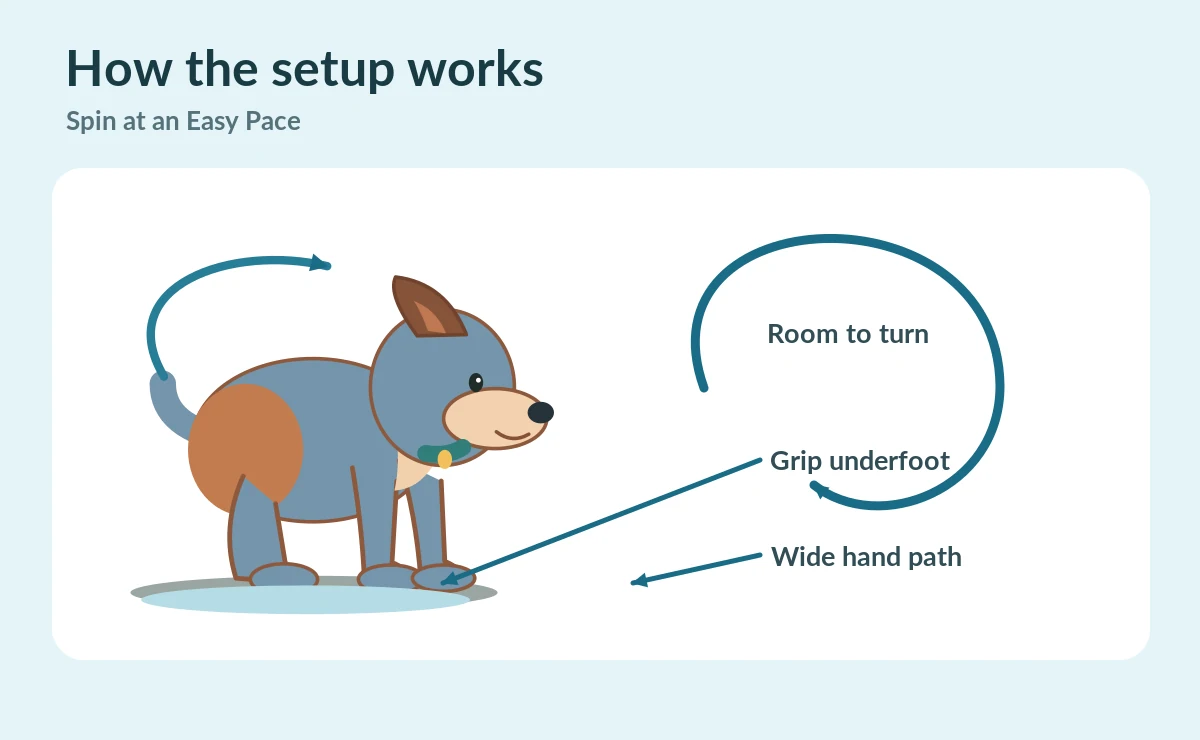
“Spin” should describe a relaxed walking turn in place, not a fast pivot with paws sliding across tile. Invite the dog to turn by following a hand or toy in a broad circle. Reward a partial movement at first, especially for a beginner who cannot follow a full arc. Do not twist the head or pull the leash to complete the turn. A dog may prefer turning in one direction. That is a training clue, and a persistent one-sided difficulty may also deserve a mobility check.
Pick a stable surface and a generous turning radius
Use a nonslip rug, rubber-backed mat, or other firm surface with traction. Clear nearby chair legs, cables, children’s toys, and water bowls. For a large dog, leave more space than you think the shoulders and tail need. Place a treat near the nose and move your hand slowly to the side rather than high above the head. The dog should be able to follow with ordinary steps. Avoid tight rotations on slippery floors, raised platforms, or near stairs.
Mark the first quarter turn
Begin with the dog standing comfortably. Hold the lure close to nose level, travel toward one shoulder, and mark a small follow. Reward before the dog loses balance or becomes confused. Repeat until a comfortable head turn becomes a one-quarter body turn. Feed in a position that lets the dog reset naturally. Asking for a complete circle immediately may produce jumping, backing up, or rapid spinning. Smaller pieces make it easier to see which movement the dog is actually learning.
Join short arcs into one comfortable circle
Extend the lure path toward the hip and then around the rear, keeping it wide enough for the dog to walk instead of twisting. Reward when the dog takes an extra step around the arc. A full circle is optional at this stage. Do not raise the lure so high that the front paws leave the ground. When the circle is smooth, mark the end and deliver a treat near the dog’s mouth. Pause between repetitions so the dog can regain orientation.
Add the verbal cue and reduce the visible treat
After repeated easy circles, say “spin” just before the familiar hand motion. Keep your cue short and use it once. Next, guide with the same empty-hand arc and reward from the other hand. Gradually shrink the gesture only while the dog remains accurate. If the dog stops midway, return to a wider cue. Training both directions can be useful, but label each direction separately and teach the unfamiliar turn with the same slow progression.
Read the difference between cooperation and dizziness
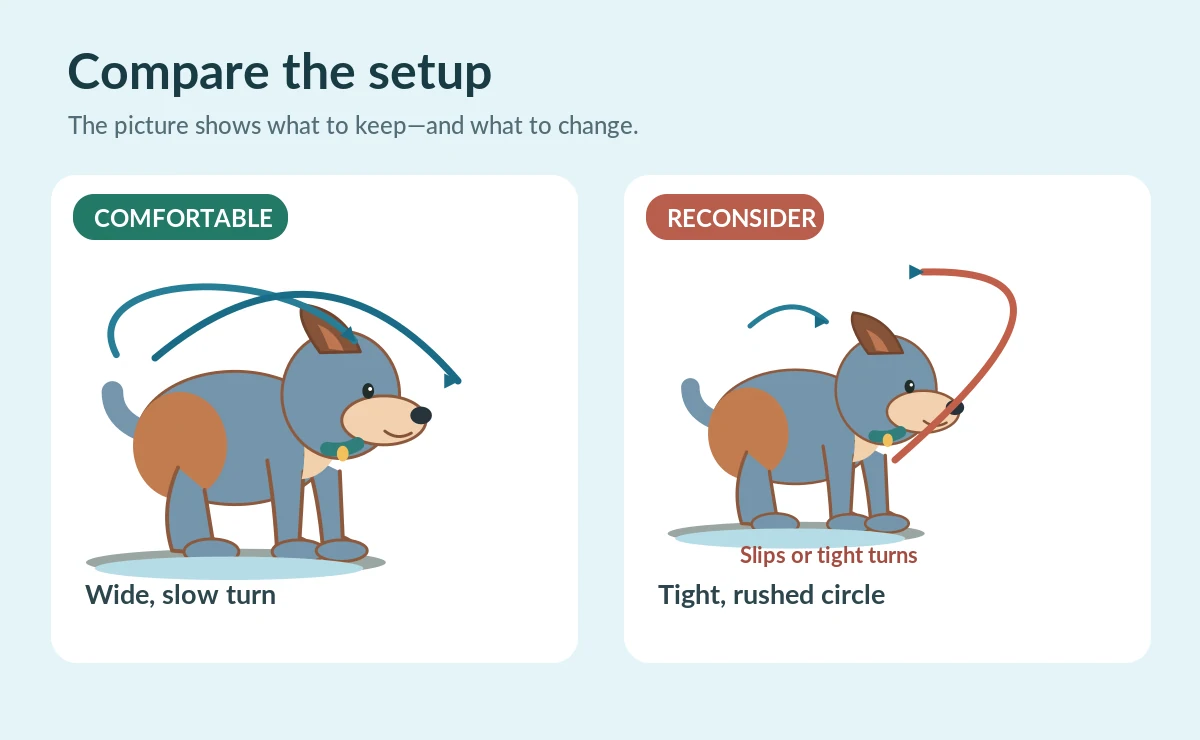
A comfortable spin has measured steps, a stable back, and an interested dog that pauses afterward. A rushed spin shows skidding paws, a tight bend, repeated circles without stopping, or hesitation afterward. Do not use rapid, repeated spins to tire out a dog. Stop if the dog seems dizzy, wobbly, distressed, or unwilling to turn. The purpose is a brief enrichment trick. It is not a therapy exercise, balance test, or substitute for walking and rest.
Change only one training variable at a time
Once your dog can turn indoors, try another quiet room with equivalent traction. Then change the position you stand in, or increase the distance between hand and nose a little. Do not add a new floor, a loud audience, and a smaller hand signal in the same attempt. Return to an easy version if performance falls apart. Rewarding success in varied calm settings helps the dog understand the cue rather than memorizing one corner of the living room.
Troubleshoot jumping, backing up, or stopping
A lure held too high can invite a jump, while a hand moved too quickly may cause the dog to back up or lose track of it. Bring the hand lower, slow the arc, and reward a quarter turn. If the dog only follows in one direction, pause and try a wider path toward the other shoulder later. Do not trap the dog against furniture to prevent backing away. Backing out is useful feedback that the setup feels awkward.

Avoid spinning through mobility warning signs
Dogs with painful joints, weakness, injury, or balance problems may not be comfortable turning in circles. Older dogs and growing puppies do not need high-repetition tricks. If turning triggers stiffness, yelping, limping, stumbling, or unusual reluctance, stop and speak with a veterinarian. A nose touch, stationary paw target, or simple scent search can offer gentler enrichment. A voluntary small turn is more valuable than a forced full rotation.
How We Research
We drew this guide from published reward-based training resources and translated those principles into observable steps. The setups here are educational exercises, not claims that we tested particular equipment or trained every type of dog. Watch your own dog’s posture, interest, and willingness to participate. Progress depends on prior learning, physical comfort, environment, and reward preference. See the HubPet editorial information for site context. When movement appears painful or behavior changes suddenly, ask a veterinarian before continuing.
Sources
AKC — How to Teach Your Dog to Spin Around. We consulted this source for reward-based steps and the specific skill described here. The source makes no claims about our individual results.
Dogs Trust — Enrichment Activities for Dogs. We consulted this source for reward-based steps and the specific skill described here. The source makes no claims about our individual results.
Use a slow walking turn with secure footing. The goal is a deliberate response, not a quick whirl or repeated rotation.
Teach the movement first. Add the spoken cue after your dog follows a broad hand circle consistently.
Often yes, but teach each direction separately and reward small successes. Do not assume the second direction feels equally comfortable.
The lure may be too high or moving too fast. Lower it to nose level, widen the arc, and reinforce an easy partial turn.
Skip it when the dog has painful joints, poor balance, an injury, or clear discomfort. Ask your veterinarian about new movement problems.