
Make toy cleanup a voluntary game with an open basket, a safe toy, and a rewarded drop. Build one small behavior at a time. Begin with your dog in a familiar, quiet space and keep the task optional. Mark the action you want to repeat and deliver a small appropriate reward promptly. Avoid force, painful restraint, intimidation, and long repetitive drills. This is an enrichment and skill-building activity, not a treatment for pain, fear, or aggression. If your dog is physically uncomfortable or becomes unusually worried, stop and consult an appropriate professional. Read the HubPet veterinary disclaimer for health-related limits.
Understand the three skills hidden inside cleanup
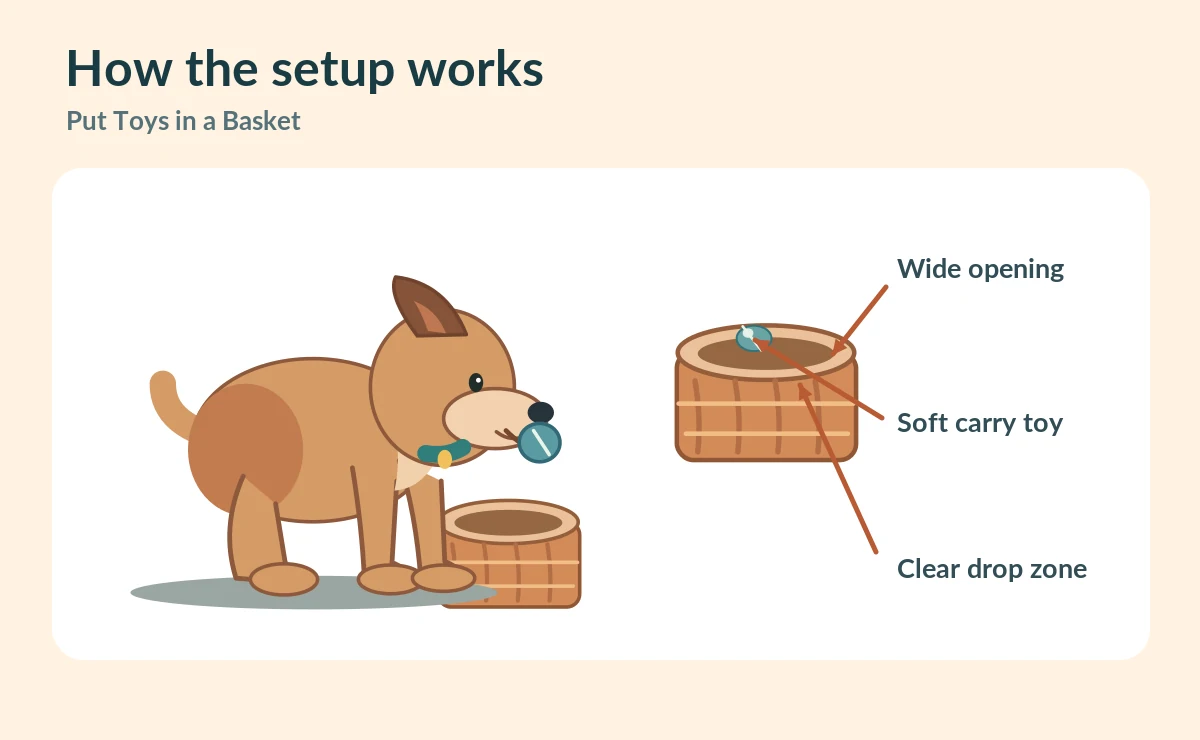
Putting toys away is not a single trick at first. Your dog must pick up a safe object, carry it toward a target, and release it above the opening. Teach those pieces separately and celebrate early approximations. Dogs Trust describes a progression from toy pickup to dropping and targeting the container. A dog that is already happy to retrieve and release may advance quickly, while a dog that prefers chasing or chewing needs a slower start. Keep the activity fun; an empty basket is never worth a conflict over a toy.
Choose a basket that cannot trap a muzzle
Set a sturdy basket or low-sided bin on the floor. The opening must be wider than the dog’s muzzle and the carried toy together, with no sharp rim, wire loop, or lid that can fall. Choose a soft, intact toy larger than the dog can readily swallow, with no detachable parts. Avoid prized chews, food-stuffed toys, or objects that trigger guarding. Place the basket on a clear nonslip surface. Do not ask a dog to lean into a narrow or deep container.
Teach safe pickup with the basket out of sight
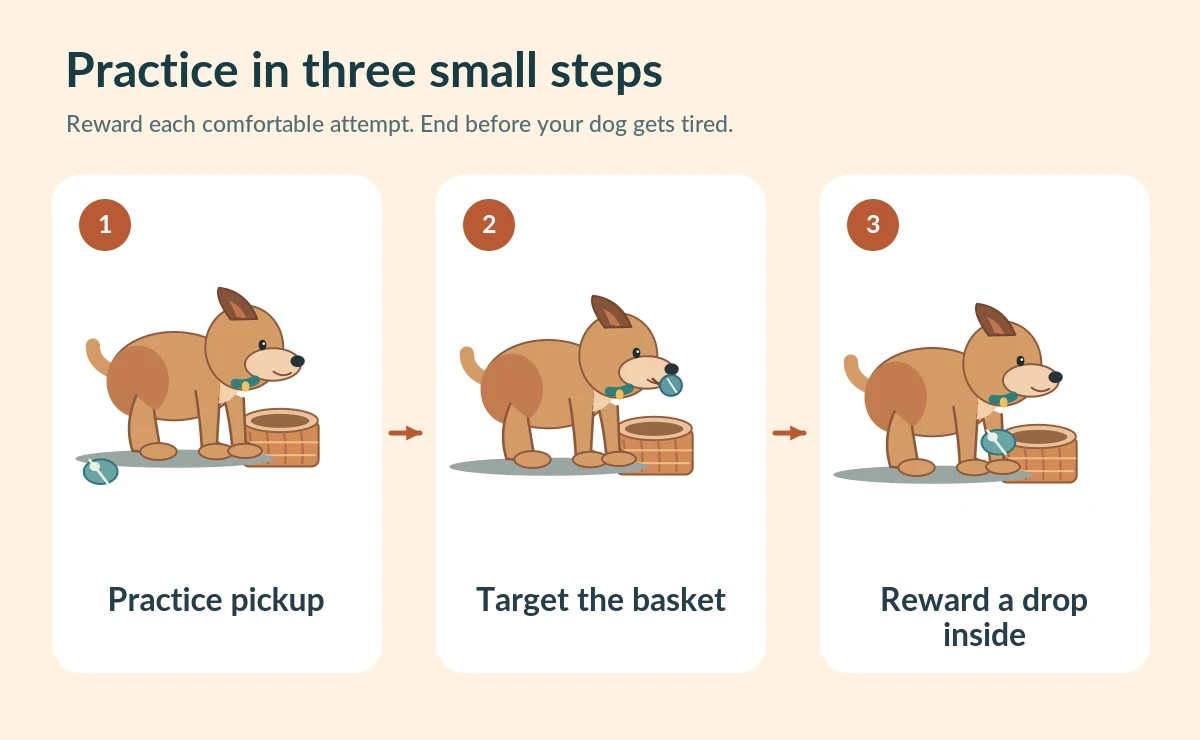
Place one familiar toy nearby and mark any calm interest in it. Reward sniffing, touching with the mouth, or a brief gentle lift. Only increase the criterion when the dog readily repeats the earlier stage. If the dog is not naturally interested in holding toys, keep this phase playful and do not pry the mouth open. Offer rewards in a way that makes dropping and reengaging easy. Some dogs learn faster with a plush toy, while others prefer a soft ball or fleece tug.
Teach the release before introducing a distant target
Hold a treat ready and ask for a voluntary release. Mark the instant the toy leaves the mouth, then reward. If your dog already knows “drop,” use that familiar cue. Do not chase a dog, grab the toy from the teeth, or turn the exercise into tug-of-war. Practice several easy releases over an open section of floor before expecting accuracy over a box. If your dog guards the toy, stop the activity and seek qualified reward-based help instead of provoking a confrontation.
Build a clear basket target
With the toy set aside, reward looking toward or approaching the basket. Then present the toy directly above the opening. Prompt a familiar drop and mark when it falls inside. The first success may need the basket almost directly below the muzzle. That is fine. Do not scold a missed drop; move the container back under the release point and repeat. Use a simple phrase such as “basket” only after the dog reliably moves toward the target and releases nearby.
Add distance one small step at a time
Move the toy just outside the rim and ask for a pickup, short carry, and drop. Reward immediately after an accurate release. Increase distance slowly as the dog succeeds, rather than scattering toys across the room at once. Keep the dog’s path clear of stairs, slippery rugs, and crowded furniture. If the dog drops the toy halfway, reduce the distance. Eventually you can introduce two different toys, but teach them one at a time so the dog can learn each size, grip, and reward expectation.
Compare relaxed cleanup with a pressured retrieve
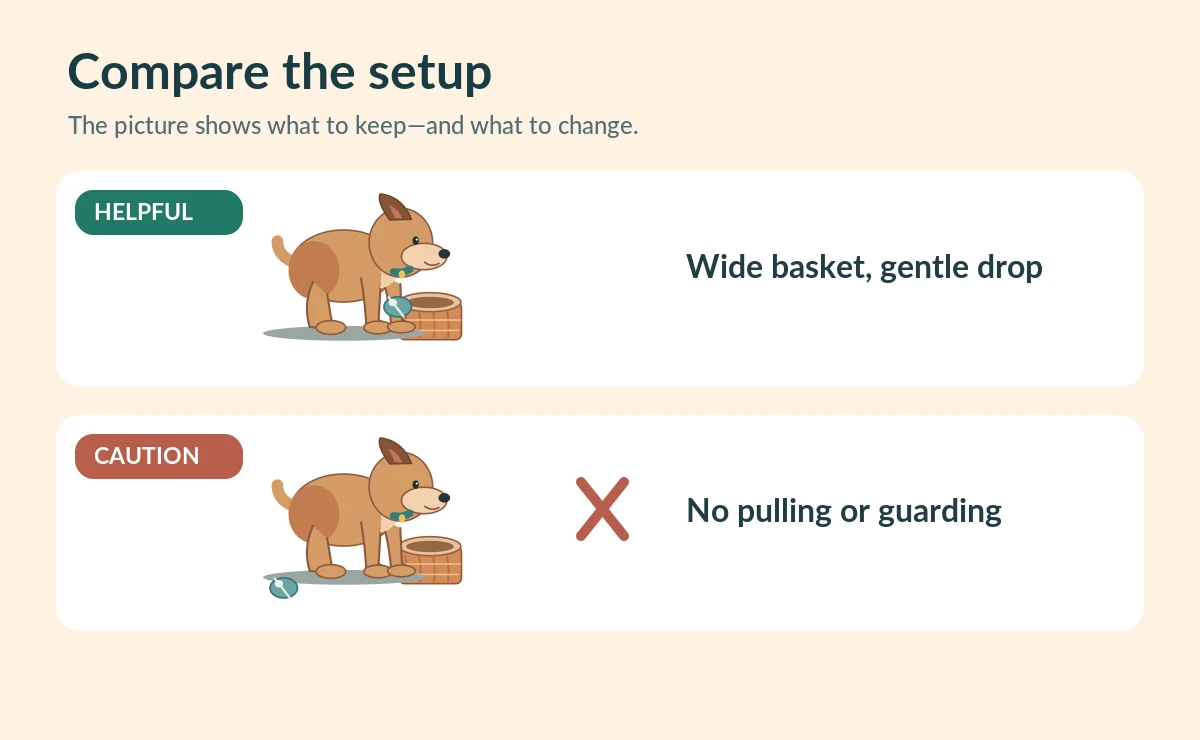
In the helpful picture the dog carries an intact soft toy to a wide, stationary basket, releases it, and receives a reward. In the unsuitable picture a person reaches toward the mouth, demands the release, and pulls the toy back. That pressure can make the game frustrating or unsafe. Avoid high-value stolen items, sharp plastic toys, and containers with snapping lids. Reward the voluntary choice, not a rushed race to empty a room.
Troubleshoot missed targets and toy chewing
When your dog drops beside the basket, shift the opening nearer and reward a correctly placed drop. For a dog that chews instead of carrying, use a less exciting object and mark a very brief hold. When your dog runs away with the toy, restart with a small area and a short pickup-to-release distance. Do not pursue the dog around the house. If the basket slides, secure it with a nonslip mat rather than weighting it with loose objects the dog might swallow.
Finish with the dog feeling successful
Stop after a good attempt rather than extending the task until your dog loses interest or becomes frustrated. Store the basket and toy where they cannot create an unattended chewing risk. Children may help place toys but should not reach into a dog’s mouth or take guarded objects. Clean soft toys and the container according to their care instructions. A reliable cleanup game is useful enrichment, but a well-mannered dog does not need it.
How We Research
We drew this guide from published reward-based training resources and translated those principles into observable steps. The setups here are educational exercises, not claims that we tested particular equipment or trained every type of dog. Watch your own dog’s posture, interest, and willingness to participate. Progress depends on prior learning, physical comfort, environment, and reward preference. See the HubPet editorial information for site context. When movement appears painful or behavior changes suddenly, ask a veterinarian before continuing.
Sources
Dogs Trust — Teach Your Dog to Tidy Up Their Toys. We consulted this source for reward-based steps and the specific skill described here. The source makes no claims about our individual results.
AKC — Teach Your Dog to Clean Up Their Toys. We consulted this source for reward-based steps and the specific skill described here. The source makes no claims about our individual results.
It helps. Teach a relaxed voluntary release before trying to drop a toy into a basket, then use the familiar cue over the opening.
Use a sturdy floor-level basket with a wide smooth rim and no collapsing lid. It should not trap the dog’s nose or tip easily.
Bring the bin closer to the release point and reward a simpler accurate drop. Increase the distance after several easy successes.
Avoid objects that invite resource guarding or intense chewing. Start with an intact, familiar low-stakes toy the dog willingly carries and releases.
No. Practice a rewarded voluntary drop instead. If a dog guards objects or becomes tense, stop and seek qualified professional help.