
A raincoat can reduce how much water reaches a dog’s back and chest, but it should never turn a routine walk into a struggle with straps. Choose the coverage your dog needs, then check walking motion, leash connection, wet fabric, and your dog’s willingness to wear it. A raincoat is not a guarantee of warmth or weather safety. This guide focuses on practical fit and after-walk care rather than a brand ranking. These are general equipment and home-care considerations, not individualized veterinary care. If a dog has pain, injury, or ongoing skin problems, contact a veterinarian and read our veterinary disclaimer.

Measure the dog, not the label
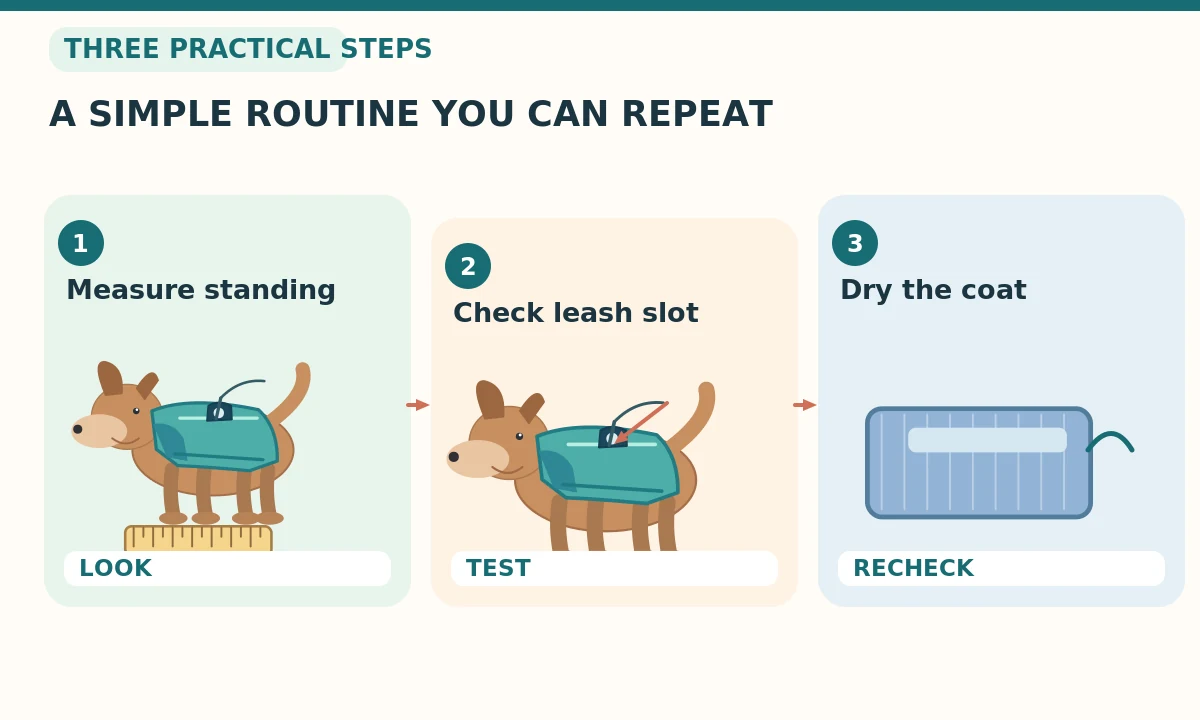
Start with your dog standing on level ground. Measure from the base of the neck to the base of the tail, then record chest girth and neck size. Dog clothing size names vary by manufacturer, so compare your numbers with the specific garment chart. A raincoat that reaches past the tail base can interfere with movement or elimination. A very short panel may leave more of the trunk wet than expected. Check how each strap changes the fit while the dog walks and turns. Leave comfortable breathing and shoulder movement without letting the jacket rotate around the body.
Check chest and belly coverage in motion
Put the coat on for a short indoor trial before testing it outside. Watch your dog step forward, lower the head, sniff, turn around, and climb a shallow step. The front panel should not press into the throat or sit across the moving shoulder. A belly flap may reduce splashes, but it should remain clear of the dog’s normal bathroom position. Check for dampness and rubbing after a brief walk. If the fabric bunches between the front legs, the cut may not fit your dog’s shape even when the back length looks correct.
Match the leash opening to the real harness
A coat with a tiny opening is not automatically compatible with a bulky harness. First fit the harness correctly, then place the raincoat over it if the garment is designed for that arrangement. Check that the leash passes through the slot without tugging fabric over the attachment ring. If the coat includes its own leash loop, read the maker’s guidance rather than assuming it replaces a secure walking harness. Never fasten a leash to decorative fabric trim. A smooth leash path matters most when your dog looks down, turns, or pulls briefly during a normal walk.
Choose closures you can inspect quickly
Wide hook-and-loop panels, buckles, and adjustable straps offer different tradeoffs. Hook-and-loop can collect hair and grit; buckles may create pressure points near a rib or armpit. Run a finger beneath closure areas while your dog stands and moves. Check the underside for rough stitching, loose cords, and hardware likely to strike the legs. A hood may be unnecessary for dogs that dislike fabric near the face or ears. Keep vision, hearing, and panting unobstructed. Practice fastening and removing the garment indoors without trapping fur in the closure.

Understand what waterproof fabric cannot do
A shell that sheds light rain may still leak through seams or openings during prolonged exposure. Coated fabric also differs from an insulated winter coat. A dog can become cold when wet or uncomfortable when overdressed, so watch body language and the weather rather than trusting a product claim. Choose shorter walks or return indoors when conditions are unpleasant or unsafe. Dry any wet fur underneath instead of leaving a damp jacket on after arriving home. If a coat feels clammy inside, review its fit and ventilation before the next outing.
Introduce the garment without forcing it
Let your dog investigate the dry coat on the floor and reward voluntary interest. Drape it briefly without fastening, then practice one simple closure if your dog remains relaxed. Stop if the dog freezes, repeatedly scratches, or tries to escape. A comfortable dog should eventually move normally, not merely tolerate being held still for a photograph. Begin with short indoor sessions before a real wet-weather walk. Some dogs dislike clothing, and a towel at the door may be a better option. Do not leave unfamiliar clothing on an unattended dog.
Set up an efficient wet-weather entry
Place a towel, washable mat, and dry storage hook near the door. Remove the raincoat before the dog settles onto upholstered furniture or a bed. Press a towel into the coat and skin gently instead of rubbing wet fur back and forth. Pay attention to paws, belly, and areas under straps, where rain may have gathered. A raincoat can reduce cleanup, but it does not replace basic paw care after dirty sidewalks. If a seam repeatedly transfers water or a closure takes too long to remove, choose a simpler design.
Inspect after each walk and wash as labeled
Hang the coat open and allow both faces to dry before storing it. Check the leash opening, taped seams, stitching, and fastener edges for wear. Brush away grit before closing hook-and-loop tabs for laundry. Follow the care label, as heat or detergents can damage some water-resistant finishes. Avoid leaving a wet coat in a sealed bag, especially if it contains dirt. Replace damaged hardware that no longer holds reliably. Recheck the fit after washing, because shrinkage or twisted straps can change where fabric rests on the dog.
How We Research
Our editors use established veterinary and animal-welfare guidance about clothing fit, paw safety, gentle handling, visibility, and cleaning. Product dimensions, physical diagrams, and material checks are inspection criteria. They are not independent laboratory ratings, medical endorsements, or promises that any specific product prevents harm. We do not claim to have tested or ranked named brands. Read more about HubPet.
Sources
American Kennel Club — Does Your Dog Need a Raincoat? — professional guidance informing the selection, safe-use, or hygiene checks above.
American Kennel Club — Dog Apparel Measuring Guide — professional guidance informing the selection, safe-use, or hygiene checks above.
AAHA — Cold Safety for Pets — professional guidance informing the selection, safe-use, or hygiene checks above.
American Kennel Club — How to Dry Your Dog Completely — professional guidance informing the selection, safe-use, or hygiene checks above.
No. Coat type, weather, the length of the outing, and the dog’s tolerance all matter. A coat is an optional aid, not a substitute for appropriate shelter.
Only if the garment offers a safe leash route and the harness still fits properly. Check the connection during walking and turning.
Coverage can reduce splashes, but the panel must allow normal steps and bathroom movements. A shorter safe cut can be better than a rubbing flap.
No. A light shell may repel rain without insulation. Plan for temperature and wind separately, using your dog’s comfort as the guide.
Open all damp sections and let them dry fully. Inspect seams and closures, then store the clean coat away from chewing access.