
This guide covers general dog bedding and household safety, not individual veterinary treatment. If your dog struggles to rise, appears to be in pain, or may have swallowed bedding, contact your veterinarian; see our veterinary disclaimer. A fluffy bed can be inviting, especially to a dog that prefers to curl into soft fabric. However, pile length changes how you inspect and clean the surface. Long fibers can hide dirt, mats, loose threads, and small damaged seams that a short smooth cover reveals immediately. The aim is not to prove that fluff is calming or therapeutic. It is to find a surface your dog actually likes and that you can inspect, launder, and dry thoroughly.

Look under the pile before you buy
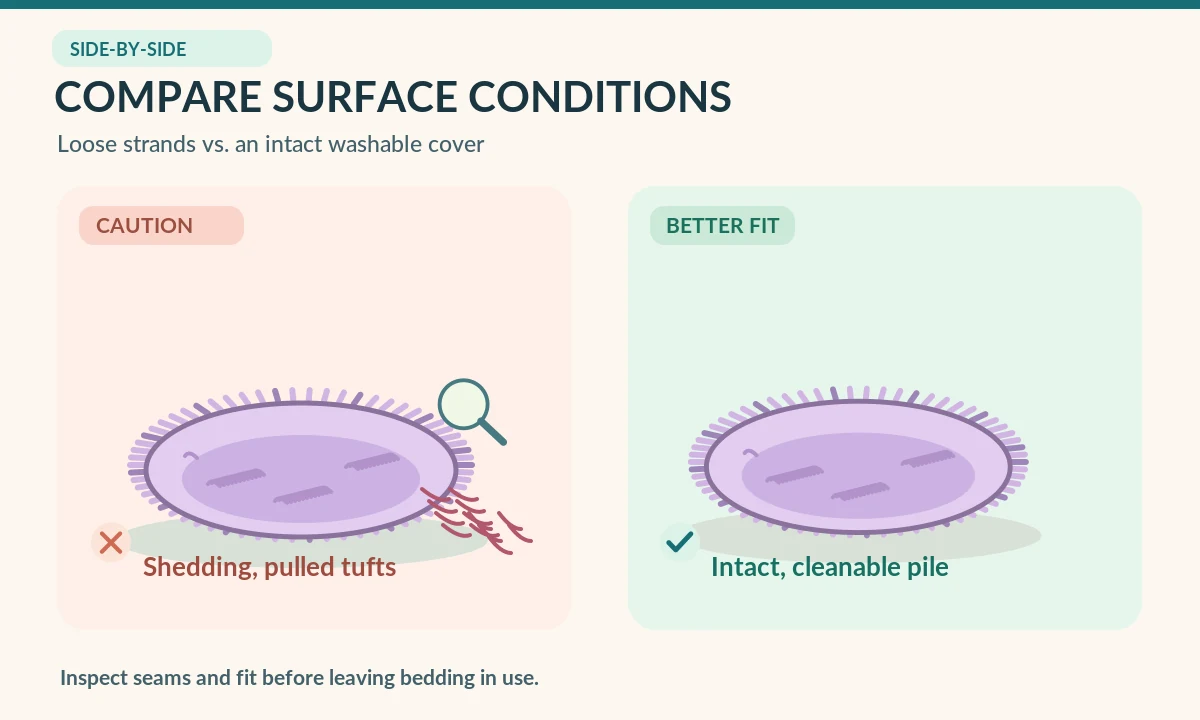
Separate the fibers with your fingers so you can see the backing cloth, stitching, and attachment points. A high, shaggy finish can conceal a lightweight knit base or seams that pull when the dog paws at the cushion. Check whether the fabric sheds loose fibers when gently rubbed. If you see strands releasing in handfuls, that is a poor fit for a dog that mouths or swallows fabric. The surface should feel soft rather than scratchy or sticky, and the manufacturer should list fiber content and care instructions. A decorative throw is not automatically built to withstand daily pet use.
Compare short plush with shaggy faux fur
Short plush makes crumbs and surface damage easier to spot. Longer faux fur creates a deeper nest but can trap more debris. Neither texture is automatically better for every dog. Offer two clean surfaces in a quiet place and observe which one the dog chooses during normal rests. Check whether nails snag as the dog kneads or turns. If your dog pulls strands or repeatedly chews fabric, try a smooth, tightly woven cover. It may be easier to supervise. Texture preference is useful, but maintenance and safety still decide whether the bed should stay.
Assess thickness without mistaking fluff for support
A dramatic fuzzy halo does not tell you how thick the supportive cushion is underneath. Press the center and edges to identify the actual padding, and check the shape after your dog has lain down for a while. A shallow cushion can look bulky in a product photograph because the pile stands upright. Watch for the dog slipping into the seam between cushion and raised rim. If your dog seems stiff, reluctant to step up, or uncomfortable getting out, discuss bedding and mobility with a veterinarian instead of relying on a comfort claim printed on a label.
Build a cleaning routine that reaches the base
Shake or gently remove loose fur outdoors where safe, then inspect the pile for trapped debris. Follow the care tag for washing; some long-pile materials require a gentle cycle, a mesh bag, or air drying. The CDC recommends weekly cleaning of pet beds and blankets. Clean sooner when you find soil or dampness. Make sure water can drain from the backing and that the thick central cushion is completely dry before reuse. Never add strong fragrance or cleaning products just to mask odor; wash and dry the fabric as instructed instead.
Prevent tangles, flattening, and damp spots
Check high-contact zones around the head and hips for fibers that have become compressed into mats. Gently separate clumps only if the maker permits it. Avoid cutting near the fabric backing because the pile can conceal stitches. If a mat will not release, do not yank it; consider replacement or a new cover. Be especially attentive after bathing, rainy walks, or accidents. Moisture trapped in a dense pile can remain out of sight while the top feels dry. A washable layer may protect the bed. Secure it safely and remove it if the dog chews it.
Inspect chewing hazards and exposed threads
A dog may grab a dangling tuft like a toy, especially if it lifts easily away from the cover. Inspect not only the center but the underside, zipper edge, and narrow piping. If you find detached strings, clumps of fibers, or accessible stuffing, remove the bed for repair or replacement before another unsupervised rest. Redirect chewing toward suitable dog toys and supervise new bedding until you understand the dog’s habits. Do not treat plush material as edible or assume a bed can safely tolerate a persistent fabric chewer; swallowed textile fragments can be dangerous.
Choose placement for temperature and traction
A thick shag surface may feel warm in a cool room, but it can also feel uncomfortably hot during warm weather. Give your dog easy access to a cooler floor spot rather than expecting one bed to suit every season. Put the bed where the surface beneath it stays dry and the base does not slide when the dog turns. In a busy home, keep long pile away from food preparation areas and high-traffic doorways where crumbs and dirt gather quickly. Bedding should be an optional quiet retreat, not a barrier that crowds the dog’s escape route.

Use a simple keep-or-replace check
Each week, look for loose tufts, bald patches, snarled fibers, and odor. Check that the cushion still dries and holds its shape. Look beneath the bed too; a dirty underside can undo careful surface washing. Keep it only if the dog lies comfortably and the cover remains intact and cleanable. If the backing is splitting or the fabric continues shedding material, replace the damaged piece. A smooth washable cover may be less dramatic in photographs but can offer a more dependable everyday routine for a dog that loves to dig into bedding.
How We Research
Our research draws on veterinary, animal welfare, and public-health advice about cleaning, chewing, comfortable access, and home setup. The checklist covers textile backing, fiber loss, laundering instructions, complete drying, and observed behavior. No laboratory product tests inform these guides. These articles do not rank or endorse products. Learn more about HubPet.
Sources
American Kennel Club — How to Clean a Dog Bed — Evidence about pet care, household safety, or bedding maintenance.
CDC — Cleaning and Disinfecting Pet Supplies — Evidence about pet care, household safety, or bedding maintenance.
ASPCA — Destructive Chewing — Evidence about pet care, household safety, or bedding maintenance.
No. Pile height is a surface texture, not a measurement of support. Watch how your dog lies down, rests, and gets up from the underlying cushion.
The CDC gives weekly cleaning of pet bedding as a general routine. Clean sooner when muddy, wet, or soiled, and follow the fabric manufacturer’s instructions.
Take the bed away while you assess the damage and offer safe alternatives. Loose strands or exposed stuffing are a concern, especially if a dog swallows fabric.
Only use methods the care label allows, and do not tug hard near stitching. When the pile mats badly or the backing tears, replace the cover.
No particular fabric guarantees calmer behavior. A quiet resting spot, predictable routines, and the dog’s own observed preference matter more than such claims.