
Wheat cat litter is one of several grain-based alternatives to mineral litter. A familiar pantry crop does not mean the litter should be handled or stored like food. The practical questions are whether the grains stay dry before use, whether damp clumps lift cleanly, and whether your cat likes the substrate. Use an ordinary scoop, a controlled trial, and consistent cleaning to judge a product. Read our veterinary information disclaimer before interpreting changes in toileting as a product issue.
Distinguish litter grains from food ingredients
Read the complete label for wheat components and any added fragrances or plant blends. Manufacturers process the granular material for toileting use; never treat it as edible. Keep open bags away from pet food and family groceries. If your cat repeatedly eats litter, contact your veterinarian instead of treating that behavior as an acceptable reaction to a grain ingredient. Avoid projecting human food-allergy rules onto cats without clinical advice.
Check the actual wet clump
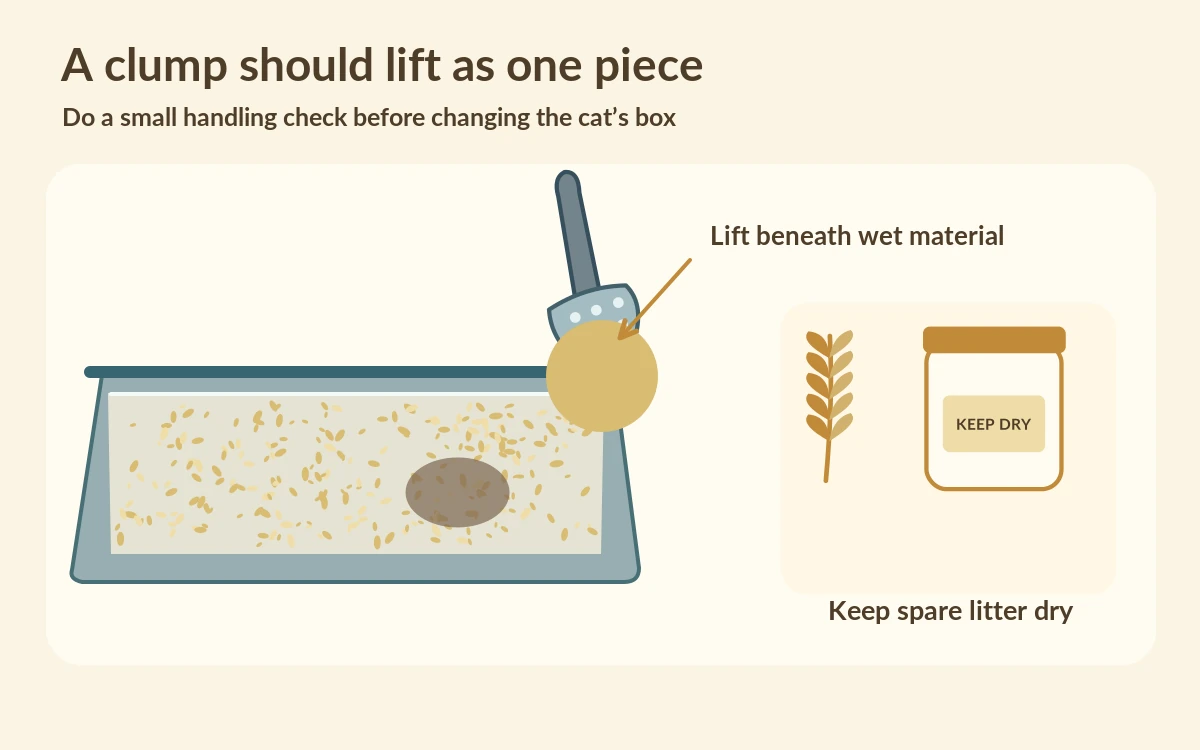
Some wheat-based products claim clumping. Yet the damp material may change shape and firmness over time. Make a small test puddle in a spare container and allow the package-recommended waiting time. Insert the scoop from beneath the clump and raise it slowly. If a wet trail remains on the bottom, clean it rather than hiding it beneath dry litter. Do not pour liquids into the cat’s occupied box for an experiment.
Plan daily scooping with a stable depth
The litter should allow comfortable digging without an excessively deep bed. A commonly suggested starting range for litter is about 1–2 inches (2.5–5 cm), adjusted to the individual cat and product guidance. Scoop solids and damp areas daily. Top up only after removing waste, and check the tray bottom for sticky spots. A large uncovered box gives the cat room to turn and lets you see the entire surface.
Watch for storage pests and dampness
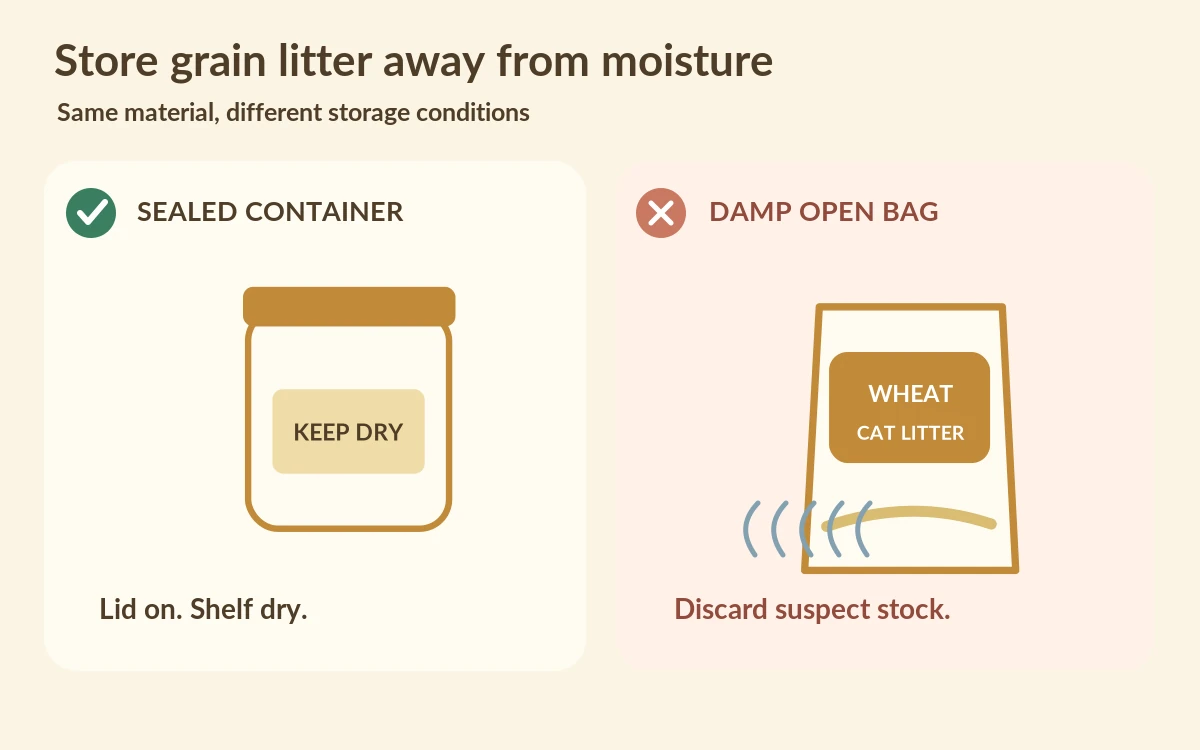
Any opened grain-based product deserves a dry, tidy storage area. Close the bag, keep it off wet floors, and inspect nearby shelving for moisture or insect activity. Do not spray pesticides into litter or mix insect repellent into the box. If a stored batch smells unusual or shows contamination, discard it according to the label. A secure container also helps keep curious pets from chewing through the packaging.
Compare odor claims with maintenance
An absorbent ingredient can help collect moisture, but it does not cancel the need to remove waste. Strong perfumes can discourage cats from using a litter box. Instead, prioritize a predictable scoop routine, regular tray washing with mild unscented soap, and good room ventilation. Keep the box away from air fresheners, furnace vents, and startling appliances. If odor remains severe despite cleaning, inspect whether old damp granules remain trapped in corners.
Give your cat a meaningful texture choice
Set up the wheat litter in a second box with similar dimensions to the familiar one. Keep both options clean and accessible. Try not to change box location, cover, and substrate at the same time because you will not know which factor caused avoidance. Observe whether your cat digs, buries, and exits comfortably. A preference for the older surface is useful information, not a training failure.
Look at paw debris and cleanup burden
Granules can move from the tray to a hallway on paws. Check the mat after several normal visits and look for stuck wet particles, which need different cleanup from dry dust. Use a washable soft-textured mat with enough room for stepping out. Avoid rough surfaces that may feel unpleasant to the cat. A product that clumps well but coats the floor may not be the practical choice for a high-traffic doorway.

Set a clear stopping point
Return to the accepted litter when the cat repeatedly avoids the trial box. Check access, cleanliness, and whether another pet blocks the route. Never punish accidents or hold the cat in the tray. Sudden urinary changes, straining, repeated trips, or visible distress need veterinary attention. Litter selection is about a safe routine and cat preference; it is not an alternative to diagnosing a health concern.
A practical buying and routine checklist
Before buying a large supply, record the exact ingredient list, whether the formula clumps, and its recommended depth. Check the weight of the bag you will carry and the storage space you have. Keep a washable mat and a scoop that matches the grain size. Most important, preserve your cat’s access to a familiar clean box during trials. Revisit the decision after a week of ordinary use instead of relying on a single enthusiastic visit.
What to record during a trial
When you buy a large resealable sack, check the closure after several uses rather than assuming it still seals correctly. Fine grains can lodge in the zipper track and keep it partly open. Wipe the rim with a dry cloth, press the seal fully together, and place the bag inside a secondary clean container when necessary. Keep the trial stock small at first. A giant bag is not economical if your cat rejects the texture and you cannot return the unused portion.
How We Research
We reviewed cat litter guidance from the Ohio State Indoor Pet Initiative, ASPCA, Cats Protection, and RSPCA. Those sources support clean, accessible boxes, individual substrate preferences, and cautious litter changes. Product-specific grain behavior should be checked against the actual manufacturer label. Our illustrations explain practical checks rather than laboratory testing or brand endorsements. Read more about our approach on the About HubPet page.
Sources
Ohio State Indoor Pet Initiative: Litter Boxes — reference for cat litter preference, box hygiene, and safe comparison of substrates.
ASPCA: Litter Box Problems — reference for cat litter preference, box hygiene, and safe comparison of substrates.
Cats Protection: How to Choose Cat Litter — reference for cat litter preference, box hygiene, and safe comparison of substrates.
Some formulas clump, but they may feel and lift differently. Test the specific product after following its recommended waiting period.
Keep litter separate from food in a dry, closed package. This helps prevent confusion, spills, and storage contamination.
Inspect storage conditions, isolate the product, and follow manufacturer disposal guidance. Never apply pesticide to litter.
Do not infer flushability from the grain ingredient. Follow local plumbing and wastewater rules and place cat waste in household trash.
No. Offer a second clean box first and let your cat show a preference. Keep the previously accepted option available.