
A flattened dog bed does not always need to go in the trash. If its cover remains intact and the manufacturer supports replacement parts, a compatible foam insert may restore a usable sleeping surface. The difficult part is fit: a rectangle that appears close in size can buckle, leave loose corners, or pull painfully against the zipper. The insert also has a different care requirement from the fabric around it. Before replacing anything, inspect the existing cover, measure its internal cavity, and identify the previous fill type. This guide focuses on practical fit and hygiene, not promises that a new foam core will treat pain or joint disease. For medical concerns affecting resting comfort, review our veterinary disclaimer and speak with your veterinarian.
Decide whether the cover is worth keeping
Unzip the cover and examine it under good light. Check seam threads, hidden zipper teeth, fabric thinning, retained odors, and any damp patches. A cover that tears along a corner may not safely contain a new insert. If your dog chews exposed foam, a replacement core can create a fresh swallowing hazard. Keep the old cover only when it closes securely and the material remains suitable for normal use. Look for a manufacturer’s model number or replacement guide before treating the inner cushion as a generic rectangle. Original components can use curved or tapered corners.
Measure the empty cavity and the old foam
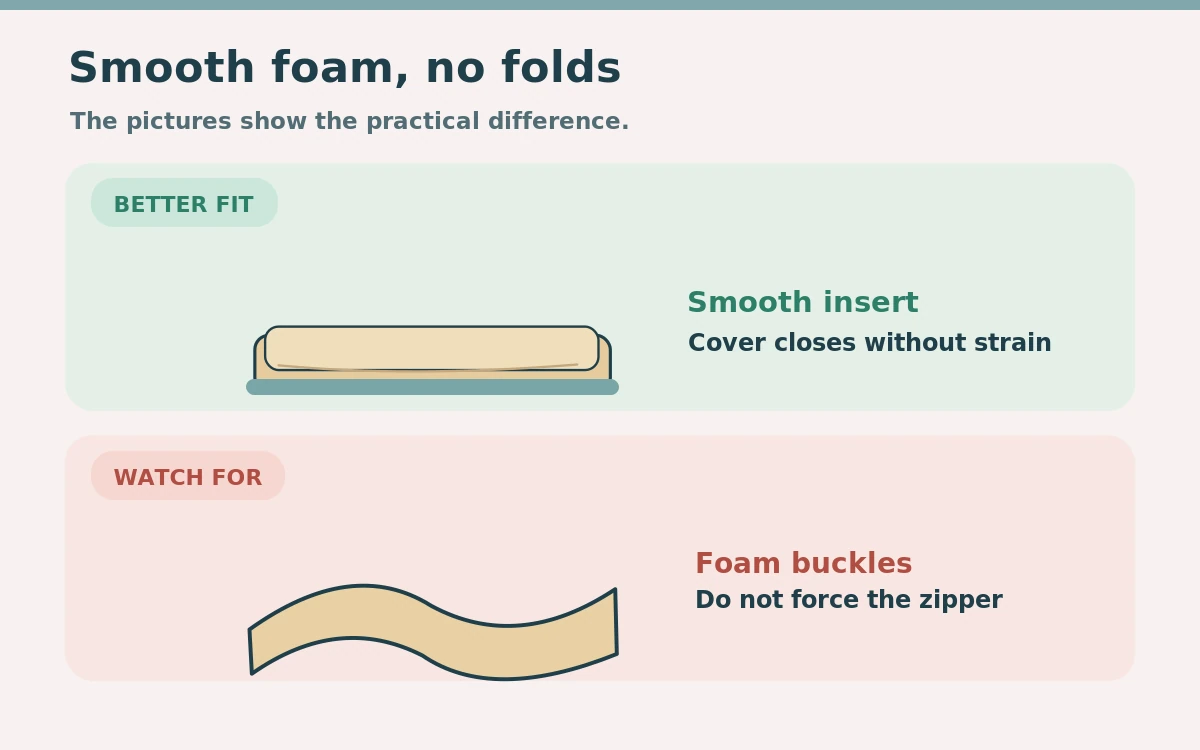
Measure the cover on a flat surface without stretching it tightly. Record interior length, width, corner shape, and the depth the cover can comfortably hold. Measure the old insert separately, noting any sections that have permanently compressed. A worn slab may no longer represent the original thickness, so check the maker’s published dimensions if possible. Avoid forcing a thicker slab into a shallow cover. The goal is a smooth top surface with no upward bowing or tight zipper tension. A custom insert should match the actual internal shape rather than the advertised exterior bed footprint.

Understand the difference between foam and fiberfill
Solid foam inserts hold one continuous shape; shredded foam and fiberfill shift within their compartments. A cover designed for a loose-filled pillow may not support a slab without extra wrinkles, while a slab cover may bulge if you pack it with loose pieces. Do not make unsupported medical claims about density or memory foam. What matters for daily use is that your dog can rest, turn, and rise comfortably without the mattress collapsing to the floor. If pressure sensitivity, pain, or mobility issues drive the purchase, ask a veterinarian about the dog’s individual needs.
Protect the zipper and conceal loose edges
Position a new insert so its corners align before zipping. The cover should close smoothly without trapping foam in the teeth. Inspect the zipper pull and any internal fabric flap so your dog cannot easily reach hard hardware. Do not leave exposed cut foam, stuffing strings, or loose plastic coverings around the bed. A dog may investigate the new smell or texture by chewing. Use a manufacturer-compatible protective liner only when it does not create an unventilated moisture trap. Remove any damaged cover rather than relying on adhesive tape around a hole.
Check the finished surface under normal use
Place the finished bed on a stable floor, then let your dog approach voluntarily. Watch the mattress compress as the dog settles. Deep creases, raised edges, or a corner that flips upward can signal a badly fitted insert. A foam slab that remains visibly folded may place uneven pressure under the dog and make turning awkward. Compare the dog’s position to the former arrangement without forcing a preferred pose. Keep the original bed available briefly during the change if it is still safe. Stop use if the dog seems uncomfortable or starts accessing the foam.
Follow separate cleaning rules for each layer
A washable cover does not mean the foam insert can enter a washer or dryer. Follow both components’ instructions rather than inventing a universal routine. The CDC recommends cleaning soft pet supplies and following the product care label. Vacuum loose hair from the cover when practical, launder approved fabric, and let it dry fully. Keep the foam clean with only manufacturer-permitted methods and ensure it is completely dry before covering it. If an old insert holds persistent urine odor or moisture deep inside, replacement may be safer than repeatedly soaking it.
Avoid trapping moisture inside the mattress
Water-resistant liners sometimes protect foam against spills, but seams and closure openings can leak. Putting damp foam into an impermeable casing can trap water and odors instead of solving them. After cleaning, examine the lowest corners and underside before reassembly. Store extra inserts in a clean, dry area away from chewing animals and heat sources. Never apply perfumes, essential oils, or unapproved disinfectants to mask a smell. If the dog has recurrent accidents, treat the bedding problem and the animal’s care needs separately. A replacement insert should not serve as a substitute for veterinary evaluation.
Compare replacement cost against a new bed
Consider the cost of the core, any protective sleeve, shipping, and a future spare cover. A custom foam insert may cost more than a simple complete bed, especially with unusual dimensions. On the other hand, a durable washable cover may justify a new inner cushion. Ask the original manufacturer whether it offers a matched insert or dimensions for compatible replacements. Check the return policy before trimming foam, because cutting often changes eligibility. Avoid making a purchase based only on the word ‘orthopedic’; look at the construction and cleaning practicalities first.

Build an inspection habit after replacement
At every cover wash, inspect the foam for moisture, cracks, unusual odor, and permanent low spots. Look along the zipper guard for threads or teeth that can catch a claw. Turn the bed only where the manufacturer permits and keep it off wet surfaces during drying. Document the insert size and date installed for future shopping. If the bed soon loses its shape, consider whether the cover is too tight or the material simply cannot support that dog’s usage. Remove and replace any component that your dog begins chewing or swallowing.
How We Research
HubPet compared published veterinary and animal-welfare guidance with the practical construction and care questions in this guide. We checked dimensions, exits, cover fit, materials, and everyday cleaning limits; we did not run laboratory testing or claim a product endorsement. Specific features vary by manufacturer and model. Read our editorial approach, follow the product instructions, and consult a veterinarian when pain, mobility difficulties, or other health concerns affect your dog’s rest.
Sources
CDC — Cleaning and Disinfecting Pet Supplies — https://www.cdc.gov/healthy-pets/about/cleaning-and-disinfecting-pet-supplies.html (reviewed October 2026).
American Kennel Club — Sleepy Time: Choosing a Dog Bed — https://www.akc.org/expert-advice/home-living/sleepy-time-choosing-dog-bed/ (reviewed October 2026).
ASPCA — General Dog Care — https://www.aspca.org/pet-care/dog-care/general-dog-care (reviewed October 2026).
Safety note: This article provides general pet-care and buying guidance, not an individual veterinary assessment. Stop using damaged bedding or any component a dog is chewing. Seek veterinary guidance for pain, burns, suspected ingestion, or changes in ability to rest or rise.
No. The insert must match the cover cavity, thickness, corners, and closure. Incorrect sizing can create folds, buckling, and exposed foam.
Only when the specific foam manufacturer expressly permits it. Many foam cores require different care and must remain completely dry before reassembly.
Measure the cover’s interior length, width, corner shape, and usable depth, then compare with the maker’s original core specifications.
No. Material claims do not diagnose or treat pain. Ask your veterinarian if you are replacing bedding because your dog struggles to rise or seems uncomfortable.
Remove access immediately. Loose foam can be swallowed. Contact your veterinarian promptly if you suspect ingestion or if the dog has concerning signs.