
A filterless cat water fountain can eliminate replacement cartridge purchases, but it does not eliminate hair, food particles, residue or routine washing. The pump simply moves water through a reservoir and outlet without passing it through a removable filter cartridge. That difference affects maintenance and how floating debris accumulates. Before choosing a filterless model, separate what a filter is supposed to catch from what cleaning must remove. Safe drinking access depends on fresh water, a clean basin and a cat willing to use the setup—not on whether the product has one more accessory. For veterinary questions, read our veterinary disclaimer.
Understand the water route and missing cartridge
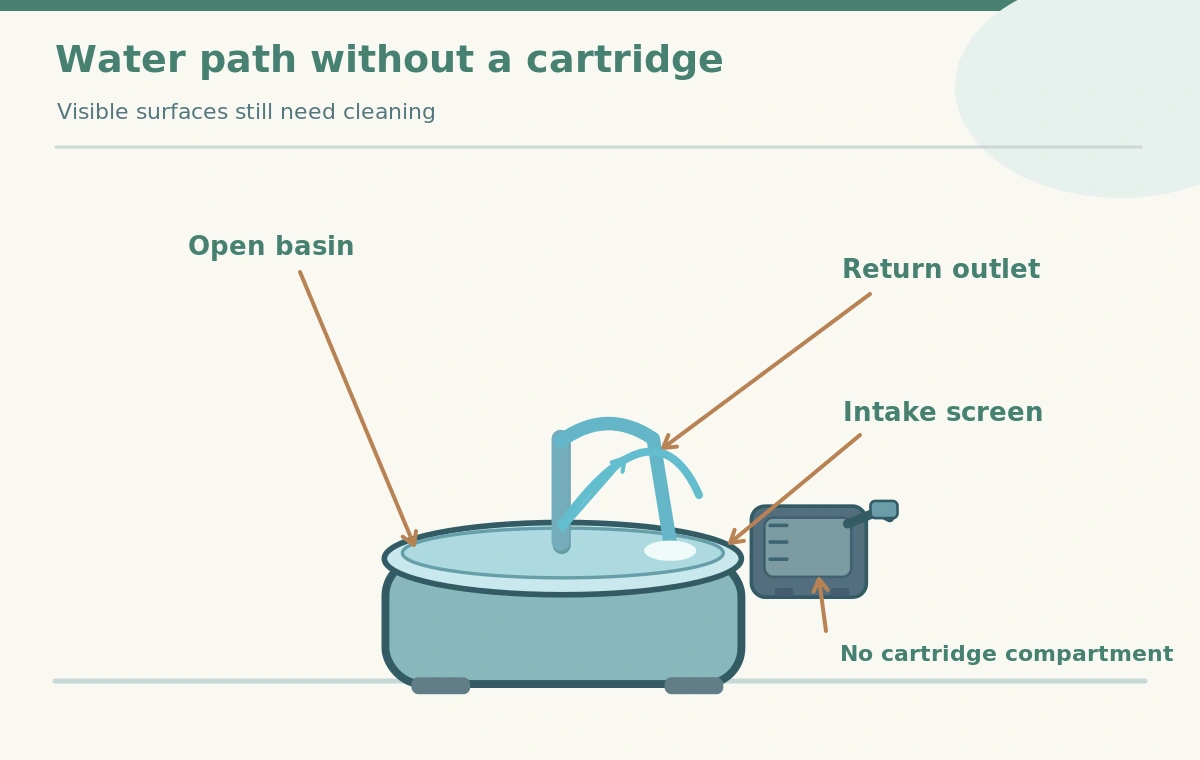
In a simple filterless design, water enters the pump through an intake screen, travels along a short outlet and returns to an open basin. The intake screen may stop larger hair clumps but is not the same as a replaceable carbon or foam filter. Check whether the product is genuinely cartridge-free or simply uses a concealed reusable prefilter that needs cleaning. Illustrations on a retail box can obscure an intake channel below the waterline. Ask for the exploded parts diagram and check that the water-contact surfaces are accessible. A complex filterless product may still be harder to wash than a straightforward filtered one.
Separate visible debris from dissolved residues
Hair and crumbs can float on the surface, settle in a corner or become trapped against the inlet guard. A filter may help intercept some particles, depending on its construction, but it cannot replace washing slimy surfaces or removing stagnant water. A filterless basin lets you inspect debris immediately if the water is clear and the top is open. The tradeoff is that you may need to scoop or empty the basin more often. In a shedding household, keep a clean small scoop by the wash station so that trapped fur does not get pushed around the circulating water. Rinse that scoop after use and store it dry. These are hygiene habits, not a replacement for cleaning the whole fountain. Never promise that a flowing fountain sanitizes its own water. Water moving past an unwashed surface does not make the surface clean.
Check whether the bowl is truly easy to wash
Look for a basin without narrow blind channels, a removable spout that lifts free and an opening wide enough for a soft sponge. The CDC recommends daily washing of pet water bowls, and fountains should not be treated as an exemption. Follow the fountain maker’s cleaning instructions for the pump and other assembled parts. If you must thread a cloth through several curved tunnels to reach old water, routine upkeep may become frustrating. Dishwasher safe applies only to parts explicitly approved for it; do not put a powered pump or adapter in a dishwasher. Dry electrical connections before reassembly.
Compare filtered and filterless designs fairly
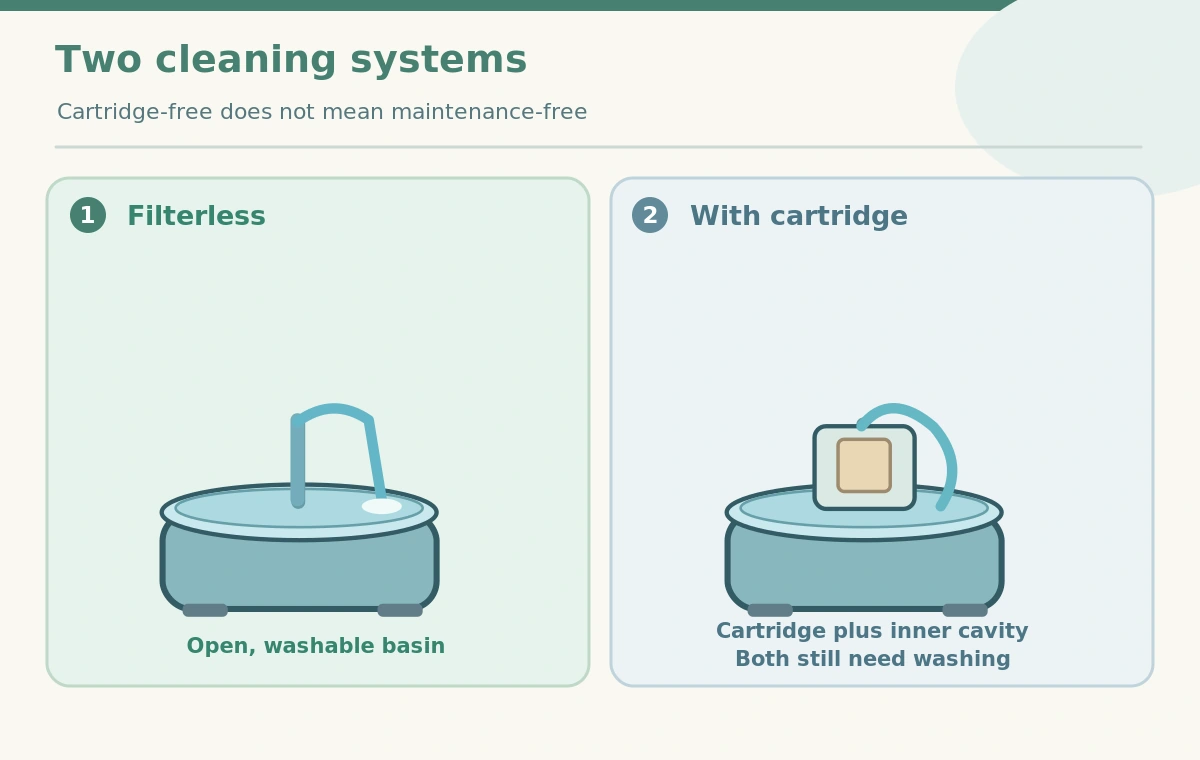
A filtered fountain may capture certain particles or odors, but owners must buy compatible cartridges, replace them as directed and still wash the basin and pump. A filterless model removes that recurring component, though it can leave visible debris in circulation until manually removed. Neither type guarantees improved hydration. Cornell notes that some cats drink more from fountains while others prefer bowls. Compare accessible surfaces, the number of hidden cavities, actual replacement part costs and the time you can realistically spend on cleaning. The best choice is the clean setup your household can maintain consistently.
Keep the inlet free and the outlet steady
Even without a disposable cartridge, the intake screen, impeller and hose can collect fur. Unplug the unit and inspect the screen during cleaning, following the model’s service diagram. Keep water above the minimum line before reconnecting power. If the stream weakens, do not run the pump dry to diagnose it. A long outlet tube that traps slime may need a dedicated brush or the manufacturer’s replacement part. Use only safe cleaning products approved for that unit, rinse thoroughly and reassemble every gasket correctly. Make a note of the pump part number so an eventual replacement does not require a whole new fountain.
Manage taste, smell and bowl preferences
A cat may reject a perfectly maintained fountain because of its sound, material, stream height or location. VCA recommends trying different water sources and keeping bowls clean. If a filterless fountain develops an odor or film, empty and wash it rather than disguising the smell with an additive. Choose fresh potable water appropriate for your home and follow veterinary advice if your pet has special needs. Put the fountain away from litter dust and high-traffic paths. Avoid relying on one shared resource when an assertive pet could block access. Plain clean water bowls remain useful alongside every style of fountain.
Plan a simple daily and deeper-clean schedule
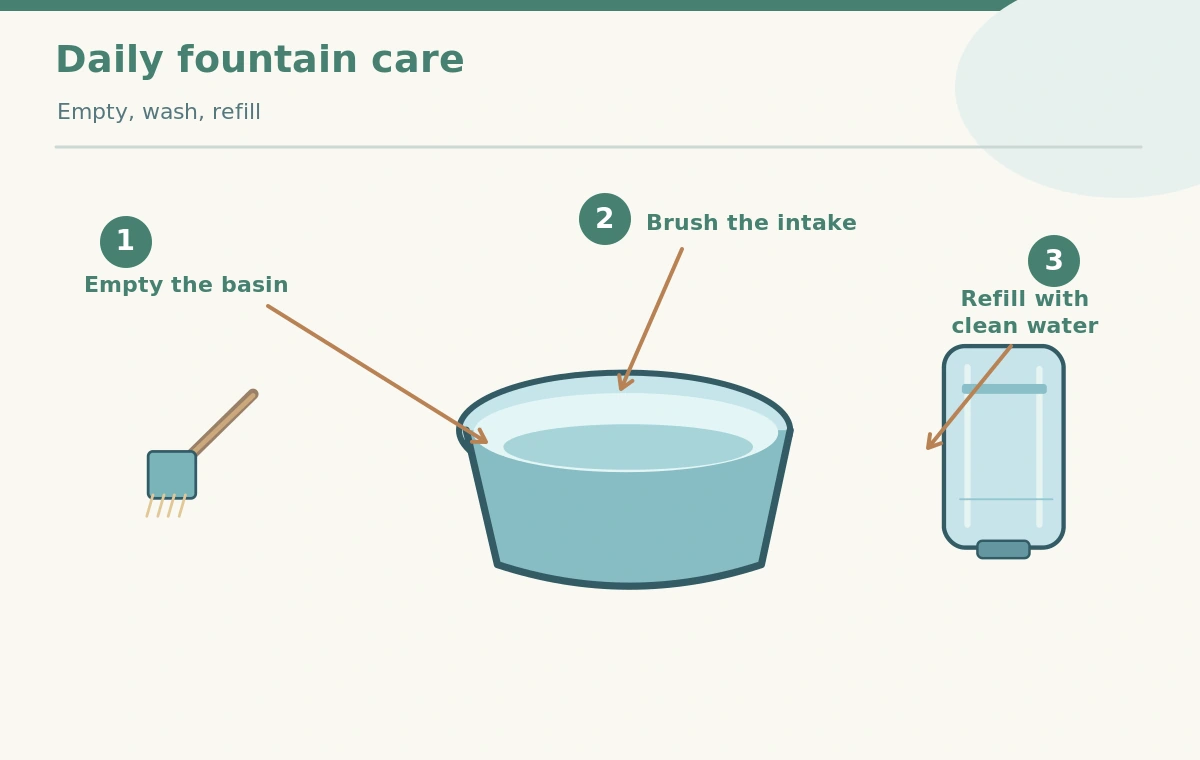
Each day, discard stale water as needed, wash accessible drinking surfaces and refill with clean water. At the maker’s interval, unplug and disassemble the waterway, brush channels, check seals and clean the removable pump pieces. Hard water, shedding and multiple pets may require more frequent maintenance than a lightly used fountain. Use a written date or calendar reminder instead of waiting for a visible film. Inspect for cracks, rough seams and worn gaskets while everything is apart. Replace damaged components with model-compatible parts; do not seal cracks with household adhesive that might contact drinking water.
Know when a fountain is the wrong choice
A filterless device with narrow inaccessible channels may not suit a home where daily maintenance is difficult. A fountain with an unreliable pump, chewing-accessible cord or unstable base is also a poor fit. If your cat is frightened by recirculating water, keep a normal bowl and offer different safe water locations instead. Notice changes in drinking, appetite or urination and consult a veterinarian rather than assuming a new fountain solves a medical problem. The decision is about accessible clean water and manageable upkeep, not a blanket claim that having no filter is healthier or less healthy.
How We Research
We reviewed veterinary hydration guidance, public-health cleaning recommendations and manufacturer instructions for relevant water equipment. Product diagrams illustrate features readers can inspect, not a tested brand or a certification. We did not independently measure pump output, material safety or drinking behavior. We checked these sources on October 28, 2026.
Sources
Centers for Disease Control and Prevention, Cleaning and Disinfecting Pet Supplies. Read source.
U.S. Food and Drug Administration, Proper Storage of Pet Food and Treats. Read source.
Cornell Feline Health Center, Hydration. Read source.
VCA Animal Hospitals, Tips to Encourage Cats to Drink More Water. Read source.
Safety note: This is general pet equipment and hygiene information, not a veterinary diagnosis. Seek veterinary advice for a sudden change in thirst, appetite, urination, or suspected dehydration. Recognize urgent pet warning signs.
No. Without a cartridge, manual water changes, bowl washing and pump cleaning remain essential.
You may avoid cartridge purchases, but consider maintenance time, pump replacements and the useful life of the bowl and seals.
Usually it is a coarse intake guard, not a substitute for a cartridge designed to capture smaller debris.
Only the specific non-electrical parts the manufacturer labels dishwasher-safe. Always remove the motor and adapter.
Yes. A separate clean bowl gives the cat a choice and keeps drinking water available during maintenance or outages.