
The best place for a dog crate is rarely the most remote corner of the house. Dogs generally benefit from family contact, predictable routines and an undisturbed resting place. A room can be quiet at noon and noisy near the washer at night; a sunny window can become hot in the afternoon. This room-by-room guide helps you choose a practical location for a home crate based on normal airflow, door clearance, movement through the home and what your dog actually finds comfortable.
Balance household contact with quiet rest
VCA suggests a room where the family spends time, such as a den or kitchen, or a bedroom for night rest. That does not mean the crate belongs directly in a busy hallway. Aim for a corner where your dog can hear ordinary household sounds without being bumped by every passing person. Keep the front opening visible and easy to reach. A crate hidden in an isolated basement may be physically quiet but socially stressful for some dogs. Observe whether the dog voluntarily returns to the selected spot before treating the location as permanent.
Map the door and human walking route
Before placing the crate, open its door fully and walk around it as if carrying a food bowl or cleaning tools. A door that sticks out into a passage is a trip hazard, and a door forced against a wall may not latch properly. Leave a comfortable service path so you can reach the tray, water and resting area. A small corner can be too narrow once the door swings. If you have toddlers or other animals, arrange for a separate quiet boundary around the resting crate rather than depending on an open door to keep others away.

Test sunlight and heating changes
Check the location in the morning, afternoon and evening. Direct sun on a crate or blanket can make its interior uncomfortable. Avoid radiators, space heaters, fireplaces and hot appliances. Keep a reasonable distance from air-conditioning vents that blast directly onto the resting dog. Do not drape heavy fabric over ventilation to hide the effect of a badly chosen site. A thermometer can help you notice room changes, but the dog’s panting, moving away and willingness to rest remain important. If the site is predictably hot, move the crate rather than hoping a cooling product solves everything.
Check household noise beyond the obvious
A laundry room may seem sheltered until the spin cycle shakes the floor. Meal preparation can turn a kitchen noisy. A television may flash beside the crate late into the night. Try standing or sitting at dog height and listen during typical busy periods. Look for dropping utensils, slamming doors, vacuum routes and speakers pointing toward the enclosure. You may find that a bedroom corner or secondary sitting area provides better rest. Quiet should not mean darkness all day, and avoiding noise should not mean depriving the dog of familiar family interaction.
Compare a connected nook with a risky corner
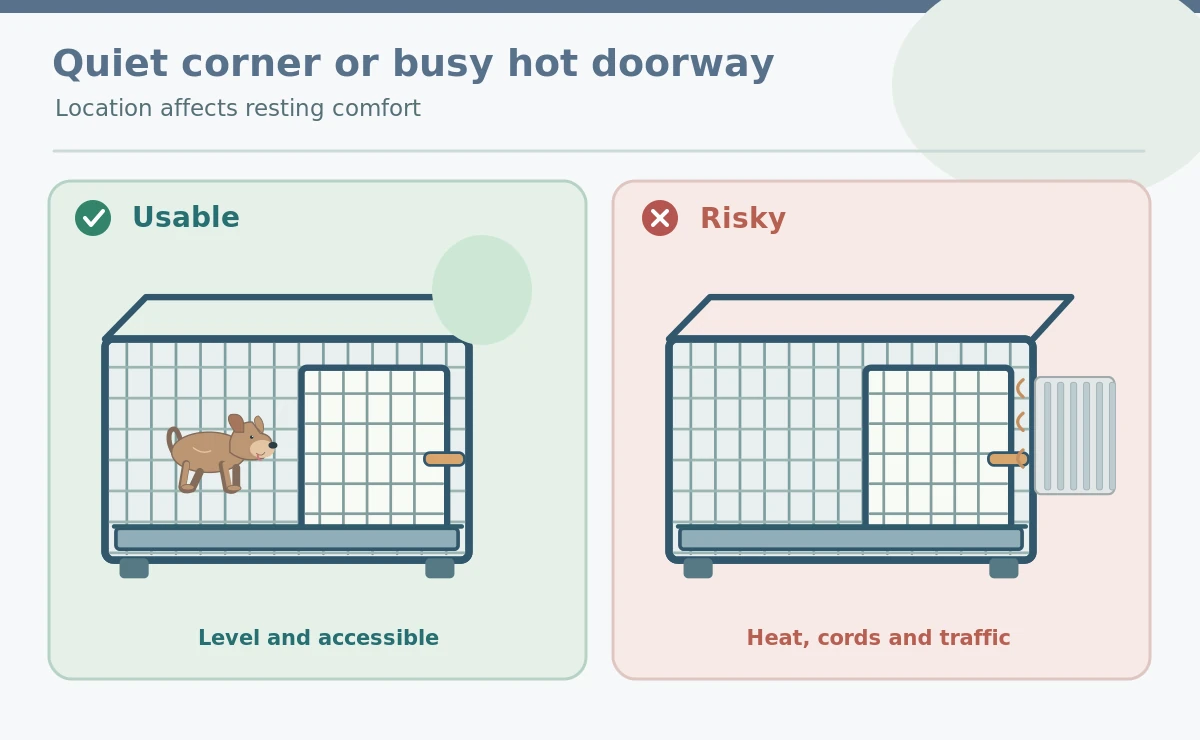
A suitable scene has a level crate near family seating with clear airflow, a fully opening door and enough room for the dog to settle. A risky scene places the crate beside a radiator, under hanging power cords, beside a busy doorway or in direct strong sunlight. The dog may sleep in either place at first, but the environmental hazards are different. Check actual home conditions instead of copying an attractive photo. One carefully placed crate can work better than elaborate decorative furniture that blocks ventilation or creates difficult access.
Plan for other pets and children
Dogs need a resting zone that people and pets respect. Explain to children that a crate is not a game, punishment space or hiding place for grabbing the dog. If another dog or cat repeatedly approaches the bars, use a safe barrier or move the crate to create breathing room. Do not put the crate where another pet can block the only exit. A dog that feels cornered may avoid resting even if the bedding is comfortable. Choose a location where you can supervise introductions and where family members can pass without leaning into the opening.
Consider day and night as different needs
A daytime crate near a family room may work well for short rests, while a second crate in a bedroom can help maintain nighttime contact. You do not have to move a heavy crate repeatedly if that disturbs the dog. VCA describes having one main living-area space and a second bedroom rest option. Choose the approach your dog tolerates comfortably and that you can maintain. For puppies, remember that nighttime toileting needs may require convenient access to a safe exit route. Keep the route clear and avoid stepping over gates in the dark.
Introduce the location without forcing confinement
Set up the empty crate, leave its door secured open and invite voluntary exploration with rewards. Watch whether the dog lies down or repeatedly leaves to follow you. If the selected corner feels too exposed, adjust the angle or provide an alternative resting mat nearby. If the dog shows panic, prolonged vocalization, drooling or escape attempts, do not use longer confinement as a test of endurance. Revisit your training plan and consult a veterinarian or qualified behavior professional. Location adjustments help with comfort but cannot resolve every underlying separation or noise concern.

Recheck the spot after rearranging furniture
A new sofa, desk lamp or floor fan can change airflow and door access. Repeat the clearance check after changes and especially during hot or cold seasons. Keep cleaning supplies, cords and hanging blind strings out of reach. Verify that the crate remains level and that your dog still stands, turns and lies down comfortably. Assess the place from the dog’s perspective, not merely from the room’s appearance. A good location gives the dog predictable quiet, reasonable family contact and an easy route for a person to help quickly when needed.
How We Research
We reviewed current veterinary behavior guidance and compared the visible features of equipment that owners can check at home. Manufacturer documentation informs compatibility and assembly notes, but we did not conduct independent product strength testing. We reviewed these sources on October 28, 2026. Read about HubPet editorial standards.
Sources
VCA Animal Hospitals, Crate Training and Confinement for Puppies and Dogs. Read source.
VCA Animal Hospitals, Getting Your Puppy Started Off Right. Read source.
VCA Animal Hospitals, How to Crate Train Your Dog. Read source.
Safety note: This article offers general product and home setup guidance, not a veterinary diagnosis. If your dog experiences persistent distress, injures a paw or chews and swallows equipment fragments, contact a veterinarian. See our veterinary disclaimer.
Often, especially for nighttime rest, if airflow, temperature and door clearance are suitable.
Only if noise, heat, isolation and chemical access are controlled; many laundry rooms are poor resting spots.
Avoid direct sun and drafts, and keep blind cords out of reach. Check temperature throughout the day.
A predictable place usually helps; some homes use two stable locations for day and night.
Try a calmer location and positive introductions. Seek help if the dog shows ongoing distress.