
Pairing a puppy crate with an exercise pen can provide a resting nook next to a small activity area. It is not automatically safe to push two pieces of equipment together. An unstable gap at the joint can trap a paw, and a swinging crate door may narrow the pen opening. A useful combo requires compatible gates, a stable floor, visible paths and frequent human interaction. The goal is a supervised home-management layout, not an all-day substitute for walks, play or potty breaks.
Choose the layout before buying connectors
Decide whether the crate will sit completely inside the pen or outside with its doorway opening into the enclosure. An internal crate uses floor area and can give a puppy an edge to climb. An external crate saves exercise space but creates a joint that needs an engineered secure connection. Consult both manufacturers; not every gate panel or wire crate supports attachment. If the products are not designed to join, use two separate zones rather than improvising with rope or loose clips. Make a paper sketch that shows the adult access route, puppy entrance and emergency exit.
Keep the doorway easy to use
Open the crate door and trace its full swing. It should not jam against the pen wall or create a wedge-shaped opening. Provide a clear path from the pen to the crate that does not require hopping over a tall lip or squeezing between bars. Check that the puppy can walk in, turn and lie down without stepping on a loose connector. Some pet owners prefer the crate door open during supervised pen time so the puppy can choose to rest. If you need both doors closed, confirm that each remains independently operable in an emergency.

Make the enclosure stable on the actual floor
A pen that feels sturdy in a carpeted showroom may slide across tile. Test the base on the same surface where you will use it, with a suitable non-slip mat when the manufacturer permits one. Look for panel gaps, pin ends, narrow slots and corners that could catch paws. Do not place loose wire shelving or heavy furniture against a pen where a puppy can climb. A dog that jumps or pushes hard against panels may need a different setup and closer supervision. Stability matters more than a tall-looking barrier in a product photograph.
Separate resting, play and elimination space
Put the crate in the calmest part of the enclosure, away from a water spill zone and busy door swing. If an indoor toileting option is necessary, place it well away from the bed and food area and maintain a consistent outdoor toileting plan when possible. VCA notes that an exercise pen can provide a rest zone and an appropriate elimination area when a puppy cannot yet manage a longer absence. That does not eliminate the need for age-appropriate breaks or company. Keep water available in a stable, easy-to-clean bowl, and remove chewable loose hardware.
Compare an intact connection with a risky gap
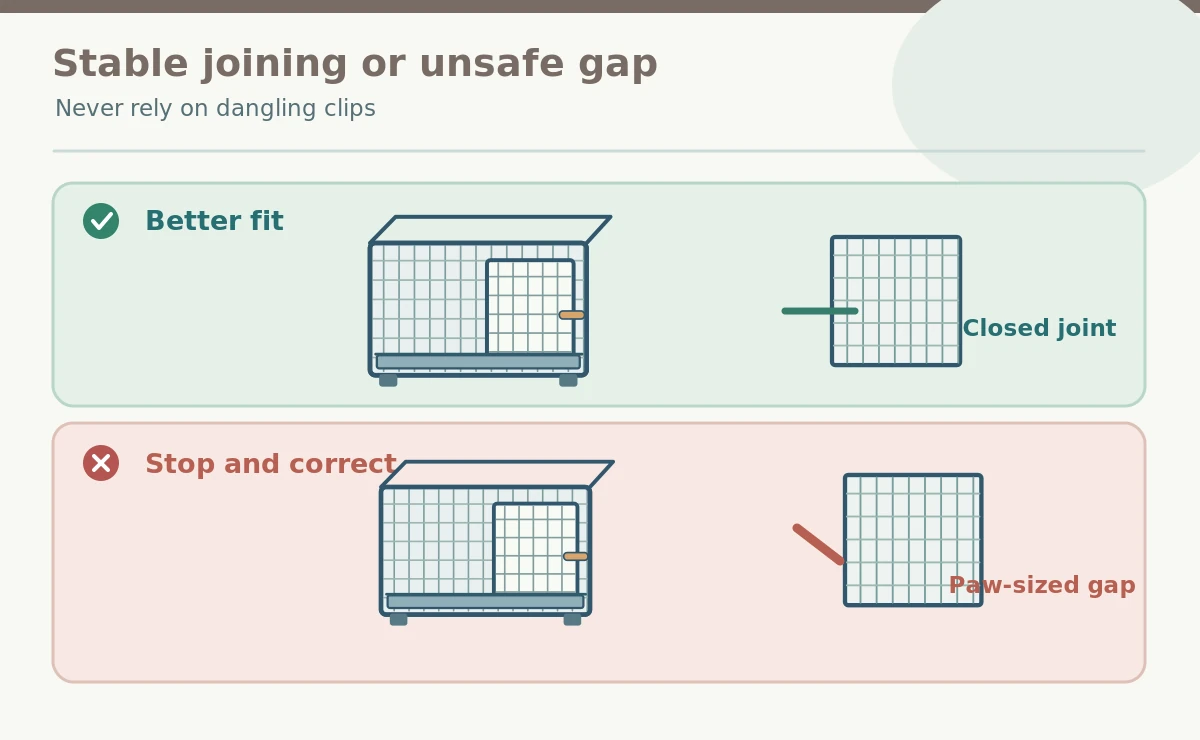
In a suitable setup, the crate opens into an enclosed pen through a purpose-built joining arrangement or remains fully separate; panels meet without a paw-sized wedge. In a risky setup, a crate door holds two pen sections together, loose clips dangle and a gap widens when pushed. A puppy can catch a leg or move the wall. Do not fix this by pulling tighter on improvised string. Return to a manufacturer-supported installation or keep the units separate. The connection has to remain safe even when a person opens a door to refill water.
Introduce the puppy in easy, positive sessions
Let the puppy investigate the area while you sit nearby. Scatter a few treats on the floor, encourage voluntary movement between zones and reward calm pauses. Give the puppy an outing before and after short confinement sessions. If the puppy cries persistently, climbs frantically, drools or attacks the gate, do not expect the layout alone to resolve distress. Shorten the session and seek guidance from your veterinarian or a qualified reward-based trainer for continued distress. A pen offers management, but comfort comes from the dog’s experience, not just the square footage.
Inspect toys and furnishings at the joint
Toys can roll beneath the crate where a puppy may stretch a paw through bars. Keep small chew objects away from gaps and remove cords, dangling tags and unsecured fabric panels. Place a washable mat flat enough that its corners do not curl into the door. Avoid placing crates next to radiators or low outlets. If an attached pen blocks quick access to the crate tray, cleaning becomes difficult and users may skip it. Design the layout so a person can open and clean every zone without dismantling a hazardous connection around the dog.
Use different rules for absence and supervision
A stable pen does not guarantee safe unsupervised confinement for a puppy that climbs, chews fasteners or tests gaps. Observe how your specific puppy behaves and follow the makers’ enclosure guidance. Consider a puppy-proofed room or a secure crate for short, appropriate periods when you cannot supervise, rather than leaving an untested combo unattended. Do not attach the crate and pen with carabiners that the puppy can mouth unless the maker explicitly designed the connection. Remove collars or dangling equipment when entanglement is possible.

Run a repeatable weekly setup audit
Every week, push lightly on panels, check door swings, look for loosened connectors and inspect the floor for sliding or scratched surfaces. Reassess the puppy’s growing height and ability to climb. Make sure fresh water, safe rest and planned elimination breaks remain practical. Remove broken or bent accessories immediately. Photograph the assembled joint to compare with the manufacturer diagram and keep the manuals handy. When the puppy outgrows the layout, resize or separate the zones deliberately rather than stretching panels beyond their intended design.
How We Research
We reviewed current veterinary behavior guidance and compared the visible features of equipment that owners can check at home. Manufacturer documentation informs compatibility and assembly notes, but we did not conduct independent product strength testing. We reviewed these sources on October 28, 2026. Read about HubPet editorial standards.
Sources
VCA Animal Hospitals, Crate Training and Confinement for Puppies and Dogs. Read source.
VCA Animal Hospitals, Housetraining for Puppies and Dogs. Read source.
VCA Animal Hospitals, Getting Your Puppy Started Off Right. Read source.
Safety note: This article offers general product and home setup guidance, not a veterinary diagnosis. If your dog experiences persistent distress, injures a paw or chews and swallows equipment fragments, contact a veterinarian. See our veterinary disclaimer.
No. Use only manufacturer-supported connections or keep the crate and pen as separate secure zones.
Open access may work during supervised time if the whole layout is stable and the door cannot trap a puppy.
No. Puppies still need exercise, company, training and frequent age-appropriate elimination opportunities.
No. Panel strength, door latches, escape behavior and floor grip also matter.
Stop unsupervised use of that setup and select a safer confinement arrangement with professional advice if needed.