
This article gives general home setup and pet-product advice, not medical diagnosis or treatment. If your cat is straining, unable to urinate, in pain, or suddenly avoiding the litter box, seek prompt veterinary care. See our veterinary disclaimer.
Disposable cat litter boxes can be convenient during a move, a short hotel stay, or a supervised transition between living spaces. They are not automatically cleaner, more comfortable, or environmentally friendly than a washable tray. The cat still needs enough room to turn around, dig, and leave without stepping into waste. The person cleaning needs a box that stays firm when someone carries it. Start by judging the actual construction and the cat’s established routine. The word disposable tells you its intended end of use, not how well it performs during use.
Decide whether a temporary tray solves the right problem
A disposable box makes the most sense when a washable box would be awkward to transport or you need a short-term separate setup. It may be less suitable for a large cat that digs vigorously, a multi-cat home with heavy daily use, or a situation where the tray must last indefinitely. Compare the total number of trays you would discard with the cost and cleaning effort of one sturdy reusable box. A lightweight temporary tray should not replace the cat’s familiar toilet abruptly if the cat is already reluctant to use a box. Keep the preferred litter type and familiar location as consistent as the situation permits. The goal is easy access and dependable containment, not fewer cleaning tasks.
Check internal floor size and entry height
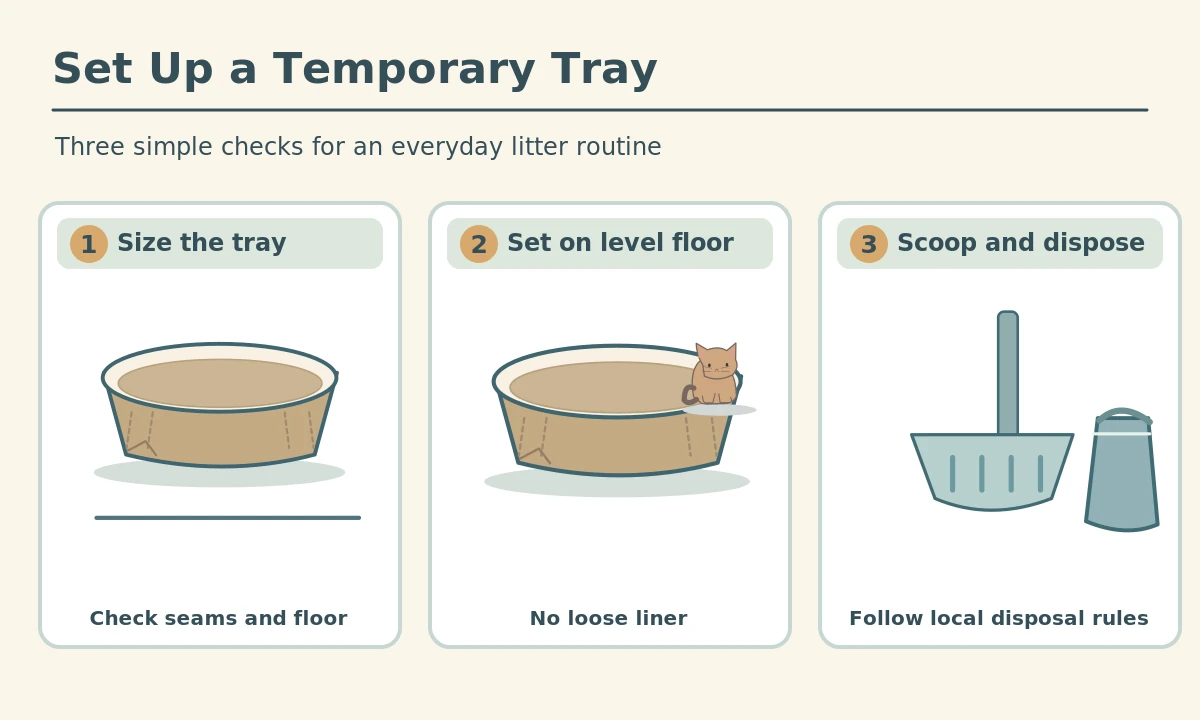
Measure the flat, usable interior—not the outer cardboard lip or molded flange. Your cat needs to step in, turn around, squat, and dig without repeatedly hitting the sides. Cornell’s feline guidance recommends generous box dimensions and low sides for cats that need easier access. A tray marketed for travel may be compact enough for a suitcase but too cramped for the cat who must use it. A low entry can be welcome, yet the remaining walls need enough height to contain normal digging. Test the empty tray on a level surface at home before relying on it away from home. If your cat stands half outside the tray, choose a larger design rather than assuming the behavior will improve.

Inspect the base, folded corners, and moisture barrier
Lift the empty tray at the points you would use when carrying it to the trash. Watch whether the bottom bends, the seams open, or the corners unfold. Molded fiber and coated paper designs may handle moisture differently. Look for an explicit manufacturer description of water resistance and disposal instructions instead of treating an earthy color as proof of compostability. Do not add a loose plastic sheet where claws can snag it. Battersea notes that some cats dislike liners, and a disposable box still needs a comfortable paw-contact surface. If any leakage occurs, put a safe rigid washable tray underneath as a catch surface, or switch to a sturdier box.
Choose a quiet spot and prepare the floor
Place a new temporary tray away from food, water, loud appliances, and a door that might swing into the box. Cats Protection emphasizes quiet, accessible litter sites with adequate privacy and an open way to leave. Put a washable mat under the entire footprint if the floor needs protection, but make sure its edges lie flat. Avoid slippery bags or towels that bunch up when the cat steps on them. During travel, check that the room can remain open to the cat overnight and that housekeeping or other people will not unknowingly move the tray. A folded cardboard privacy screen must not trap the cat behind one narrow exit.
Compare a rigid disposable tray with an open paper box
A reinforced disposable pan with a stable base is usually easier to lift than an improvised shallow paper box. Both can fail if the walls soften, but an unsealed paper carton may leak quickly when wet litter reaches a fold. Observe the construction rather than the material name. Strong handles are irrelevant if the floor peels away underneath them; carrying a loaded box by the rim alone can spill waste. For a temporary setup, a sturdy washable tray may still be the more dependable and economical option. There is no need to buy a special product merely because a seller markets it for travel. A box that the cat willingly uses and that you can clean thoroughly is the priority.

Scoop during use; do not treat disposal as cleaning
Remove feces and wet clumps promptly and wash your hands after handling waste. The CDC advises changing litter daily in its toxoplasmosis prevention guidance. Disposable does not mean that a tray can sit full until checkout day. Follow litter and manufacturer directions for safe disposal; do not flush litter or feces unless local rules explicitly allow it, and do not assume a fiber tray belongs in home compost. Some communities treat used animal waste as regular trash regardless of packaging claims. Use a separate waste bag for waste removal rather than carrying a flexible full box through living spaces. If the tray becomes soggy, unstable, or visibly damaged, replace it immediately.
Introduce the tray without making a fearful cat start over
If you can, set the temporary tray next to the familiar one before travel and let your cat investigate voluntarily. Add the usual unscented litter at the depth the cat prefers. Do not force the cat into the tray, lock it inside a bathroom, or punish accidents. Watch whether the cat sniffs, steps in, turns comfortably, and uses it during a normal routine. If your cat ignores the tray, assess entry height, size, stability, litter texture, and location one at a time. Sudden inappropriate elimination can have medical causes; seek veterinary advice rather than assuming the new box is the only factor. Keep a backup conventional tray ready whenever a disposable model is uncertain.
Use a departure-day replacement checklist
Before leaving a rental or guest room, scoop waste, close the disposal bag, inspect the floor and the tray’s underside, and check the local trash instructions. Carry an empty or lightly used tray with two hands beneath its base if the product cannot support its own load. Do not leave a used box unattended where children or other animals can reach it. Wash hands thoroughly after cleanup. Check whether the cat had easy access throughout the stay; that experience matters more than whether the tray itself looked tidy. For repeated travel, record which dimensions, litter texture, and placement worked. A reusable folding or rigid tray may prove more practical than a succession of disposable replacements.
How We Research
We reviewed original welfare and veterinary information from Cats Protection, Battersea, CDC. We compared its guidance on litter box dimensions, location, cat access, and hygiene to the practical limitations of the layouts described here. Our figures illustrate common tray and room designs rather than a specific commercial product, and we do not claim independent laboratory tests or veterinary diagnosis. Readers should verify manufacturer instructions for individual materials and home fixtures. For more information about our approach, see About HubPet.
Sources
Cats Protection, Cats & Toileting. Read the original guidance.
Battersea, Best Litter Tray Set Up. Read the original guidance.
CDC, Preventing Toxoplasmosis. Read the original guidance.
Safety note: Keep litter waste away from children and dogs, wash hands after handling dirty litter, and follow the litter manufacturer’s disposal directions. Ask a veterinarian about a sudden change in your cat’s elimination, painful or frequent attempts to urinate, or other concerning signs. Do not use a new box or barrier as a substitute for clinical advice.
Only if it remains stable, large enough and consistently comfortable. Repeated replacement may be less practical than a washable tray.
Some have coatings or molded surfaces for short-term moisture resistance, but performance varies. Read the maker’s instructions and inspect seams.
Avoid improvised loose liners that can snag claws. Use the product only as directed and provide a secure, comfortable base.
Do not assume so. Local disposal rules may exclude used cat waste and litter even when packaging claims are compostable.
Offer a familiar-size conventional tray, review the location and litter, and contact a veterinarian if elimination behavior changes suddenly.