
This article offers general grooming and household safety information, not veterinary diagnosis or treatment. Stop when a pet is frightened or in pain; contact a veterinarian about bleeding, swelling, embedded or torn claws, or sudden changes in movement. Read our veterinary disclaimer.
Overgrown dog nails may click on a kitchen floor, curve toward a paw pad, or catch in fabric. The safest response is not to cut them back to a pictured ideal length in one session. A nail contains a sensitive quick, and no universal measurement reveals its location. VCA explains that long nails need regular attention, while severely overgrown or curled nails may call for hands-on professional help. Use this guide to inspect the paws calmly, distinguish ordinary maintenance from an urgent problem, and plan small steps without forcing your dog to cooperate.
Look at the dog standing naturally
Put your dog on a flat, nonslip floor in good light and allow a relaxed standing position. View the front and back paws from the side. A nail that contacts the ground when the dog stands can indicate that the dog may need a trim; repeated clicking while walking is another clue. Note the surface: clicking is easier to hear on tile than carpet, so it cannot be your only test. Check the toes rather than pressing the paw into the floor. Some dogs carry weight differently because of posture or mobility problems. Photograph the paw from the side if you need a reliable comparison later. Do not assume all nails should look identical.
Inspect dewclaws and the space near the pads
A dewclaw sits higher on the leg and may not receive ordinary ground wear. Look for nails that bend sharply, snag on bedding, grow toward the skin, or appear to enter a paw pad. Examine without pulling a painful toe into position. A nail touching or penetrating skin, a torn nail, bleeding, swelling, discharge, or limping requires veterinary guidance rather than a home cutting experiment. Keep the dog on a secure surface and stop if handling provokes pain. Record which paw and nail has the concern. Even an otherwise cheerful dog may resist pressure near a sore toe. Avoid trimming around an embedded nail yourself.

Understand why one big cut is unsafe
The quick contains nerves and blood vessels inside the nail. It can extend farther toward the tip when nails have remained long, and dark nail color makes it difficult to see. Cutting to the short length shown in a generic photo may injure the quick. A grinder and a clipper have different handling risks, but neither can identify living tissue perfectly. Use a conservative approach rather than trusting an automatic blade guard or light. If the nail is extremely long, curled, or the dog is reactive, ask a veterinarian or experienced groomer for a plan and a demonstration. Comfort and control matter more than speed.
Make a gradual maintenance plan
For an uncomplicated overgrown nail, plan brief, repeated maintenance instead of a single large cut. An experienced professional can show where to stop on your particular dog’s nails. With that guidance, make only small changes at a time and inspect the exposed tip frequently. Leave the session early if the dog leans away, freezes, pulls repeatedly, growls, or looks distressed. Long nails did not develop in one day, and it may take repeated visits to bring them under control safely. Record when you checked each paw and which nails still need attention; this prevents guessing next time. Never use forced restraint to finish all four paws.
Choose a stable setup and a readable view
Keep the dog on the floor or another low, nonslip, secure surface. A bright lamp aimed toward the workspace helps you see the nail, but do not shine it into the dog’s eyes. Support the leg gently in its natural range rather than twisting it outward for the camera or clipper. Use nail tools sized for the dog’s nail diameter; a dull blade may crush rather than cut cleanly. Keep pads and hair away from a grinder’s moving surface. Have a clean cloth and your clinic’s contact information ready. A second person should only help when the dog welcomes their quiet presence, not by pinning the dog down.
Compare maintenance with an urgent paw problem
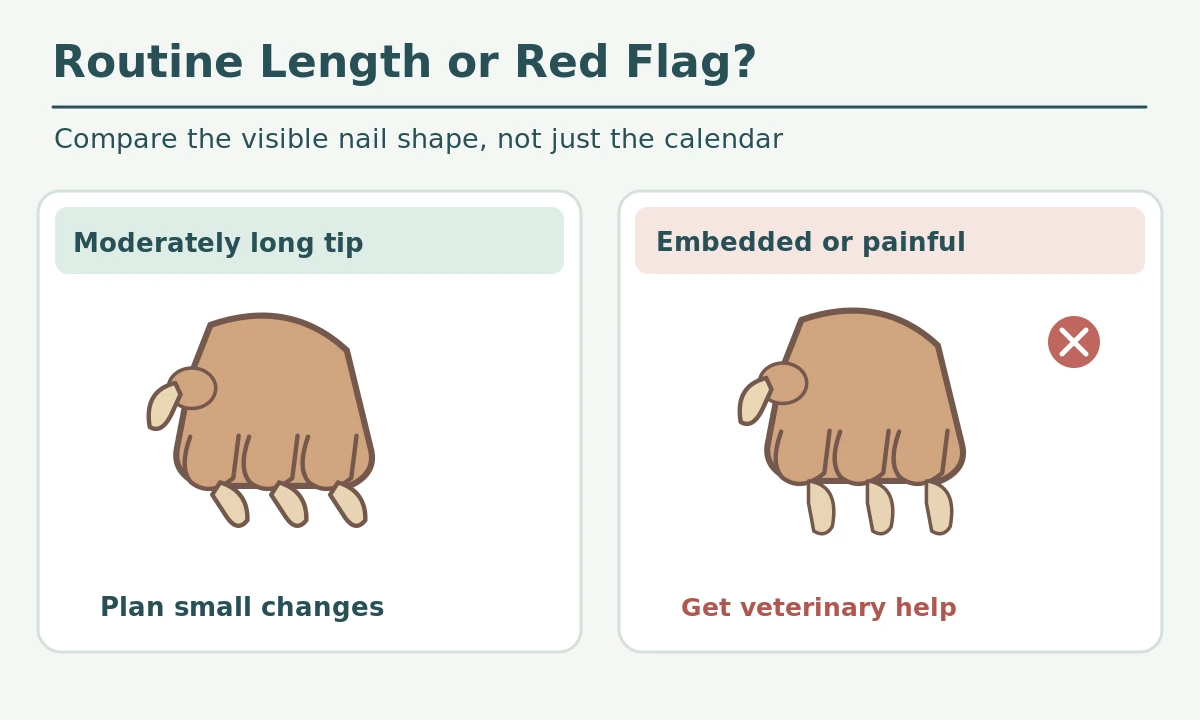
A smoothly curved tip that is a little long and not causing symptoms is different from a nail growing into a pad. The latter can cause pain and infection and needs professional care. Likewise, a nail broken at the base, persistent bleeding, a dog suddenly refusing to walk, or a swollen toe deserves prompt veterinary advice. Do not repeatedly probe under the nail to see if it is stuck. If your dog cannot tolerate even a visual inspection, stop and describe the signs to the clinic. Photos taken without forcing the paw can be helpful. A red flag should override any schedule for home trimming.
Adjust the schedule to growth and surfaces
As the nails reach a more manageable length, check them weekly and use their actual condition to decide when another trim makes sense. Dogs walking on abrasive pavement may wear some nails naturally; dewclaws typically remain an exception. A senior dog, a dog that stays mostly indoors, or one that has changed exercise routines may need more frequent checks. VCA gives typical trim intervals but emphasizes variation. Keep an ordinary calendar note alongside the side-view photograph. Do not rely on a fixed number of days to declare nails safe. Recheck if you notice clicking, snagging, or altered movement between scheduled trims.

Use a three-step check without pressure
First, observe the dog’s normal stance and compare both front paws on a secure floor. Second, look at every visible nail, including dewclaws, without prying or pinning a reluctant dog. Third, decide whether the nail needs ordinary maintenance, a cooperative-handling practice session, or a call to the clinic for a curled, painful, or damaged nail. Offer a reward for voluntary calm handling and keep each session short. If a nail bleeds after trimming, stop; apply gentle pressure with a clean cloth and contact your veterinarian for guidance if bleeding persists or the injury is significant. The safest routine leaves the dog willing to participate again.
How We Research
We compared original veterinary and animal-welfare information from VCA Animal Hospitals, ASPCA. We checked the difference between ordinary maintenance and signs requiring individual care, and focused on visible, repeatable checks rather than unverified product claims or fixed cut depths. The drawings are general explanations, not veterinary measurements or hands-on equipment tests. The instructions do not replace a veterinarian or experienced groomer showing the technique on your own pet. Learn more about our approach at About HubPet.
Sources
VCA Animal Hospitals, How to Trim a Dog’s Nails at Home. Read the original guidance.
ASPCA, Dog Grooming Tips. Read the original guidance.
VCA Animal Hospitals, Taking the Stress out of Nail Trimming for Dogs. Read the original guidance.
Safety note: An embedded or torn nail, significant bleeding, a painful or swollen toe, or marked changes in walking warrants veterinary help. Do not restrain a distressed animal to finish grooming or guess where the quick ends. A professional can demonstrate safe positioning and individual next steps.
Look for ground contact while standing, repeated clicks on hard floors, snagging, or unusual curling. Check every paw and the dewclaws.
Avoid an aggressive one-session cut. The quick may extend into an overgrown nail; ask a veterinarian or experienced groomer about gradual trimming.
A nail entering or pressing into the pad needs veterinary assessment. Do not dig it out or attempt a deep home cut.
Yes. Dewclaws may not touch the ground and can become long even when the walking nails appear worn down.
Stop when the dog is distressed, the cut line is uncertain, bleeding starts, or the nail appears painful, damaged, or embedded.