
This guide provides general pet travel and product information, not veterinary or airline approval advice. Contact the operating airline for current rules. If a pet is ill, in pain, or struggling to breathe, consult a veterinarian. See our veterinary disclaimer.
Airline pet carrier bottoms rarely get the attention given to height, weight limits, or mesh windows. But a poorly supported floor can sag, and a pad that shifts may leave an animal standing on a slippery board. A “waterproof” marketing claim may describe only the removable liner, not the stitched seams around the carrier. Inspect the whole floor assembly: fabric shell, stiffener, pad, corners, and the way it stays level when lifted. This guide is about portable cabin-style carriers; cargo kennels may have different material and labeling standards from soft-sided underseat bags.
Identify each floor layer
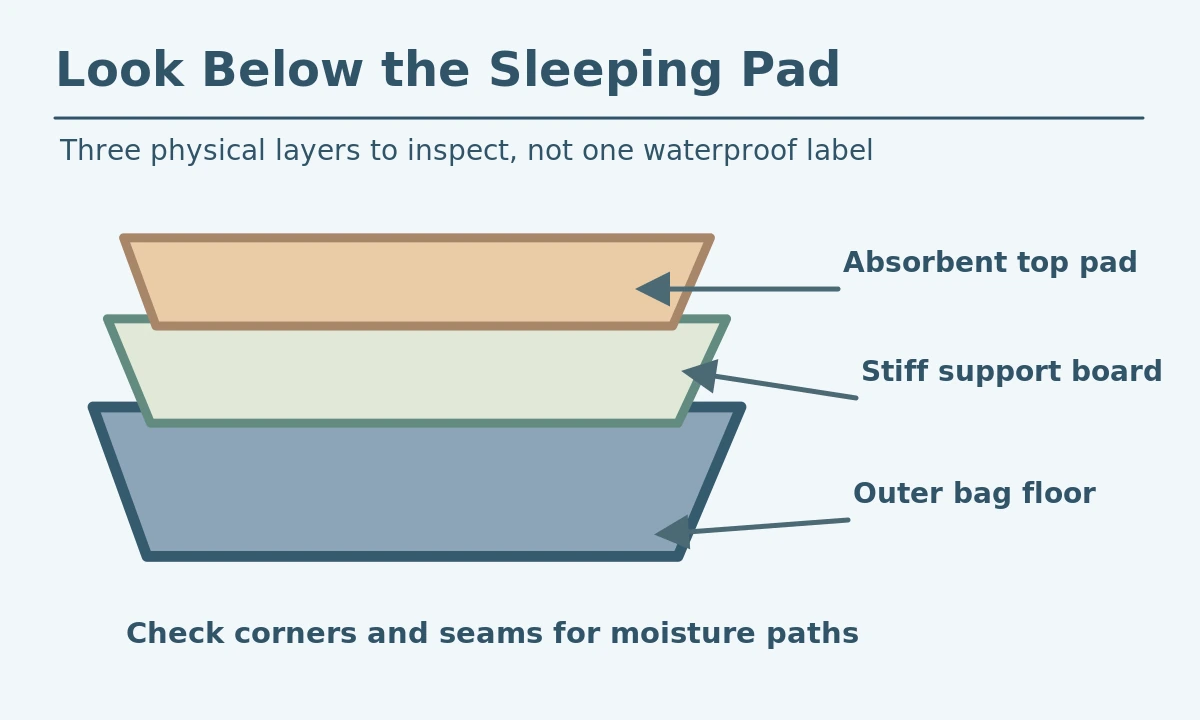
Remove the cushion and inspect the bottom piece by piece. Many soft-sided bags have a fabric shell, a plastic or composite stabilizing board, and a soft top pad. Other bags include a fixed inner liner that stays in place. List which parts are washable, wipeable, or explicitly not suited to soaking. The word leakproof may refer only to the sheet above the board. Ask how the design prevents liquid from entering seams, zipper tapes, and corner folds. A useful schematic shows all three floor layers rather than hiding the construction beneath a sleeping animal.
Check for continuous containment
Place the empty carrier on a clean dry surface. Examine its lower walls and especially the four corners for stitching holes, damaged coatings, or gaps around inserts. Do not pour liquid into a carrier while an animal is inside. If the manufacturer permits a water-resistance test, carry it out according to its instructions and dry everything completely afterward. A board that is easy to wipe is convenient, but it will not contain liquid if the fabric below it absorbs it. Avoid relying on unverified claims like spillproof, odorproof, or always dry.
Keep the base level during lifting
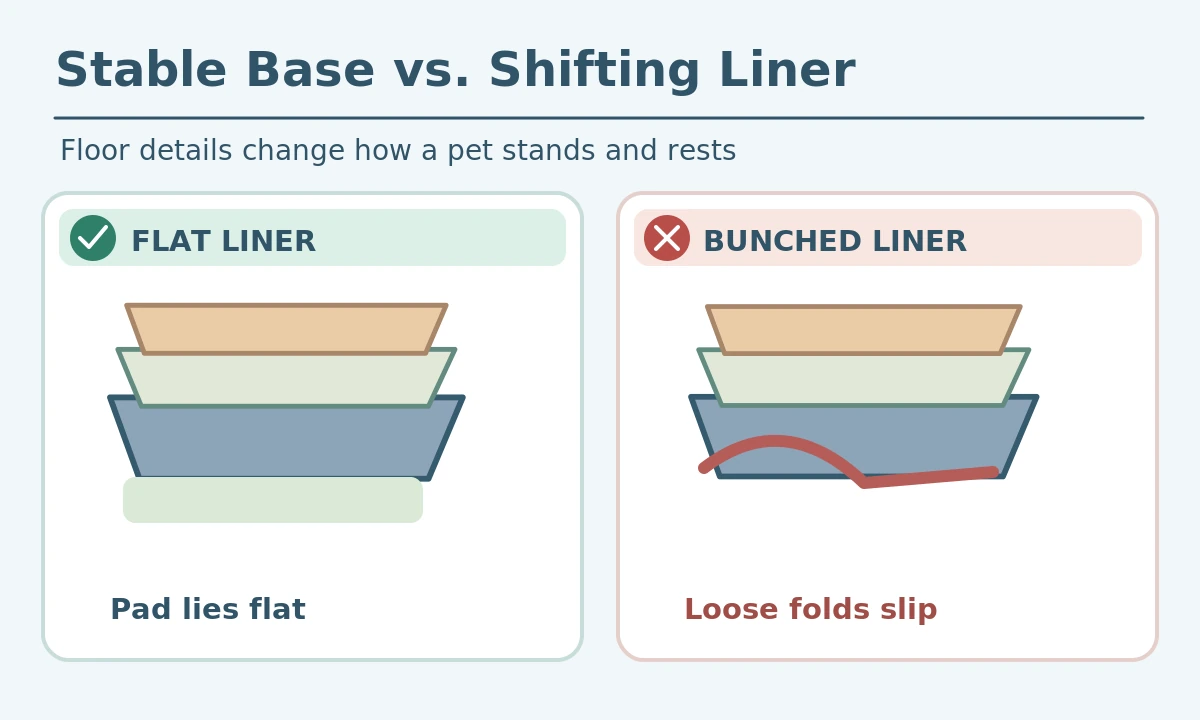
A pad may look flat on the floor but fold as you lift the bag. Put a suitable weighted object in an empty carrier if the manufacturer’s test guidance permits, support the handles evenly, and look for a deep sag or shifting board. Never use a live pet to stress-test a weak carrier. Inspect attachment points and ensure the board covers the usable resting zone without sharp edges. Replace bowed or cracked inserts. A stable floor helps the animal retain a predictable footing when the handler moves.
Choose an absorbent pad that actually fits
A pad should cover the floor without curling up over ventilation or bunching at the entry. Measure the inner base at its narrowest points, including curved corners, then trim pads only if the product instructions permit it and you will not expose any absorbent filling. Put the non-slip side, if specified, against the carrier floor. Avoid thick piles of pads that reduce usable headroom. Choose a liner you can remove and replace without complicated knots, fasteners, or swallowable clips. Carry a spare separately in a sealable cleanup bag.
Compare waterproof backing and full waterproofing
A pad with a waterproof underside can reduce contact between moisture and the board below, but the edges still remain exposed. A one-piece basin-style liner may better contain small spills if it fits without leaving raised ridges. Neither design guarantees the surrounding fabric will stay dry after a major accident. Use a hand to inspect for sharp or stiff corners after the liner is in place. When shopping, prefer explicit care and material details over vague promises. In an illustration, show the absorbent upper layer and the separate waterproof backing as different physical parts.
Handle accidents without trapping moisture
If an accident occurs while traveling, follow crew and airport instructions and avoid opening the carrier in an unsafe public area. When a suitable controlled space is available, replace the used liner, bag the waste, and dry accessible surfaces. Wash hands as appropriate and keep cleaning wipes or liquids away from the animal. Never spray fragrances or harsh disinfectants directly into a carrier occupied by a pet. After arrival, dismantle the floor according to the manual, clean approved components, and dry the entire base fully before storage.
Read care labels for each component
Machine washing a soft pad does not make the structural board machine washable. Some boards warp with water; others are removable plastic. Check whether detergent, disinfectant, or machine heat can damage the waterproof coating. If the instructions do not specify a method for cleaning a persistent spill, contact the manufacturer. Keep cleaning products inaccessible during the process and avoid mixing chemicals. A carrier with corners you cannot reach for cleaning may be a poor fit for a pet prone to accidents even if its initial price is attractive.
Prepare for realistic travel duration
Long trips can include boarding delays, missed connections, and time spent waiting for ground transport. Estimate how you will carry spare pads, a dry towel, sealable waste bags, and a clean replacement cover without putting unnecessary clutter inside the animal’s space. Water, feeding, and elimination planning should reflect the pet’s age and individual needs; discuss a suitable schedule with your veterinarian. Never restrict water or change medication simply to avoid a carrier accident. Follow airline rules for when and where the animal may leave the carrier.
Do a final floor-and-liner inspection
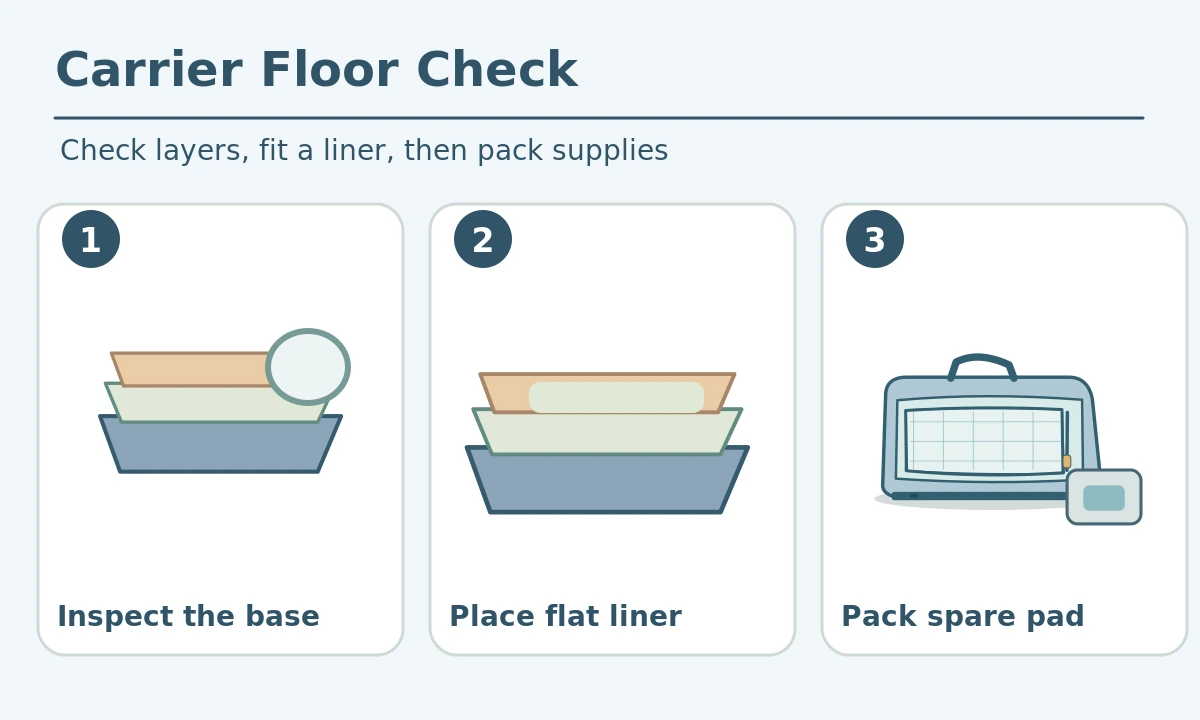
Set the empty carrier on level ground and remove the pad. Check board corners, seams, coating, and any Velcro or pocket that holds the insert. Reassemble the base and press gently across it to feel for ridges. Lift the carrier briefly using approved handles to see whether the floor remains level. Confirm the pet can lie naturally with the liner installed. Keep one clean spare ready; pack a waste bag that seals. If a board shifts, a liner tears, or stitching leaks, repair or replace the component before the next journey.
How We Research
We compared the FAA rules for in-cabin pet containers with travel and carrier-familiarity guidance from the American Veterinary Medical Association. Where relevant, we reviewed USDA APHIS information about air travel equipment and the travel-security preparation notes identified in Sources. We then translated these requirements into dimensions, physical parts, inspection steps, and practical limits for the particular carrier topic. Product-specific construction, measurements, approved seating, and destination paperwork require current manufacturer and airline confirmation. No carrier was laboratory tested or certified by HubPet. Learn about our approach at About HubPet.
Sources
AVMA, Traveling with Your Dog or Cat. Read the guidance.
USDA APHIS, Preparing Pets for Air Travel. Read the guidance.
FAA, Flying with Pets. Read the guidance.
Safety note: Never place a live animal on a security X-ray conveyor or leave a pet in a closed carrier exposed to heat. Keep ventilation clear and closure hardware intact. Contact your veterinarian before air travel if breathing issues, medical conditions, or severe distress are concerns; never use sedatives without veterinary advice. Airline size and handling requirements can change.
Not necessarily. The liner, board, and outer fabric may have different protection levels. Inspect seams and corners and read the manufacturer’s specific claim.
It should fit the usable floor smoothly without bunching, leaving loose edges, or taking away necessary space. Follow the liner’s fit instructions.
Only if the manufacturer says the board can be washed that way. Some materials warp or delaminate when soaked or machine washed.
Find a safe, permitted location, follow staff instructions, bag the waste, and replace the pad. Keep the animal securely contained.
No. A thick pad may reduce headroom and fold near the doorway. Favor a stable, flat, cleanable fit and your pet’s individual comfort.