
This guide provides general pet travel and product information, not veterinary or airline approval advice. Contact the operating airline for current rules. If a pet is ill, in pain, or struggling to breathe, consult a veterinarian. See our veterinary disclaimer.
Expandable airline pet carriers have zippered side or end compartments that unfold into extra resting space. They can be practical during some stationary, supervised moments after a trip, but the extension does not magically create room below an airplane seat. A folded bag still must suit the animal. The operating airline’s rules apply whether the carrier has one panel or three. Look at the carrier in both closed and fully opened positions before buying. This guide explains the hinges, mesh, structural support, and the difference between permitted rest-space use and airline stowage requirements.
Separate stowed dimensions from expanded dimensions
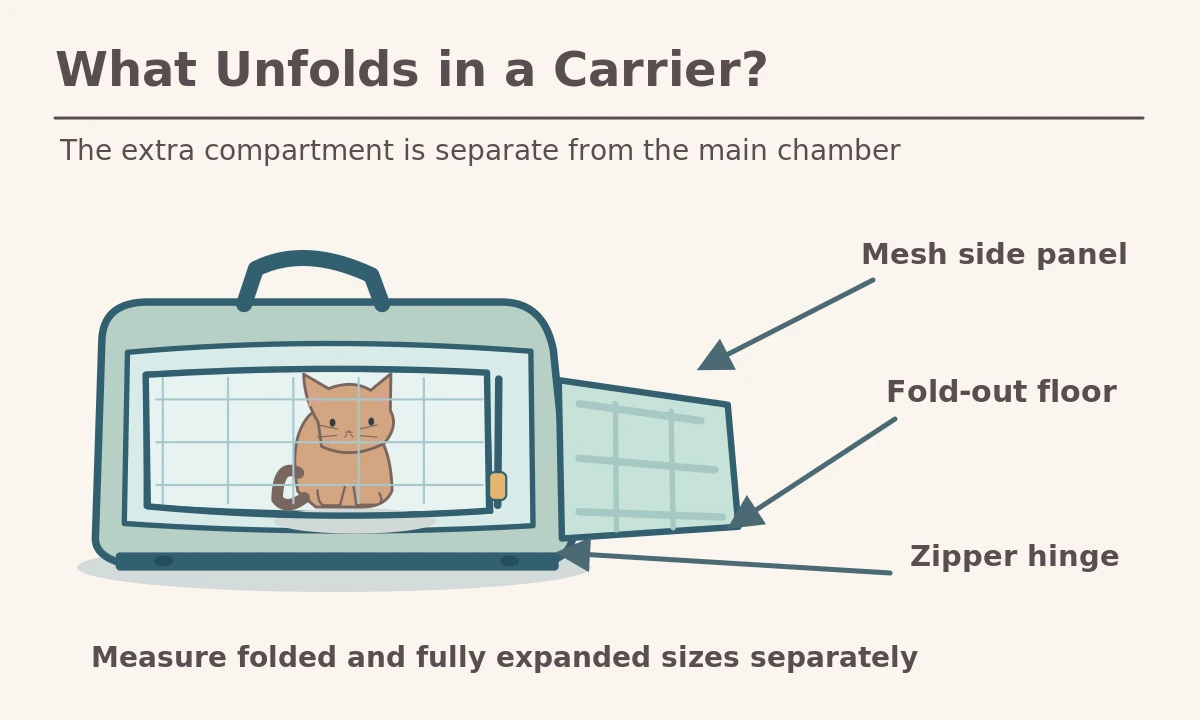
Measure an expandable carrier twice. With every panel zipped into its normal travel position, record maximum outer length, width, and height, including stiff edges and feet. Then open each panel and measure the floor footprint it occupies. The second measurement is useful at home or another place that allows the panels to open; it is not an airline cabin allowance. The FAA requires an allowed pet container to fit beneath the seat and remain under the seat during ground movement, takeoff, and landing. Never assume the extra compartment may remain open in flight.
Understand the side-panel construction
A typical expandable compartment folds along a fabric hinge and gains shape from mesh walls and stitched edging. Inspect that hinge closely: a thin, fraying seam can fail when a pet leans on it. Check whether the expanded floor has its own support or slopes away from the main base. Gently push the mesh to find areas that sag or collapse and look for any uncovered openings near zipper intersections. A pictured extension should show an actual floor and walls, not just a decorative flap. If the pet could push a body part through a gap, avoid that design.
Keep the regular carrier usable while folded
A roomy extension is not compensation for an overly cramped main chamber. The animal needs appropriate resting and repositioning space in the closed configuration, because that is the configuration relevant to stowage. Test it with a flat liner in place. Check whether the folded sections bulge inward, make a hard lump at shoulder height, or press against the animal’s back. When comparing two models, treat the normal interior as the primary fit measurement. An extra-wide lounge mode is an optional feature rather than proof that a small carrier fits every pet.
Know when an expanded panel is inappropriate
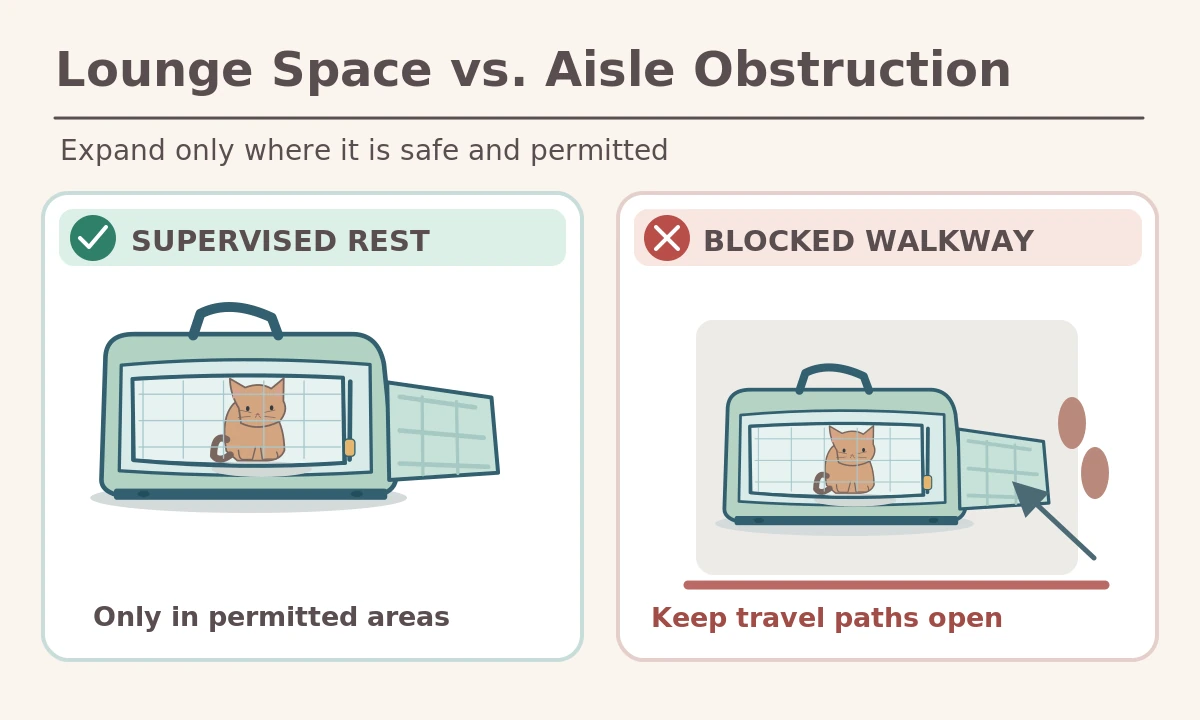
Do not unfold panels where they would obstruct a walkway, block another passenger, interfere with a seat structure, or conflict with crew instructions. Keep a pet within the secured main compartment while carrying or lifting the bag. Never allow movement into an open panel. Airport waiting areas and aircraft cabins may impose their own constraints, so ask staff rather than assuming they permit a lounge mode. If a safe, permitted stationary space is not available, leave the expansion zipped and focus on calm handling and a suitable rest schedule.
Compare mesh quality and visibility
The extension usually introduces more mesh surface than a basic carrier. That can improve visibility into the bag, but mesh durability and practical airflow need inspection. Pull lightly at stitched seams with your fingers, inspect corners for holes, and check whether an anxious pet can hook claws into loose strands. Do not drape a blanket across every opening to create darkness. Balance privacy with ventilation. Keep the carrier and pet out of direct sunlight that can heat an enclosed bag. A cover is not a substitute for managing temperature and stress.
Review zipper paths and escape points
Multiple expanding sections create multiple zipper runs and junctions. Close each one while the carrier is empty, then inspect the meeting points near corners for gaps. Check whether the pull tabs snag in mesh or catch fur. In a calm trial at home, watch for the animal pushing at a corner or chewing a zipper. Sellers may include an interior tether, but it cannot replace securely closed doors; do not use an internal tether that risks entanglement. Follow the product’s specific closure instructions and supervise unfamiliar designs.
Look for a level floor in both modes
Set the opened carrier on a flat surface and place one hand on the middle of the expanded floor to check whether it tips or folds. A wedge-shaped slope could leave the pet bracing against the main chamber. Notice where support rods and plastic boards terminate; exposed edges should never rub a paw or flank. A separate absorbent liner may help with cleanup, but it should not bridge a hinge in a way that prevents closing the panel. Choose a layout with a sturdy normal floor and an extension you can inspect and clean.
Introduce the change gradually
For a pet new to expanding sides, place the carrier on the floor with the main door propped open. Offer rewards for voluntary exploration. When the animal is calm, open an extension before the animal enters so it can examine the new space. Close the extension only when the pet has exited, then work toward short supervised practice with the normal closed layout. Do not repeatedly inflate or collapse side panels around a frightened animal. Familiarity matters more than how quickly the pet masters a particular accessory.
Use a three-position decision on departure day
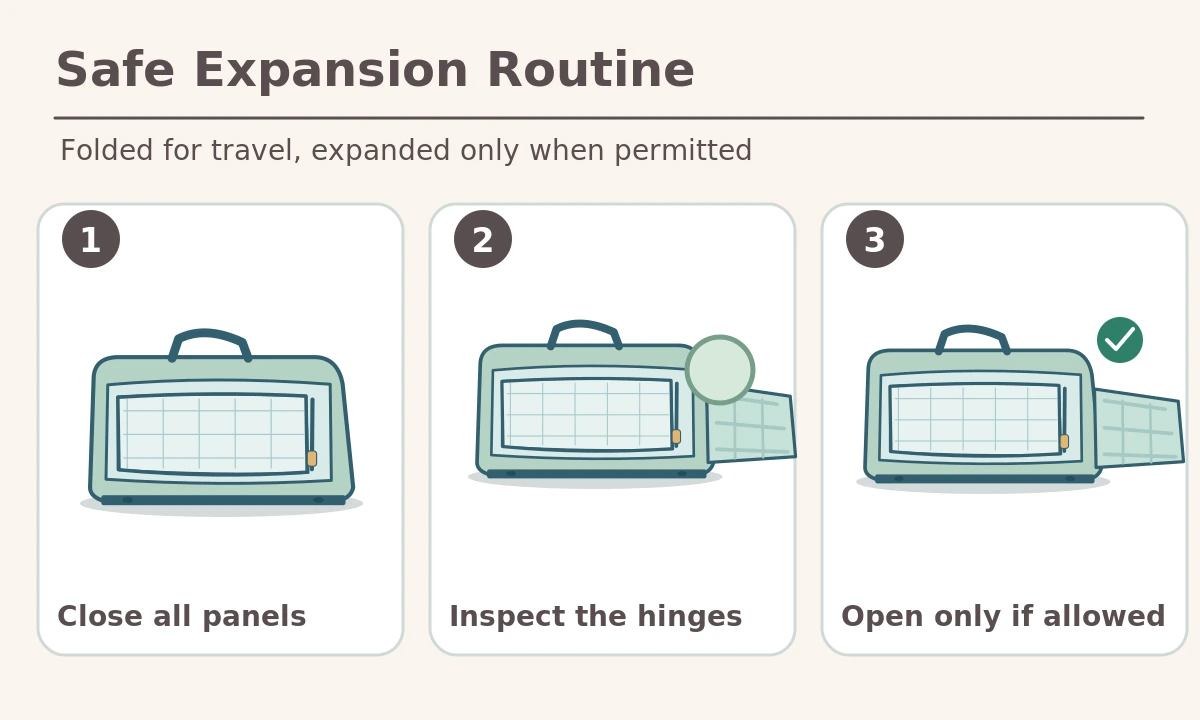
Before leaving, check the carrier in closed mode for size and pet comfort. At the airport, keep extensions closed. Ask staff before using any stationary setup, and leave circulation space unobstructed. On the aircraft, use the airline-required arrangement and follow crew stowage instructions; do not treat an open extension as reserved seat space. At your destination, evaluate a safe indoor location before opening panels for supervised rest. If you find damage or a panel that will not latch flat, retire the carrier or replace the part according to the manufacturer’s guidance.
How We Research
We compared the FAA rules for in-cabin pet containers with travel and carrier-familiarity guidance from the American Veterinary Medical Association. Where relevant, we reviewed USDA APHIS information about air travel equipment and the travel-security preparation notes identified in Sources. We then translated these requirements into dimensions, physical parts, inspection steps, and practical limits for the particular carrier topic. Product-specific construction, measurements, approved seating, and destination paperwork require current manufacturer and airline confirmation. No carrier was laboratory tested or certified by HubPet. Learn about our approach at About HubPet.
Sources
FAA, Flying with Pets. Read the guidance.
AVMA, Traveling with Your Dog or Cat. Read the guidance.
USDA APHIS, Pet Travel Process Overview. Read the guidance.
Safety note: Never place a live animal on a security X-ray conveyor or leave a pet in a closed carrier exposed to heat. Keep ventilation clear and closure hardware intact. Contact your veterinarian before air travel if breathing issues, medical conditions, or severe distress are concerns; never use sedatives without veterinary advice. Airline size and handling requirements can change.
Do not assume so. Follow the operating airline’s rules and flight crew instructions; the carrier must be properly stowed without blocking the aisle.
The airline evaluates the carrier configuration allowed on board. Measure the closed outside dimensions and separately assess the pet’s usable space.
Not automatically. Additional panels create more seams and movement; familiarization, sturdy construction, and veterinary advice for significant anxiety matter more.
Inspect hinge stitching, mesh integrity, zipper intersections, level flooring, and whether the extension can be closed securely.
Avoid carrying a pet in an unfolded extension; follow manufacturer instructions and use the supported, secured carrying configuration.