
This guide provides general information about pet products, not veterinary advice. For suspected ingestion, pain, illness, or unusual behavior, contact your veterinarian and read the veterinary disclaimer.
Plastic dog beds use molded shells to hold a separate pad or blanket instead of an upholstered mattress. Their appeal is straightforward: the hard frame wipes clean, and you can clean the cushion separately. The limitations are equally important. A tall rim may make entry awkward, smooth plastic can slide on wood or tile, and sharp or cracked edges can damage fabric or paws. The right choice depends on the dog’s resting posture, mobility, chewing habits, and the exact cushion that fits inside the shell. This guide is about construction and daily care, not brand rankings.
Measure the inside floor, not the outside shell
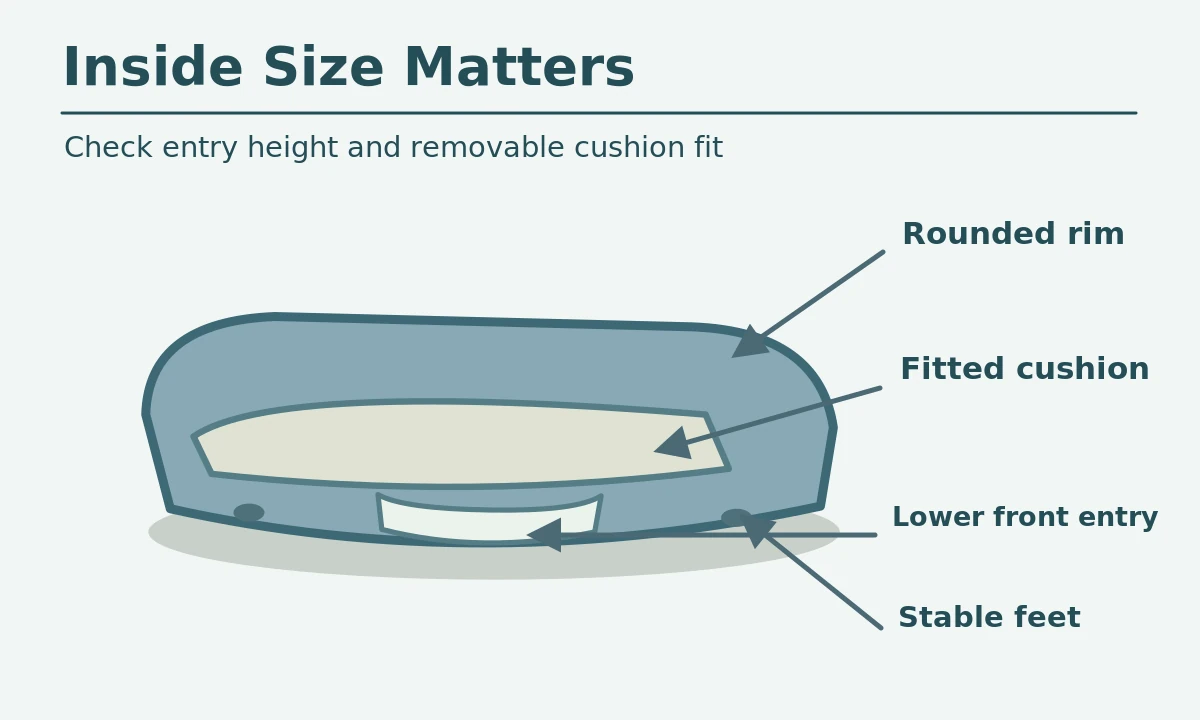
Plastic frames have wide raised walls that consume usable sleeping area. Ask for the flat interior length and width at the base, not only the widest outside diameter. Watch your dog lying on its side and check whether hips, shoulders, and paws would fit without pressing against the rim. Rounded oval beds are often narrow near the ends; a rectangular pad may bunch when squeezed into them. Compare actual internal dimensions before buying a cushion or ordering a spare. If a dog typically sprawls straight, a long flat mat may fit its habits better than an oval basket.
Evaluate the step-over height
A molded front entrance can be lower than its side walls, but the drop still matters for a small, young, or mobility-limited dog. Look at the height from the floor to the lowest entrance, including the cushion’s depth. The dog should be able to step in and out without catching paws or bracing against an abrupt rim. Do not cut the plastic yourself to lower an opening; a rough edge can be sharp and can weaken the frame. For new difficulty stepping over a bed edge, arrange a veterinary assessment rather than forcing repeated practice.
Check the edge finish and frame integrity
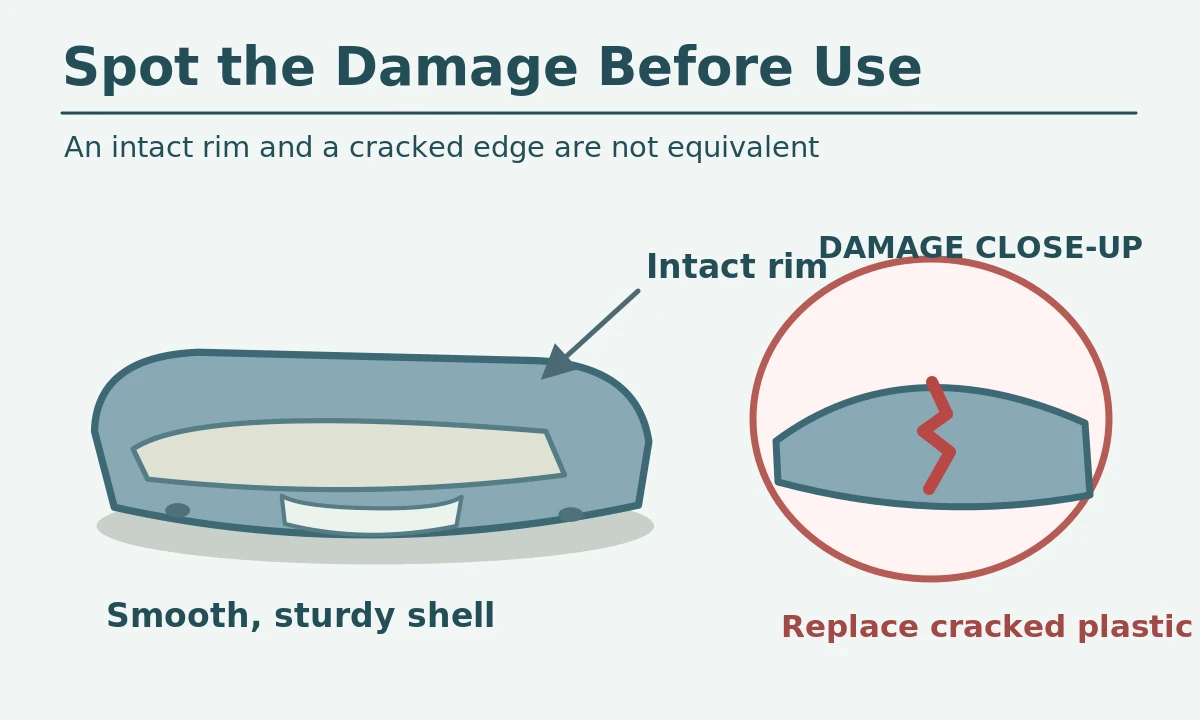
Run a hand along every reachable rim, handle cutout, and corner. Finished edges should be smooth, with no cracks, projecting plastic shards, or loose molding remnants. Flex a side gently according to the manufacturer’s expectations, not enough to stress it: excessive warping, whitening, or sharp creases suggest a concern. Inspect the underside too, where burrs can scratch floors. Replace a frame that develops splits or jagged pieces. A dog that actively gnaws rigid plastic may need a different supervised resting setup because swallowed fragments pose a hazard.
Use a correctly shaped removable cushion
A cushion should lie level inside the frame without folding against the sides. If its corners bunch up, the dog must rest on an uneven surface and cleaning becomes harder. Choose a pad whose cover or whole insert has clear washing instructions; do not assume a generic cushion fits every molded model. The pad should not be so thick that it erases the useful low entrance or spills over the rim. If the dog moves the pad around, inspect whether the shape or friction is a poor fit rather than pinning the fabric down with clips or ties.
Stop the frame from skating across the floor
Many smooth plastic shells slide when a dog steps onto the lip, particularly on polished wood and tile. Examine the underside for built-in grip pads or feet that are secure and not likely to detach. If using a separate non-slip mat, make sure it lies flat, does not trap moisture against a delicate floor finish, and has no edges the dog can grab. Test the setup gently before the dog uses it. Place it away from stair landings and busy door swings. Slipping reflects a placement or design problem. Do not expect the dog to overcome it.
Make cleaning a two-part routine
Remove the fabric pad first and handle it according to its own care label. Then wash the hard shell with an appropriate cleaning method, paying attention to corners, underside feet, and grooves that catch hair. The CDC describes soapy water for hard pet items and separate washing approaches for soft items. Rinse and dry every surface thoroughly before replacing the pad. Never mix cleaning chemicals or leave wet disinfectant accessible to the dog. If an ill pet has used the bed, follow relevant veterinary and disinfectant-label guidance rather than guessing at concentrations or dwell times.
Consider chewing, noise, and temperature
Some dogs scratch or dig in a hard shell and may find the impact noise irritating, while others rest comfortably in a snug basket. Rigid plastic can feel different from a fabric mattress on cool tile or near a window; monitor whether the dog voluntarily chooses the bed. Avoid leaving it in direct sun where surfaces can heat. Hard edges or a hollow base may transmit sound across a wood floor. If the dog spends time chewing on the frame, remove it from reach and provide suitable alternatives. Never describe any type of plastic as safe to ingest.
Match the shell to your space
Check the exterior footprint, including protruding handles or feet, against the intended location. Leave enough room for the dog to enter from the low side and turn around without colliding with furniture. An oval shape can fit a corner but may waste space against a straight wall; a low rectangle may be easier in a narrow room. Do not place the hard bed where a person could trip at night. If you plan to move the shell between rooms, check its weight with the pad inside. Never carry the dog inside it as though it were a carrier.
Inspect replacement parts and long-term wear
Before choosing a model, check whether the maker supplies replacement cushions, grip pads, or feet. Small replaceable components are useful only if they attach securely and the dog cannot chew them off. Watch for surface scratches that catch grime and for rims that become rough. If the frame is brittle or the cushion no longer lies flat, replace affected parts. A low-cost shell may be practical if it is stable and cleanable; an expensive one is not inherently more comfortable. Evaluate the object you can inspect, not a promise of indestructibility.
Run a practical fit and cleaning check
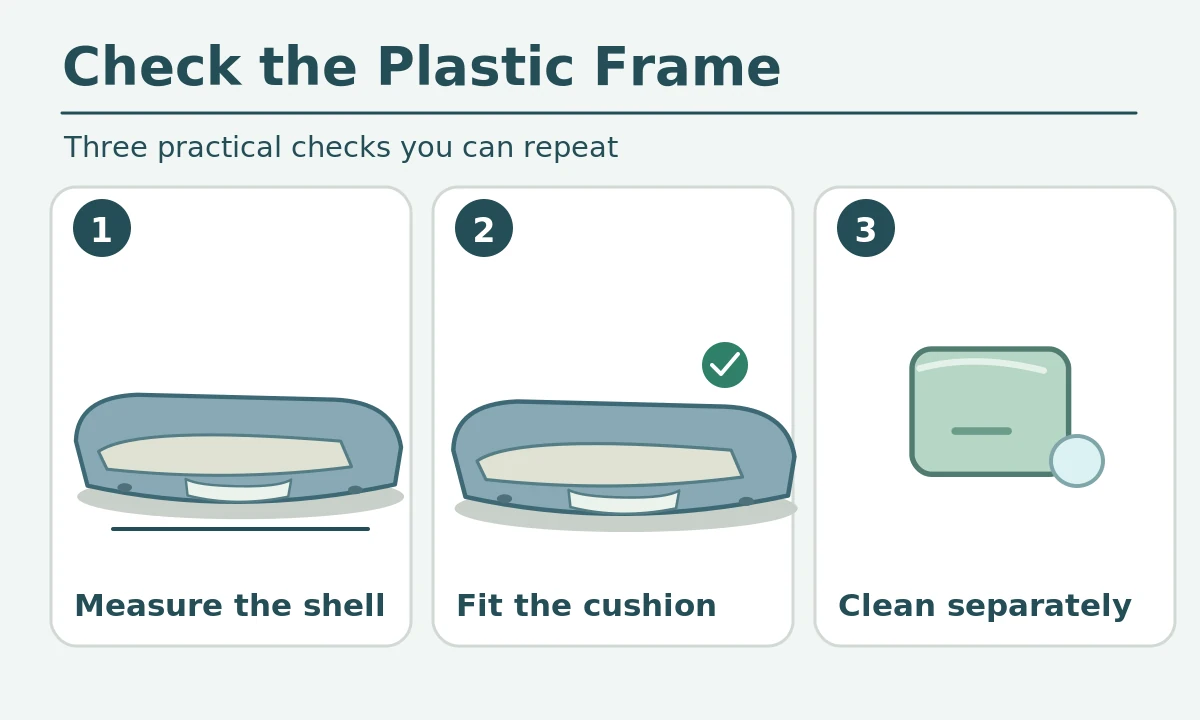
Set the empty shell on a level floor and press gently around the rim to check for unexpected rocking. Inspect inside dimensions, smoothness, the low entry, and underside grip. Add the cushion and ensure it remains flat and does not protrude into the entry path. Invite the dog to investigate without forcing a position and observe turning, resting, and stepping out. To clean, remove and launder the cushion as directed, wash the shell separately, rinse, and let both dry completely. Recheck for cracked plastic after every move or heavy cleaning.
How We Research
We review care principles from the CDC, veterinary hospitals, and animal-welfare organizations, then apply those principles to actual bed construction, cleanability, placement, and behavioral safety. For product-specific dimensions, laundering temperatures, load limits, and material contents, consult the current manufacturer instructions. We do not claim product laboratory testing, independent certification, or a veterinary diagnosis. Follow our editorial approach and confirm what applies to your own pet.
Sources
CDC, Cleaning and Disinfecting Pet Supplies (2026). Read the guidance.
VCA, Toy or Toxin: Safe Products for Pets. Read the guidance.
Safety note: Inspect bedding, zippers, liners, and any filling before use, and supervise equipment the pet has not used before. Remove damaged or swallowable parts. Suspected ingestion, new pain, or signs of overheating require prompt veterinary care. Product shopping advice does not replace medical assessment.
Many dogs benefit from a properly fitted, washable pad; rigid shells do not provide the same surface as a cushioned mattress.
Measure the usable inside base for the dog’s resting space, and the exterior for where the shell will fit in your room.
Choose secure non-slip feet or a compatible flat mat and test it on the actual floor. Avoid loose improvised ties or bulky rugs.
Follow the product and disinfectant labels, use appropriate cleaning methods, rinse as directed, and keep dogs away until fully dry.
Replace a shell with cracks, sharp edges, unstable feet, or pieces a dog can chew off. Damaged rigid plastic is a safety issue.