
This guide provides general information about pet products, not veterinary advice. For suspected ingestion, pain, illness, or unusual behavior, contact your veterinarian and read the veterinary disclaimer.
Puppy beds do not have to be expensive or elaborate. During the first week, the most useful features are a low entry, enough room to turn and stretch, washable materials, and no loose parts a curious mouth can pull away. A soft bed is not automatically appropriate for unsupervised crate time, especially for a puppy that tears or eats fabric. This article focuses on a separate floor-level resting bed for ordinary supervised relaxation and on the practical questions to ask before offering any bedding in an enclosed space. Keep the setup simple enough to inspect after every nap.
Start with a quiet location and an exit route
Choose a room corner that is away from the path of opening doors and busy household traffic but still close enough for gentle supervision. Avoid placing the bed beside a radiator, drafty doorway, reachable power cord, or unstable furniture. Let the puppy approach voluntarily. Leave a retreat route so another pet or chair legs cannot trap the puppy. A washable floor mat under the bed can catch minor messes only if it lies flat and is safe from chewing. Keep the sleeping area consistent while the puppy learns the household routine.
Measure the puppy rather than the marketing size
Observe the puppy lying on one side, curled, and standing before choosing the mattress footprint. The inside resting area should allow the puppy to turn and settle without folding its body against a high bolster. A bed can look large in a product photo but offer less usable room once you count thick sides. Plan for growth, yet avoid extremely deep bolsters that a small puppy has to climb or jump over. A simple rectangle with a low front edge may be easier to enter than a tall round nest. Recheck fit as the puppy grows.
Make the entrance easy on little legs
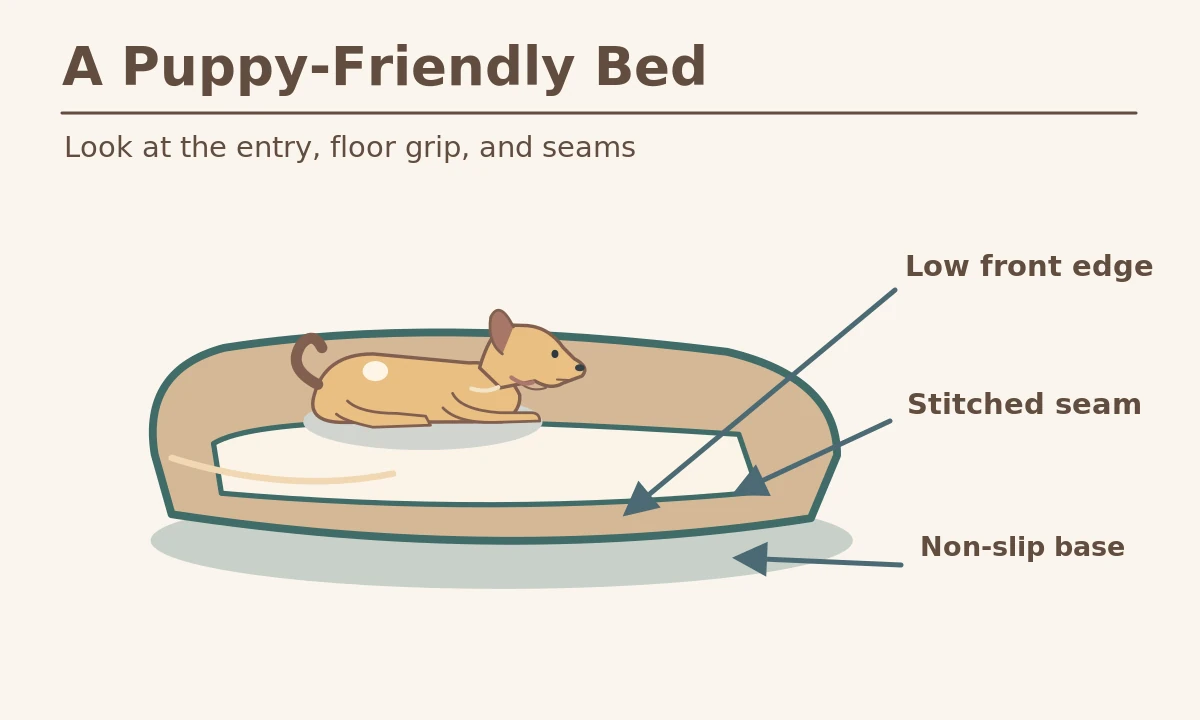
Choose a soft, stable surface with an entry edge the puppy can cross in one natural step. Look for a bottom that does not slide across tile or wood and seams that will not snag claws. A puppy should be able to walk away without getting caught under a decorative canopy or between loose cushions. Watch the puppy use the bed before leaving it in that room. If the puppy repeatedly slips, hesitates, or tumbles over a rim, adjust the setup instead of coaxing harder. Puppies with movement problems deserve veterinary advice, not a furniture workaround.
Inspect every part for chewing hazards
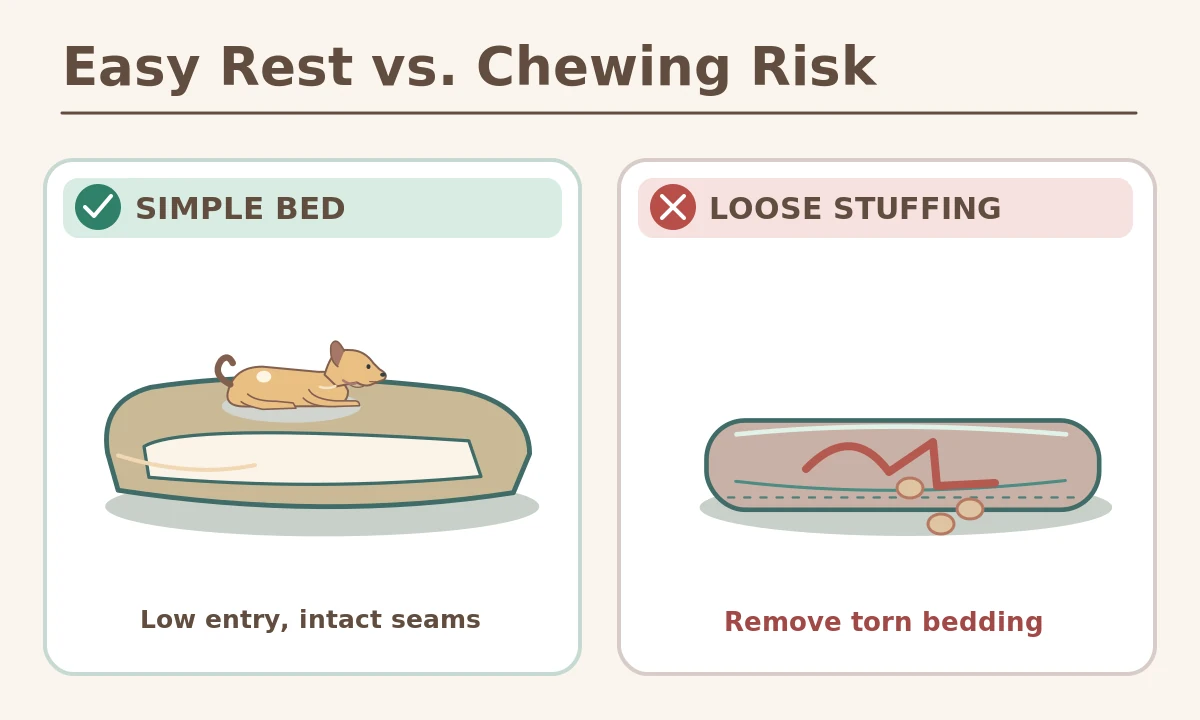
Puppies investigate with their mouths and may chew bedding during teething. VCA notes that puppy chewing is normal behavior, but swallowed stuffing, thread, foam, or decorative parts can cause harm. Avoid accessible zippers, tassels, loose ties, dangling tags, beads, and frayed seams. Inspect an unfamiliar bed before and after each supervised use. If the puppy starts shredding the material, take the bed away calmly and offer an age-appropriate chew item under supervision. Do not punish the puppy for exploring; change access and reward appropriate alternatives.
Keep a realistic plan for accidents
Choose a cover or entire bed with clear washing instructions rather than relying on the word “stain resistant.” Check whether you can launder the insert. Confirm the bed fits your machine and find out how long drying takes. Blot fresh accidents promptly and use a cleaning method appropriate for the fabric. Never return damp stuffing to the puppy. Keep a clean spare surface so the dog still has a resting place while laundry dries. The CDC gives weekly cleaning as a general example for pet bedding and advises cleaning sooner when the item is dirty.
Introduce the bed without making it a command
Set the bed near where the puppy already chooses to relax. Toss a small piece of the puppy’s usual food onto it or quietly praise a voluntary step onto the fabric. Allow the puppy to step off immediately. Repeat in short, low-pressure moments and avoid holding the dog down or closing off exits to keep it there. A sleepy puppy may simply flop onto the floor nearby, which is information about comfort, not a training failure. The goal is a positive association with rest, not forcing a specific posture for a photograph.
Separate floor-bed choice from crate safety
A floor bed and a crate are different contexts. Bedding that works while a person watches may not be suitable inside a crate for a puppy that chews or swallows textiles. Follow crate manufacturer directions and veterinary or behavior advice for the individual puppy. A bed should never obstruct the crate door, vents, or escape path, and loose pieces must not create an entanglement hazard. Do not put unsafe bedding in a crate just because the puppy seems to like the texture. If chewing makes the sleeping setup difficult, discuss the safest temporary arrangement with a qualified professional.
Consider household pets and children
Give the puppy a place to rest away from footsteps, surprise hugs, and approaches during sleep. Teach children that a resting dog gets space, and supervise interactions with other animals. If an older dog owns a favorite bed, do not expect the puppy to share it immediately. Separate sleeping spots can prevent crowding and resource conflict. Choose a resting place from which the puppy can see familiar activity without people constantly touching it. A predictable, protected nap area may be more valuable than extra padding or a more decorative shape.

Watch comfort and condition as the puppy grows
Recheck the bed every week for flattening fill, curled edges, frayed seams, and undersized resting space. A puppy’s preferred posture can change with age and temperature. If the puppy begins avoiding the bed, check whether it is damp, hot, unstable, or difficult to access. Sudden reluctance to lie down, signs of pain, or unusual restlessness warrant a veterinary conversation. Do not assume the solution is an orthopedic label, a heated bed, or a stronger perfume. Comfort should be observable in how willingly the puppy rests and moves.
Keep the first-week checklist short
Place the bed in a calm accessible spot, verify the low entrance and non-slip base, and clear nearby cords or small objects. Before offering it, check for intact seams and swallowable parts. Supervise early naps and redirect chewing to an appropriate item. Remove and wash the bed as directed after accidents, then dry it completely. Give the puppy the choice to lie elsewhere, and maintain another safe resting option. If the puppy shreds bedding or appears to swallow pieces, remove access. Contact a veterinarian promptly instead of waiting for symptoms.
How We Research
We review care principles from the CDC, veterinary hospitals, and animal-welfare organizations, then apply those principles to actual bed construction, cleanability, placement, and behavioral safety. For product-specific dimensions, laundering temperatures, load limits, and material contents, consult the current manufacturer instructions. We do not claim product laboratory testing, independent certification, or a veterinary diagnosis. Follow our editorial approach and confirm what applies to your own pet.
Sources
VCA, New Puppy Checklist. Read the guidance.
VCA, Teeth, Teething and Chewing in Puppies. Read the guidance.
VCA, Toy or Toxin: Safe Products for Pets. Read the guidance.
Safety note: Inspect bedding, zippers, liners, and any filling before use, and supervise equipment the pet has not used before. Remove damaged or swallowable parts. Suspected ingestion, new pain, or signs of overheating require prompt veterinary care. Product shopping advice does not replace medical assessment.
A comfortable safe resting place helps, but it need not be a thick or expensive bed. Choose bedding appropriate to the puppy’s chewing behavior and supervision.
A stable flat or low-front bed often allows easy entry and exit. Check the puppy’s actual size and mobility rather than trusting breed labels.
Not automatically. For a puppy that chews or ingests bedding, a plush item may be unsafe without supervision or individual professional guidance.
Follow the fabric-care label, clean soiled areas promptly, and dry all layers before returning the bed to the puppy.
Remove damaged bedding, supervise access, and offer suitable chew alternatives. Consult a veterinarian promptly if the puppy may have swallowed pieces.