
Flexible rubber nubs can help lift loose short-coat fur, but they are not a substitute for an undercoat tool or an excuse to scrub sensitive skin. This article provides practical checks and limitations. See our veterinary information disclaimer for health-related decisions.
Start with the dog’s coat, not the product name
A rubber curry brush has a flexible face with short raised nubs or fingers. It works best for a close, smooth coat where loose hair sits near the surface. Dogs with a dense double coat or long feathering may need a different grooming tool to reach the undercoat without snagging. Compare the shape of the coat in several areas: a sleek shoulder can hide denser hair around the neck or tail. The American Kennel Club describes rubber brushes as useful for short-coated dogs and notes their limited reach through longer or thicker fur. Choose a tool for the actual coat in front of you rather than for breed marketing.
Inspect the nubs, edges, and grip
Bend several rubber nubs gently with your fingers. They should flex without exposing a rigid point or jagged molding seam. A rounded edge matters when brushing around elbows, belly skin, and the chest. Larger brushes cover a broad back quickly, while a palm-size curry makes it easier to control pressure on a small dog. A handle that slips when damp can encourage accidental overpressure, so test your grip with clean hands. Check whether dirt and hair can collect inside the tool and whether the manufacturer allows warm-water cleaning. Avoid damaged rubber with cracked or sharp edges.
Use a light touch on a calm dog
Start with two or three slow strokes along the direction of hair growth on the shoulder. Watch for a relaxed body, soft facial expression and willingness to remain near you. If your dog leans away, freezes, turns to mouth the brush, or develops pink skin, pause. Do not work in circles aggressively just because loose hair keeps emerging; friction against skin can become uncomfortable. Some short-coated dogs enjoy gentle circular motion over broad muscle areas, but use the dog’s response as the guide. Keep the tool away from eyes, ears, nipples, groin and areas with sores or scabs.
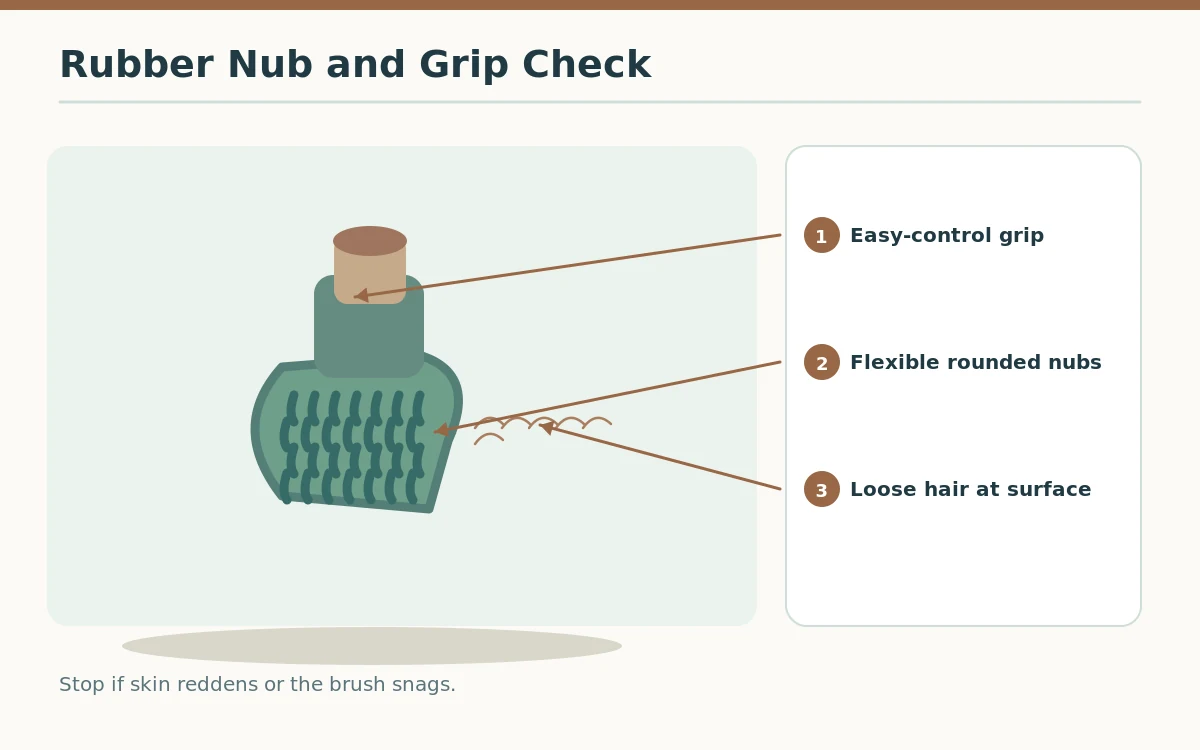
Know what the curry can and cannot remove
The flexible surface can gather loose topcoat hair and dirt, especially during a normal shedding period. It cannot safely cut out mats, remove every strand of undercoat, or make a naturally shedding dog stop shedding. If the coat has tangles or a thick secondary layer, a coat-appropriate comb or groomer may be a better match. Compare what you collect in a few gentle passes, not how hard the brush can scrape. The goal is comfortable routine maintenance, not filling a bag with fur every time. Groomers may finish with a soft bristle brush to lift loosened hair from the coat.
Compare gloves, solid curry pads, and handled models
A grooming mitt wraps around the hand and may feel familiar during petting, but a loose fit can twist around a small wrist. Flat curry pads often offer fine pressure control at the expense of reach. Handled models keep fingers farther from the coat and can be easier to rinse, though a heavy handle may make precise motions awkward. Prefer rounded, flexible nubs and easy washing in every format. Avoid treating a printed ‘deshedding’ claim as proof that the tool suits delicate skin. A supervised trial over a small area provides more useful feedback than an impressive before-and-after photograph.
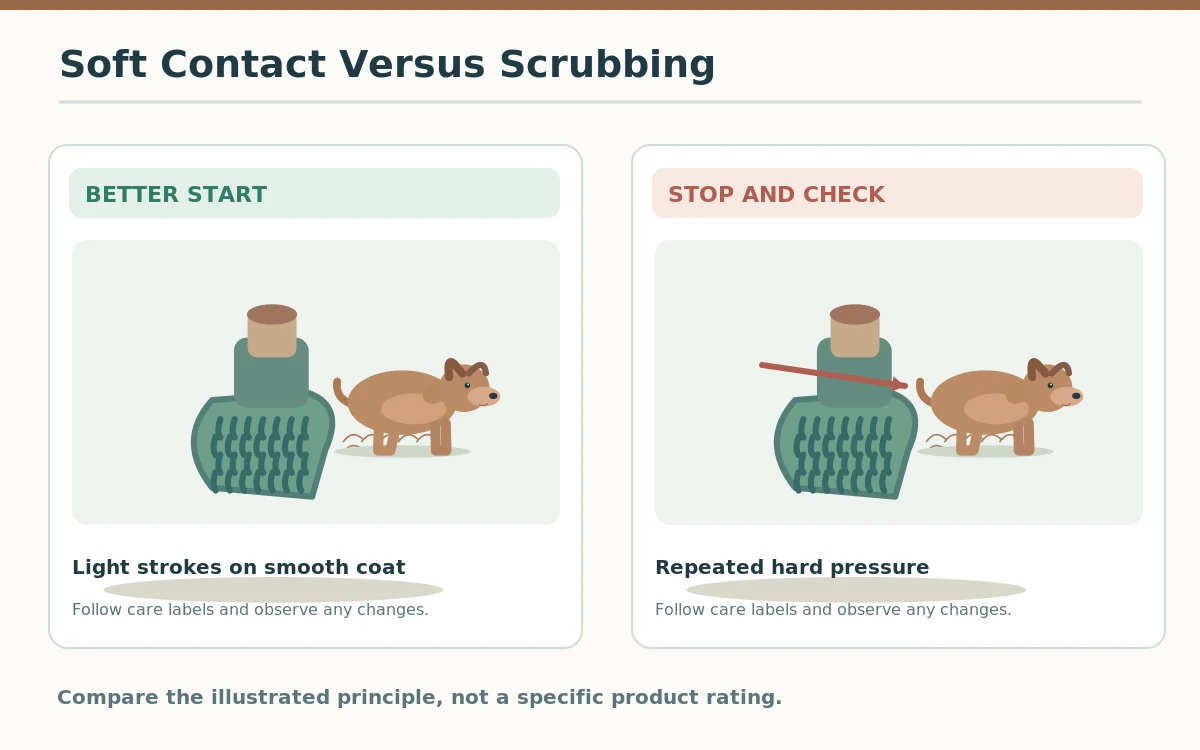
Check the skin while grooming
Part the fur occasionally in good light. Look for new flakes, redness, bumps, insects, hot spots, or areas where the skin feels tender. Stop when brushing seems painful. Sudden patchy hair loss, marked itching, greasy changes, or a strong odor deserves veterinary advice rather than a stronger brush. Do not apply human medicated creams or oils to make the tool glide. Dogs with healing wounds, irritated skin or recent procedures may need a temporary break from physical grooming. A short inspection can be valuable even when almost no loose hair comes off the brush.
Keep sessions brief and predictable
Introduce a new curry on the floor where the dog can investigate it without pressure. Reward calm sniffing; touch the brush lightly to the shoulder for a second and stop before the dog wants to leave. Expand the number of strokes gradually. Brush on a non-slip surface, never a high unstable table for convenience. Puppies and dogs with grooming worries may need many brief sessions. If the dog growls, do not scold the warning. Give space and simplify the plan. Positive handling is more useful than restraining the dog until the grooming session is over.

Clean the tool and reassess seasonally
Peel off collected hair, rinse away debris as the manufacturer directs, and let the brush dry fully before storage. A damp rubber face left in a closed bag can trap grime. Recheck cracks and rough edges after months of use. Some dogs shed more at certain times, while coat changes may reflect indoor living or individual biology. Adjust the frequency to the amount of loose hair and the dog’s comfort, rather than brushing hard every day. You can combine a few comfortable strokes with a floor-cleanup routine, but no grooming brush replaces an appropriate veterinary check for abnormal skin changes.
How We Research
We compared pet-care or textile/equipment guidance from the sources below, looking for practical checks that an owner can verify without buying a particular brand. We separated observed mechanisms from marketing claims and checked the limitations specific to rubber curry brushes for dogs. This guide does not claim original laboratory tests, certified product performance, veterinary diagnosis, or exhaustive testing of every model. Read more about our editorial approach. Product manuals and fabric care labels take priority. Reviewed October 28, 2026.
Sources
American Kennel Club, Types of Dog Brushes for Shedding. Read source. Accessed October 28, 2026.
American Kennel Club, Grooming Your Dog. Read source. Accessed October 28, 2026.
Safety note: Product and routine advice must be adapted to the individual animal, fabric, and appliance. For pain, injury, unexplained coat changes, or persistent distress, contact a veterinary professional. Follow equipment and care-label instructions rather than forcing an unsafe workaround.
They may lift surface hair, but short nubs often fail to reach a dense undercoat. Choose coat-specific tools with professional guidance.
Only if your dog remains comfortable and the skin stays healthy; shorter gentle sessions often work better than repeated vigorous brushing.
Both use flexible surfaces, but fit, nub shape and pressure control differ.
Start with gentle strokes in the direction of growth and follow your dog’s comfort and product guidance.
Stop vigorous brushing and consult a veterinarian rather than trying to remove more hair.