
A dog brush for short hair should lift loose fur without dragging across bare-looking skin. That sounds simple, yet short coats vary. A sleek coat can need a flexible rubber curry; a short double coat may hide a much denser layer beneath the surface. Instead of choosing by breed name or a dramatic shedding claim, start with what your hand feels in the coat. This guide explains the tool differences, a gentle first test, and when to stop. For skin concerns, consult your veterinarian and the HubPet veterinary disclaimer.
Identify the coat beneath the short hairs
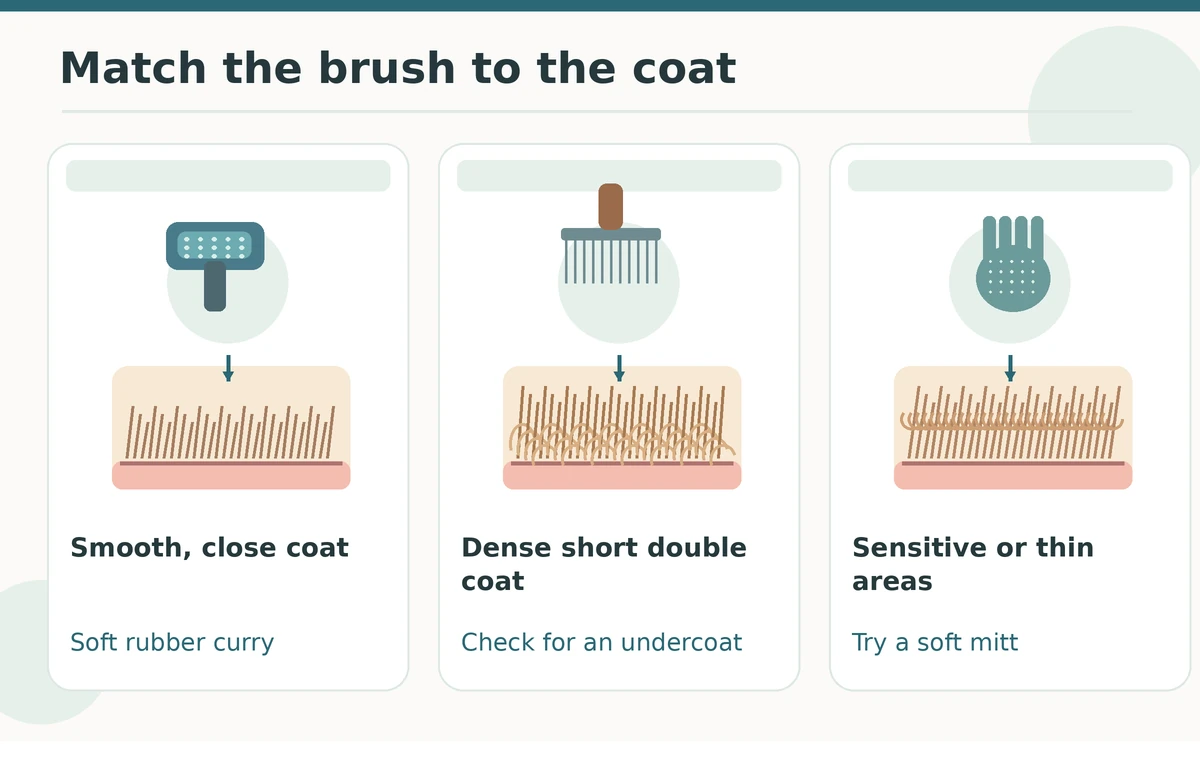
Part the hair over the shoulder and look for a soft, woolly layer below the top hairs. A smooth-coated dog may show little visible undercoat. Another dog can have short guard hairs over a dense insulating layer. That distinction matters more than a package that says ‘all short-haired breeds.’ Run your fingertips over the coat without scratching. Note areas that feel thin, bumpy, or sore. Those areas should not become a testing ground for a firm deshedding tool.
Use rubber when you need flexibility
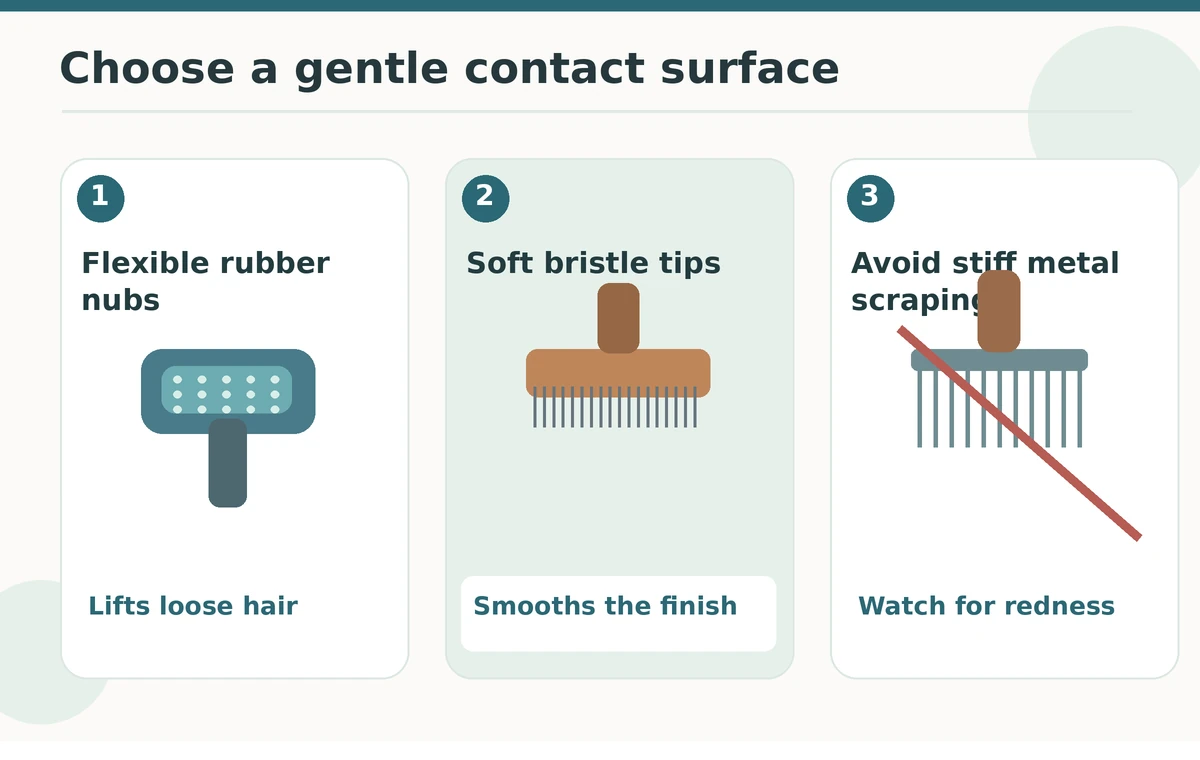
A flexible rubber curry brush or textured grooming mitt can loosen surface hair on a close, smooth coat. Choose short, pliable nubs that bend under fingertip pressure. In a store, reject a head with sharp flashing or a rigid scraping edge. Start with light contact across the shoulder. If loose hair rises easily and the dog stays relaxed, you have a workable match. Meanwhile, a stiff rubber tool may feel rough on skin with very sparse hair.
Pick soft bristles for the finishing pass
Soft bristle brushes sweep up dust and loosened fur and smooth the outer coat. They work well after a rubber curry has released hair. Look at the actual tips: they should feel soft against your inner wrist and should not create a prickly sensation. A broad head covers a large dog efficiently, while a narrow head helps around curved shoulders. However, a bristle brush cannot reach deep loose undercoat in every dog, even when the coat looks short.
Know when a dense undercoat changes the plan
A short double coat can shed far more underfur than a simple rubber mitt collects. Start with a gentle surface pass, then discuss a correctly sized undercoat tool with a groomer if loose wool remains trapped. Avoid turning to repeated hard strokes with a metal-edged shedding blade. The job is to remove already loose hair, not to pull coat that is still attached. If a brush repeatedly catches, try a gentler tool rather than more force.
Test the contact pressure before buying
Put the working face against your forearm and move it slowly without pressure. This is not a complete safety test, but it exposes sharp edges and harsh tips. Check the handle too. A slippery handle invites you to squeeze and press harder when hair accumulates. A rubber pad should clean without trapping damp hair in deep cavities. Finally, choose an appropriate head size: a compact dog does not need an oversized rake-like brush pressed around elbows.
Brush in sections, not against a stopwatch
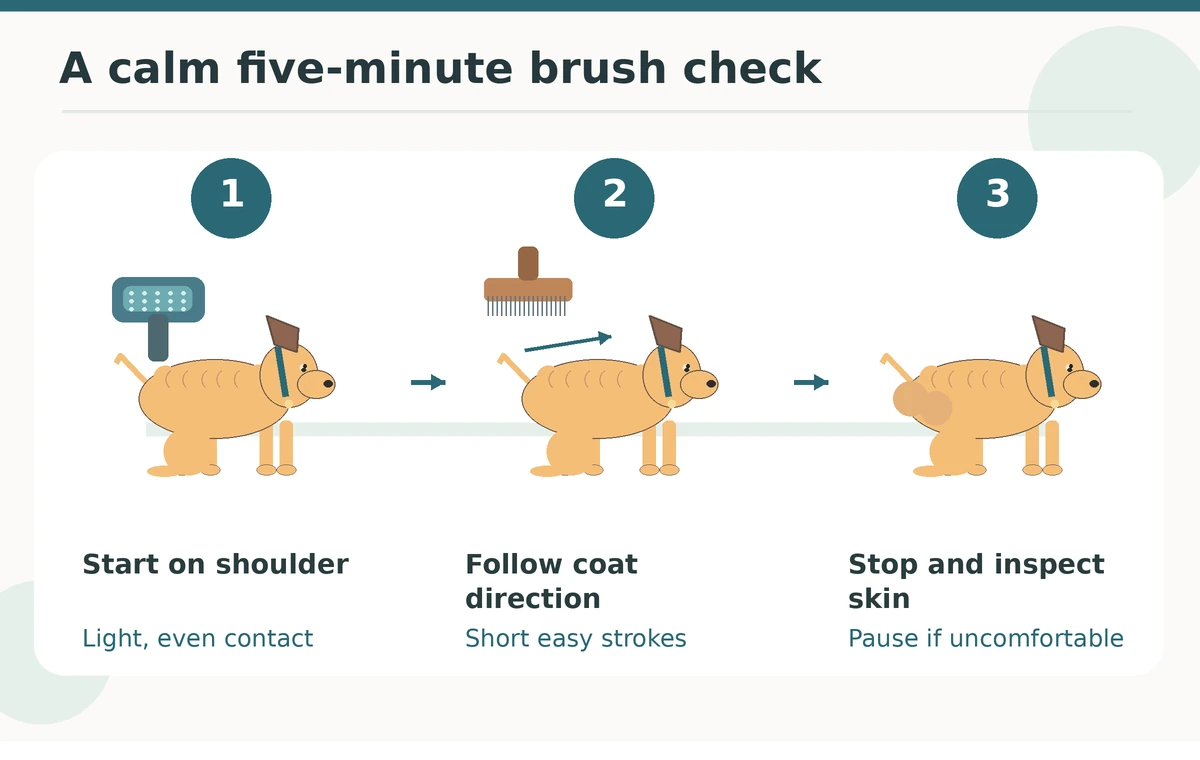
Invite the dog onto a stable floor-level mat and allow an easy exit. Begin on the back or shoulder, where handling often feels less intrusive. Use a few short strokes with the lay of the hair. Lift the brush, remove collected hair, and reassess the skin. Then move to another comfortable area. Avoid rubbing one patch until it looks polished. Even an easy short coat can become irritated through friction when an owner repeats the same motion too long.
Treat the belly, face, and legs differently
Skin near the belly, armpits, inner thighs, and face deserves a lighter touch. In fact, a damp soft cloth may be a better choice than a brush around the muzzle and delicate spots. Never drag a rubber nub over a bump, healing scrape, or irritated fold. Support the dog calmly when checking areas the dog cannot see. If your dog freezes, turns away, or licks their lips repeatedly, end the session and make the next attempt easier.
Compare the hair removed with the skin response
A brush loaded with loose fur looks satisfying, but volume alone is a poor performance score. A better check combines a relaxed dog, normal skin appearance, and steadily less loose hair as you finish. Inspect the shoulder after the first section. If you see pink streaks, flakes after heavy friction, or obvious tenderness, stop. Similarly, sudden excessive shedding, bald patches, itching, or sores call for veterinary assessment rather than a more aggressive brush.
Clean the tool without damaging its surface
Remove trapped hair after each session. Wash a washable rubber head as its maker directs and let it dry completely before storage. Bristle brushes may need a comb to lift hair from the base, followed by careful cleaning. Do not share a dirty brush between animals, especially if one has a skin problem. Inspect the rubber for cracking and the bristles for sharp broken tips. Replace a damaged head even if its handle still looks new.
Build a routine around the individual dog
Frequency changes with the season and coat, so start with brief sessions and adjust from what you observe. A smooth coat that stays tidy may need only periodic attention, while an actively shedding short double coat may need more frequent gentle brushing. Use treats and voluntary participation rather than restraining a dog to finish every patch. A consistent light approach is more useful than an occasional marathon that ends with the dog avoiding the grooming drawer.
A practical shopping decision
Before paying, identify the coat layer you want to reach, test the brush tips for comfort, and inspect how easily the head cleans. Choose one primary tool and add a second only if it solves a different job. For a smooth coat, that may mean rubber plus a soft finishing brush. For a short double coat, professional coat guidance may matter more than another tool purchase. Keep the receipt until you can test the brush during a calm, short session.
How We Research
We compared veterinary coat-care advice from VCA Animal Hospitals with practical grooming and handling guidance from the American Kennel Club and topic-specific safety recommendations. The review distinguishes coat types, mechanical tool design, and situations that require a professional rather than pretending we tested products. Our editors checked the cited guidance on October 27, 2026. Read more about our editorial approach on the About HubPet page.
Sources
VCA Animal Hospitals: Grooming and Coat Care for Your Dog: Read the original guidance. Accessed October 27, 2026.
American Kennel Club: How to Choose the Right Dog Brushes: Read the original guidance. Accessed October 27, 2026.
American Kennel Club: Dog Grooming at Home: Read the original guidance. Accessed October 27, 2026.
Often for a smooth, close coat, yes. A short double coat may need a different undercoat tool because rubber nubs rarely reach its dense inner layer.
Usually start with softer contact tools for a sleek coat. Ask a professional about a slicker only when the particular coat requires it and your technique stays gentle.
Yes. Repeated friction or pressing hard on the same spot can irritate skin, so let skin condition and your dog’s comfort guide session length.
Many benefit from periodic coat checks and loose-hair removal year-round. Adjust frequency to actual shedding and comfort rather than a fixed calendar.
Stop immediately, inspect the skin, and switch to gentler handling. If redness persists or the dog seems painful, contact your veterinarian before grooming again.