
A collapsible dog water bowl looks convenient because it folds flat, clips to a bag, and weighs little. Yet the bowl needs to perform one very ordinary job: stay open while a dog drinks. Floppy walls, narrow bases, and deep seams can undermine that job. Material claims such as ‘food-grade’ do not replace checking the actual manufacturer instructions and the finish of each surface. The AVMA includes portable bowls and spare water among travel supplies, while CDC explains why pet water containers need regular washing. This guide helps you choose a practical portable dish for walks, road trips, hikes, and temporary stops without treating it as a replacement for a reliable home water station.
Look at the shape fully opened
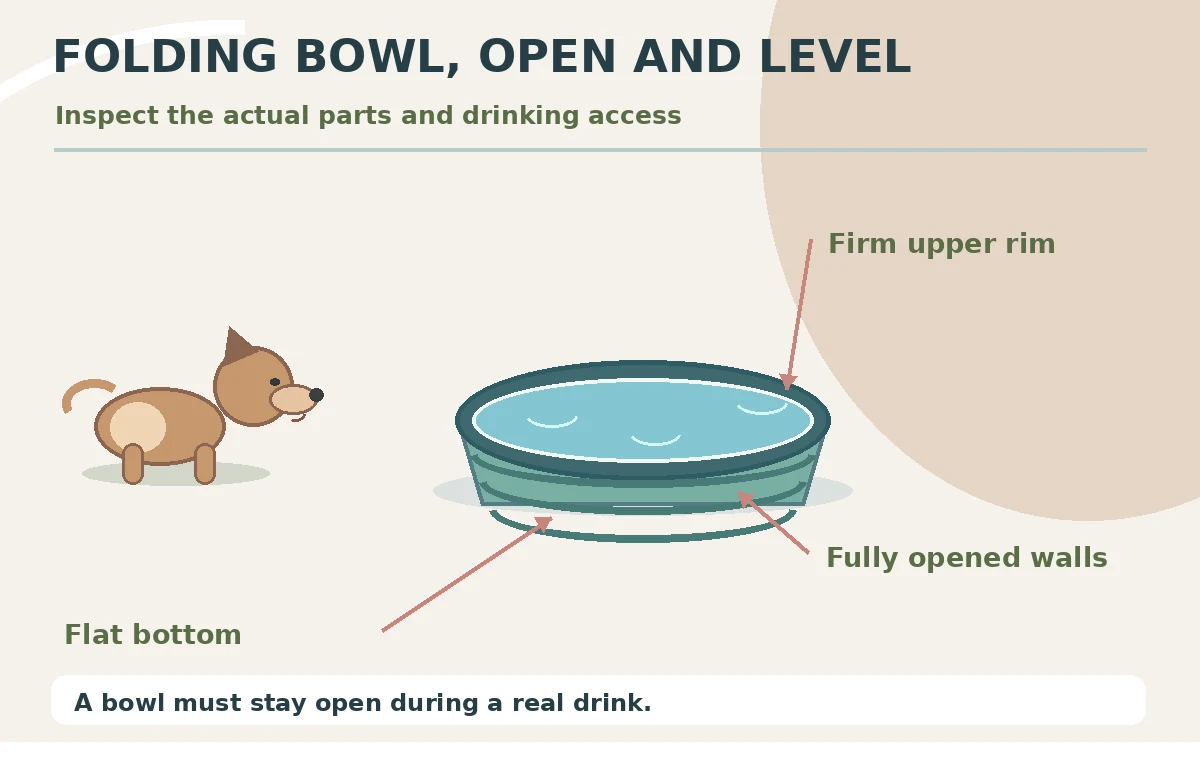
Compare an open bowl from above and from the side. A wide enough rim allows a dog to lower its muzzle comfortably, while a shallow wide base supports the water without requiring a tall, narrow wall. Product capacity claims can describe a bowl filled to the brim, which is not a useful working level for a thirsty dog. Estimate the normal amount you would pour at a rest stop and allow space to prevent splashing. A giant breed and a toy breed may need different rim widths even on the same trail. Judge reach and stability with actual use, not breed-size labels alone.
Assess the rim and fold rings
Many silicone bowls collapse through concentric rings. Each ring should open cleanly and remain expanded when the rim receives gentle sideways pressure. Try pressing lightly around the edge before filling it. If one ring snaps closed while the others hold, water may spill when the dog nudges the side. Fabric bowls use seams and a waterproof liner instead; inspect the corners and folded base for buckling. A thick rim adds structure but can also increase packed size. Look for a sensible balance: the bowl should store compactly and still feel like a real dish once opened.
Put stability ahead of carabiner features
A clip helps you transport a bowl, but it does not make the bowl more stable. Set the unfolded vessel on level ground, add clean water, and gently press its edge as a dog might. Watch for rocking, tipping, or a wall that folds inward. On a steep trail, choose a level safe pause rather than balancing a full bowl on a rock. Keep clips and small removable pieces away from dogs that chew gear. If the unit has a detachable mounting ring, examine it for rough edges and wear. Carrying convenience has value only when the drinking vessel works reliably.
Compare silicone, fabric, and rigid-fold designs
A smooth one-piece silicone bowl can often rinse easily, provided its accordion grooves open for scrubbing. Foldable fabric dishes are light but may have stitched corners, liner folds, or waterproof coatings that need careful drying. Hybrid hard-rim designs are usually stiffer but bulkier. Read the exact care instructions, since dishwasher compatibility and temperature tolerances vary. Inspect any food-contact finish for peeling or cracks; avoid assuming a bright color or ‘BPA-free’ claim proves overall product safety. Choose surfaces you can see, touch, and clean without leaving hidden pockets full of moisture.

Plan a calm first drink
Bring a folded bowl to the yard, expand every ring, and place it on a flat surface. Add a modest amount of familiar fresh water and let the dog approach on its own. Some dogs hesitate at the movement of a flexible wall or an unusual color, so do not force the nose into the dish. Offer a standard home bowl alongside if needed. Observe the dog’s preferred head position and whether it repeatedly steps into the drinking area. Try two or three supervised short uses before trusting the bowl on a longer trip. A simple equipment trial can reveal a poor fit quickly.
Carry clean water rather than depending on puddles
A foldable bowl creates a place to drink, but it does not supply safe water. Pack a separate sealed bottle filled from a trusted source and refill as needed. AKC warns that ponds and streams may contain bacteria, parasites, and other hazards, making them unreliable substitutes. If a dog is hot or tired, pause the activity, move to a safer environment, and offer water without rushing. Avoid prescribing a single fixed drinking interval for all dogs. Weather, activity level, and an individual animal’s needs matter more than the gear description on a package.
Wash the accordion folds
Rinse grit away before scrubbing. Expand every ridge and wash all surfaces with soap and warm water, paying attention to grooves that are invisible while the bowl is collapsed. After a thorough rinse, leave it fully open to dry; packing a damp flexible bowl can encourage unpleasant residue and odor. CDC recommends washing water bowls every day and more often when visibly dirty. Check for sticky film, discoloration, or a persistent smell that washing does not remove. Replace a damaged bowl. On trips, a separate clean bag keeps the dry bowl from contact with muddy shoes or used equipment.

Use a four-point pass test
A good collapsible dish stays fully open, offers an accessible rim, stands flat on realistic surfaces, and dries completely after washing. Fold and unfold it repeatedly to see whether the hinges or rings show stress. Make sure the packed item fits where you intend to store it without being crushed by heavy objects. Choose returnable products if you can, because some dogs dislike flexible rims even when the design looks sound. Keep a conventional bowl available at home and bring another drinking option on longer journeys. Portable convenience should never reduce the dog’s access to fresh water.
How We Research
We reviewed first-party guidance from veterinary associations, established animal welfare organizations, government agencies, and electrical safety authorities where relevant. We compared practical water access, product geometry, materials, and maintenance rather than ranking untested products. Drawings are explanatory and do not represent product certifications or testing. Sources reviewed October 27, 2026. Learn more at About HubPet.
Sources
American Veterinary Medical Association — Traveling with Your Dog or Cat. Read guidance. Accessed October 27, 2026.
American Kennel Club — Hiking With Your Dog: Safety and Gear. Read guidance. Accessed October 27, 2026.
CDC — About Cleaning and Disinfecting Pet Supplies. Read guidance. Accessed October 27, 2026.
FDA — Tips for Safe Handling of Pet Food and Treats. Read guidance. Accessed October 27, 2026.
Safety note: These are general equipment-selection tips, not a diagnosis or an individualized hydration or medical plan. A sudden change in drinking, severe weakness, or unusual behavior calls for veterinary assessment. See our veterinary disclaimer.
Smooth washable silicone, lined fabric, or a supported hybrid can work; choose the design that stays open and matches its cleaning instructions.
Open every fold completely, choose a stable broad base, and place it on level ground where the dog can drink without bumping it.
Avoid storing it wet. Wash, rinse, and air-dry the bowl open, especially within accordion grooves that hold moisture.
Yes when the manufacturer permits food contact, but clean it appropriately after food and avoid transferring dirty food residue into drinking water.
Check rim width, stable working capacity, and comfortable muzzle access rather than relying only on the size label or package photograph.