
A dog can bark while the room looks perfectly still to a human. That does not prove the dog is imagining a threat or behaving for no reason. Dogs hear and notice sounds that may be faint to us, detect outdoor scents, and observe motion in lighting that gives humans less visual detail. Sometimes dogs learn to bark for attention, during excitement, or after a predictable household event. Start with the modest assumption that information is missing. A calm investigation is more useful than deciding the dog is being difficult, “seeing ghosts,” or intentionally disturbing you.
Check outside your immediate field of view
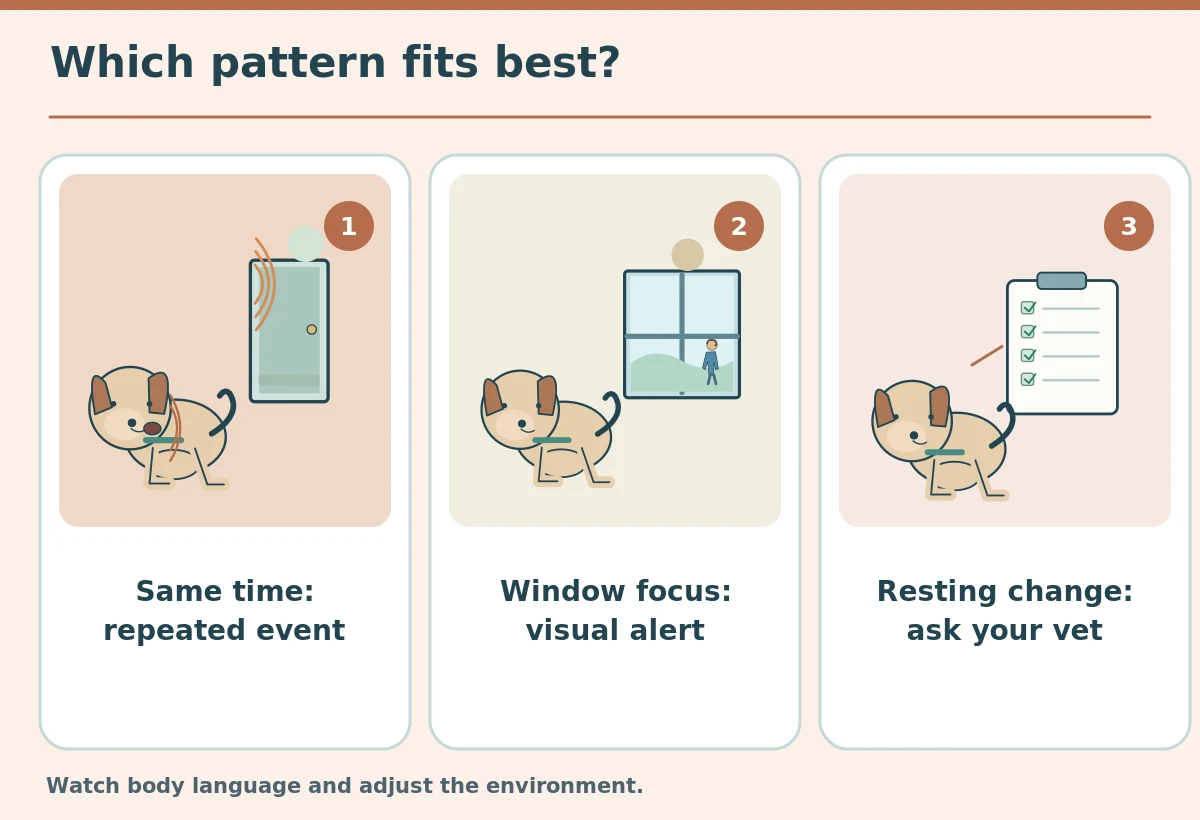
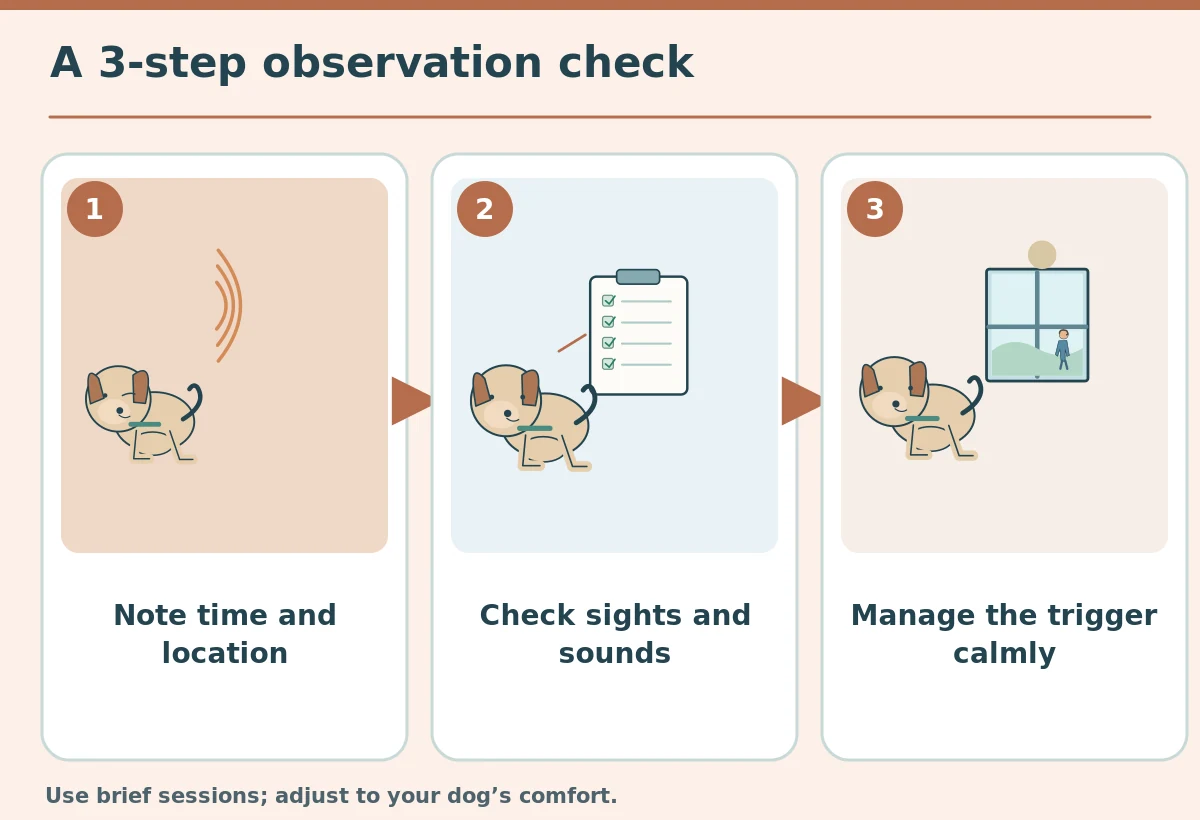
Stand where the dog stands. Can it see through a hallway door, balcony glass, garden gap, or reflection you normally overlook? Does a parked car mirror briefly catch movement at the same time each day? A dog near a window may react to people on a road farther away than the yard. If the dog faces one wall, consider noise traveling through shared plumbing, an elevator shaft, or an adjacent apartment. You do not need to hear the exact sound to record the pattern. Look for repeatable timing, posture, and orientation before trying to interrupt the bark.
Listen for the sounds between obvious noises
Pause and listen at different times, especially near vents, entry doors, and windows. Delivery carts, neighbors returning home, pets moving upstairs, birds, rodents outdoors, heating systems, and distant vehicle doors can all create intermittent cues. Do not assume any single sound is the answer without some evidence. Keep household noise at a comfortable level; loud background audio may itself stress some dogs. A quiet recording made in your own home can help identify a repeating event, but it is not a medical diagnostic tool. Remember that a dog may hear frequencies that a phone microphone or your ears miss.

Record the dog’s entire response
Use a short log: time, location, direction of gaze, body language, duration, and what happened next. “Barked twice, ears forward, recovered when door shut” differs from “paced, trembled, barked for ten minutes and refused food.” Track whether barking appears during predictable delivery hours, after sunset, while someone cooks, or just after play. If you record video, focus on the dog and its surroundings without compromising a neighbor’s privacy. Over several days, you may see a schedule emerge. A log is especially useful to your veterinarian if the barking is new or comes with other changes.
Distinguish alert barking from persistent distress
Brief alert barks followed by easy recovery may reflect the dog checking a sound. A dog who stays rigid, hides, paces, salivates, or cannot relax after the trigger passes may need an entirely different plan. Avoid describing a dog as territorial or anxious from a single episode; such labels can mask an unmet need or discomfort. If the dog suddenly barks while appearing disoriented, repeatedly startles from sleep, or has other unusual changes, contact a veterinarian. Pain, sensory changes, and medical conditions can affect behavior, but a blog cannot diagnose them from a bark.
Remove a repeat trigger when practical
When the pattern points to outside movement, try closing a blind at known busy hours or shifting the dog’s resting mat away from the window. If hallway noise is the trigger, place a comfortable rest area farther from the front door. For a visually exposed yard, provide supervised access rather than allowing rehearsal of uninterrupted alert barking. Measure whether episodes become shorter and the dog recovers faster. Do not cover every window or shut a dog into an isolated space if that increases distress. Management is an experiment that should improve comfort, not simply hide the sound from people.
Teach a gentle follow-up to the alert
When the dog alerts, calmly acknowledge the sound, then invite a familiar easy action such as walking with you to a mat or touching your hand. Reward the dog for turning away and settling; practice these behaviors away from triggers first. If barking is already intense, create distance and reduce stimulation before asking for a cue. Avoid shouting “quiet,” grabbing the dog, or startling with cans and devices. The aim is to give the dog a predictable end to the alert sequence. For some dogs, one or two barks may remain normal even after the longer cycle improves.
Don’t train away a signal for a real need
If your dog barks at the back door, check whether they need a potty break. Barking near a food bowl or during rest may also indicate frustration, routine disruption, or a request for help. A sudden change deserves special attention rather than automatic behavior correction. You can teach an alternative request, such as standing on a mat near the door, while still meeting the underlying need. For attention-seeking patterns, proactively reward quiet check-ins and enrichment, not frantic calling. Be cautious with any advice that treats all barks as one habit to extinguish without asking why they happened.
Improve daily predictability without overloading
Regular meals, suitable exercise, sniffing opportunities, resting periods, and low-pressure training help you interpret barking in context. A dog who hears more sounds when the house quiets at night may need a rest location with fewer exterior cues. Try one environmental adjustment at a time and observe for several days. If a background sound helps, choose low volume and check that the dog remains relaxed; do not use continuous masking as a substitute for addressing fear. Keep sessions short. A useful outcome is fewer prolonged alarms and easier recovery, not perfection in every room and every season.
Use the log to decide on outside help
Share patterns with a veterinarian when barking appears suddenly, increases sharply, or accompanies pain signs, disorientation, hearing changes, sleep disruptions, or difficulty settling. A qualified reward-based behavior professional can help with persistent fear, sound sensitivity, or reactive alerting after a veterinarian evaluates possible medical concerns. Never punish a growl or bark that could warn of discomfort. Describe observed facts rather than diagnosing “hallucinations” or “paranoia.” Even when the trigger remains unidentified, your record can reveal where the dog feels safe and which changes improve welfare. That is enough to make a sound next decision.
How We Research
We compared veterinary and canine-behavior explanations of sensory triggers, then designed an observation record that separates evidence from speculation. Sudden, unexplained changes call for a veterinarian’s assessment. We did not test commercial devices or diagnose individual dogs. Learn more about our editorial approach at About HubPet.
Sources
American Kennel Club — Why Does My Dog Bark at Nothing?: Read the source. Accessed October 27, 2026.
Cornell University College of Veterinary Medicine — Excessive Barking: Read the source. Accessed October 27, 2026.
VCA Animal Hospitals — Tips to Quiet Barking: Read the source. Accessed October 27, 2026.
American Veterinary Society of Animal Behavior — Humane Dog Training Position Statement: Read the source. Accessed October 27, 2026.
Safety note: New or markedly changed barking, suspected discomfort, fear, or dangerous reactions warrant veterinary assessment or individualized support from a qualified, reward-based behavior professional. This article does not provide a medical diagnosis; see the HubPet veterinary disclaimer.
Yes. Dogs may notice faint, distant, or higher-frequency sounds that humans do not readily detect, but do not assume a particular source without observing a pattern.
The dog may be reacting to repeated arrivals, outdoor animals, or building noises. Log location and timing to test the idea.
No. Yelling can increase arousal and does not teach a calm alternative. Make space and reinforce easy disengagement when the dog is able to respond.
A bark alone cannot identify a diagnosis. Contact a veterinarian if it is new or accompanied by confusion, pain signs, or other unusual behavior.
Work on comfort, reduce likely visual triggers, track episodes, and seek professional guidance if the dog becomes distressed or the pattern worsens.