
Pet-care safety note: If your animal is ill, has injured skin, or may have contacted a household chemical, contact your veterinarian. Read our veterinary information disclaimer for the limits of general website guidance.
Choose carpet shampoo for pets based on the carpet’s construction, cleaning method, and type of soil—not because the bottle includes a dog or cat photograph. Installed synthetic wall-to-wall carpet may permit a low-foam extractor solution while a wool rug or an upholstery fabric may need different care. Find the fiber, backing, and stain-treatment instructions from the carpet maker first. If you cannot identify a rug’s dyes or cleaning method, avoid a whole-surface wet treatment. A wrong shampoo can change texture or color even when it advertises household stain removal.
Understand the three jobs on the label
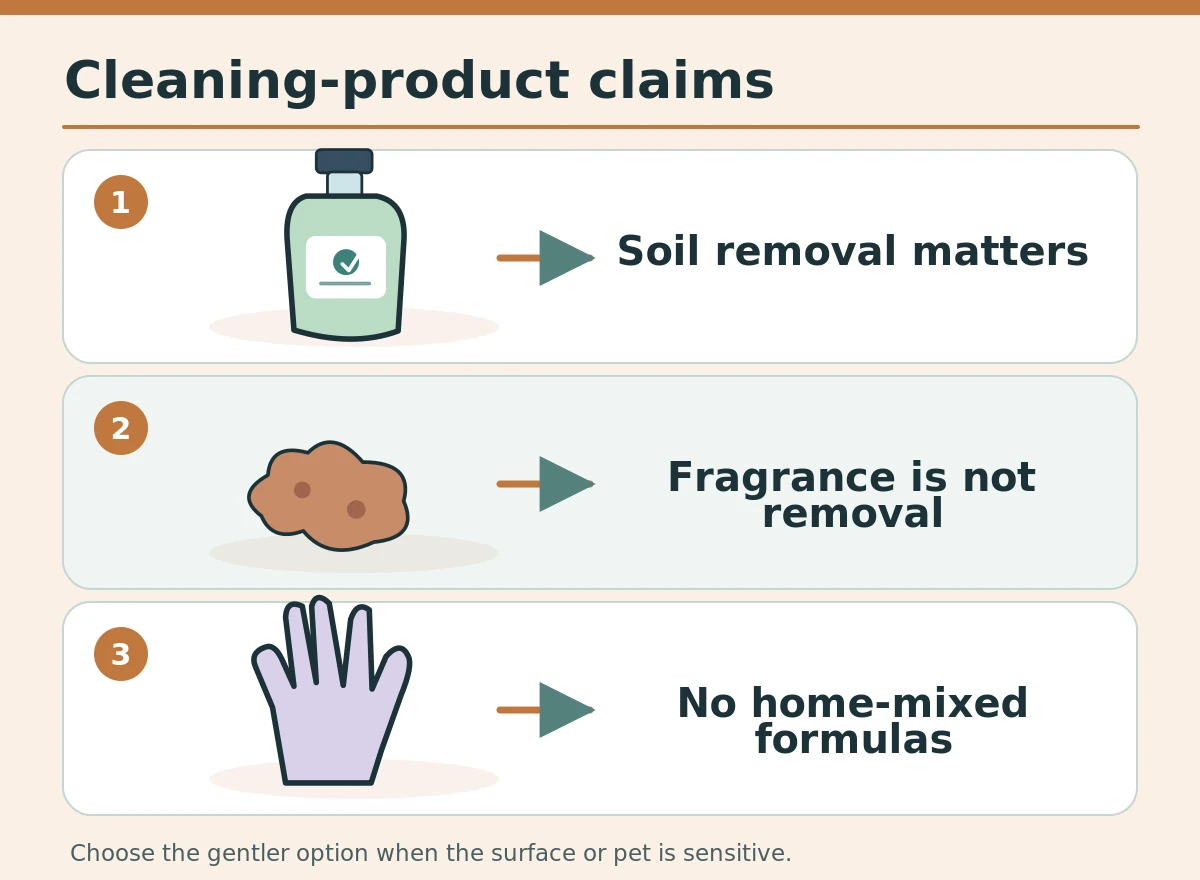
Some products target general soils, others are spot removers, and others target pet stains and odors. The right job matters. A pre-spray has different directions than an in-tank detergent; a rinse solution is not always the same as an all-purpose shampoo. Read whether the product requires extraction, wiping, or rinsing and whether the maker permits use in your machine. Claims such as ‘eliminates all pet odors’ cannot substitute for checking backing contamination. Choose an approach that removes soil and leaves minimal residue rather than just adding fragrance.
Treat dilution as a requirement, not a suggestion
Concentrate labels specify a dilution based on equipment and product strength. Use a marked measuring container rather than estimating a capful. Adding extra detergent can leave sticky residues, increase foaming, and complicate extraction. Using less than instructed can also make treatment ineffective, so follow the exact use directions instead of experimenting. If your machine has a dedicated dilution feature, confirm that the maker supports the formula in that feature. Store the concentrate in its original, labeled container out of pets’ reach, and never decant cleaners into food or drink bottles.

Check for genuine third-party evaluation
The Carpet and Rug Institute’s Seal of Approval program tests carpet cleaning solutions and equipment for performance considerations that include soil removal and potential changes to appearance. That can be more informative than a generic ‘pet friendly’ claim. EPA’s Safer Choice program assesses product ingredients against health and environmental criteria; it does not mean the concentrated bottle is safe for a pet to lick or that you can skip use instructions. Certifications serve different purposes, so verify an actual product listing rather than assuming a logo in an advertisement proves every claim.
Never mix formulas or add perfume oils
Do not combine shampoo with bleach, ammonia, disinfectant, odor powder, or essential oil. Dangerous reactions or residues can result, and mixtures can also harm pumps and carpet dyes. ASPCA notes that many household cleaners are compatible with pet homes when owners follow the label and dry treated areas, while some concentrated products pose serious injury risks. A strong fragrance may mask an odor without cleaning the underlying soil. Birds can be particularly vulnerable to fumes; seek species-specific veterinary advice and move animals away from cleaning vapors.
Run a small colorfastness and texture test
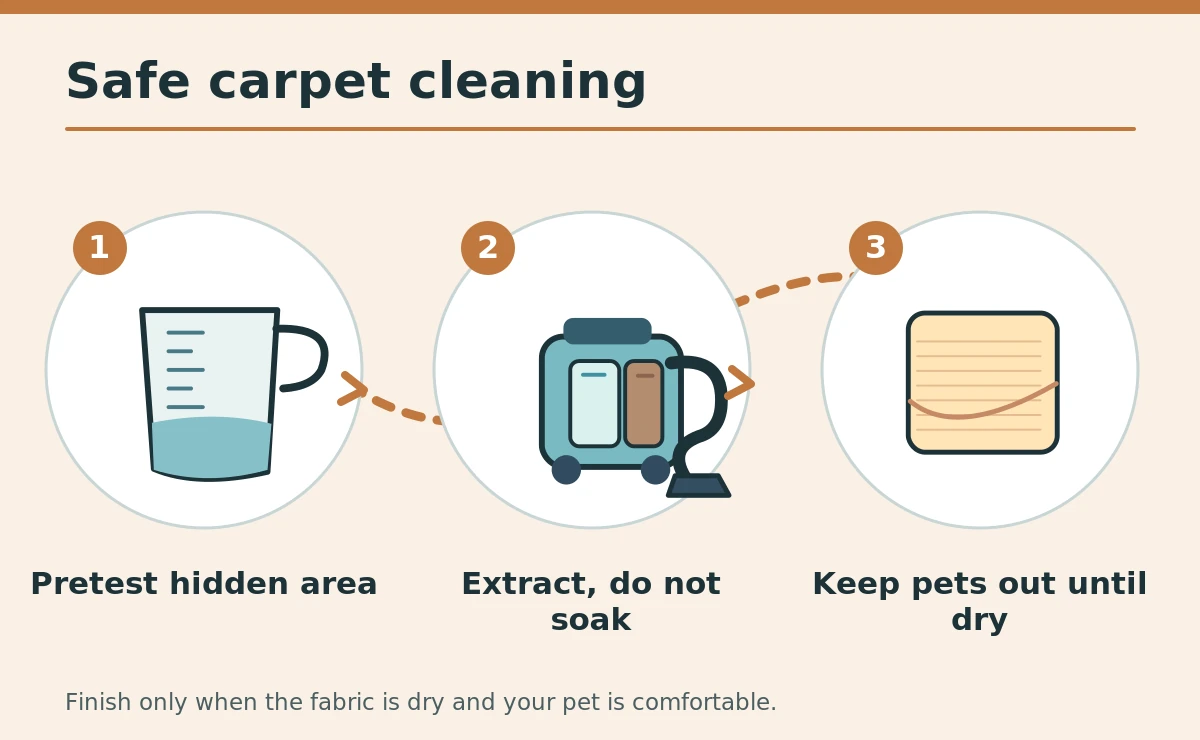
Apply the solution exactly as directed to a hidden corner or spare piece of the same carpet. Blot with an unprinted white cloth and inspect for transferred dye, fiber distortion, or stiffening once the area is dry. CRI recommends pretesting cleaning agents and avoiding rubbing, which can damage the pile. A successful spot test helps reduce uncertainty but does not guarantee an entire old carpet will respond uniformly, especially if earlier chemicals remain in it. Stop and contact a professional if colors migrate or the backing softens.
Separate surface cleaning from odor problems
Shampoo can remove ordinary tracked-in soil and some spot contamination. Urine that has wicked below the surface may persist in underlay or subfloor even after the pile looks clean. Heavy fragrance does not address that deeper material. If odor returns after drying, investigate its source rather than repeating wet applications. Frequent wet treatment can leave residue and moisture that worsen the floor’s condition. For ongoing house-soiling, clean the area appropriately and also consider whether the pet needs a veterinary check or a review of its toileting routine.
Protect pets during application and drying
Move dogs and cats into a separate ventilated room before bringing out concentrated solutions or the machine. Secure cords, buckets, and dirty recovery tanks; curious pets can lick puddles or tip containers. Follow any rinsing instruction carefully, then allow the carpet to dry completely before paws return. ASPCA specifically advises keeping pets off carpet until it is dry after shampooing. Air movement can help drying, but avoid assuming that a dry-feeling pile guarantees moisture has left the pad beneath. Inspect the backing or ask a professional if you suspect saturation.
Finish with removal, not more product
Use the rinse and extraction steps specified for the shampoo and machine. Avoid going back over the carpet with stronger detergent because it still smells wet. Plain-water rinsing is suitable only when the equipment and product instructions allow it. Clean the extractor’s tanks and lines to keep old residue from returning next time. After full drying, vacuum if recommended to lift residual loose soil. A carpet that feels crunchy, sticky, or unusually flat after cleaning deserves reassessment; pouring on another product rarely fixes excess residue.
A smarter choice for sensitive households
Look for clear directions, full ingredient and precaution information, a compatible machine use statement, realistic coverage, and accessible manufacturer support. If someone in the home is sensitive to fragrance, consider an appropriate low-odor or fragrance-free option rather than assuming a scented formula is inherently cleaner. Test all options on the actual fiber. Cleaning residues may particularly bother pets with skin problems, but a shampoo selection guide cannot diagnose that; consult the veterinarian if rubbing, licking, or irritation occurs after floor cleaning.
What to buy and what to skip
Choose one carpet-compatible formula that addresses the actual stain and matches your machine, then purchase only enough for planned maintenance. Skip mystery refill bottles, strong deodorizing powders, homemade essential-oil blends, and combinations that neither equipment maker nor chemical label approves. Keep all products secured before, during, and after cleaning. The best result is a visibly cleaner carpet that dries in a reasonable time without transferring dye or leaving noticeable residue—and a pet that has no access to wet chemical-treated fibers.
How We Research
We cross-checked label-oriented chemical safety advice from ASPCA and EPA with carpet-performance guidance from the Carpet and Rug Institute. The emphasis is on choosing a compatible formula and avoiding overapplication; we did not chemically test or endorse individual shampoos. See About HubPet for our editorial approach.
Sources
ASPCA: Pet Poisons, Household Products and Cleaning Agents: Read the original source. Accessed October 27, 2026.
ASPCA: What Pet Parents Need to Know About Corrosive Household Products (September 2026): Read the original source. Accessed October 27, 2026.
Carpet and Rug Institute: Cleaning and Maintenance for Homes: Read the original source. Accessed October 27, 2026.
Carpet and Rug Institute: Seal of Approval Program: Read the original source. Accessed October 27, 2026.
U.S. EPA: Safer Choice Frequently Asked Questions: Read the original source. Accessed October 27, 2026.
No. Follow the exact product label and keep animals away during application and until the treated carpet has fully dried. The claim does not mean a pet can lick concentrate or residue.
Do not add oils or other ingredients unless the product and equipment makers explicitly direct it. Some oils are dangerous for pets, especially cats, and mixtures can damage carpet or equipment.
Usually not. Excess detergent can leave residue, and odors originating in pad or subfloor may require additional evaluation rather than stronger surface shampoo.
It indicates the listed product meets EPA criteria for safer chemical ingredients and other program requirements. It is not permission to ignore label precautions, dilution, rinsing, or drying.
Not without clear manufacturer or specialist instructions. Broad wet cleaning can harm delicate fibers, dyes, and backing; a professional rug cleaner is often the safer option.