
Puppy teething toys can offer a safe outlet for chewing while baby teeth give way to adult teeth. Yet the toy that fits a young puppy today may not fit the same mouth a few weeks later. Teething does not explain every chewing episode, and a frozen or hard toy is not automatically kinder to sore gums. This guide offers a check-before-you-buy framework and a short positive routine for owners who want to protect both teeth and household belongings. Seek veterinary advice for broken teeth, heavy bleeding, refusal to eat, or suspected swallowed pieces; see the HubPet veterinary disclaimer.
Understand the changing teething window
Puppies develop their baby teeth early and begin replacing them as they grow. VCA describes the transition to permanent teeth as a process extending into the first several months, with individual variation. Chewing may remain rewarding even after teething ends, so do not count on a birthday to stop interest in furniture or shoes. Watch the puppy’s current behavior and ask the veterinary team what is expected for its age and breed size. A toy should support appropriate exploration rather than promise to speed up tooth development. Avoid giving human teething products or applying numbing gels without veterinary direction.
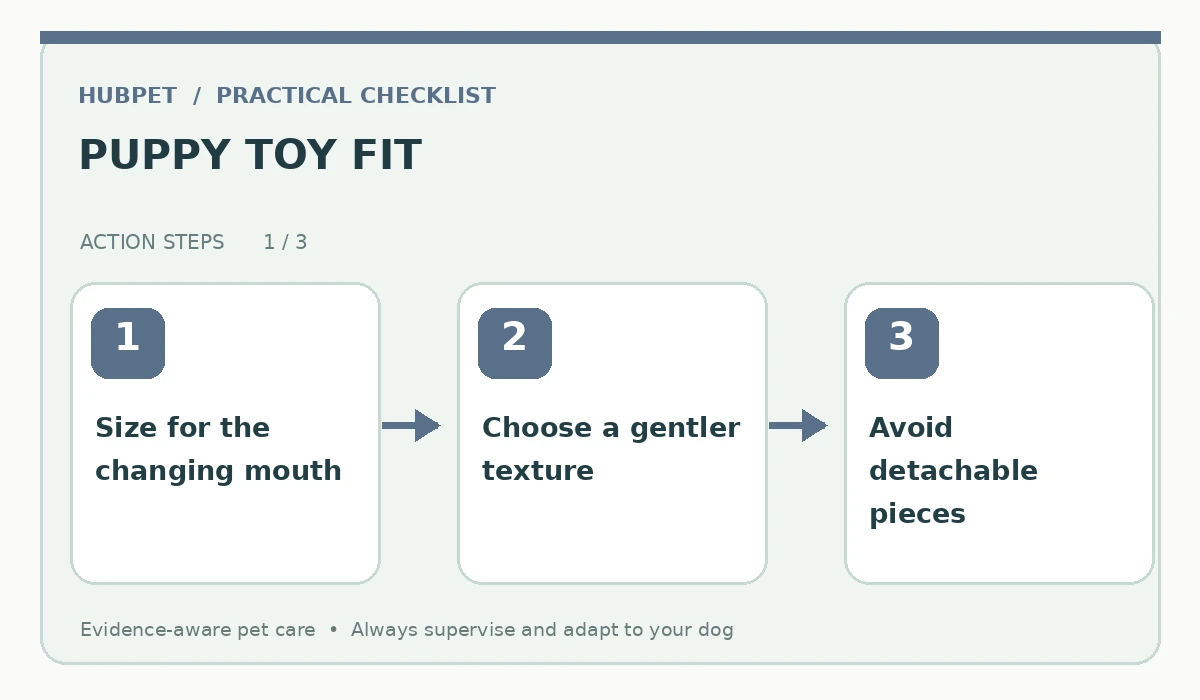
Prioritize a pliable surface and safe size
Look for a puppy-labeled toy that yields somewhat under pressure and has no exposed wire, hard corners, or glued decorations. VCA warns that extremely hard chews can fracture teeth. Evaluate the widest part and the narrowest part of the object; either can create trouble if the puppy can lodge or swallow it. As the puppy grows, reassess the toy’s dimensions. Small objects and removable squeakers are risky even for dogs that have behaved gently before. Do not assume a toy is safe simply because a pet-store shelf groups it with puppy items.
Avoid overstating the benefit of cold toys
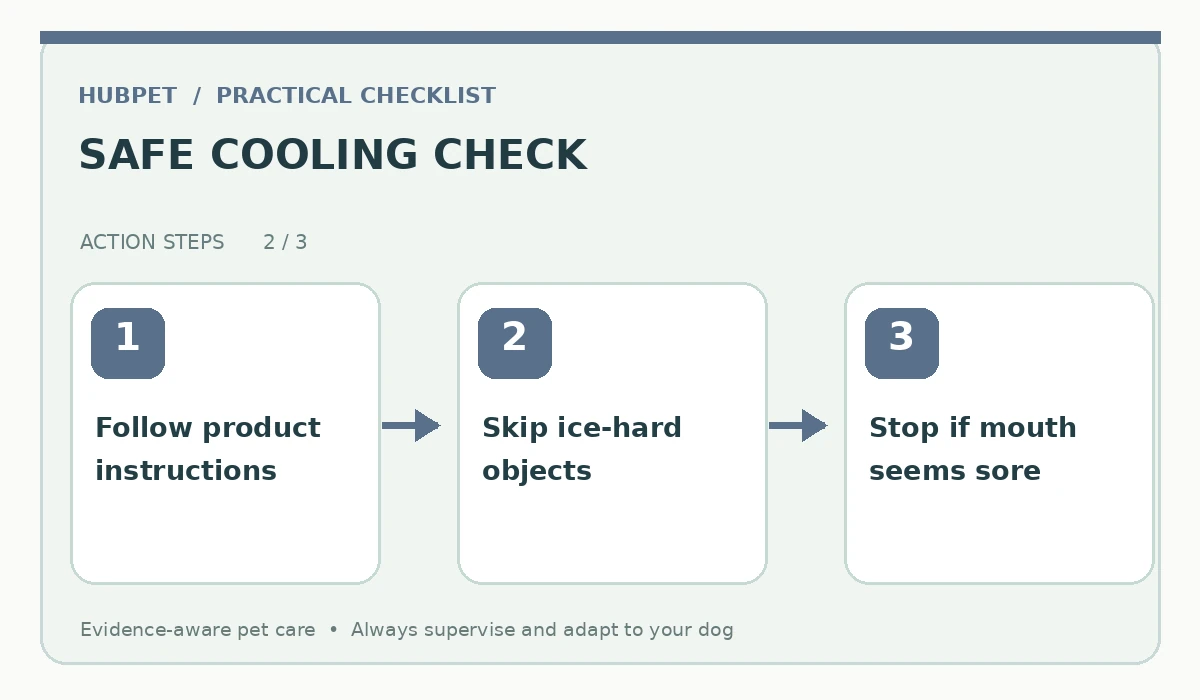
A manufacturer-approved, lightly chilled toy may interest some teething puppies, but extreme cold or frozen solid objects can be uncomfortably rigid. If a particular rubber toy is designed for cooling, follow its specific instructions and check the surface before use. Avoid improvising with brittle plastic, exposed ice chunks, or cloth that the puppy rips and eats. Cold is an optional preference, not a medical treatment. If the puppy winces when chewing, has marked swelling, or refuses food, stop the session and ask a veterinarian for a dental check rather than making the toy colder.
Separate chewing from mouthing people
A puppy may grab sleeves or hands during play even when toys are available. Set a toy within reach before the puppy becomes overexcited and calmly invite a switch to that object. Reward voluntary contact with the allowed toy. If biting escalates, end the interaction briefly and make room for rest. Avoid physical correction, shouting, or teasing games that encourage biting hands. Humane World recommends positive methods and arranging the environment so successful choices are easy. A teething toy is one tool in a broader routine that includes sleep, age-appropriate activity, and predictable human responses.
Choose a washable shape
Food-filled grooves and hollow chambers can provide enrichment, but residues create extra cleaning work. Select a shape you can wash and dry according to its label, preferably without inaccessible channels. Check whether the material tolerates the cleaning method recommended by the maker. Remove fabric toys that become frayed or soaked with loose threads. A toy used outdoors may collect soil or grit that irritates a puppy’s mouth, so keep an indoor alternative. Inspect after each session rather than waiting for a visible chunk to break free. Clean storage matters as much as purchasing the right design.
Introduce one texture at a time
Offer a new toy during a calm, supervised window and observe the response. A puppy may enjoy a softer rubber surface but avoid a ridged design, or carry a fabric item without chewing it. This does not mean the puppy is being stubborn. Try another manufacturer-approved texture rather than forcing the item into the mouth. Reward exploration and let the puppy move away. Start with brief sessions so you can notice small tears or loose parts. Keep the unfamiliar toy away from other dogs until you know whether the puppy tries to guard it or swallow pieces.
Puppy-proof the chewing zone
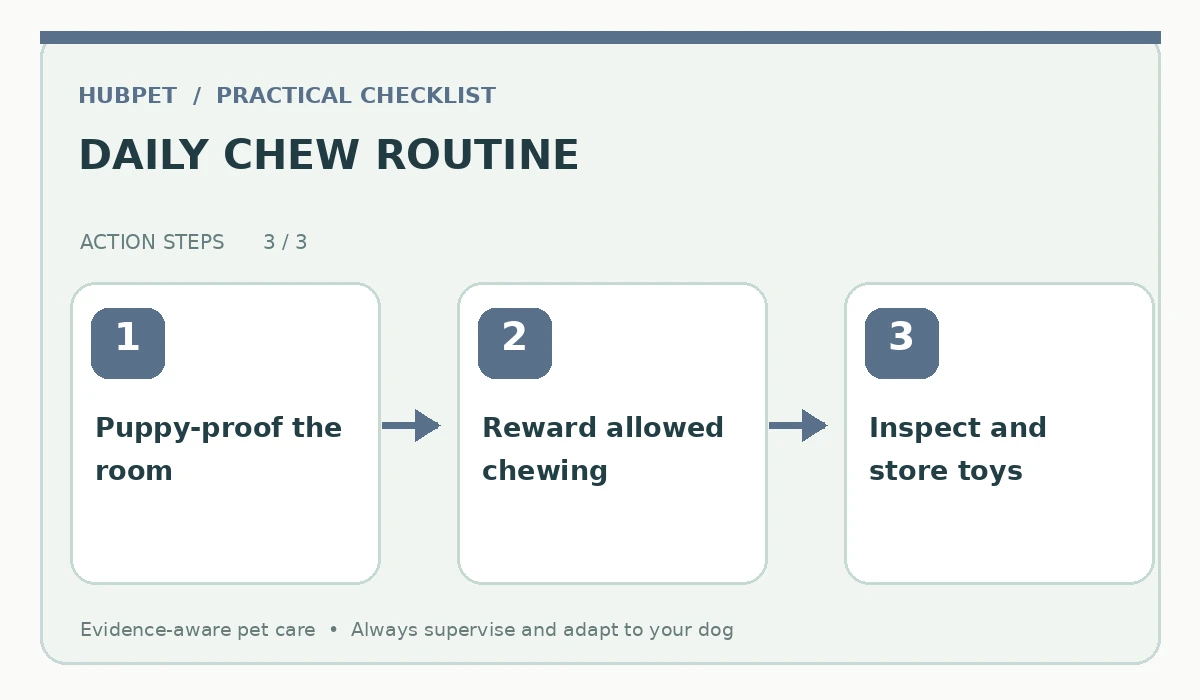
Before a session, pick up socks, batteries, electrical cords, children’s craft supplies, and shoes. Move the puppy to a calm, supervised room or gated area that has drinking water and a comfortable place to rest. A pen or barrier should never function as punishment. Put the selected chew where the puppy naturally settles, not on a distant shelf. If the puppy repeatedly heads for a particular furniture corner, block access while you train an alternative. Prevention reduces rehearsals of the unwanted behavior and is often kinder than repeatedly interrupting a curious animal.
Replace and resize on a schedule based on wear
Check a teething toy every time you use it. Watch for rough edges, deep cracks, exposed filling, and a change in how easily it compresses. Replace the item when the puppy can tear pieces from it or when the object becomes relatively small as the mouth grows. There is no universal number of days a puppy toy should last. Rotating a small set of intact textures can be more useful than offering a crowded basket. Keep a simple note about which item lasts through supervised play, and stop using anything that repeatedly causes gagging or frantic shredding.
Use chewing as a teachable routine
Offer a permitted toy after waking, during a quiet transition following play, or when the puppy begins looking for things to mouth. Reward calm engagement and redirect early, before a shoe or table leg becomes the center of attention. Introduce a gentle trade for releasing objects using treats or another toy. Practicing when nothing valuable is at stake makes emergency exchanges less stressful. Avoid chasing a puppy that grabs an object; chasing can turn possession into a game. Consistent household rules matter more than buying additional products every time the puppy explores an object.
Know when the pattern needs professional help
Talk with a veterinarian if a puppy swallows non-food material, chews frantically despite safe options, has mouth pain, loses interest in meals, or shows sudden behavior changes. A swallowed object can cause an obstruction even if the puppy initially appears normal. For repeated distress during alone time, ask about a positive behavior plan rather than relying on confinement or a stronger chew. Evaluate toys by fit, condition, ease of cleaning, and the puppy’s supervised behavior. The goal is to teach safe choices while supporting normal development, not to eliminate natural chewing.
How We Research
Our editorial review compared dog-welfare guidance from veterinary institutions and animal behavior organizations with the specific household safety problem in this guide. We separated sourced health or behavior principles from practical owner checklists, and did not test named products or claim that a method prevents every injury. Always check manufacturer instructions and discuss ingestion, pain, persistent panic, or sudden changes with your veterinarian. Our team reviewed sources on October 27, 2026. For editorial background, see About HubPet.
Sources
VCA Animal Hospitals: Teeth, teething, and chewing in puppies. Reviewed October 27, 2026.
VCA Animal Hospitals: What chew toys are right for my puppy?. Reviewed October 27, 2026.
HumanePro / Humane World for Animals: Puppy teething: appropriate toys and positive management. Reviewed October 27, 2026.
ASPCA: Dog chews and treats: selection and supervision position statement. Reviewed October 27, 2026.
Many puppies develop permanent teeth during the first several months, but timing varies. Your veterinarian can evaluate unusual tooth retention or persistent discomfort.
Only when its actual size, material, and intended use fit that puppy. Adult products may be too rigid or awkward for a small, changing mouth.
Do not assume freezing improves safety. Use a cooling method only if the manufacturer permits it, and avoid a hard or icy surface that could hurt teeth or gums.
A small rotation of intact, appropriate choices is often easier to monitor than a pile of toys. Supervise unfamiliar designs and inspect them after use.
Contact a veterinarian promptly with details about the material and missing piece. Do not attempt to induce vomiting without direct veterinary instructions.