
Low-tracking cat litter is a useful goal when grains appear on floors and furniture, but the term describes an outcome in a particular home, not a universal product guarantee. Granules can ride out on paws, stick to fur or spill during energetic digging. Large pellets may travel less as fine grains yet feel uncomfortable to some cats. A better comparison weighs cat acceptance against cleanup burden and keeps box access simple. This is general household guidance; unusual bathroom habits or signs of discomfort need veterinary assessment. Read HubPet’s veterinary disclaimer before interpreting symptoms.
Identify whether the problem is tracking or scattering
Tracking happens when litter clings to paws or fur and reaches another room. Therefore, scattering occurs when digging or jumping throws pieces beyond the tray. Look at where granules collect: directly beside the entrance, across the hallway, on a blanket or around the back wall. Fine particles stuck in fur suggest a different fix from a small tray with an enthusiastic digger. Record the pattern for several days before buying. A mat can catch tracked pieces, while a roomier tray might reduce scattering. These solutions are complementary but should never make entering the box difficult.
Compare size without ignoring a cat’s paws
Larger granules may cling less than fine sand-like particles, but texture changes can make cats reluctant to dig. Instead, veterinary guidelines often note a preference for fine-grained, unscented litter; the individual cat still decides. Compare texture by looking at a sample rather than judging a website description. Sharp-edged or very hard pieces may be uncomfortable for animals with sensitive paws. If your cat balances on an edge, scratches the wall instead of the substrate or suddenly refuses the tray, reconsider your choice. A low-tracking label has little value if the cat avoids elimination indoors.
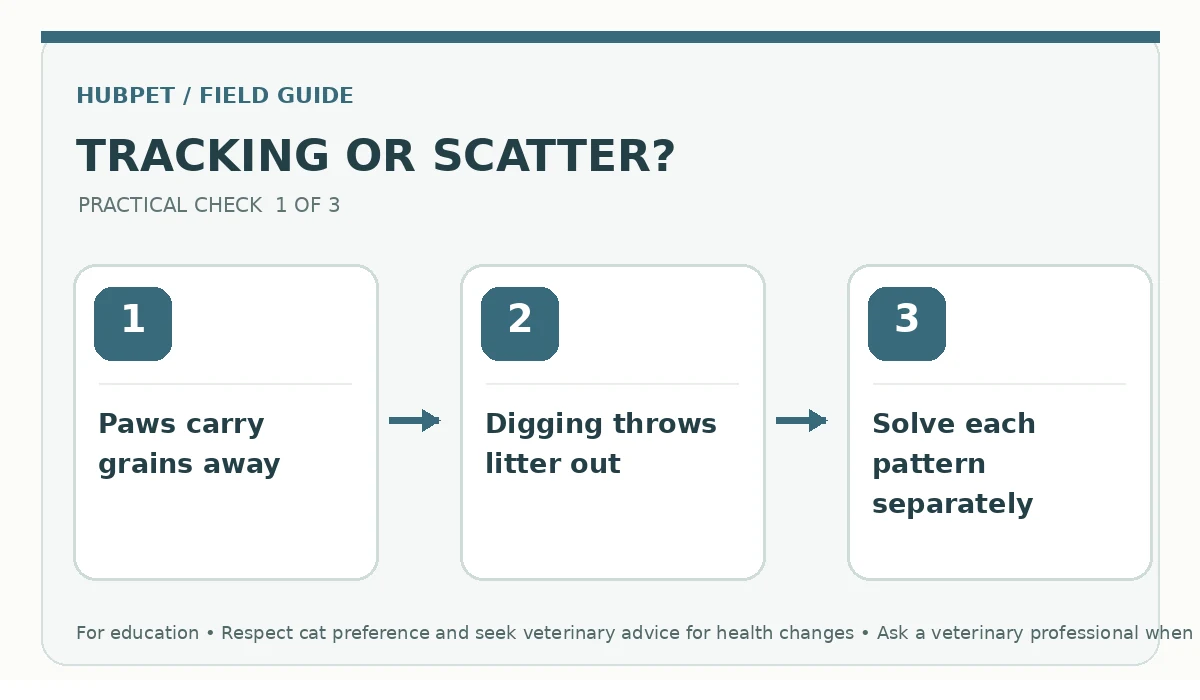
Watch the shape and weight of the grains
Rounded pellets, irregular particles and lightweight flakes behave differently on fur and smooth floors. Also, a heavy grain may stay near the tray but can be tiring to carry and scoop; a light grain may scatter across a hard floor after a single leap. Examine how much fine dust rests at the bottom of the bag and whether grains break apart during use. Tracking often changes after a material gets wet and dries again. Compare real cleanup over the same number of days, not a short demonstration with unused litter. Avoid products with strong fragrance simply because they claim to trap odor.
Use a bigger box before buying accessories
Check whether your cat has enough room to turn and dig naturally. Next, a small tray may send litter over the rim during covering behavior. Cornell recommends roomy boxes, and cats with mobility limitations may need a low, accessible entry. An enclosure that hides the mess can also trap odors and create an unpleasant dead end. For many homes, a plain open tray on a washable surface works better than a complex structure. Put the entrance away from steep steps and loud machines. A cat should never have to cross a prickly mat or slippery floor to reach its toilet.
Pick a litter mat that does not block access
Use a flat, washable mat with a surface your cat willingly walks over. As a result, position it where paws naturally land after leaving the tray, leaving the entrance fully open. Mats with deep grooves may trap granules but can also trap water and need regular cleaning. Check corners and edges for curling that could catch claws or create a trip hazard. If your cat jumps over the mat or starts refusing the box, revise the layout. An extra patch of easy-clean flooring may work better. The mat is a cleaning aid, not an excuse to postpone scooping or washing the tray.
Trial alternatives side by side
Keep your established litter in one accessible tray and provide a second clean box with a candidate formula. By contrast, use a similar box shape and location so the litter itself is the main changed variable. Observe which box your cat chooses and whether elimination looks comfortable. Do not interpret one visit as proof of permanent preference; watch over ordinary daily routines. If the cat avoids the new substrate, remove it without punishment and retain the familiar choice. You can also test a different tray or mat independently. Changing several features simultaneously makes it hard to know which adjustment helped.
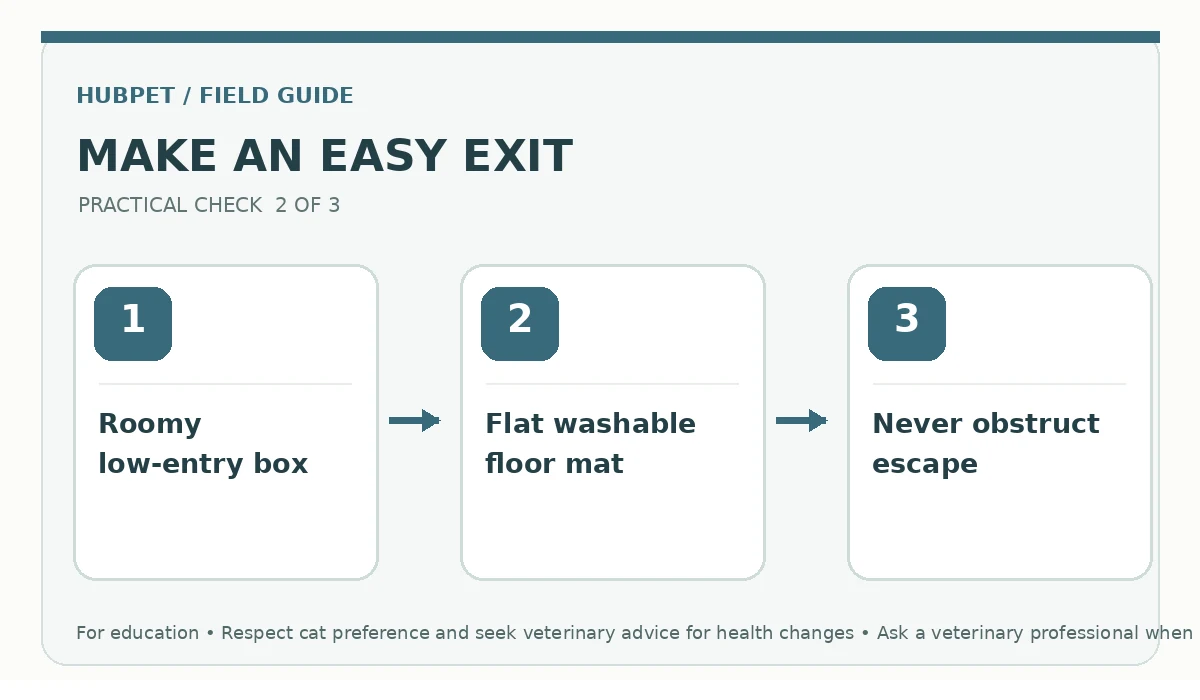
Assess the cleanup you actually saved
Count how many times you sweep around the box, how far litter travels and whether you need to wash the mat every day. For example, a product that moves fewer grains but creates harder-to-remove wet residue may not improve your workload. Note the cost per refill and how often fresh material gets discarded with waste. Compare two candidate litters for similar periods while keeping your cat comfortable. Spot-cleaning hard floors with a dustpan or vacuum attachment often remains necessary. Choose the arrangement you can maintain easily without tolerating litter that your cat dislikes.
Do not trade hygiene for fewer footprints
Scoop at least daily, replace litter on an appropriate schedule and clean the empty pan with gentle unscented products. However, odor or damp patches can drive avoidance even when the floor is spotless. Strong air fresheners and scented deodorizers may make a box less appealing. In multi-cat homes, spread enough boxes through different quiet locations rather than grouping them in one crowded corner. Monitor whether other animals block an exit. A home can have little tracked litter and still have an unsuitable toileting setup. Welfare and reliable access are the first outcomes to measure.
Recognize when a tracking fix is failing
If you see frequent accidents, prolonged straining, vocalization during elimination or other new changes, stop experimenting with substrates and contact a veterinarian. Inability to pass urine needs urgent help. For ordinary tracking, revisit the simple decisions: roomy accessible box, texture the cat likes, flat mat, and steady cleaning. Meanwhile, continue observing for a week rather than buying several accessories at once. A low-tracking setup is successful when the cat uses it normally and the floor needs less cleanup. It should never require the cat to tolerate pain or avoid the box.
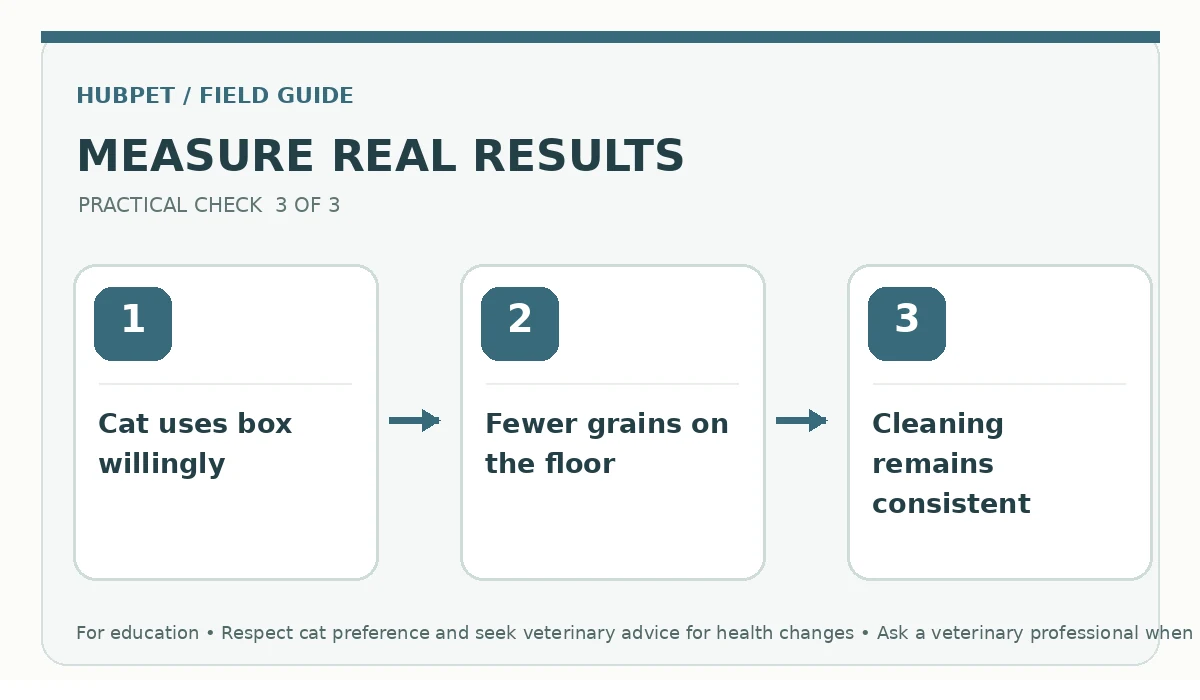
How We Research
Our editorial review compared veterinary and animal-welfare guidance on cat litter materials, feline substrate preference, accessible box placement, hygiene, and signs that warrant veterinary evaluation. We used published feline guidance as the basis for practical owner choices and contrasted it with the limitations of packaging claims. We did not run comparative laboratory absorption tests, conduct product trials or endorse brands. Texture tolerance, accessible boxes and cleaning routines vary by animal and household; ask a veterinarian about persistent behavior changes. We last reviewed the sources on October 27, 2026. Read about our editorial process on the About HubPet page.
Sources
AAFP/ISFM: Guidelines for house-soiling behavior in cats. Accessed October 27, 2026.
Cornell Feline Health Center: Feline house-soiling behavior. Accessed October 27, 2026.
ASPCA: Litter box problems. Accessed October 27, 2026.
No. Tracking depends on granule size, paws, fur, digging and the household floor. Product labels cannot guarantee zero spread.
They may travel differently, but some cats dislike their texture. Provide a familiar alternative and prioritize comfortable box use.
Usually not. A flat washable mat may collect grains near the exit, while tracked particles can still travel farther.
It is easier to evaluate one change at a time. Offer a second box with new litter and retain the familiar setup for comparison.
Restore the familiar litter and check cleanliness and access. New or persistent elimination problems warrant a veterinary assessment.