
A cat tree should give a cat choices: a stable place to climb, a perch for watching, a scratching surface, or a quiet spot above household traffic. Height alone does not create good enrichment. A tall, narrow unit that wobbles may be less useful than a shorter structure with solid steps and a clear exit route. This guide shows what to measure and what to inspect before buying. Read our veterinary disclaimer if your cat has a mobility concern.
Cats Protection describes climbing and hiding places as resources that can help cats manage shared spaces. Yet individual needs vary with age, confidence, and household layout. Start by watching where your cat already chooses to rest; our guide to why cats prefer high places explains the appeal. Here we focus on matching furniture to that preference without creating avoidable hazards.
Start with your cat, not a product photograph
Notice whether your cat climbs bookcases confidently, pauses on low furniture, stretches vertically to scratch, or prefers enclosed hiding spots. Record the places your cat actually uses. A kitten that races up shelves and a senior cat that climbs carefully may benefit from very different platform spacing. Do not infer a safe climbing height solely from weight or breed.
Consider the household as well as the animal. Children, dogs, hallway traffic, and other cats can make a favorite perch feel exposed. Sketch a location with enough room for the base and a safe landing. Avoid placing a tower near an open window, balcony rail, stovetop, or an unstable item the cat could topple while jumping.
Measure the floor footprint and the usable platforms
Check the base dimensions against the exact spot in the room, including clearance for opening doors and cleaning. A large upper platform attached to a tiny base may feel unsteady when a cat launches from one side. Ask the seller for footprint and top-platform measurements rather than trusting an image of a cat beside the product.
Platforms should let your cat stand, turn, and curl up without balancing on an edge. Measure your cat lying in a normal resting position as a starting point, then allow generous room for paws and tail. A bed-like bowl may be cozy for one cat and restrictive for another. A usable platform matters more than the number of decorative tiers.

Check structural stability before allowing climbing
Look for a broad, level base, reliable fasteners, rigid joints, and a design that does not twist when pressure shifts sideways. A wall-anchoring option can help only when installed correctly into a suitable structural surface according to instructions. Never treat a picture of an anchor strap as evidence that every wall or room can support it.
Once assembled, test for wobble without placing the cat on the tree. Recheck tightness after the first days of use and during routine cleaning. Stop access if the post tilts, a platform loosens, or coverings peel away. Do not use improvised heavy weights that could fall on a pet or turn an unstable base into a tipping hazard.
Compare steps, gaps, and landing routes
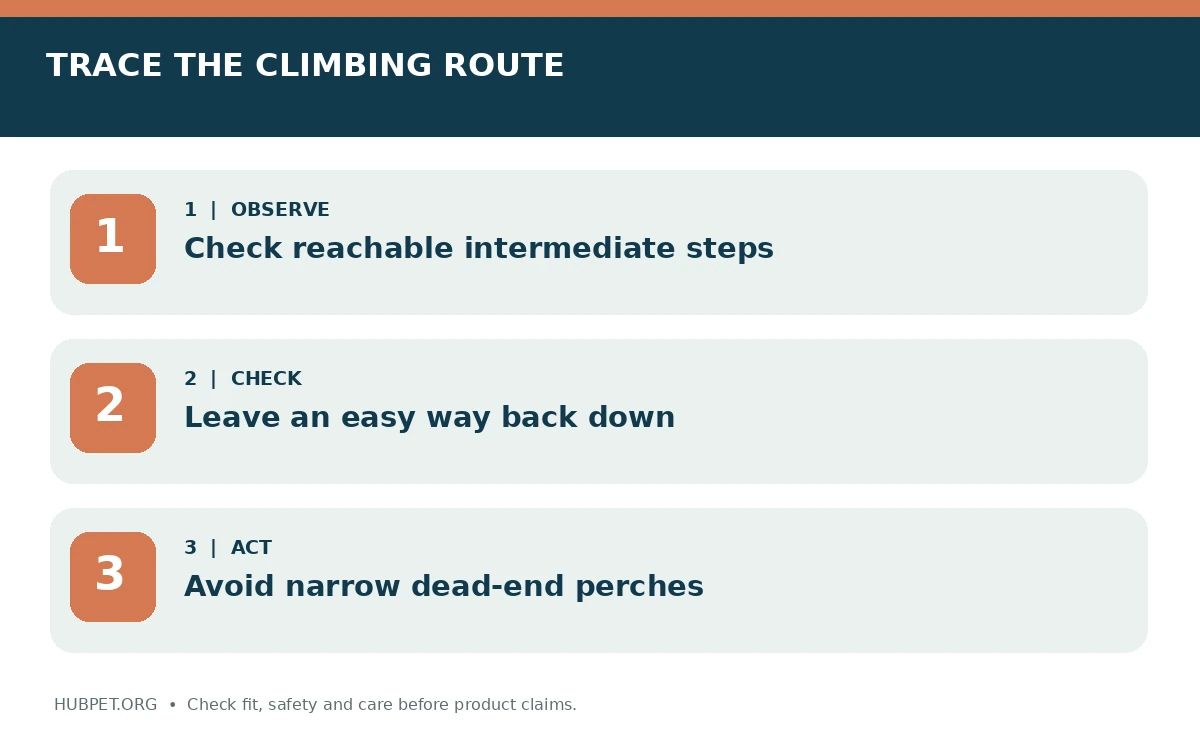
Map the route from floor to highest perch. Can the cat move up without making a blind leap across a wide gap? Can it descend without backing down a narrow pole? Staggered platforms can provide intermediate stops; very close layers may also obstruct the body of a larger cat. Test the layout against how your own cat moves.
Cats with reduced mobility need especially accessible routes. Add low steps or a nearby stable piece of furniture only if that arrangement does not introduce an unsafe jump or sliding surface. Sudden reluctance to climb can signal discomfort or another health problem. Ask a veterinarian to assess new changes instead of assuming the tree needs more padding.
Choose scratching and surface materials thoughtfully
Sisal rope, woven fabric, or firm scratching panels provide different textures. Watch whether your cat scratches vertically, horizontally, or at an angle. Choose posts tall and stable enough for a comfortable stretch. The outer layer should not unravel into long loops that could catch claws or be chewed and swallowed.
Inspect carpeting for loose staples, exposed wood edges, strong adhesive odors, and dangling fibers. Remove detachable toys with vulnerable cords when the cat is unsupervised. A machine-washable cushion may reduce cleaning work, but washing instructions and replacement-part access matter as much as a cheerful color or a fashionable upholstery finish.
Place the tree where the cat feels safe
A view of household activity or a window may encourage use, provided the window is secured and the tree cannot act as a launch point to danger. Some cats prefer a calm corner rather than a busy doorway. Put the structure far enough from curtains, fragile objects, and heaters to reduce climbing and overheating hazards.
Offer more than one resting area when cats share a home. One coveted highest platform may create conflict if another cat blocks the exit. Plan separate routes and additional perches. See our safe climbing space guide for room-level arrangements that work alongside a standalone tree.
Do not confuse the tallest tree with the best multi-cat layout
Multiple cats need options for passing, withdrawing, and watching from different locations. A single narrow pole with one enclosed cubby can trap a shy cat if another blocks the way. Count usable levels and exits, not just advertised capacity. Spread resources around the home instead of expecting one tower to satisfy every preference.
Cats Protection recommends access to hiding and climbing areas when cats feel threatened. In practice, distribute quiet resources so neither cat must cross a contested feeding or litter area. Watch for stalking, blocking, or a cat abandoning a perch; those behaviors may reveal that the furniture layout needs adjustment.
Introduce new furniture without placing the cat on it
Assemble the tree in its final safe location, remove packaging, and let your cat investigate. A familiar blanket or a few small treats may make a low platform interesting. Reward voluntary exploration and give the cat time to choose higher levels. Never lift a frightened cat onto a top perch or block the way down.
If the cat ignores the structure, reconsider its location, platform spacing, or texture. A useful change may be moving it to a quieter spot rather than buying another tower. Continue offering the cat other hiding and resting choices. Enrichment works best when the animal controls participation and can leave at any time.

Keep a practical inspection and cleaning routine
Look at the joints, bolts, base, hanging toys, and fabric seams during normal household cleaning. Hair, dust, and litter collect in plush surfaces and concealed corners. Vacuum gently when the cat is away, follow the manufacturer cleaning instructions, and allow cleaned areas to dry fully before the cat returns.
Replace worn scratching sections if the maker provides compatible parts; otherwise retire damaged structures. Never keep a damaged tree because it was expensive or because a cat still likes the top. The relevant test is whether every platform and attachment stays secure through everyday climbing, jumping, and lounging.
Use a short pre-purchase decision checklist
Write down your cat’s size, mobility, preferred activity, location, floor footprint, and likely access routes. Compare those requirements with real product measurements, instructions, and clear photographs of the joints and base. Include delivery and assembly considerations; a heavy tower that cannot be assembled securely is not a practical choice.
Finally, imagine your cat descending at speed, another cat approaching, and a person cleaning around the base. If any of these creates a problem, keep looking. A simpler tree with stable perches and a safe route can offer greater daily value than a highly decorated product with inaccessible levels.
How We Research
We prepared this guide using animal welfare guidance and practical questions owners can ask about size, materials, supervision, fit and safe use. We did not purchase or independently test products, and we do not rank brands or claim veterinary endorsement. On October 26, 2026, our editorial review considered these sources. Learn more about HubPet and our editorial approach. This material does not replace advice for a specific animal from its veterinarian.
Sources
Cats Protection: Cats and Children. Accessed October 26, 2026.
ASPCA: Feline DIY Enrichment. Accessed October 26, 2026.
Cats Protection: Our Guide to Indoor Cats. Accessed October 26, 2026.
Choose a height your cat can reach and leave safely. Platform spacing, grip, stable support, and the animal’s mobility matter more than maximum advertised height.
Follow the manufacturer’s instructions and assess the structure and location. Anchoring may improve stability, but unsuitable hardware or wall material can defeat that benefit.
Look for a surface that accommodates standing, turning, and resting without the cat hanging over the edge. Compare the real measurements with your cat’s usual sleeping posture.
They may use it at different times, but provide other perches and hiding areas. Multiple exits and separate resources reduce the chance of one cat blocking another.
Do not force the cat. Try a safer location and reward gentle exploration. If your cat suddenly avoids climbing that was previously easy, ask a veterinarian for advice.