
A self-cleaning litter box can move waste into a drawer after a cat leaves, but that convenience brings moving parts into a private space where an animal needs to feel safe. Before comparing apps or odor claims, examine the moving mechanism, the entrance during a cycle, and the rules that stop motion when a cat approaches. A mechanism that can pinch or close the only opening deserves far more scrutiny than a glossy feature list. See the HubPet veterinary disclaimer for health and safety limits.
This guide explains common cleaning designs, the checks you can perform from a product manual, and a cautious introduction plan. We have not mechanically tested individual devices. For many households, a basic open litter pan remains a reasonable choice, especially when a cat is young, fearful, mobility-limited, or already avoiding the box.
Understand rakes, rotating drums, and waste drawers
A rake-style design sweeps through a litter bed and deposits solid waste into a covered receptacle. Rotating-drum models sift material through a screen while moving the chamber. Some designs use a separate drawer or bag beneath the mechanism. The sequence matters because different moving parts create different reachable gaps.
Open the manual or a clear engineering illustration and trace the entire cleaning movement. Check what happens to the entrance, how waste travels, and where a cat could place a paw or head during motion. Avoid relying on a cropped demonstration video that hides the opening or only shows the device empty.
Reject a moving opening that can trap a cat
A serious design concern arises when the cleaning movement narrows or closes the only accessible entry while a cat might reach it. A failed sensor must not turn ordinary curiosity into a trapping hazard. Public consumer incident reports describe severe concerns with certain automatic designs; those reports are allegations, not proof that every device is unsafe.
Prefer geometry that keeps the entrance unobstructed throughout the cleaning cycle, then verify the maker’s description against actual movement. If you cannot determine whether the doorway ever closes, do not purchase based on marketing language alone. Leave a conventional open box available regardless of the automation choice.

Read the safety system before the app features
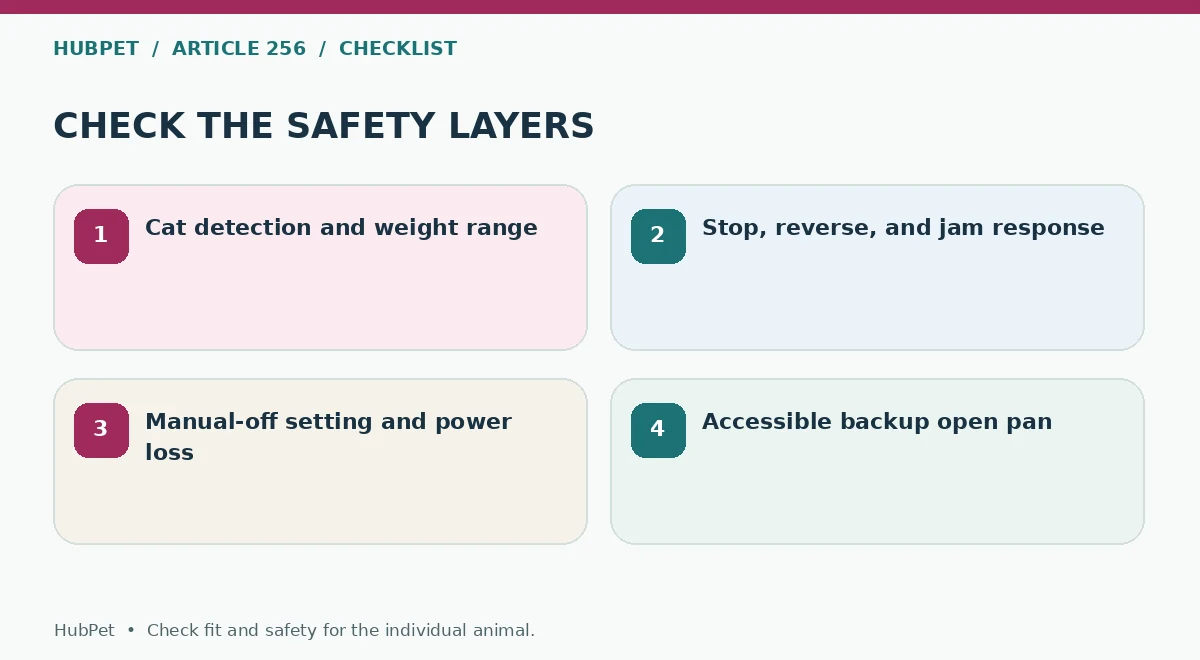
Look for documented cat-presence detection, interruption during motion, anti-pinch behavior, and a safe response to a jam or power loss. Weight thresholds differ among devices; small kittens may fall below a sensor’s detection range. The manual should describe a simple way to disable automatic operation and explain how to clear errors without reaching near live moving parts.
A claim of multiple sensors is useful only when the manufacturer explains their role and failure response. Ask whether a detected cat stops the cycle immediately and whether the system needs resetting afterward. Do not put a cat, hand, toy, or other object into moving machinery to improvise a safety test.
Match the machine to the individual cat
A large outer shell does not guarantee comfortable usable floor space. Check interior dimensions, entrance height, turning room, and the approach path. A senior cat with stiff joints may hesitate at a tall step, while a cautious cat may dislike an enclosed chamber that blocks the view of approaching animals.
Measure usable interior space instead of comparing exterior footprints. Keep an accessible open pan on the same floor. Households with multiple cats also need boxes in separate locations rather than assuming a single fast-cleaning machine replaces every toilet resource.
Treat kitten, weight, and mobility limits as firm limits
Very young or lightweight cats may not reliably trigger weight-based safeguards. VCA warns that many robotic designs are unsuitable for young kittens, and individual manufacturers set additional minimum ages or weights. Never substitute an assumed universal safe age for the actual device instructions.
If a household includes kittens, keep automatic cycling switched off unless the current manual explicitly supports the kitten’s age and weight and a veterinarian agrees the setup is appropriate. For elderly or disabled cats, prioritize easy entry and predictable movement over automation. Any limping or toileting discomfort calls for veterinary evaluation.
Introduce the box without forcing the cat
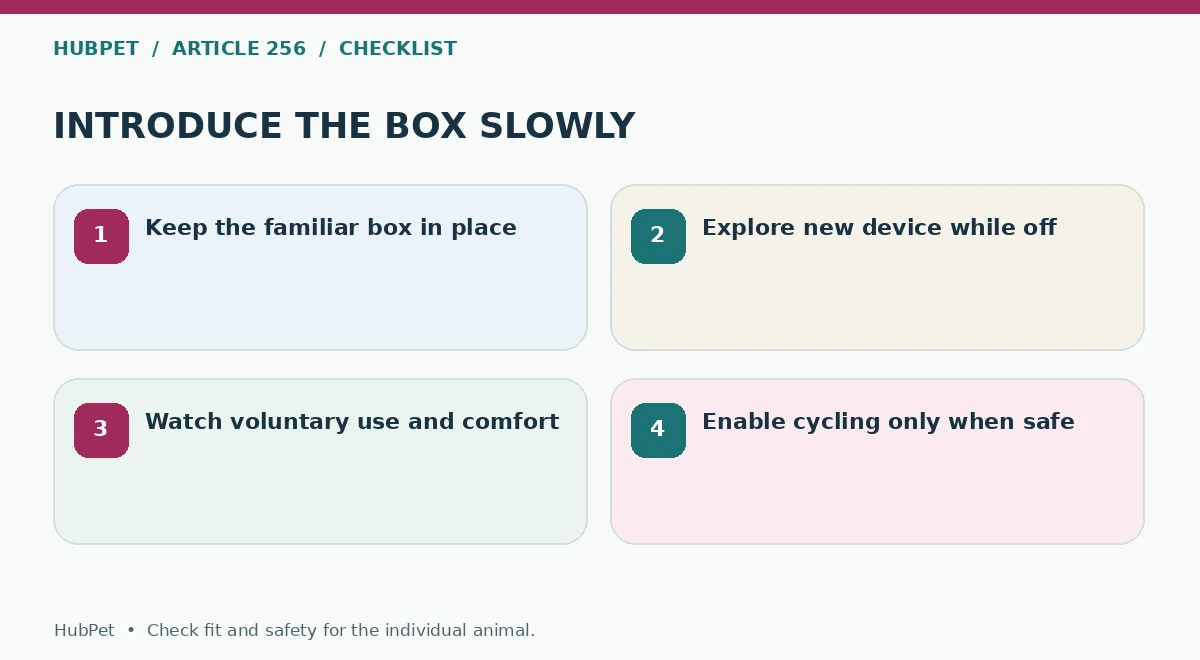
Place the new unit near a familiar box but preserve the existing toilet. Let the cat investigate while the new device is switched off. Offer the same familiar, unscented litter if it is compatible with the mechanism. Never carry a frightened cat into the opening, block an exit, or run a loud cycle while the cat is inside.
Observe voluntary visits over several days. Enable automated cleaning only after the cat uses the unit comfortably and all manual safety conditions are met. If the cat avoids the device, defecates elsewhere, or startles at movement, return to the quiet manual arrangement rather than pushing for a quick transition.
Calculate the maintenance you still have to do
A waste drawer still needs emptying and cleaning. Litter levels, screens, sensors, tracks, and contact surfaces need attention at the frequency stated in the manual. A full drawer or clogged screen may spread mess rather than prevent it, while a dirty sensor can undermine normal operation.
Write down the steps for a complete clean: disconnecting power, removing litter, washing approved parts, drying them, and replacing liners. Consider recurring bags, proprietary litter, filters, and repair parts. Convenience is meaningful only if you can maintain the system regularly and safely.
Compare litter compatibility and the real footprint
Many automated sifters require a specific clumping behavior or particle size. Lightweight pellets, unusually sticky litter, and heavily fragranced products may not work with a grate or rake. Check approved materials and do not assume a label saying cat litter guarantees compatibility.
Measure the floor area needed for the device and the clearance to open a service drawer. Add room for the cat to approach from more than one direction, and consider cord management away from chewing or water spills. No plug-in appliance belongs where pets can pull the cord into a litter pan.
Continue checking urine and stool by hand
Automatic disposal can hide useful changes in how often a cat urinates or passes stool. Even an app that counts visits does not diagnose an illness or reliably replace observing the cat and waste. Inspect the drawer and litter frequently enough to notice diarrhea, blood, straining, or markedly changed output.
Repeated trips with little or no urine, crying while attempting to urinate, or signs of severe distress demand urgent veterinary attention. A blocked urinary tract can be life-threatening. Do not wait for a device warning or treat a change in the box as merely a mechanical problem.
Use a decision checklist rather than a brand ranking
Before purchasing, confirm an unobstructed entrance during movement, documented fail-safe behavior, a suitable manual mode, adequate interior space, clear litter requirements, cleanable components, and accessible support documentation. Compare return terms in case the cat refuses to use it, not just claimed labor savings.
If any major safety detail is missing, choose a simple, roomy, washable pan and a consistent scooping routine. The objective is safe, willing toileting for the cat and practical maintenance for the household. Automation is optional; accessible choices and prompt cleaning are not.
How We Research
We checked this guide against the authoritative sources listed below on October 26, 2026. We reviewed practical differences, safety limits, and relevant home conditions rather than drawing conclusions from brand advertising. Specifications, warranty policies, and device capabilities change; check the manufacturer’s current manual. We did not purchase, laboratory-test, rank, or endorse individual products. Where a pet has pain, skin concerns, or fear, seek individual veterinary advice. See our approach at About HubPet.
Sources
ASPCA: Litter Box Problems. Accessed October 26, 2026.
VCA Animal Hospitals: New Kitten Checklist. Accessed October 26, 2026.
US Consumer Product Safety Commission: Automatic litter box incident report, September 2024. Accessed October 26, 2026.
Consumer Reports: Best Cat Litter Boxes. Accessed October 26, 2026.
No universal safety conclusion follows from the product category. Evaluate entrance geometry, detection, moving parts, shutdown behavior, cat size, and the manufacturer’s current manual.
Many models exclude very young or lightweight kittens from automatic cycling. Keep a manual box available and follow specific age and weight limits rather than guessing.
It can move waste into a drawer, but the drawer, surfaces, sensors, and litter still need routine maintenance. Check the waste often enough to notice health changes.
Restore the familiar open litter pan and remove pressure. If avoidance persists or toileting changes suddenly, have a veterinarian rule out medical causes.
No. Visit counters may help you notice patterns, but they cannot diagnose urinary problems. Straining or little urine warrants urgent veterinary care.