
A memory-foam dog bed may contour around a resting dog, but “memory foam” alone says little about daily comfort. A thin top layer can sit over weak filling, while a thick mattress can trap heat or create a high step. The useful comparison is the whole construction and how it performs under your dog.
This article explains how to question product descriptions without claiming that foam treats joint disease. If a dog has ongoing pain or mobility changes, involve a veterinarian and consult HubPet’s veterinary information disclaimer. Start by learning which layer actually supports the body.
Memory foam is a material, not a quality grade
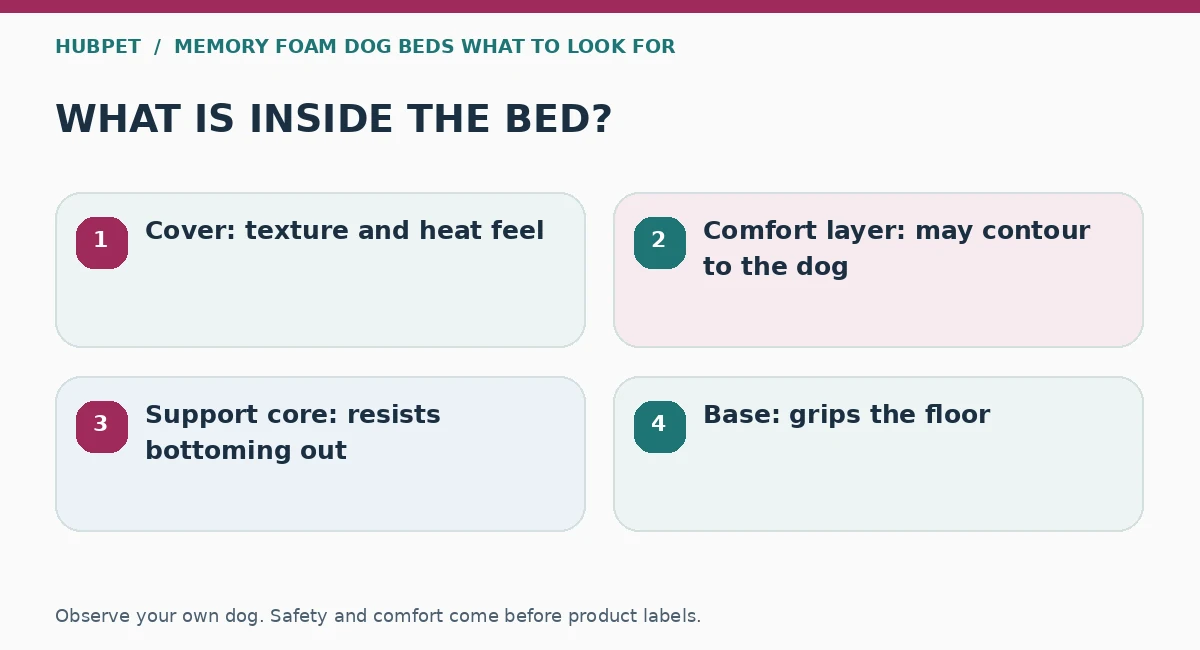
Memory foam responds to pressure and tends to conform gradually to the shape above it. However, manufacturers can combine a small memory-foam layer with ordinary polyurethane or loose fiber underneath. Two beds with the same label can feel very different. Seek layer descriptions and clear dimensions, not a single fashionable material name.
Ask which layers sit on top and which form the support core. Check whether the manufacturer explains compression and recovery. A mattress can feel soft to a hand yet bottom out when a heavier dog lies down. A dog’s comfortable resting posture offers more useful feedback than vague promises of luxury.
Compare support layers, not just total thickness
Total mattress height includes any top fabric, filling, and foam layers. Consequently, a tall product photograph can exaggerate the actual load-bearing material. Press the center and watch for a hard spot beneath the foam. If a retailer gives layer thicknesses, compare the support core separately from any comfort topper.
The goal is a stable resting surface that accommodates the dog without collapsing. For large dogs, review the stated weight range with extra care. Meanwhile, observe whether foam loses its shape after repeated use. Flattened or lumpy material may justify replacement even when the outer cover looks good.
Use a simple compression test at home
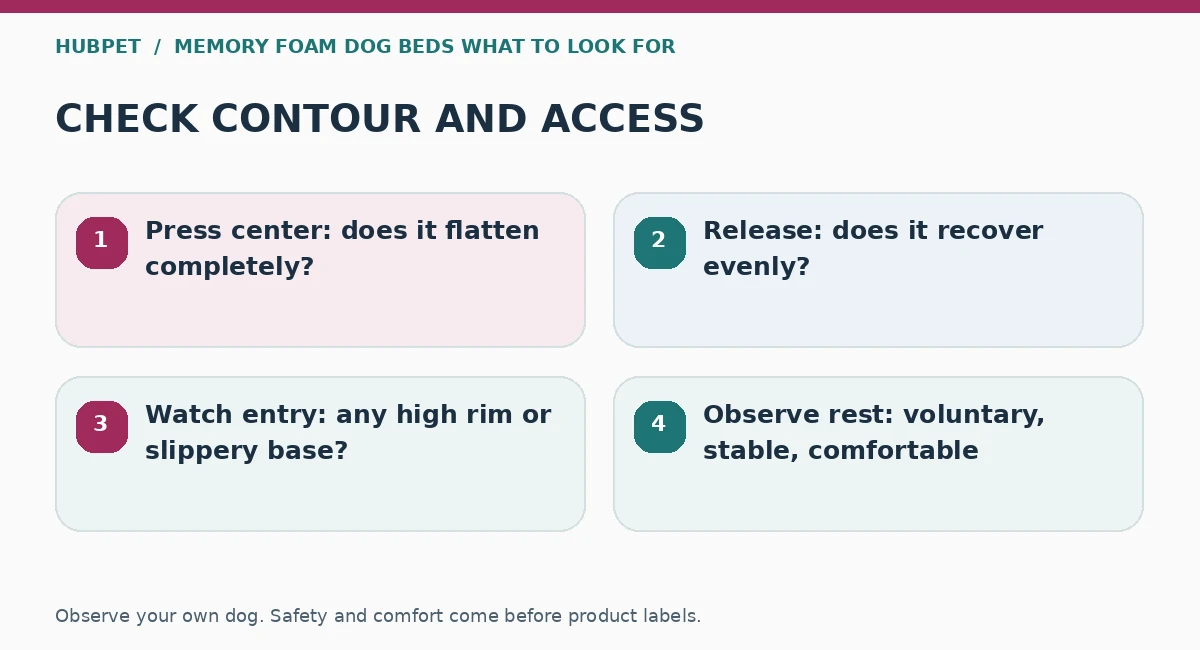
With the bed on the intended floor, press gradually in several areas. Note whether the center offers steady resistance or compresses flat. Then release and watch the recovery. Check the edges too, because a dog may push from the side when standing up. This is a practical screening step, not a validated medical test.
Next, watch the dog turn and lie down voluntarily. If a dog hesitates or repeatedly shifts, investigate heat, positioning, and surface feel. Do not conclude that a particular mattress fixes discomfort. A clinical problem needs assessment. For other comfort adjustments, see HubPet’s senior dog home guide.
Heat retention changes the experience
Dense foam can feel warmer than an airy cot or thin mat in some rooms. Look at the cover and the dog’s behavior before assuming cooling marketing claims hold true. A dog that frequently leaves the bed for tile may prefer more airflow. Provide access to a comfortable alternative rather than insisting on one sleeping surface.
Some brands advertise gel or ventilated channels. These features do not provide a universal temperature guarantee. Instead, compare cover breathability, room ventilation, and whether the dog can move away. If your pet overheats or shows heat distress, seek appropriate veterinary help immediately; bedding changes alone are not emergency care.
Clean the cover without soaking the foam
Read every care instruction. Many memory-foam inserts should not go through a washing machine, even when the removable cover can. Water retained inside thick foam may lead to odor or deterioration. A water-resistant inner liner can help with accidents, but test whether it crinkles or feels unpleasant to the dog.
Buyers should ask whether replacement covers are available. Check zipper placement and seams so a curious dog cannot chew loose parts. Wash and dry the cover fully before reassembly. For broader cleaning routines around pet bedding, use HubPet’s floor-cleaning guide.
Check edge height for dogs with stiff joints
A thick foam bed can create an unintended step, especially on a slippery floor. Watch your dog approach and rise from the mattress. Choose a low-entry design when stepping over tall bolsters seems difficult. The underside should grip the floor, and the route around the bed should remain uncluttered.
VCA emphasizes easy access and traction for mobility-compromised dogs. If you notice weakness, slipping, or a new limp, ask your veterinary team for an individual plan. Also, review HubPet’s senior pet accessibility ideas for safer floor transitions.
Match firmness to the dog, not to a slogan
Too soft can mean the body sinks and rising takes extra effort. Too hard may feel unpleasant when the dog prefers a forgiving surface. Instead of chasing an abstract firmness number, look for steady support and voluntary use. Your dog’s size, weight distribution, sleep style, and mobility all affect the experience.
Beware unsupported claims that one foam density suits every breed or prevents arthritis. Ask the maker about materials and returns, then observe your dog. Some dogs enjoy a firm mat on top of the foam; others prefer a softer cover. Preference and access come before technical language.
Look carefully at the cover and inner liner
Outer fabrics change how the foam feels. A thick plush cover adds warmth and a different surface texture. A thin tightly woven cover may feel cooler but expose weak seams. Check for a nonslip bottom, sturdy zippers, and a liner that protects the foam without creating a noisy or slick sleeping surface.
If your dog scratches or circles before resting, inspect how the seams hold up. Damaged covers can expose foam chunks that a dog might swallow. Remove a damaged bed from access and replace unsafe parts. Never treat “chew resistant” as a guarantee against ingestion.
Questions worth asking before buying
Request the actual usable sleeping area, mattress height, details of the foam layers, washing instructions, replacement cover options, and return terms. Ask what weight range the company designed the bed for. These details support a reasoned comparison without depending on subjective product rankings.
For instance, a simple two-layer bed with clear specifications may be easier to evaluate than a complex mattress with vague descriptions. Keep a record of the answers. If the seller cannot explain the foam core or care method, you have less information about how the bed will age.

Know when memory foam is not the priority
For a hot sleeper, airflow may matter more than contouring. With an energetic young dog that shreds bedding, safe construction and supervision may matter more than premium layers. A dog with major mobility challenges may prioritize entry height over the softness of a topper. A different design may fit better.
The right bed earns its place through actual resting comfort, safe access, cleanability, and durability. Memory foam is one option among several. Do not use a foam purchase to postpone evaluation of pain, stiffness, or changes in normal activity.
How We Research
We reviewed veterinary care and animal-welfare guidance alongside material-specific shopping information. Sources were checked on October 26, 2026; practical buyer observations remain distinct from clinical claims. HubPet does not endorse brands, claim hands-on product tests, or recommend a bed as a treatment. Learn about HubPet at About HubPet.
Sources
VCA Animal Hospitals: Creating a Comfortable Home for Your Mobility Compromised Dog. Accessed October 26, 2026.
American Kennel Club: Senior Dog Comfort: Making Your Home More Accessible. Accessed October 26, 2026.
PetMD: How to Pick Out Large Dog Beds for Giant Dog Breeds. Accessed October 26, 2026.
No. Memory foam describes a material, while orthopedic is a broad marketing term. Compare the construction, support core, usability, and access instead of relying on either label.
Not always. Total thickness can include soft top layers and other filling. Look at what supports the dog under load and whether the center bottoms out.
Some dense foam and plush covers can retain warmth. Watch whether your dog chooses cooler surfaces and allow a breathable alternative.
Follow the product care label. Many foam inserts do not tolerate machine washing, even when their covers do. Dry removable covers completely.
A bed may contribute to comfort, but limping needs veterinary assessment. Choose safe access and traction, and ask your veterinarian about bedding preferences.