
Educational information only, not veterinary diagnosis or individualized behavior treatment. Sudden behavior changes, pain signs, persistent distress, and bite risk warrant appropriate veterinary or qualified professional advice. Read our veterinary disclaimer.
A siren passes, your dog lifts their head and sings along. Another dog howls every time the household leaves. These sounds can have different causes even when the melody seems alike. Howling is one way dogs vocalize; it may respond to noises, create social contact, attract attention, or coincide with distress. The important question is what happens before and during the howl and whether the dog can settle again.
This article separates everyday howling triggers from warning patterns, rather than teaching a generic quiet command. If your concern is a dog who vocalizes specifically after people leave, see our separation-anxiety overview as well. A recording of an ordinary episode can be more useful to a veterinarian than a description such as “he howls for no reason.”
Start With the Sound That Came First
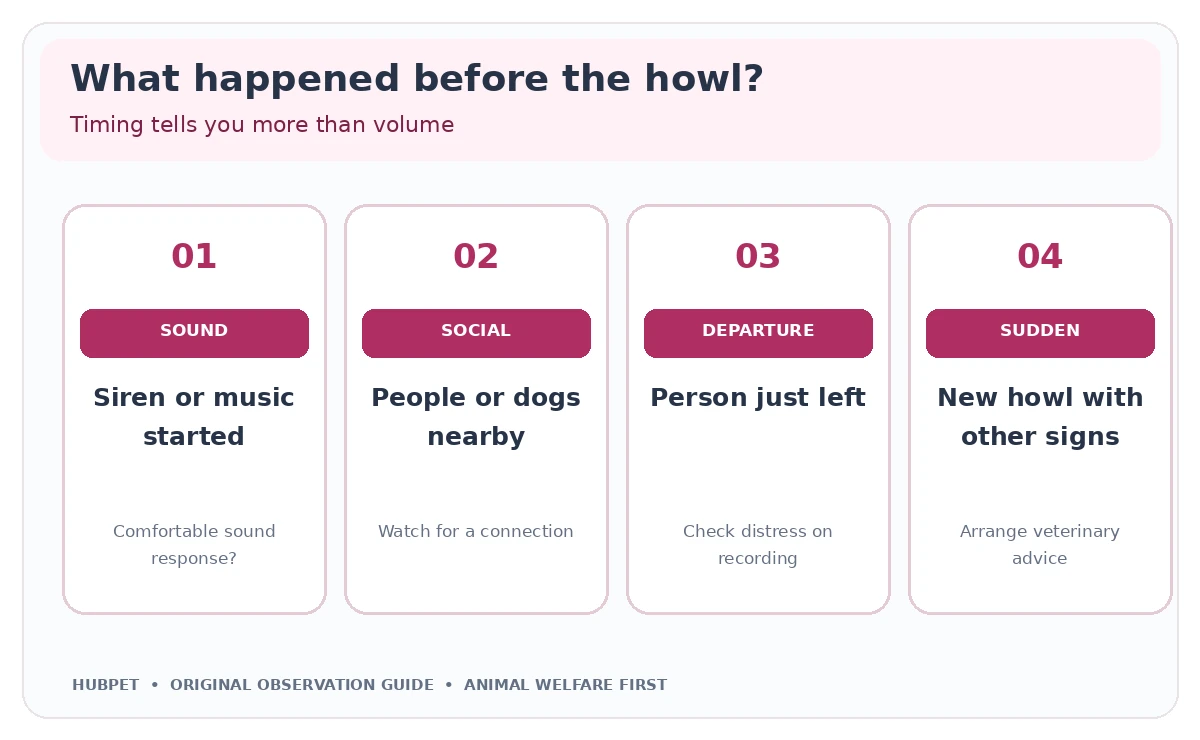
Check whether a siren, music, a nearby dog, a person singing, or an unfamiliar sound preceded the howl. AKC and VCA describe dogs responding to high-pitched or howl-like noises; the sound may prompt a vocal reply, but we cannot infer exactly what the dog thinks it means. Note whether your dog looks comfortable and returns to normal activity when the noise ends.
Do not repeatedly play sirens to test how much howling you can produce. If the dog appears worried, lower the volume, close windows if practical, offer a quieter room, and let the dog choose where to rest. A dog who joins a sound briefly is a different case from one who shakes, hides, or cannot recover.
Howling for Social Contact or Attention
Some dogs vocalize when they hear neighbors, household members, or other dogs. Others learn that howling reliably brings an audience. If everyone rushes into the room each time the sound starts, that consequence may make attention-related howling more common. Yet it is unsafe to assume every call is manipulation: the dog could be asking for access, feel fear, or need help.
Before changing the response, meet ordinary needs and look at the full pattern. Offer companionship and enriching activities before predictable periods when howling usually begins. Reward resting or a quiet activity at normal times; do not wait for a distressed dog to fall silent before checking whether they need something. Our attention-seeking behavior guide explains how to teach alternatives without scolding.
Howling During Alone Time Needs a Separate Check
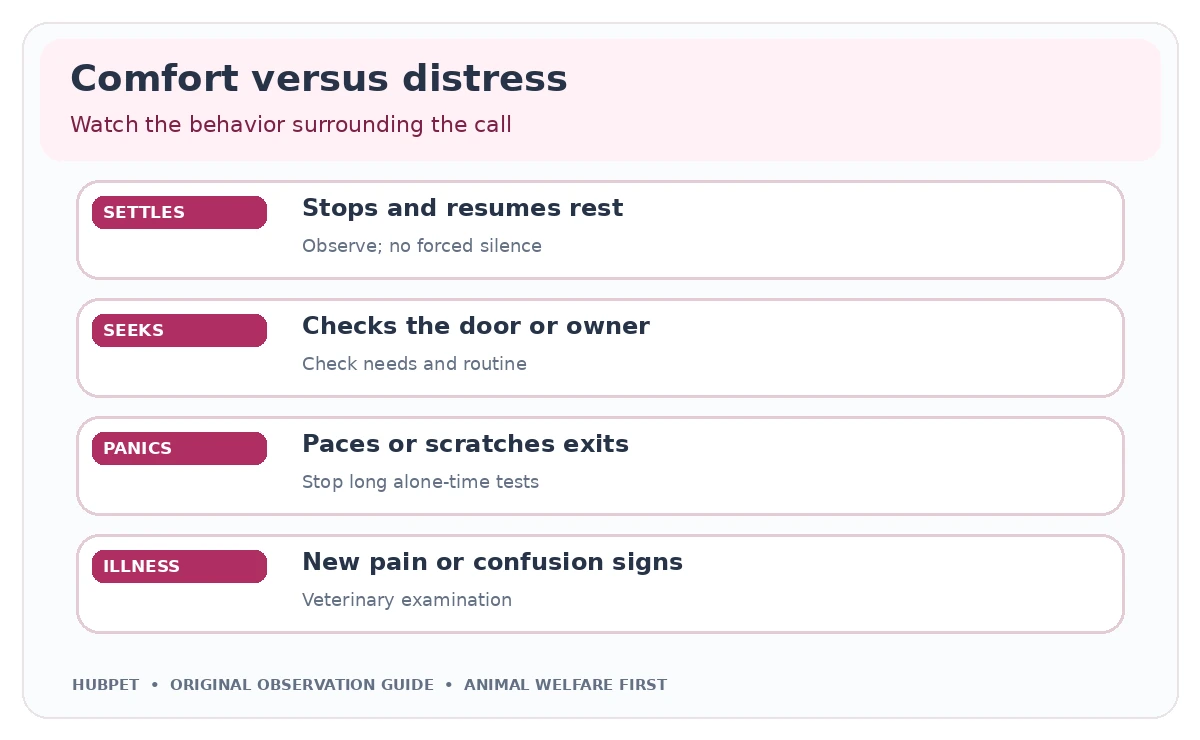
If howling begins as you leave or soon afterward, record the first part of a brief, ordinary absence with a camera where permitted. Look for pacing, drooling, scratching exits, eliminating, trembling, or other signs of distress. VCA notes that separation-related problems can involve different emotions and need an individualized assessment. Howling only in the owner’s absence is an important clue, not a diagnosis by itself.
Do not allow a panicked dog to rehearse long absences as a training technique or use a punishment collar. Arrange care or another safe plan when possible and ask your veterinarian or a credentialed behavior professional for support. A dog who howls but then relaxes with safe enrichment may need a different plan from one trying to escape confinement.
Check for Pain, Sensory Change, or a New Pattern
A normally quiet dog who suddenly starts repeated howling, especially alongside restlessness, reluctance to move, changes in sleep, appetite, or responsiveness, needs a veterinary check. Vocalization may accompany discomfort, but it does not tell you which condition is present. Older dogs can also experience sensory or routine changes; do not assume age alone explains a new symptom.
If the dog appears to be in acute distress or has trouble breathing, collapses, or cannot stand, seek urgent veterinary advice. For less urgent changes, note the onset date, frequency, duration, trigger, and other signs. These observations can make the consultation more productive than assigning a behavioral label too early.
A Humane Four-Step Response Plan
First, identify whether the sound is brief and tied to something predictable or happens without a clear trigger. Second, decide whether the dog is comfortable; look for loose movement versus pacing, hiding, or panic. Third, change the environment: reduce unwanted outside noise, provide a resting spot, and give safe opportunities for enrichment and social contact. Fourth, reward voluntary calm in easy moments.
If your dog howls at a specific predictable sound, practice a comfortable alternative activity at a volume and distance that do not trigger distress. Increase difficulty cautiously; there is no value in forcing the dog to endure upsetting noises. For dogs distressed by thunderstorms, our thunderstorm comfort guide describes a more specialized safety plan.

Decide What Progress Looks Like
Track a few ordinary days without provoking howling. Record trigger, length of episode, body posture and recovery. An improvement might mean the dog resumes resting sooner after a siren, or finds an activity without becoming upset during household noise. The goal is better welfare and coping, not a dog who never makes a natural species-typical sound.
Consult a veterinarian or qualified reward-based behavior professional if frequency escalates, the dog seems afraid, nearby people are at risk, or management is not helping. Avoid arguments about whether howling is a “wolf trait” or evidence the dog is lonely: both can distract from the behavior you can actually observe and support.
How We Research
We reviewed the linked veterinary, animal welfare, and behavior resources on October 26, 2026, using the HubPet editorial approach. The cited organizations provide guidance, while the observation prompts and practical household examples are our own. Editorial checks addressed unsupported mind-reading of animals, aversive training suggestions, and advice that could delay necessary veterinary care. Our original diagrams serve as teaching tools, not diagnostic charts or findings from clinical studies. Individual animals differ: consider your pet’s usual behavior, age, medical history, and safe opportunity to disengage.
Sources
American Kennel Club: Why dogs howl and when to be concerned. Accessed October 26, 2026.
VCA Animal Hospitals: Why dogs howl. Accessed October 26, 2026.
VCA Animal Hospitals: Separation-related distress in dogs. Accessed October 26, 2026.
American Veterinary Society of Animal Behavior: Training position statements. Accessed October 26, 2026.
Some high-pitched sounds may elicit a howl-like response. Observe whether the dog remains comfortable; do not repeatedly trigger the noise to test the reaction.
No. Howling can occur with sounds, social contact, attention, or distress. The timing and accompanying behavior are more informative than the sound alone.
Do not ignore signs of panic. If howling accompanies pacing, destruction, drooling or escape attempts, arrange appropriate support and discuss separation-related distress with a veterinarian.
A sudden change in howling can accompany discomfort, especially with other behavior or health changes. A veterinarian should assess the dog rather than guessing the cause from vocalization.
Identify and reduce the trigger when possible, meet the dog’s needs, reinforce relaxed alternatives, and get professional help when fear or separation distress plays a role.