
A Christmas tree with cat beds usually means festive cat furniture: a tree-shaped climbing tower with padded platforms, sleeping baskets or little enclosed condos. It does not mean hanging a hammock in the branches of a household Christmas tree. Seasonal cat towers do exist, but their decorative style should come second to sturdy supports and beds your cat will actually use. Start with the sleeping surface, stability and accessible route between levels, then check whether dangling trim poses a risk. A holiday theme is only useful if the structure works for normal scratching, resting and climbing after the decorations come down.
For general education only; not a substitute for individual veterinary assessment. If your pet has pain, injury, severe distress or a sudden behavior change, contact your veterinarian. Veterinary disclaimer.
Choose real resting spaces, not tiny decorative shelves
Look for a wide enough perch or enclosed resting nook for the whole cat to curl up, turn around and lie without hanging over the edge. Measure your own cat’s usual sleeping footprint and compare it with each listed platform, hammock or condo opening. A label such as ‘for two cats’ may refer to total weight rather than two usable beds. Separate hideouts can matter for multi-cat households where cats prefer distance while resting. A winter theme does not change the basic need for a stable sleeping platform.
Manufacturer descriptions of Christmas-style cat towers commonly list a basket bed, top perch, enclosed condo and sisal-wrapped scratching posts. Those are distinct functions; inspect the dimensions of each rather than relying on the overall tower height. Cats with limited mobility may prefer a low cave bed or widely spaced steps over a tall tower. HubPet’s guide to why cats seek height explains why some cats value raised vantage points, though not every cat enjoys the highest platform.
| Design | Potential benefit | Check before buying |
|---|---|---|
| Tree-shaped tower with condos | Several sleeping levels | Per-tier load, base, wall anchor, condo opening |
| Festive single cave bed | Low, enclosed nap spot | Internal turning room, removable wash cover |
| Tall tower with hanging ornaments | Climbing and play zones | Detachable trim, cords, stability |
| Plain year-round tree plus removable theme | Easier to clean after holidays | Only pet-safe, securely attached accents |

Check the base and anti-tip hardware before looks
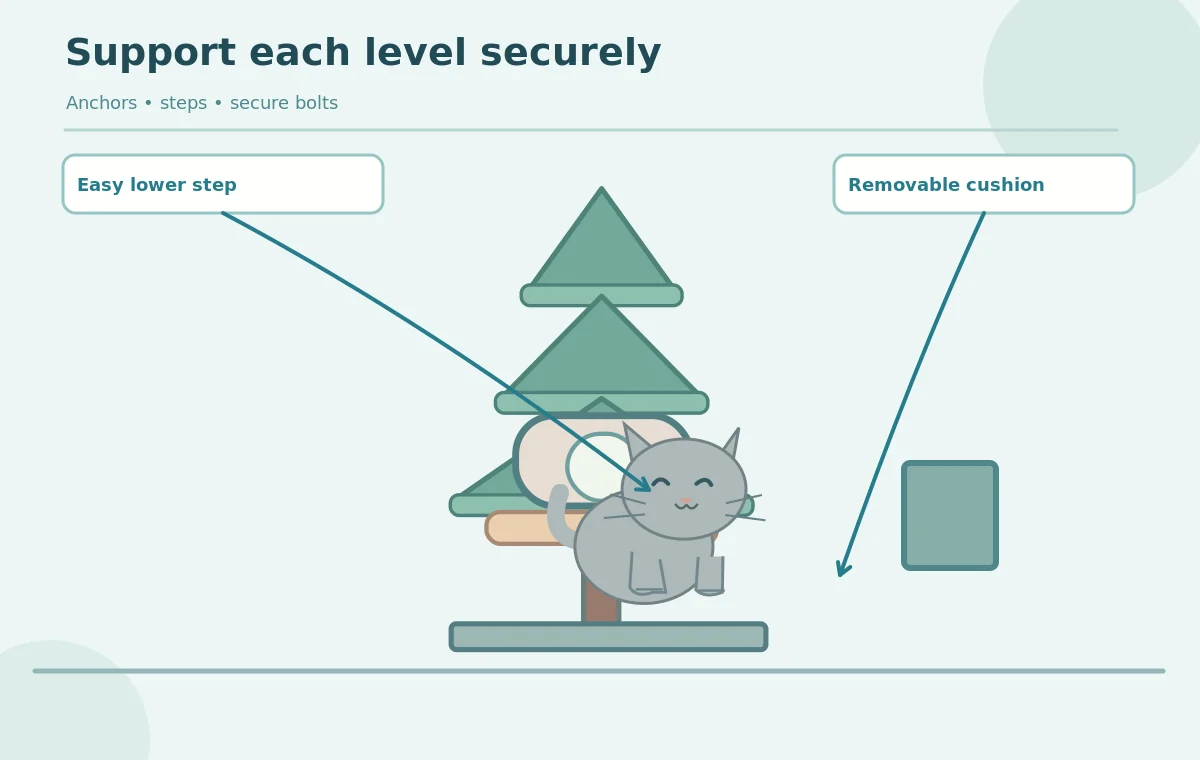
A tall decorative shape can create a narrow footprint and a top-heavy silhouette. Compare the base footprint with the climbing height and check how the posts join the platforms. Follow the included anti-tip anchoring instructions and use appropriate wall fixings for your actual wall construction. A non-slip floor under the base helps prevent sideways movement, but it cannot replace anchoring when the maker requires a bracket. Inspect every bolt after assembly and again after energetic climbing.
Test an empty structure gently for wobble; do not ask the cat to jump on a loose, unanchored tower. Avoid siting it beside fragile ornaments, dangling electrical cords or a real tree that a jump could topple. A tower near a window can be appealing, but keep window openings secured. See the published heavy-duty cat-tree fit guide for stronger structural checks and safe climbing spaces for placement ideas.
Step-by-step check
- Measure the cat in a comfortable curled and stretched position.
- Compare actual bed diameters, condo openings and load per platform.
- Choose a broad base and fit any required anti-tip wall anchor.
- Remove fragile trim and inspect hanging toys and exposed cords.
- Introduce the tower at floor level and watch the first climbs.
Treat ornaments and seasonal trim as detachable hazards
ASPCA warns against tinsel, reachable wires and breakable ornaments because ingestion or electrical contact can cause serious harm. Decorative bells, bows, sewn-on plastic stars, faux snow and ribbon should be regarded as risk items when a cat chews or bats at objects. Inspect trim attachment points before assembly, including any toy suspended over a sleeping area. If the product has a hanging toy, supervise initial use and remove it at the first sign of fraying or chewing.
Avoid decorating the cat tower with additional real-tree lights or glass baubles. Keep normal holiday tree water covered and the tree firmly secured if it shares the room. Give cats a quiet route to escape busy celebrations and do not use a sleeping condo to store gifts, snacks or candles. A themed tower should still function as pet furniture when every decorative item has been removed; that is a useful test of whether the purchase is sensible.
Match the number and height of beds to your household
For one confident adult, a two-level tower with a substantial perch and a lower hideout may be more practical than five small ledges. For multiple cats, provide more than one resting option and maintain other sleeping places elsewhere in the room. An older, arthritic or timid cat benefits from low steps and a platform reachable without a large leap. Check the manufacturer’s per-tier load limit and internal condo dimensions; decorative height does not indicate weight capacity.
Try placing the finished tree where your cat already likes to nap and watch the room. Let the cat approach at its own pace and reward investigation with quiet praise or a treat when appropriate. Do not place the cat on the highest shelf to make a photo. Some cats prefer an ordinary floor bed even when they enjoy scratching a seasonal post. That preference is a reason to keep a familiar resting spot rather than force use of the new furniture.

Plan for cleaning, storage and year-round use
Check whether cushion covers detach for washing and whether the frame can be wiped down without soaking particle board. Loose glitter, glue lines and seams deserve special inspection before a cat starts grooming the fabric. Photograph the hardware layout during assembly and save the manufacturer’s instructions if you plan to dismantle the tower after the holidays. Avoid storing the structure damp, especially when fabric and wood panels touch.
A Christmas-themed cat tower can serve throughout the year if it remains stable and the cats actually use its beds. Alternatively, a simple washable cat cave shaped like a tree may better suit a small apartment. Treat style as the last comparison after usable bed area, materials, secure construction and daily maintenance. HubPet’s indoor-cat enrichment guide offers other activities that do not require a tall seasonal tower.
Common mistakes to avoid
Common mistakes are choosing the tallest tree by appearance, interpreting overall dimensions as bed dimensions, treating decorations as safe cat toys, or adding string lights to scratching surfaces. Another frequent problem is leaving a new tower unanchored because the cat is ‘small’. Recheck the hardware and supply a quiet alternate bed for a cat that does not like climbing.
When to Call Your Vet
Seek veterinary advice if the cat develops limping, pain after a fall, repeated reluctance to jump or sudden changes in mobility. Suspected swallowing of ribbon, string or tinsel warrants prompt veterinary help; do not pull string protruding from the mouth or rectum. This product-fit guide is not a substitute for individual health advice.
How We Research
HubPet compared the intent of this search with veterinary, welfare and relevant equipment guidance, then translated supported principles into pet-specific checks. We do not claim hands-on product tests, ranking results or veterinary diagnosis. See our editorial approach.
Sources
ASPCA — Holiday Safety Tips — source guidance used to support the safety and selection advice above.
Tangkula — Manufacturer Cat Tower Specifications — source guidance used to support the safety and selection advice above.
Tangkula — Holiday Cat Tree Load and Anchor Details — source guidance used to support the safety and selection advice above.
Do not attach pet beds to a decorated household tree. Choose purpose-built cat furniture with rated supports and anchoring.
It usually refers to a holiday-themed cat tower or cave bed with platforms, plush perches or enclosed sleeping spaces.
Follow the manufacturer’s anti-tip directions, especially for tall or narrow towers and energetic climbers.
Loose ribbons, bells and chewable trim can be hazards. Remove damaged or accessible small parts and supervise play.
Yes, if it is sturdy, easy to clean and still meets the cat’s daily needs after seasonal ornaments are removed.