
This guide is general education, not individual veterinary advice. If your cat or dog becomes unwell, is injured or may have swallowed a toy component, seek veterinary advice promptly. Read the HubPet veterinary disclaimer.
A roller pet hair remover can lift loose dog or cat fur from a couch, blanket or jacket, but the word “roller” covers several different mechanisms. Adhesive sheets hold hair until you peel the used layer away; reusable directional fabric rollers collect fur in a chamber; and silicone or rubber tools may gather strands into a pile that you remove by hand. None is suitable for every surface. This decision guide looks at fabric compatibility, how you empty the tool and whether it works on flat upholstery or fine clothing. Choose based on the actual job rather than a claim that one roller removes every hair in a single pass.
Compare mechanisms before buying a roller pet hair remover
Adhesive lint rollers are convenient for quick spot treatment on smooth everyday clothing and can capture small debris, but refills create waste and sticky surfaces may snag vulnerable textiles. Reusable fabric rollers use a directional nap: you move the tool across an upholstery surface, then clear the accumulated fur from a chamber. Check which direction the maker specifies. Rubber or silicone rollers can be washable and may suit certain sturdy fabrics, although high friction risks pulling loops. For thick carpet and deeply embedded fur, an appropriate vacuum attachment may be more effective than any small handheld roller. There is no universal score that applies across all fabrics.
| Roller style | Usually useful for | Check first |
|---|---|---|
| Adhesive-sheet lint roller | Flat clothing and quick visible lint | Fabric sensitivity, refill use |
| Reusable directional roller | Sofa and broad upholstery panels | Required stroke direction and emptying |
| Rubber or silicone tool | Sturdy washable textiles | Friction, fabric care guidance |
| Compact travel roller | Small areas on the go | Capacity and easy storage |
| Vacuum upholstery attachment | Deep pile and embedded hair | Fabric and vacuum maker instructions |

Test the fabric, then make short controlled passes
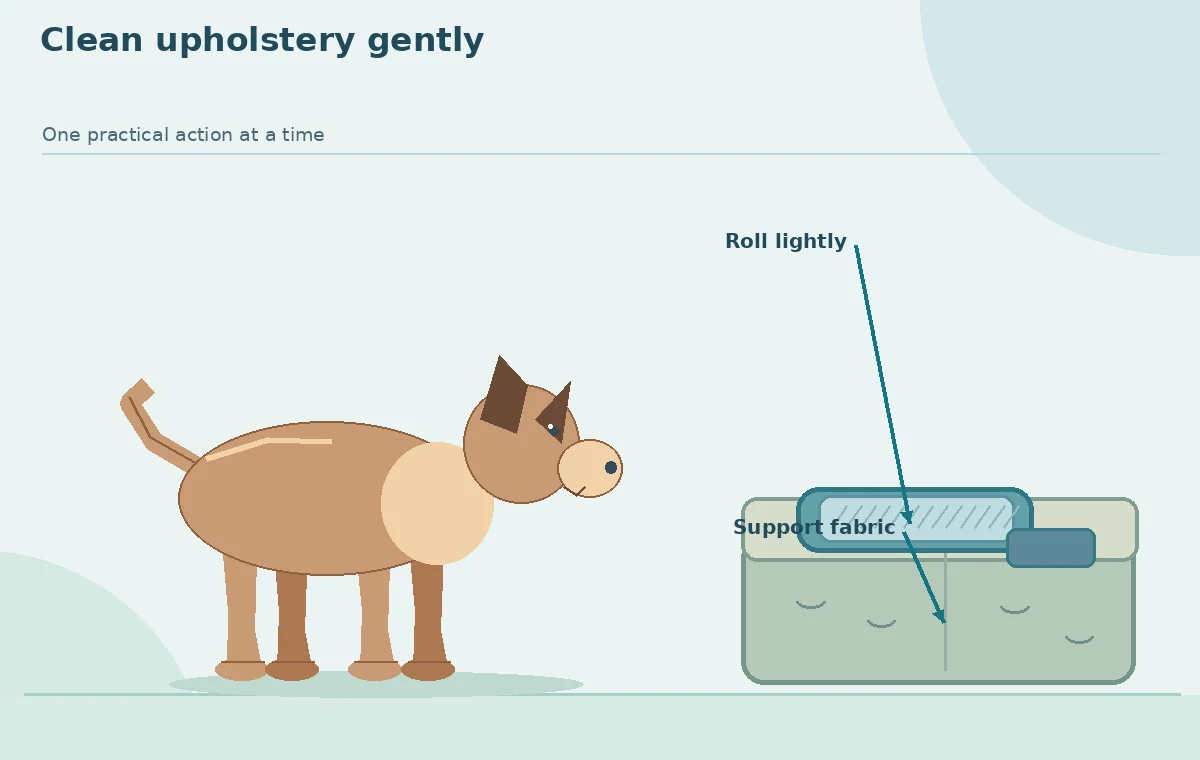
Begin in a hidden corner and look for pilling, lifted fibers, color transfer or loose threads. A roller pet hair remover should move across the fabric rather than grind into one spot. On a cushion, work in small overlapping sections and keep the fabric supported with your free hand. On clothing, lay the item flat rather than rolling aggressively while you wear it. Empty reusable chambers frequently so the collected hair does not simply fall back. For adhesive sheets, replace a used sheet once it no longer grips well and dispose of it where pets cannot chew the backing or glue. Handle long-fiber rugs and delicate knitted fabrics with special care.
- Read both the fabric-care instructions and the roller manufacturer’s permitted-surface list.
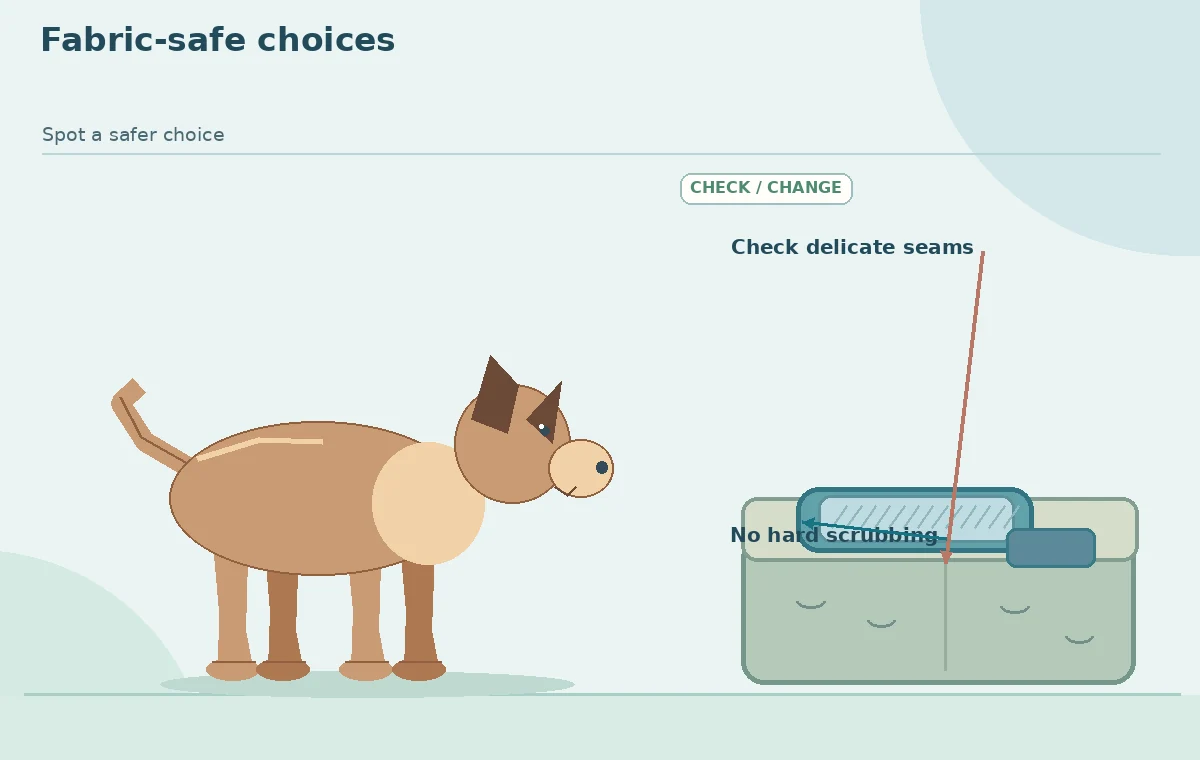
- Test a concealed seam or corner with a light single stroke, then inspect for damage.
- Work in one small section with overlapping gentle passes rather than forceful scrubbing.
- Open and empty the chamber or change the adhesive sheet before it becomes overloaded.
- Inspect the surface and finish with vacuuming or laundering when appropriate for the material.
Pick the tool by surface and type of fur
The best match can change across a single home. A smooth cotton couch cover may respond quickly to a directional roller, while a delicate velvet sofa could need a specialist method recommended by the furniture maker. Short stiff dog hairs can work into tightly woven fabric and resist shallow pickup, while fluffy undercoat may lift more easily from a smooth throw. Our furniture hair management guide covers how to choose a gentle cleaning sequence. Preventive care is equally useful: brush the pet at the appropriate rate and wash removable throws according to their labels. A roller solves the remaining visible hairs, not the cause of extraordinary shedding.
| Surface or task | Try cautiously | Better alternative if it fails |
|---|---|---|
| Smooth sofa upholstery | Directional reusable roller | Vacuum upholstery tool |
| Cotton shirt | Light adhesive or small reusable roller | Wash according to garment label |
| Delicate knit | Very gentle spot testing | Fabric-care professional advice |
| Thick rug | Small spot touch-up only | Suitable vacuum attachment |
| Pet blanket | Remove clumps before washing | Prewash brushing then laundry |
Avoid four common mistakes
Do not press harder because a roller misses a hair; friction can damage delicate fibers. Avoid carrying sticky exposed sheets in a pet’s reach, as animals may lick or chew the backing. Do not apply water to a tool unless the manufacturer says it is washable, and let a rinsed roller dry before storage. Finally, avoid accepting “two-way” or “self-cleaning” as proof of equal performance in both directions: some reusable tools require specific forward and back strokes to load the chamber correctly. Check the actual instructions before comparing products.
A reusable tool may be cheaper to maintain over time, but its value depends on durability, replaceable parts and your preferred cleaning effort. A disposable lint roller may be handy for travel but less appropriate for a household sofa used by several shedding pets. For routine prevention, review gentle shedding-care strategies and pet-friendly cleaning routines. Choose a device that you can empty, clean and store safely; no performance claim overrides a care label.
When to Call Your Vet
Consult a veterinarian if a pet starts shedding abnormally, develops skin irritation or has patchy hair loss. Stop using any cleaning tool that damages fabric or leaves loose parts a pet could swallow.
How We Research
We compared manufacturer descriptions of directional brushes and reusable chambers with the limits of the underlying mechanisms, then applied textile-care limitations and safe pet-household storage practices. This is a criteria-based selection guide, not a ranking or endorsement of a specific retailer, product model or performance claim. Reviewed November 2026. For editorial context, learn about HubPet.
Sources
OXO — FurLifter Furniture Brush, Directional Use; ChomChom — Reusable Roller Use and Emptying Instructions; Maytag — How to Get Dog Hair Out of a Washer.
Neither wins on every surface. Adhesive sheets suit small smooth areas; directional reusable rollers may suit broad upholstery if the fabric tolerates their movement.
Only after checking the garment label and testing a hidden spot. Pressure or adhesive can snag some knitted or delicate fabrics.
Follow its manual. Many use a hair-collection chamber, while others need wiping or rinsing; never add water to a tool not labeled washable.
It may collect surface strands, but an appropriate vacuum attachment is often more useful for deeply trapped hair in carpet pile.
Not necessarily. Directions and performance vary by mechanism, fabric and fur type. Test gentle strokes and compare cleanup effort instead of relying on a label.