
A reusable pet hair roller can be a convenient alternative to tearing off disposable sticky sheets after every dog cuddle. But roller is a broad term: some products use a directional fabric surface, others use a rubber collecting edge, and some have a built-in chamber that stores loose fur. A tool that works on smooth cotton pants may snag a loose sweater or leave traces on velour. Begin with the fabrics you wear most and the kinds of hair you find on them. The right tool should lift loose strands without pulling stitches, flattening texture, or requiring excessive pressure.
Understand directional fabric rollers
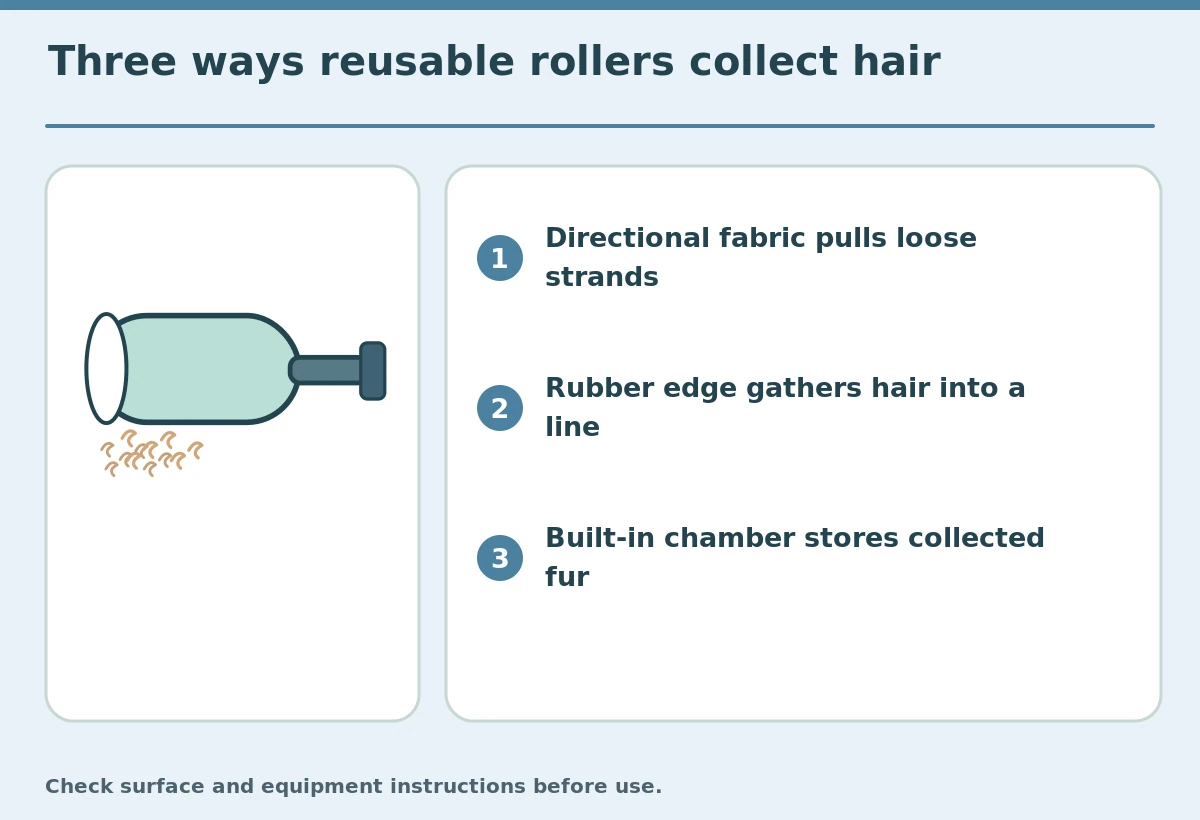
Many reusable garment brushes or rollers have a fabric surface that collects hair in one brushing direction and releases it when swept the other way or passed through a cleaning base. The arrows on the handle matter. Going back and forth randomly can redeposit hair. Check whether you can clean the brush easily and whether the collecting pad is replaceable. A garment-sized model is useful for a jacket or pant leg but slow on a large comforter. Examine how the tool reaches lapels, seams, and pockets before choosing a wide roller solely for speed.
Compare rubber edges with sticky sheets
A soft rubber edge can gather surface fur into small piles on some sturdy fabrics. Sticky lint sheets pick up loose hair and crumbs but produce ongoing refill waste and may leave adhesive on delicate textiles if used improperly. Neither option should scrape silk, loose knits, or fragile upholstery. The Good Housekeeping Institute reports that different pet-hair tools performed differently on clothes and other surfaces in its tests. Treat that as a reason to match tool type to textile, not as evidence that any one technique is safe for everything. Keep sharp metal teeth away from garment loops.
Let garment care labels set the boundary
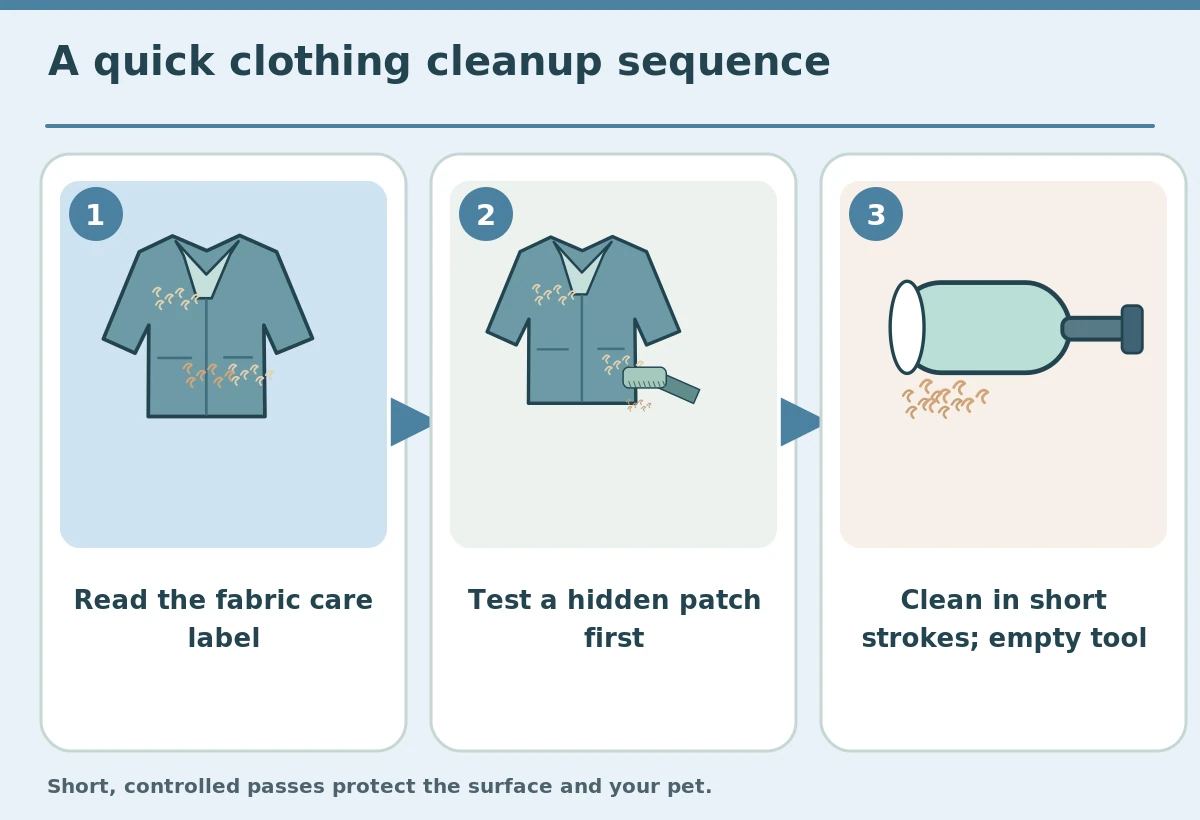
Examine the material before rolling. Tight woven cotton or durable synthetic jackets often tolerate gentle short passes. Loose cashmere, open knitwear, sequins, lace, velvet, and old fabric with raised threads need more caution. Test inside a hem or another hidden patch first and stop if the tool lifts fibers or changes the pile. A velvet garment may have a preferred brushing direction; check its care guidance. Never treat a pet-hair remover as an excuse to scrape stubborn fabric until it looks smooth. When in doubt, a textile professional can advise on fragile clothing.
Use a small repeatable clothing routine
Lay the garment flat or hang it securely so it does not pull under the tool. Remove larger loose pieces by hand, then make controlled strokes that follow the manufacturer’s intended direction. Support the fabric with your other hand and use little pressure. Empty the roller chamber or clean the brush before it reaches capacity. Finish around pockets, cuffs, and collars with a smaller permitted tool. If the roller becomes contaminated with grit, stop and clean it rather than rubbing abrasive particles into your clothes. You can often get a better result with several gentle passes than one forceful stroke.
Plan for pet hair that returns after washing
A clean shirt can pick up fur from a shared laundry basket, washing-machine seal, or pet blanket dried nearby. Keep heavily furred blankets separate from delicate garments where practical. Remove loose surface hair before laundering and follow the garment and machine instructions for cleaning the lint filter or seals. Do not put a reusable roller into a washer or dryer unless its own instructions explicitly allow it. Dryer balls and dryer sheets are separate products with variable effects; do not expect them to replace removing hair from the textile before washing. Avoid overloading machines with heavily soiled pet bedding.

Account for travel and storage
An everyday garment roller is more useful if it fits in your entryway or work bag and remains clean between uses. Check whether a cover protects its collecting face from dust, keys, and grit. A reusable design may have fewer consumables than tape refills, but the mechanism can wear, jam, or become hard to clean. If you commute in dark workwear and live with a white dog, a small portable garment brush may solve more daily frustration than a large device intended for furniture. Check for replacement cleaning bases and find out if wear requires replacing the entire tool.
Know when to switch to another method
Deeply embedded hair on coarse upholstery is a different job from loose hair on a cotton sleeve. A furniture vacuum with an appropriate nozzle may work better on a couch, while a garment brush can be safer and easier on the clothes you wear. If fabric has persistent fuzz or pilling rather than animal hair, a lint roller may have little effect. Do not confuse lint shaving with fur removal; fabric shavers can damage knitwear if used aggressively. Identify whether the problem is surface fur, trapped fur, ordinary garment lint, or worn fibers before selecting a tool.
Include hygiene and household safety
Clean the hair chamber and collecting surface regularly according to the maker’s instructions. Keep loose replacement parts and adhesives away from pets who might chew them. Do not roll a garment lint tool over pet skin or coat; choose a purpose-made grooming product instead. If airborne allergens concern someone in the family, remember that lifting visible fur does not remove all microscopic dander. The EPA discusses vacuuming and damp dusting as part of indoor particulate control. Store your garment brush dry and free of accumulated fur.
Choose by cost per use rather than a single claim
Compare the purchase price, refill needs, replacement pads, portability, and surface limits. If you frequently clean work clothes, a simple washable or chambered garment brush may be practical. If you occasionally need to remove fur from one coat, an ordinary lint sheet might be sufficient. The ideal purchase is not the device promising complete hair removal in one stroke, but the one that you can use lightly and repeatedly on your usual materials. A quick home test on a hidden patch is the final safety check before putting a new roller into your daily routine.
How We Research
We used textile-focused consumer cleaning tests to distinguish directional rollers, rubber collection tools, and sticky sheets, then prioritized care labels and nonabrasive handling. We do not claim a proprietary performance ranking. HubPet does not replace veterinary evaluation, professional flooring advice, or the manufacturer’s care instructions. See our editorial information.
Sources
Good Housekeeping Institute — Best Pet Hair Removal Tools: Read the source. Accessed October 27, 2026.
US Environmental Protection Agency — Sources of Indoor Particulate Matter: Read the source. Accessed October 27, 2026.
ASPCA — Dog Grooming Tips: Read the source. Accessed October 27, 2026.
Safety note: Follow manufacturer instructions for electrical appliances, chargers, fabric care and floor finishes. When a pet has sudden hair loss, unusual itching, irritated skin, or pain during grooming, consult a veterinarian instead of using stronger equipment. See our veterinary disclaimer.
No. Pressure, surface design, and fabric type determine whether either method is suitable.
Only if the garment care advice permits it and a hidden-area test shows no snagging or texture change.
Check its designed stroke direction and clean the collecting surface or chamber before continuing.
Visible hair removal is not a reliable measure of microscopic allergen removal; broader cleaning and filtration may still matter.
Not unless the maker specifically recommends it for animal grooming; garment tools belong on fabrics.