
General education only, not individual veterinary advice. If your pet appears unwell, is in pain, or may have swallowed a dangerous object, contact a veterinarian promptly. Read HubPet’s veterinary disclaimer.
Judge a strong large dog crate by measured fit, construction quality and the dog’s emotional comfort—not by a “heavy duty” label. Large dogs can lean against doors, push corners and expose weak hinges, but a stronger box is not always a more humane choice. Some highly stressed dogs injure their mouths and paws while trying to escape confinement; VCA warns that crating a dog with separation anxiety may make that danger worse. This article is a physical-product inspection checklist for a settled large dog, not a guide to fixing escape behavior. Use it to compare sturdy wire, molded plastic and metal box-style designs, verify the true interior dimensions, and decide when professional behavior help matters more than buying heavier hardware.
Compare structural designs rather than marketing adjectives
Wire crates allow airflow and visibility, fold for storage and often have replaceable trays. Their weak points may include flexible wire intersections, bent pins and the door frame. Molded plastic can reduce visual stimulation and contain spills but may be bulky, with latches and fasteners that need inspection. Metal box-style units may offer rigid corners and a smaller number of flexible wire joints, although heavy weight and heat or ventilation concerns require review. VCA describes advantages and limits of these categories and notes that no style substitutes for training. Do not call a cage “escape-proof” without testing and a full understanding of the dog’s behavior.
| Type | Practical advantage | Inspect closely |
|---|---|---|
| Reinforced wire | Ventilation, visibility, folding storage | Wire ends, welds, bars, door alignment |
| Rigid plastic | Light blocking and easy cleanup | Vent holes, clips, shells, fasteners |
| Metal box-style | Rigid panels, fewer flexible joints | Ventilation, edge finish, hinges, weight |
| Travel crate | Potential vehicle/transport purpose | Certification and travel rules, not appearance |
| Crate with divider | Adjustable space for growing dog | Secure mounting with no pinch points |

Size a strong crate to the dog, not a breed chart
Measure your dog standing naturally from the floor to the highest point needed for head clearance, and from the nose to the base of the tail. Then compare the interior measurements, accounting for wall thickness, trays and door frames. A dog should be able to stand without stooping, turn comfortably, and lie in a natural position. A “large” or “extra large strong dog crate” can vary greatly between manufacturers. Weight ratings do not tell you whether your dog’s shoulders, head or tail will clear. AKC and VCA emphasize fitting the individual dog; do not treat a standard 42-inch or 48-inch label as proof of suitability.
- Measure your dog’s natural standing height and body length; include the position of the head and tail when turning.
- Ask for interior length, height and width, not just package or exterior dimensions.
- Check that the doorway is wide and tall enough for entry without rubbing hips or shoulders.
- Inspect the tray fit, floor grip and adequate airflow before adding bedding.
- Practice with an open door first and use gradual rewards; confirm that closing the door does not cause panic.
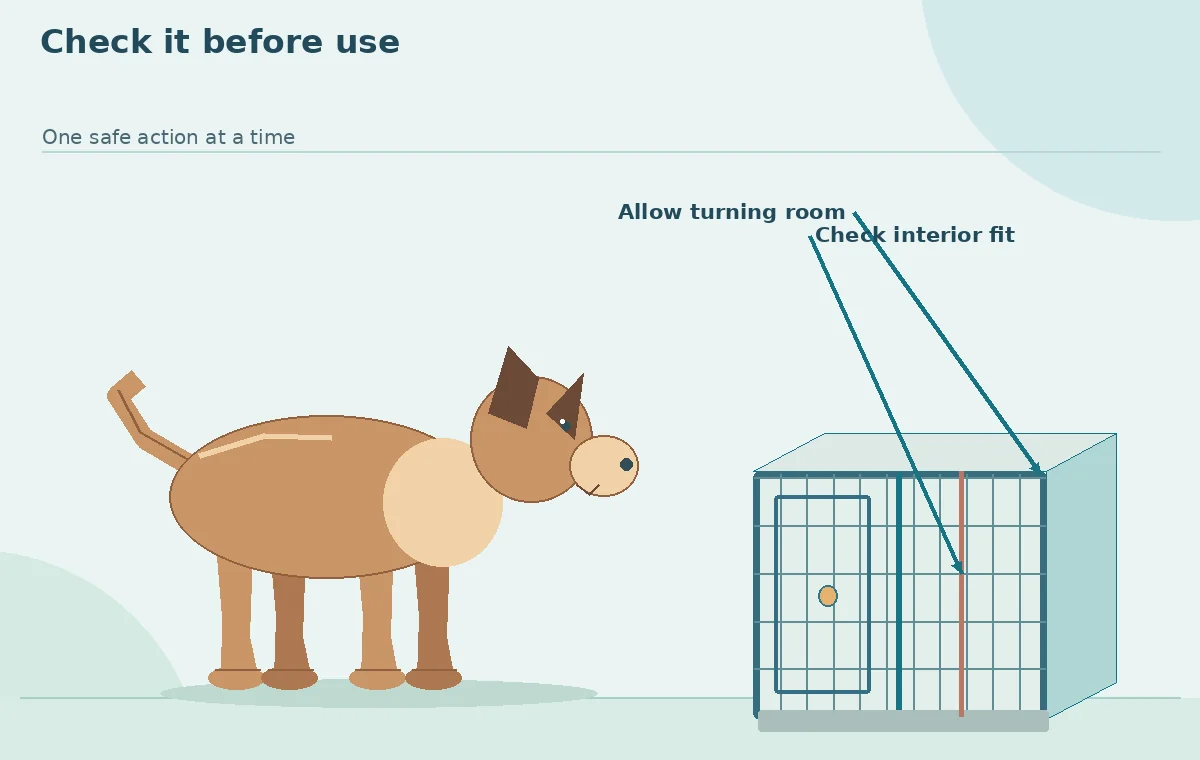
A hardware inspection you can do before use
A strong large dog crate must resist ordinary bumps without creating sharp hazards. With the dog outside, close every latch, press gently on panels and look for movement at joints; do not stress-test the crate with the animal inside. Check that the door cannot swing onto the dog, the tray sits flat, no exposed fastener can scrape the nose, and the bar spacing suits your dog. If a manufacturer lists a replacement latch or tray, confirm it matches the actual model. Do not add homemade locks, cable ties or padlocks that could delay emergency exit. Inspect bedding and collars: a collar or loose strap caught on a grate can cause serious injury.
| Finding | Why it matters | What to do |
|---|---|---|
| Latch catches only halfway | Door may shift under contact | Stop using until repaired correctly |
| Bent bar or sharp weld | Paw, mouth or skin injuries | Replace or seek maker-approved repair |
| Tray slides or rocks | Unstable footing and pinch risk | Fit approved tray and check base |
| Poor airflow near a wall | Overheating and discomfort risk | Follow maker clearance guidance |
| Dog attacks crate door | Distress or injury risk, not just weak metal | Stop confinement; seek veterinary advice |
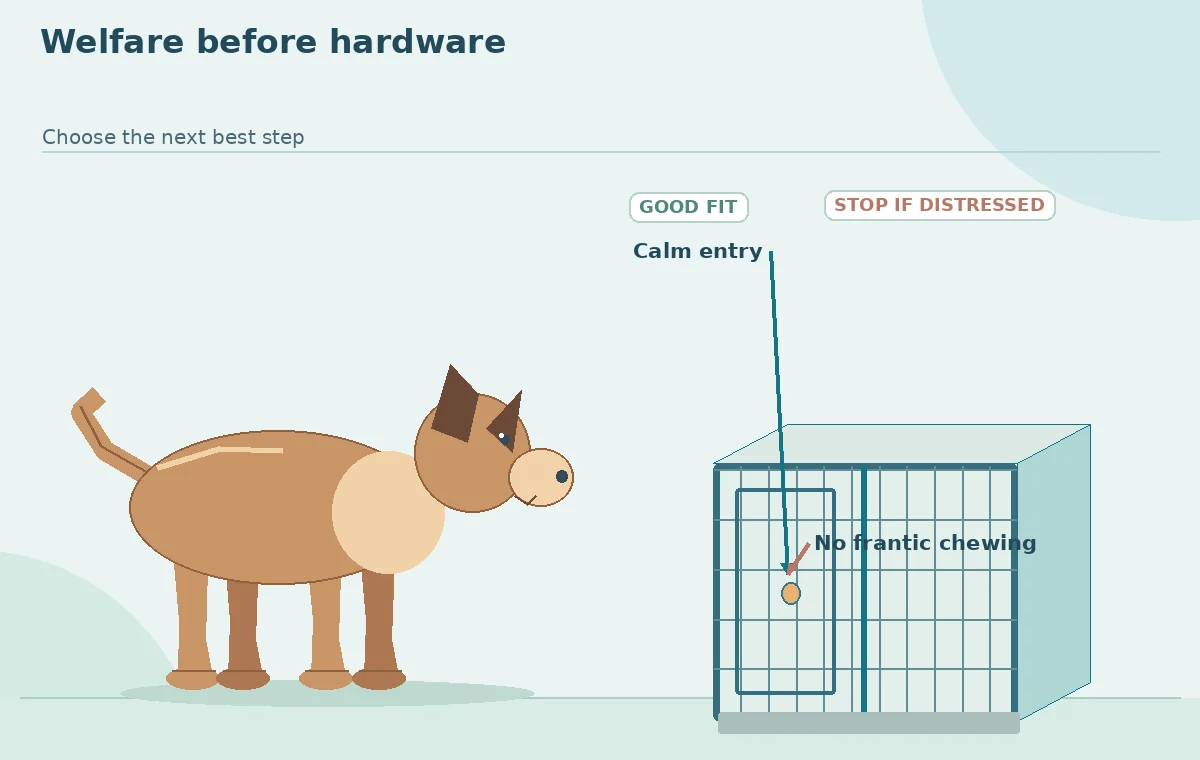
Strong materials do not solve confinement distress
Anxious escape attempts require a different plan from a dog occasionally pushing a door while excited. VCA cautions against crating animals with separation anxiety because of possible self-injury. If your dog scratches frantically, pants heavily without heat, injures teeth on bars or cannot settle, pause crate confinement and ask your veterinarian or a qualified reward-based professional for an individualized plan. Installing a stronger latch is not treatment. Use the calm approach in helping a pet feel safe in a crate and the staged steps in adult-dog crate introductions.
For an already comfortable dog, choose a stable location away from heaters and direct sun; provide ventilation and an appropriate washable bed if safe. Make the door accessible in an emergency and practice brief voluntary entries with rewards. If the crate is for transport, verify whether the manufacturer designed and approved it for your exact mode; a home “heavy duty” cage is not automatically crash-tested or airline accepted. Finally, check manufacturer warranty and replacement-parts support. These practical details usually predict more about safe daily use than glossy descriptions such as “indestructible” or “escape proof.”
When to Call Your Vet
Stop using the crate and contact a veterinarian promptly for mouth injuries, broken teeth, bleeding paws, overheating, collapse, severe distress or repeated forceful escape attempts. Ask for a behavior referral if you suspect separation-related panic.
How We Research
We compared VCA descriptions of wire, plastic and metal box-style crates, AKC sizing guidance, and VCA warnings about separation anxiety. These are selection principles, not independent crash tests or ratings of specific crate models. Check material and fit claims against each maker’s specifications. Read more about our approach on the About page.
Sources
VCA — Crate Training and Confinement for Puppies and Dogs; VCA — To Crate or Not to Crate?; AKC — A Beginner’s Guide to Crate Training; AVSAB — Position Statements: Humane Dog Training (2021, reaffirmed 2025).
Not reliably. Strength varies by construction and dog behavior. If the dog is frantic or injures itself trying to leave, confinement needs professional assessment rather than merely stronger hardware.
No. Compare true inside height, width and length with your individual dog’s ability to stand, turn and lie comfortably; nominal sizes vary.
Neither category is automatically safest. Check ventilation, edges, latch design, floor comfort, correct fit and how calmly the dog uses the enclosure.
Avoid improvised locking hardware that could impede fast release. Use manufacturer-approved latches and prioritize canine welfare and emergency access.
Only if its design and any required travel approval fit the intended journey. Do not assume ordinary household crates passed crash tests.