
Searching for a carrier for two cats usually means you want to move both animals with less equipment. Unfortunately, a shared enclosure can create risks even for cats that usually sleep together. Travel noise, motion and unfamiliar scents can trigger panic or redirected aggression, and there may be no way to separate the cats quickly while maintaining safe containment. VCA Animal Hospitals recommends bringing each cat in a separate carrier. Here is a practical way to make two-carrier travel manageable instead. If an animal becomes injured, has breathing problems or shows extreme distress, contact a veterinarian promptly and consult HubPet’s veterinary disclaimer.
Why bonded cats may behave differently in transit
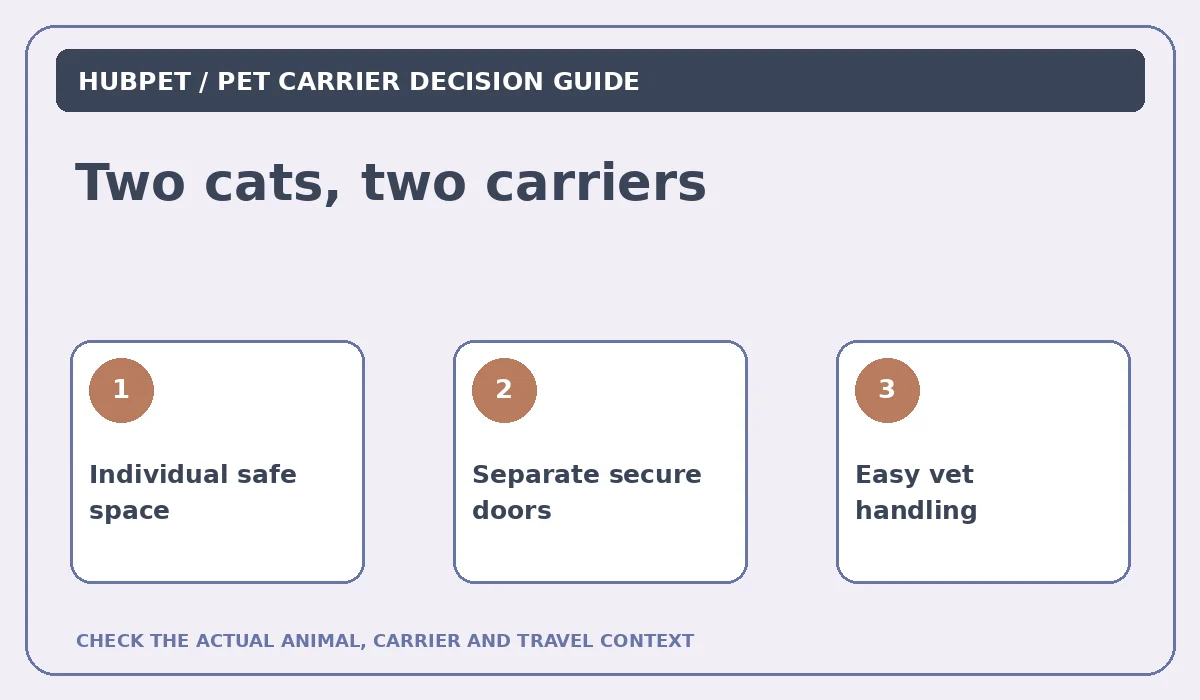
Familiar cats can groom one another peacefully at home but become stressed by strange sounds, vehicle motion and a veterinary waiting room. One cat might try to hide while the other moves around or pushes toward a door. In a shared carrier, they cannot choose distance, making an accidental scratch or bite more likely. Stress responses can also change suddenly when a vehicle stops or someone lifts the case. Bonded behavior does not guarantee compatible behavior during frightening transport. Two suitable carriers let each cat settle, move and be handled independently. This is a welfare decision rather than a judgment that the cats dislike each other.
Choose two carriers that fit each cat individually
Measure each cat’s relaxed lying length, standing height and width, then compare the usable interiors of candidate carriers. The two cases do not have to be identical if the cats differ in size. Each should provide a secure floor, reliable door and enough room for natural posture changes. Check the floor with bedding installed and verify that top and side fasteners lock properly. Avoid purchasing one enormous carrier to avoid the inconvenience of two smaller cases. A large shared case still does not solve the inability to separate frightened cats. A strong, lightweight carrier that you can clean and carry level is a better long-term investment.
Make the trip manageable for one human
Two carriers can be awkward, especially on stairs or when opening a car door. Plan how you will transport them before closing either carrier. Ask a trusted adult to help if the combined weight is too heavy or you cannot keep both cases level. Avoid dangling one case from a fingertip while balancing a second against your leg. Use carrier handles as intended and keep door latches away from impacts. When using a stable trolley compatible with the carrier, secure the cases against tipping and follow its instructions. Your balance and the ability to open vehicle doors safely matter as much as each cat’s comfort.
Prepare both cats with separate training sessions
Leave each carrier in a quiet room with a door fixed open and familiar bedding inside. Allow the cat who will use it to investigate voluntarily. Reward approaches and calm entry rather than pushing the cat through the opening. Gradually practice a closed door, lifting the carrier a small distance and short periods of stillness. Train the cats separately, so one does not crowd the other’s opening or compete for rewards. If one cat needs more time, adjust its schedule rather than rushing the pair. Reward-based familiarization can make transport more predictable, although it cannot eliminate all stress. Begin before an upcoming appointment whenever possible.
Load the carriers in a quiet, secure room
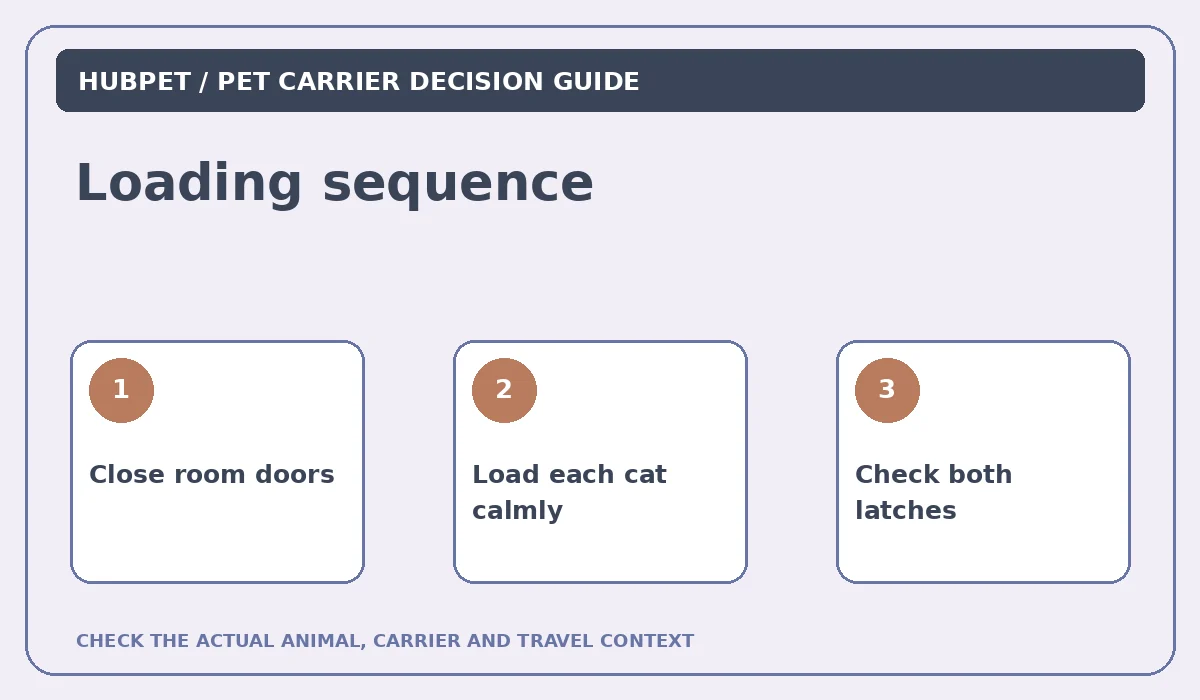
Check doors, handles and floor padding before bringing the cats into the loading area. Close external doors and windows to reduce escape risk. Place each cat inside its own familiar carrier, then confirm latches individually. If a cat resists strongly, pause and use a gentler plan rather than chasing it around the house. Do not open the first carrier to “comfort” its occupant while the second cat is loose in the room. Once both are secured, move them separately to the vehicle. Give yourself additional time so rushing does not turn an ordinary appointment into a preventable escape incident.
Secure two cases appropriately in the car
Cats should remain contained during travel so they cannot reach the driver or escape at a stop. Decide in advance where each case can rest securely with airflow unobstructed. Follow vehicle and restraint-equipment instructions; a carrier is not automatically crash tested. Do not stack one carrier on top of another unless a system is specifically designed and secured for that configuration. Keep cases away from footwells where they could move into pedals, and never place a pet unsecured on the driver’s lap. Avoid leaving animals unattended in a parked car. Each cat should have access to a ventilated, stable space throughout the journey.
Reduce waiting-room tension and handling
Call the veterinary clinic ahead of time to ask whether two cats can be examined sequentially and whether you can wait somewhere quiet. Place a light cover over part of each carrier without blocking airflow if your cats seem calmer with reduced visual exposure. Keep the carriers apart from unfamiliar dogs and cats. A case with a removable top may let a veterinarian examine a nervous cat without pulling it through a small front door. Inform staff if either cat has previously redirected fear or aggression toward the other during travel. Separate carriers let the clinic safely manage one patient at a time.
Plan for the return trip and post-visit scent changes
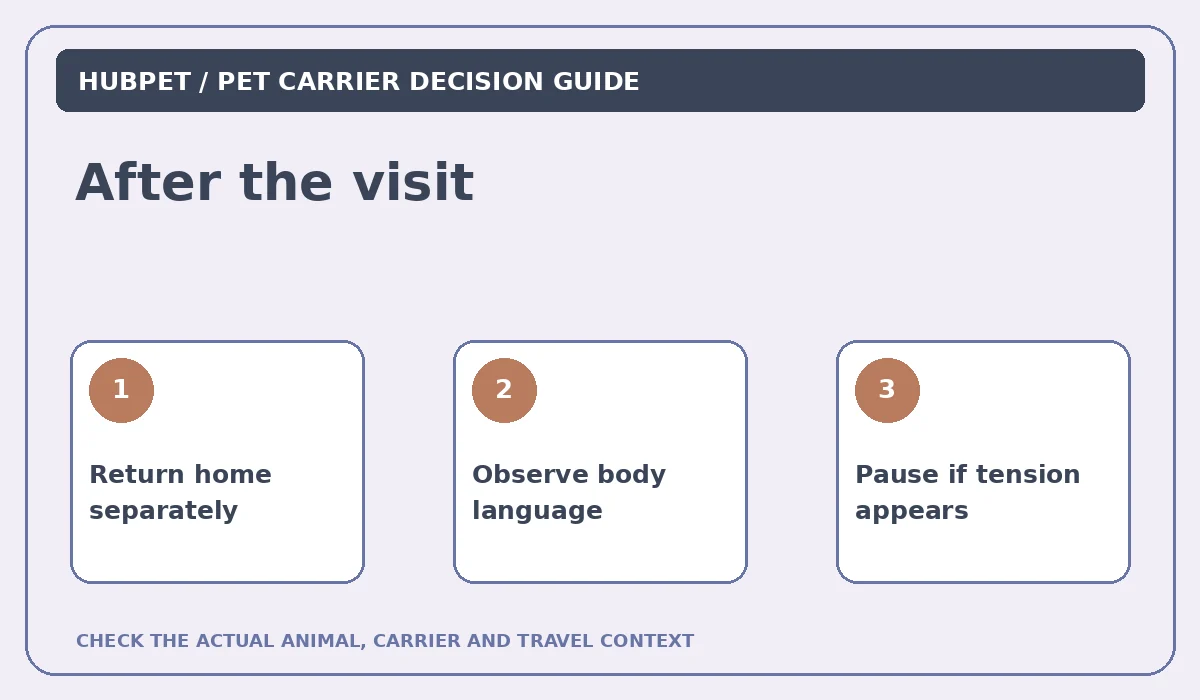
Cats may smell different after an examination, grooming or hospitalization, which can alter how housemates greet them. Transport them home separately, even if the outward trip seemed calm. On arrival, set each carrier in a quiet secure room before opening the doors one at a time. Allow the cats to settle and observe their body language rather than forcing immediate contact. If hissing, staring or chasing occurs, separate them and follow an appropriate slow reintroduction process. Do not assume that placing both cats into one carrier will restore their bond. Normal routines and calm choices usually provide a better way to recover from an unusual day.
Use a final two-cat packing checklist
Label the cases discreetly so you can identify which cat is inside and carry current contact information. Check individual bedding, absorbent liners, door latches, ventilation and both cats’ microchip registry details. Pack supplies separately where useful, and carry a recent photograph of each cat. Plan enough time for loading and unloading without propping doors open. If your trip includes a flight or another regulated service, confirm the operator’s current per-animal and carrier policies rather than assuming two cats can share one cabin allowance. Your goal is not fewer pieces of equipment: it is predictable, safe handling for both animals.
How We Research
We reviewed animal-welfare and veterinary guidance on containment, handling, fit, travel stress and equipment limitations, prioritizing practical owner checks over commercial claims. These sources inform the safety recommendations but do not constitute endorsements of individual products. We did not independently crash-test carriers, measure manufacturer specifications in a lab, or receive compensation for this article. Airline and transport rules may change; confirm current requirements with the provider and ask a veterinarian about a specific animal’s health. Learn more About HubPet.
Sources
VCA Animal Hospitals: Reducing the stress of veterinary visits for cats. Reviewed October 27, 2026.
Cats Protection: Choosing and using a cat carrier. Reviewed October 27, 2026.
RSPCA: How can I train my pet to feel comfortable in a transport carrier?. Reviewed October 27, 2026.
American Veterinary Medical Association: Traveling with your dog or cat. Reviewed October 27, 2026.
Separate carriers are generally preferable even for bonded cats. Travel stress can change behavior unexpectedly and prevent safe distancing.
Not usually. An oversized shared case does not remove the risk of conflict, difficult handling or stress when cats cannot separate.
Plan the route, use stable equipment and ask a helper when needed. Do not attempt to carry more weight than you can handle safely.
Yes, keep them individually contained for the return trip. At home, monitor behavior and allow time for familiar routines to resume.
Separate them safely, avoid forcing contact and seek a veterinarian or qualified behavior professional if tension persists or injuries occur.