
Puppy travel carriers can help a young dog visit the vet, experience the outside world safely, and practice resting in a contained space. A carrier is not a substitute for outdoor socialization or a guarantee of vehicle safety. A growing puppy changes size quickly, and the bag that looks roomy in a photograph may tilt or sag once you lift it. Dogs Trust notes that carrying young puppies can allow carefully managed experiences before they are ready for certain ground-level outings; your veterinarian should advise on disease exposure and vaccination precautions. Start with actual fit, a stable floor, good ventilation, and short pleasant introductions. These basics matter more than the printed breed label or fashionable shape.
Pick the carrier for your puppy today
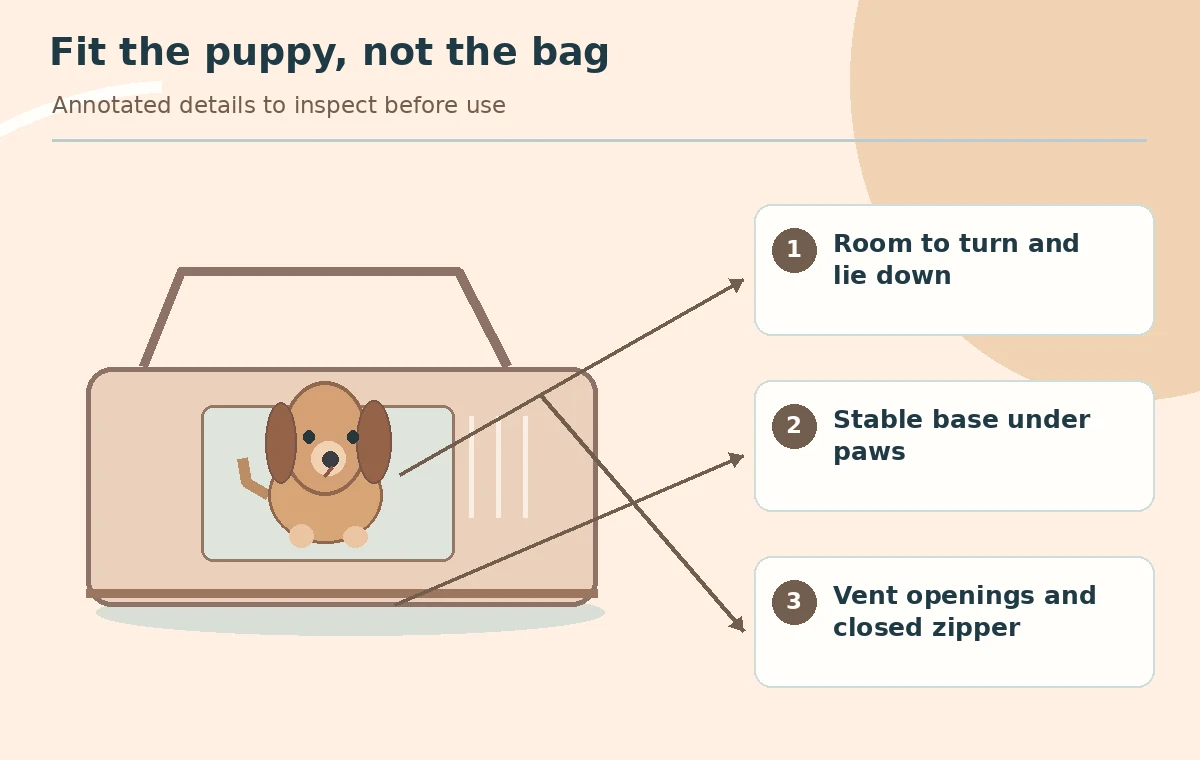
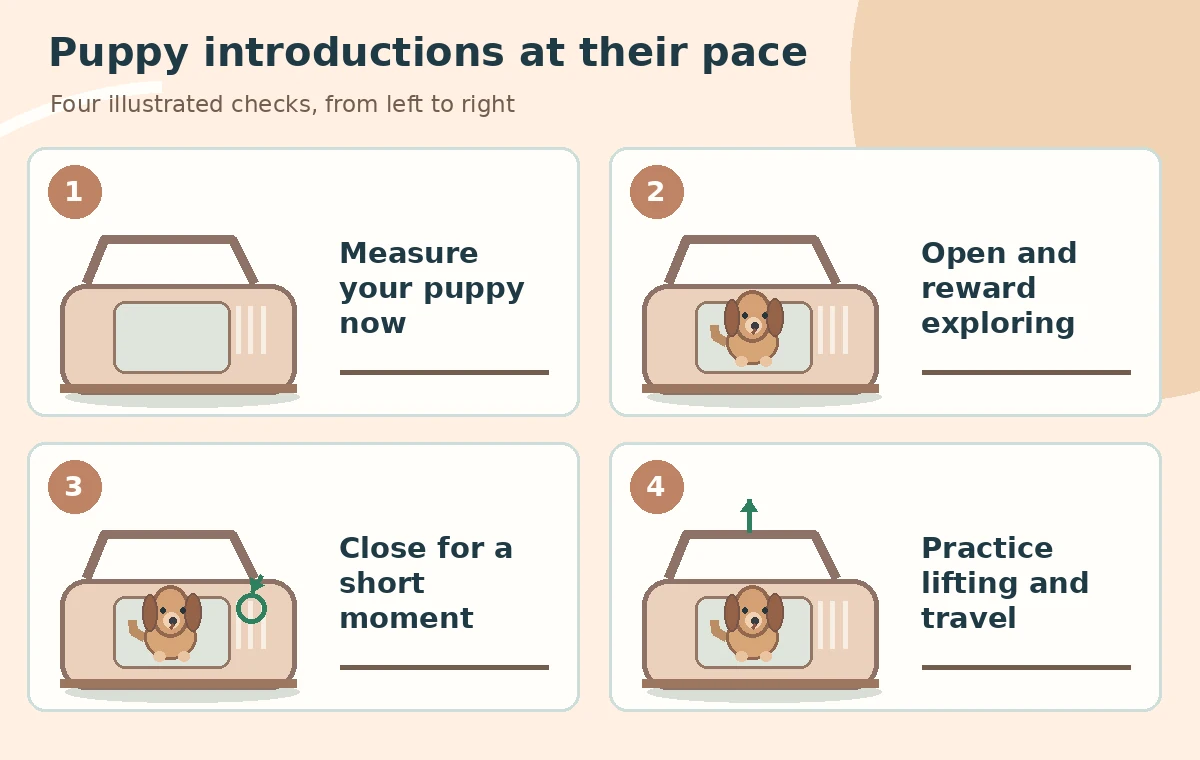
Measure your puppy standing, lying naturally, and turning within a small open area. Select a carrier with enough internal length and height for those movements while avoiding excessive empty space that allows sliding during transportation. A breed-average adult weight is not a useful substitute for present body dimensions. If the puppy will outgrow a travel carrier, budget for a replacement rather than choosing an enormous bag now. VCA explains that transport confinement needs different size considerations than a roomy home exercise pen. Check the actual dimensions after adding a washable pad and account for upright ears or long legs.
Choose real support rather than an open tote
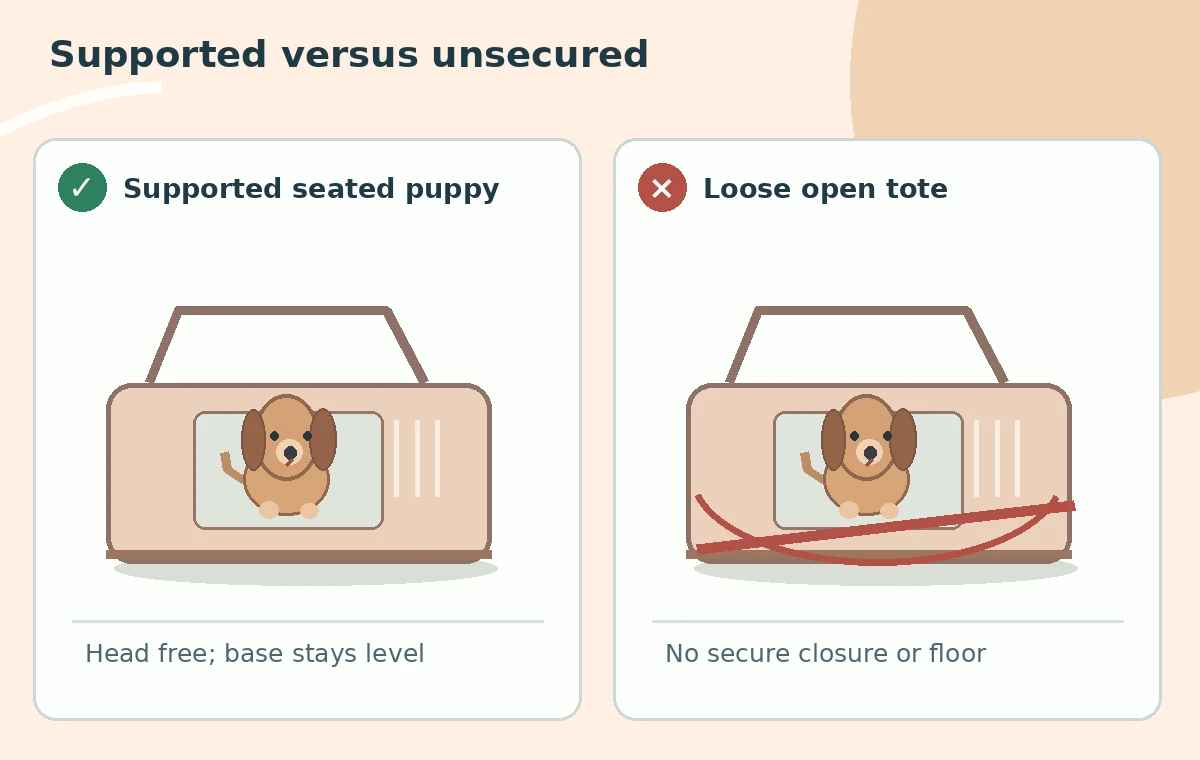
A puppy carrier should keep the animal fully inside with a secure closure and a floor that stays reasonably flat. Open handbags, exposed heads, and decorative pockets can allow falls or sudden escape. Check how the handle and shoulder strap distribute weight; a dangling hammock can force a puppy to brace awkwardly. Some small dogs enjoy sling carriers, but the design must support the body without restricting breathing, forcing a curled neck, or exposing the puppy above the rim. Choose a conventional supportive carrier for transport when containment matters. Never attach a leash to an ordinary bag handle and assume this will prevent escape.
Check breathing space and temperature
Look for a ventilation path when all doors close. Mesh must not flatten onto the muzzle when you lift the carrier, and fabric panels should stay away from the face. Puppies can become uncomfortable quickly in stuffy conditions, so avoid leaving a carrier in direct sun or unattended inside a car. Do not cover every opening with a blanket. When carrying outside, keep a close eye on signs such as persistent panting, frantic scratching, or unusual quietness. Pause the outing and contact a veterinarian if there are concerns about breathing or distress. A padded decorative exterior does not compensate for poor airflow.
Plan for cleaning without harsh smells
Young puppies can have toileting accidents and may chew loose threads. Look for a removable pad, washable surfaces, and corners you can reach easily. An absorbent layer should stay flat beneath the puppy, not bunch up around the feet. Check zippers and seams for stray fibers that could be swallowed. Wash after soiling according to the manufacturer’s instructions, rinse residues thoroughly, and allow all layers to dry before the next trip. If the floor insert becomes waterlogged or warped, replace it. An easily cleaned carrier helps avoid unpleasant associations when a short journey goes wrong.
Introduce the empty carrier before using it
Place the carrier open on a nonslip floor where the puppy feels comfortable. Reward approaching, sniffing, stepping inside, and settling there voluntarily. Keep the early sessions brief and allow the puppy to leave. Gradually close a door for a moment, reopen it, and offer a reward. If the puppy paws frantically or refuses to approach, shorten the exercise rather than pushing onward. VCA’s crate training guidance emphasizes building a safe resting association instead of forcing prolonged confinement. An active puppy can learn this skill in several tiny sessions across ordinary days.
Rehearse lifting and small movements
Before moving with the puppy, practice carrying the empty carrier. Notice whether it swings against your leg or tilts steeply from a shoulder strap. With the puppy comfortable inside, make a short lift just above the ground and set the carrier down before concern appears. Increase movement gradually: a few steps across the room, a quiet hallway, then a calm outdoor setting. Avoid crowded stairs and jostling. Provide familiar bedding with a secure non-slip base. If the puppy becomes distressed, return to the previous successful step. A calm first trip is preparation for later travel, not a performance test.
Separate outdoor exposure from road restraint
Carrying a puppy can introduce ordinary sights and sounds while a veterinarian guides safe contact with public ground and unknown dogs. Do not put the carrier down in high-exposure areas solely for a photo. For vehicle travel, do not let the puppy roam around the seats or ride in a lap. VCA and AVMA advise secure transport. The FelineVMA cat-specific car-floor guidance should not be treated as a universal puppy rule; use an appropriate dog vehicle restraint or carrier installed according to its verified crash-test and manufacturer directions. A soft walking bag is not automatically suitable for collision protection.
Keep reassessing as the puppy grows
Try the fit check again every few weeks during rapid growth or whenever the puppy appears cramped. Watch for bent ears, a crowded chest, inability to turn, or paws pushing against the ends. Recheck handle stitching, zippers, mesh, floor inserts, and any chew damage. Replace the carrier if the load path seems unreliable or the usable space becomes too small. Think ahead to future tasks: car travel, veterinary exams, evacuation plans, and carrying up stairs may require different equipment. For motion sickness, sustained distress, or physical discomfort, ask the veterinary team for individualized guidance instead of relying on extra padding or supplements.
How We Research
We reviewed animal-welfare organizations, current veterinary guidance, and carrier handling advice, then translated the evidence into observable fit, closure, cleaning, and transport checks for puppy travel carriers. We did not conduct crash tests, rank untested products, or treat illustration details as independent laboratory evidence. Model-specific load limits and transport instructions must be checked with the manufacturer. Sources reviewed October 27, 2026. Learn more about our methods at About HubPet.
Sources
VCA Animal Hospitals — Life Skills: Crate Training and Confinement for Puppies and Dogs. Read source. Accessed October 27, 2026.
VCA Animal Hospitals — Dog Behavior and Training: Air and Car Travel. Read source. Accessed October 27, 2026.
Dogs Trust — Introducing Your Puppy to the World Around Them. Read source. Accessed October 27, 2026.
Cornell University College of Veterinary Medicine — Traveling Safely with Your Dog. Read source. Accessed October 27, 2026.
AVMA — Traveling with Your Dog or Cat. Read source. Accessed October 27, 2026.
Safety note: This article offers general carrier selection and handling information, not individualized medical or transport certification advice. Stop an activity if the animal struggles to breathe, shows pain, or develops persistent distress. Ask your veterinarian about specific health concerns or safe travel arrangements. See the HubPet veterinary disclaimer.
Controlled carrying may support early exposure, but ask your veterinarian about local disease risks and safe ground contact for your puppy.
Fit the puppy’s current body with secure support, then remeasure frequently as growth changes the space.
No. A walking sling does not automatically provide a safe vehicle restraint or crash protection.
Start with an open carrier, familiar bedding, rewards for voluntary entry, and very brief door closing before any travel.
Replace it when the puppy cannot stand or turn comfortably, or when handles, zippers, the base, or mesh become unsafe.