
A shower can catch you on a short stroller outing, but a clear rain cover is not a sealed weatherproof cabin. A useful cover sheds light rain while keeping reliable air openings, enough room around the pet, and a way to return home quickly. The key purchase question is not whether a photograph shows a dry stroller. It is whether that exact cover fits the frame, leaves ventilation unobstructed, and opens without trapping paws or fur. This guide separates a drizzle barrier from unsafe hot, windy, or prolonged exposure. This is equipment guidance, not veterinary diagnosis or treatment; for pain, breathing problems, or persistent stress, consult your veterinarian and read our veterinary disclaimer.
Confirm the exact stroller and cover match
Find the stroller’s model name and the rain cover part number before shopping. Two similarly shaped canopies may have different zipper curves, handle attachments, wheel arches, and side vents. A universal cover should list usable dimensions and secure attachment points rather than only claiming a general size. Put the stroller up empty and test the complete cover without an animal inside. Fabric must not sag into the cabin or pull the mesh door open. Stop if the attachment needs improvised knots, adhesive, or pressure on a latch. Manufacturer-specific compatibility takes priority over a seller’s generic photograph.
Check airflow from more than one side
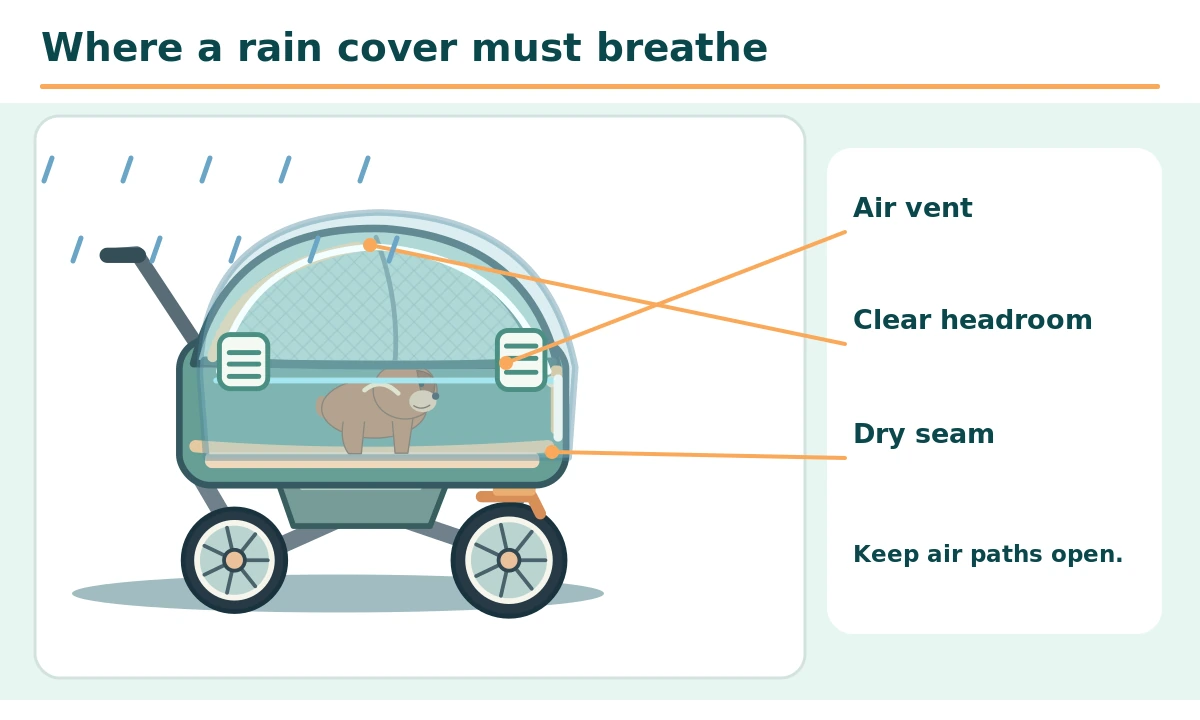
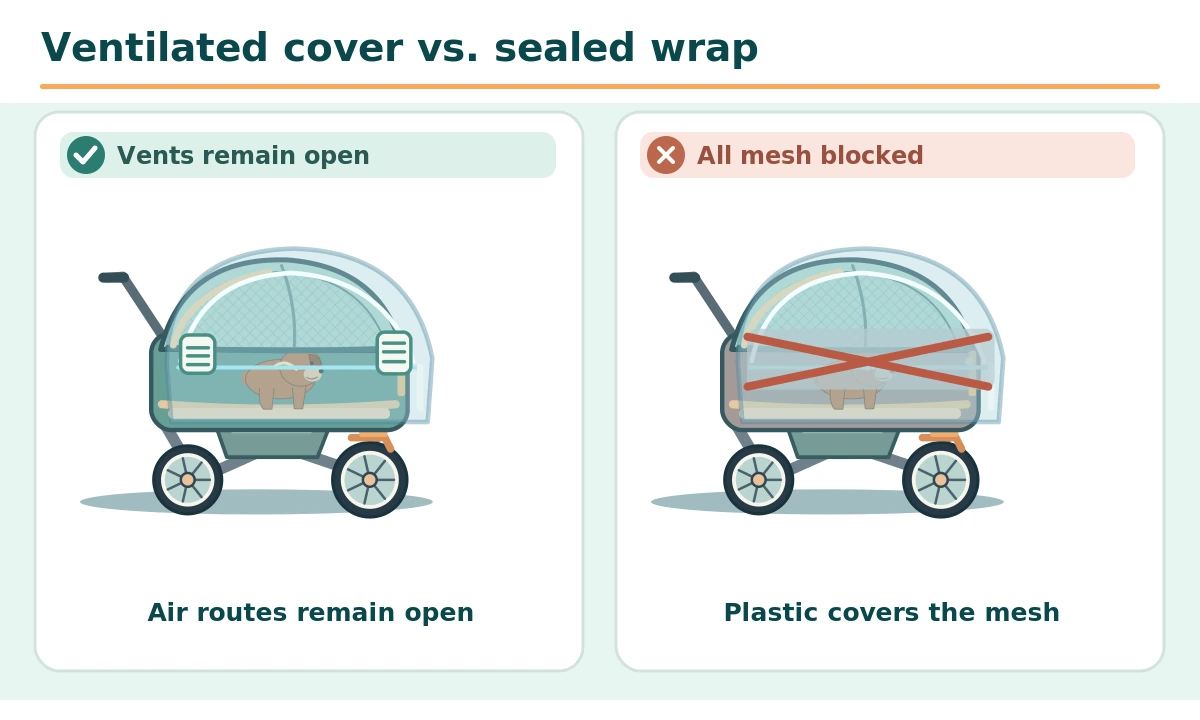
Inspect the stroller and cover together from the front, rear, and both sides. A transparent sheet can preserve a nice view while covering every mesh opening, particularly when wind presses plastic against a panel. Look for permanently open or well-protected air paths that do not fill with rain. If water enters those paths in ordinary conditions, that is a weather limit, not a reason to seal them. You should be able to inspect your pet without lifting the whole cover. Panting, agitation, drooling, or unusual quietness call for immediate reassessment away from the weather.
Keep the cover away from your pet
An attached cover should clear the head, ears, nose, and paws during sitting and turning. Examine where elastic corners, straps, and zippers end up when the pet shifts position. A pet must not be able to chew a loose plastic flap or pull an attached cord through the enclosure. Secure the cover using its intended points, and keep both the stroller’s own entry closure and the rain cover correctly fastened. A cover cannot replace the stroller’s escape-resistant mesh or internal restraint rules. Never treat plastic contact with the animal as harmless because the sheet looks soft.
Trace where rainwater runs
Pouring rain should move down the outside of a cover, not pool over the roof or drain into the seat. Look at seam overlaps and corners, and identify whether runoff will hit the brake, passenger door, or storage basket. In a stationary empty stroller, a light spray test can reveal dripping seams or puddles; follow the care instructions and avoid soaking components that should remain dry. Water near a zipper pull may make it harder to operate quickly. If the canopy forms a low pocket or flaps hard in the wind, postpone the outing rather than adding unsafe clips or weights.
Treat heat and humidity as stop signals
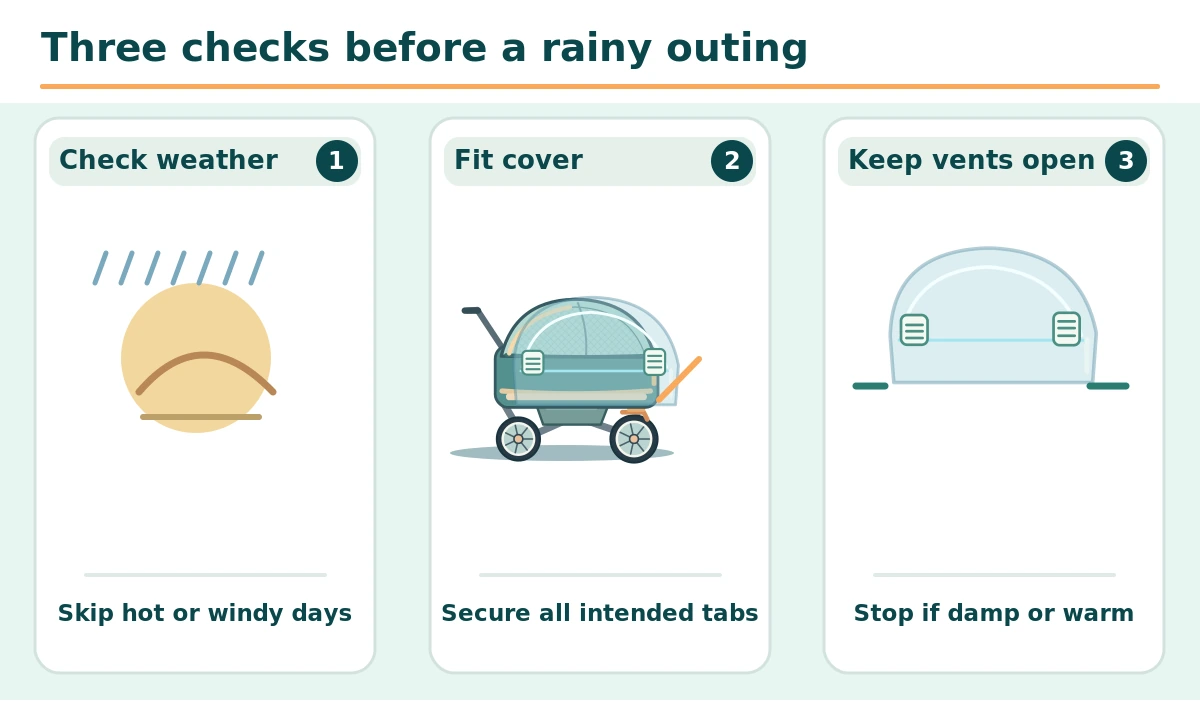
Transparent covers can hold warmth and humidity even when outside air feels pleasant. Never use one as a sealed windbreak or leave a pet parked under direct sun. Warm, humid air makes cooling harder, and a short-nosed dog may be especially vulnerable to heat problems. Choose a short, cool-weather trip only when the enclosure stays airy and the animal looks comfortable. Feel the air at the pet’s level, not just at the handle. The AVMA emphasizes shade, water, and fast attention to heat-stress signs. A rain cover is not a substitute for a climate-controlled safe place.
Plan for wind and visibility
A thin cover may catch wind like a sail and change how the stroller steers. Avoid gusty days, waterlogged paths, traffic spray, and low-visibility conditions. Keep your own view of the wheels and curb edges; do not let fabric trail near a rotating tire. Make sure reflective or light-colored trim does not block the animal’s view or the handler’s grip. If a cover flaps repeatedly or needs a hand to hold it down, stop and return indoors. Never use a stroller as shelter during thunder or severe weather.
Inspect entry access before heading out
Practice opening the complete rain barrier with the stroller parked, brakes set, and the pet safely away from moving parts. Know which zipper releases first and where a damp cover will hang when unfastened. Do not open the stroller door outdoors simply to adjust a sheet with an excitable pet inside. A closing edge should never pinch fur, paws, or a harness. If the cover prevents a quick, controlled exit indoors, it is poorly suited to your setup. Rehearse the sequence so you do not improvise during rain.
Keep the liner and bedding dry
Even a correctly fitted cover cannot prevent dampness from wet shoes, spray from below, or condensation. Use the stroller’s approved removable pad and examine the floor after a brief trial. Wet bedding can chill a pet or hide an accidental leak. Bring a dry cloth for short outings and a practical route home. Avoid stuffing towels against the mesh to stop drafts, because that also blocks circulation. If the inside becomes damp, finish the outing, clean as directed, and dry the stroller fully before storage.
Clean the cover without damaging it
Manufacturer guidance should control cleaning products and drying. Remove the cover, wipe off grit gently, and let the material dry before folding. Harsh solvents can cloud transparent panels, weaken coatings, or make plastic brittle. Check clear windows for scratches that reduce visibility; check elastic and stitching for loss of stretch. Do not store a wet cover folded into a closed compartment. InnoPet specifically advises drying its rain covers before storage, which is a helpful maintenance principle but not a universal washing specification.
Decide when no cover is the better choice
If the forecast includes heat, wind, lightning, heavy rain, or very cold conditions, postpone the outing or use an appropriate indoor alternative. Some pets dislike rattling rain or an obscured view even when physically dry. Gradually introduce a compatible cover indoors while the stroller is still, and stop if the pet shows distress. A stroller is not an emergency shelter, vehicle restraint, or overnight enclosure. After any wet-weather trip, inspect brakes, wheels, canopy fasteners, and the pet’s comfort before considering another ride.
How We Research
We compared veterinary and animal-welfare advice about temperature, stress, and secure pet handling with the features and limitations documented by stroller manufacturers. Brand-specific instructions are examples, not universal guarantees; the manual for your exact model controls load ratings, approved accessories, operating steps, and care. We favor practical inspection, secure closure, comfortable fit, and stop conditions over advertising claims. We do not claim to have laboratory-tested individual products. Read more about HubPet and our editorial approach.
Sources
AKC — Deciding if Dog Strollers Are Good Options for You.
AVMA — Warm Weather Pet Safety.
InnoPet — Properly Maintaining a Dog Stroller.
Trixie — Buggy With Rain Hood and Mesh Inserts.
No. Compare the exact dimensions, attachment points, airflow openings, and quick-access design. Reject covers that pull on the zipper or hang into moving wheels.
No. Do not seal the enclosure. Maintain genuine ventilation and return to shelter if rain enters through necessary vents.
Do not use clear plastic as a heat shield. It may trap warmth and humidity, so seek shade, cooler conditions, or an indoor alternative.
Do not close air openings to make it look drier. Check ventilation, limit time outside, and stop if the cabin becomes warm or humid.
Remove and dry the rain cover first unless the product manual explicitly directs otherwise; keep damp fabric away from closed storage.