
This article provides general dog-care and reward-based training information, not veterinary diagnosis or individualized behavioral treatment. For sudden behavior changes, panic, attempts to escape, or risk of injury, contact a veterinarian or qualified reward-based behavior professional. Never punish a dog for distress or for accidents discovered later. Read the veterinary disclaimer.
A dog trailing you from the kitchen to the bedroom is not automatically showing separation anxiety. Dogs learn routines, watch for food or walks, enjoy company, and investigate what their people do. The useful question is not whether the dog follows, but whether it can also choose to rest comfortably when nothing interesting is happening. Notice the surrounding events, the dog’s body language, and any sudden change in the habit. The distinction helps you support ordinary social behavior without overlooking a problem.
Identify what happens before following
Think about the moment the dog stands up. Did you open a food cupboard, pick up a leash, change clothes, or move toward the door? Dogs become skilled at reading these predictable signals. If following usually leads to a walk or a meal, it is easy to see how the pattern grows. A dog may also be seeking water, outdoor access, a comfortable resting place, or reassurance in a new home. Record several examples before deciding the behavior means the dog cannot be alone.
Observe relaxed versus tense body language
A relaxed follower may move with a loose body, sniff along the way, wag gently, and settle when you stop. A worried dog might pant without being hot, pace, stay rigid, repeatedly scan exits, whine, or struggle to settle despite fatigue. Read body language in context; a single tail position or yawn is not a diagnosis. Watch how the dog reacts when you briefly step out of view, then return. If distress starts immediately, avoid making the separation longer until you have veterinary or qualified behavior guidance.
Consider new places and social transitions
Newly adopted dogs may follow because they do not yet know where safe resting places are or how the household operates. Moving furniture, visitors, new pets, or a changed daily schedule can have similar effects. Provide predictable meals, resting areas, and positive experiences without forcing isolation. Offer the dog a choice of quiet spots and enough space away from household traffic. Let settling develop as trust grows. Do not expect a recently rehomed dog to behave like a dog with years of stable routines in the same home.
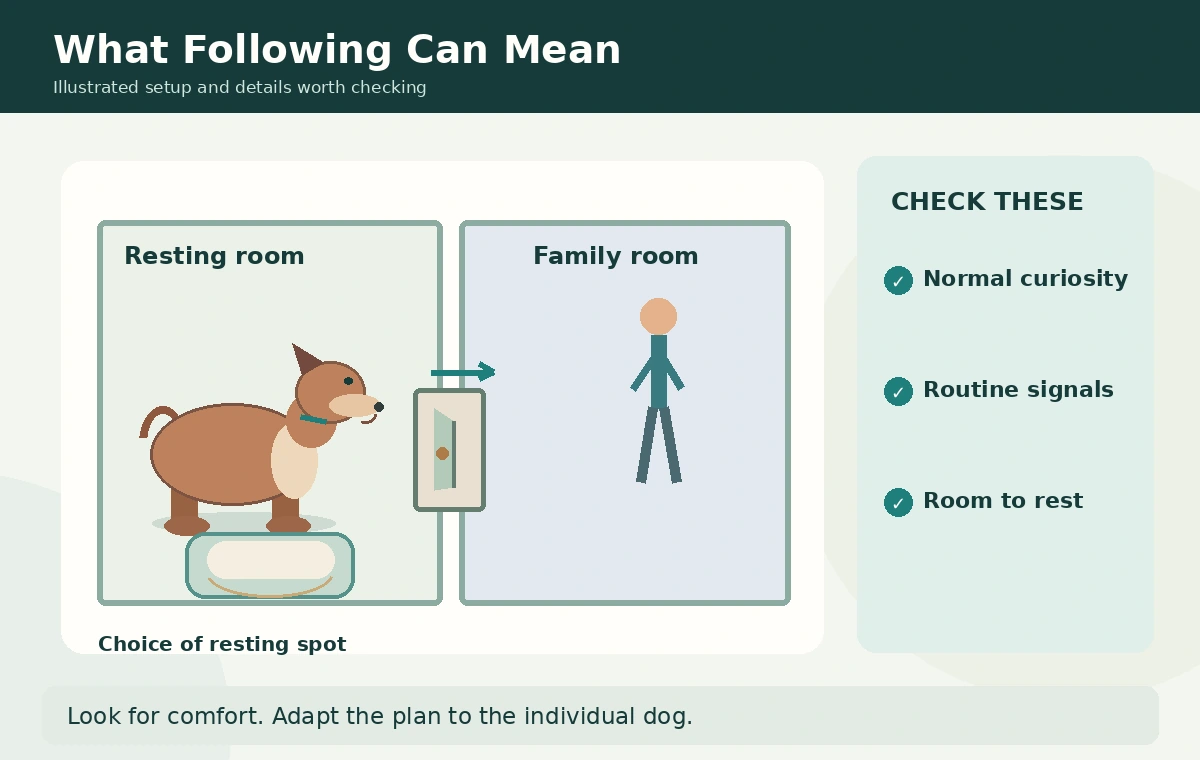
Create a pleasant rest station
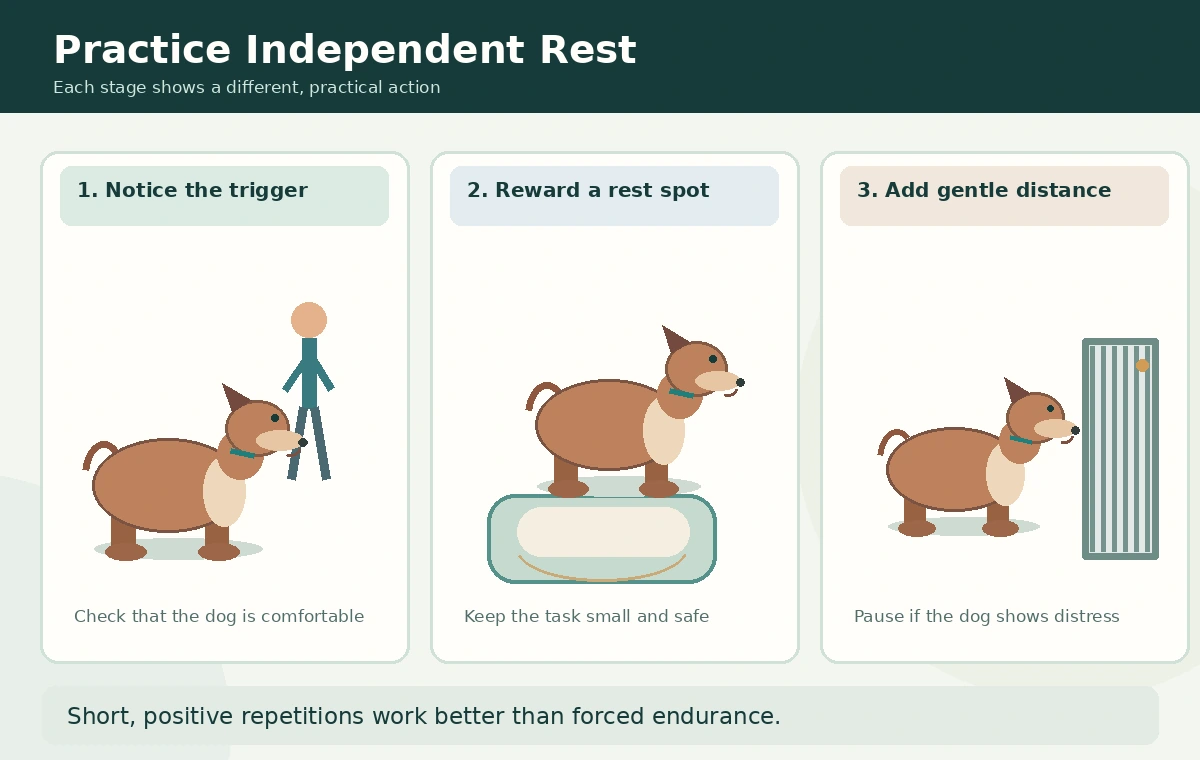
Place a comfortable bed or mat where the dog can see normal family activity without making people step over it. Pair the spot with calm praise or small food rewards when the dog chooses it. Practice while you sit nearby, then stand or move a step before returning. Keep sessions brief and voluntary. The aim is to help the dog discover that resting can be rewarding even while you focus on another task. Never tether the dog to the furniture or physically hold it in place. A safe resting station is an invitation, not a restraint.
Build independence in the same room first
Before using a closed door, practice ordinary activities while the dog rests a few feet away. You might fold laundry, sit at a desk, or walk between counters for seconds at a time. Reward moments of calm, not frantic movement. Vary your activity so the dog does not learn that every time you stand up, a game begins. If the dog gets up, allow a reset and use an easier exercise. Repeated short successes are more useful than one long stay that causes frustration. Progress should match the individual.
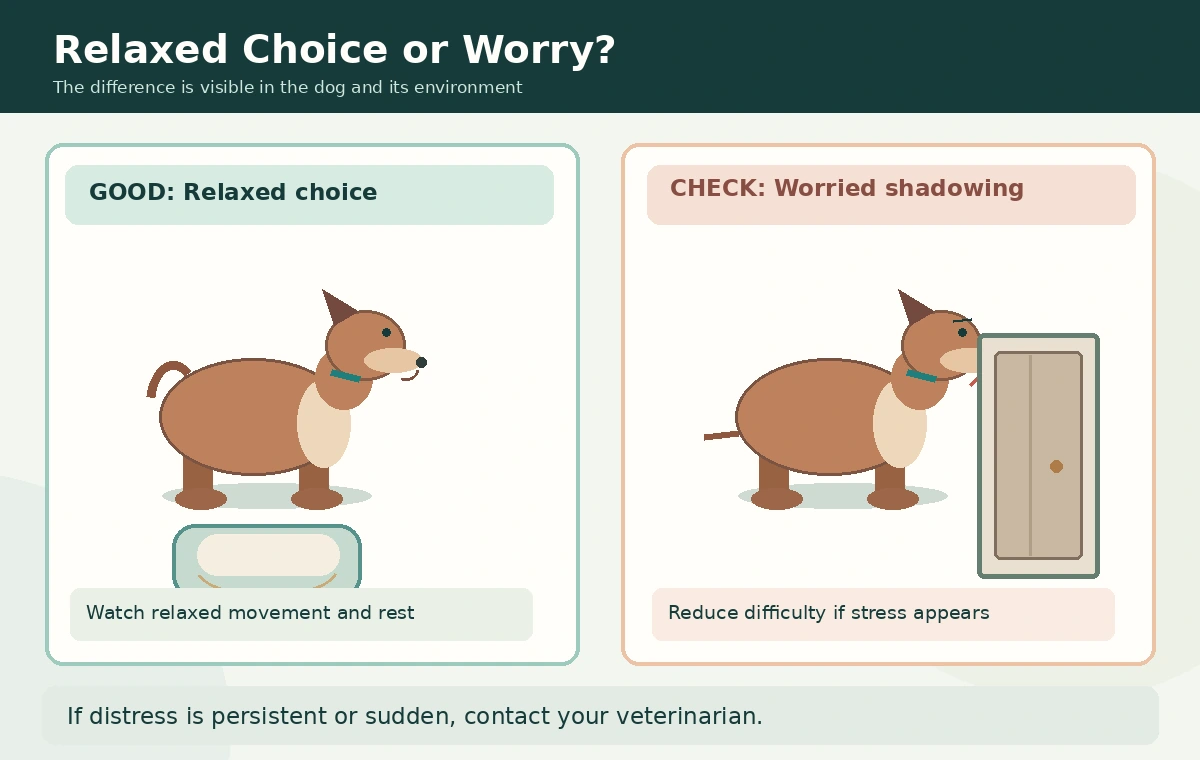
Use barriers carefully and allow choice
A well-fitted baby gate can help some dogs experience brief separation while still seeing and hearing you. Check gaps, mounting, latch security, and the dog’s ability to climb or jump. Start with you near the barrier and a familiar bed on the dog’s side. Do not use a gate as a way to force a frightened animal to remain alone. If the dog begins frantic scratching, climbing, or panicking, stop the exercise and reassess. Gates are training aids only when the dog is comfortable and the physical installation is safe.
Avoid accidentally increasing attention-seeking
If every small movement behind you leads to treats, talking, or play, following can become a highly rewarded activity. You do not need to ignore your dog coldly. Instead, make daily care predictable and reinforce quiet behavior in appropriate places. Offer walks, sniffing, play, and affection at suitable times. A dog that feels adequately supported may make more independent choices. Avoid scolding or pushing the dog away; punishment can increase worry and make the person’s movements feel unpredictable.
Check whether health or comfort has changed
Sudden shadowing, especially alongside pacing, altered appetite, sleep disruption, limping, hearing or vision changes, or new accidents, deserves a veterinary discussion. Pain, illness, and sensory decline can affect a dog’s confidence or routines. Dogs Trust specifically advises veterinary advice for new or unusual following behavior. Do not decide that the dog is manipulative or clingy from one observation. Note when the behavior began and what else changed, then share those details with your veterinarian.
Respond to genuine separation distress differently
If the dog cannot tolerate even a brief separation, damages doorways, drools heavily, has repeated accidents, or stops interacting with ordinary rewards when you leave, ordinary mat training may not be enough. Arrange support to avoid long distressing absences and contact a veterinarian for assessment and a qualified behavior referral when needed. Film a short, privacy-conscious departure if advised. Progress means building comfort, not ignoring barking for longer. The goal is a dog who feels safe, whether it chooses to be beside you or in another room.
How We Research
We compared animal welfare and veterinary behavior guidance, focusing on real signs of comfort, gradual exposure, reasonable supervision, and the reasons to seek an individual assessment. The advice favors positive reinforcement and caregiver support over punishment, forced isolation, or fixed duration claims. Exact coping limits vary by dog; product suggestions are not endorsements or medical treatments. Learn more about HubPet and our editorial approach.
Sources
Dogs Trust — Why dogs follow their people.
Dogs Trust — Helping your dog spend time alone.
Merck Veterinary Manual — Behavior problems in dogs.
ASPCA — Separation anxiety and departure cues.
Not necessarily. Many dogs enjoy company and predict routines; look for comfort when not following.
No. Separation-related distress requires a broader assessment, including behavior during absences.
No. Meet its needs and reward relaxed choices without scolding or forced isolation.
Sometimes, if fitted safely and used during very brief, comfortable exercises rather than forced separation.
Changes in routine or health may be involved. A new or unusual pattern warrants veterinary advice.