
Stores often sell a washing machine pet hair catcher as a floating disk, mesh collector or small laundry accessory intended to gather loose fur. The appealing idea is simple: drop a gadget into the drum and remove hair after the cycle. In practice, performance depends on fabric, water movement, washer design and the device’s compatibility with that machine. There is no universal proof that a floating tool can collect all pet hair. Treat it as an optional accessory and keep the core laundry routine sound.
Identify which type of hair catcher you are considering
A floating collector rests among the clothes and may have a soft textured surface. A reusable mesh laundry device works differently, collecting material on its screen if water and debris can flow through it. An appliance’s built-in lint or pump filter is not the same product as a loose gadget in the wash drum. Some manufacturers recommend cleaning an accessible filter, while others specify service procedures or have no user-cleanable lint trap. Read both sets of instructions before combining devices.
Check the washer model for accessory restrictions
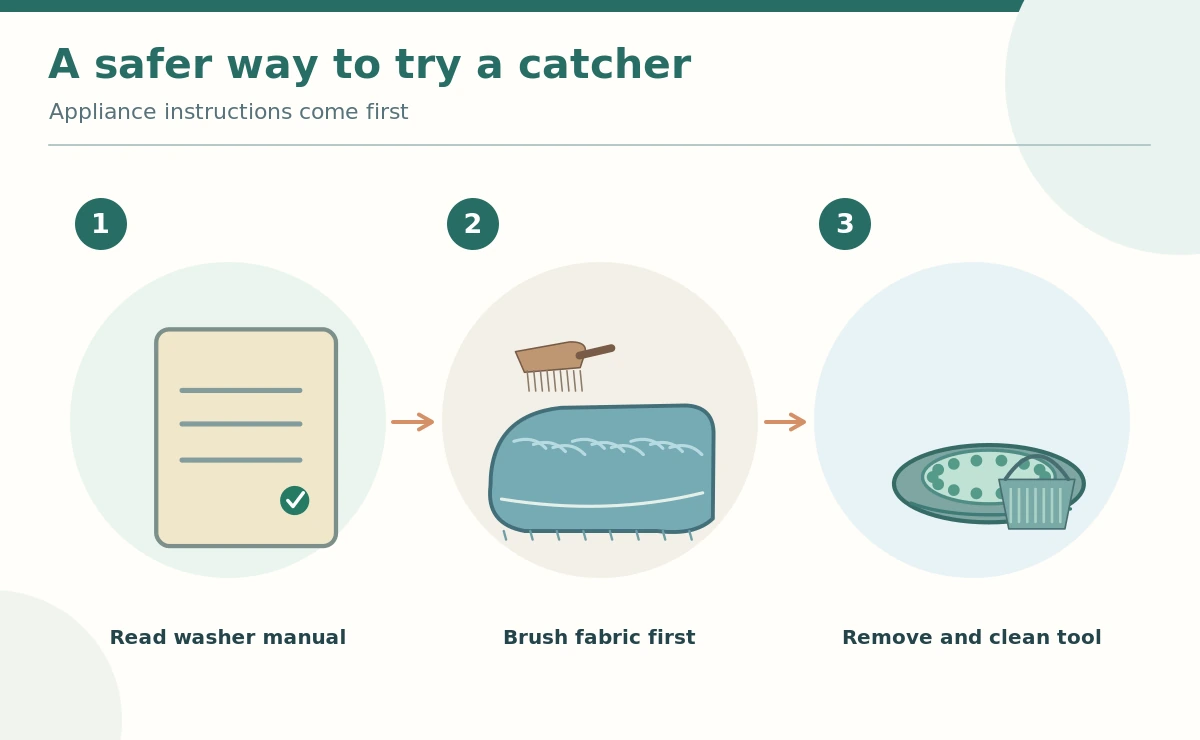
Look up your exact washer brand and model. Check whether the manufacturer permits additional objects in a front-loading, top-loading, agitator or impeller drum. A free-floating item may behave differently in each design and can snag clothing, seals or low-clearance mechanisms. Do not place a disk inside a sealed washer simply because it fits through the door. If the manufacturer warns against foreign objects or accessories, skip the catcher rather than risking damage.
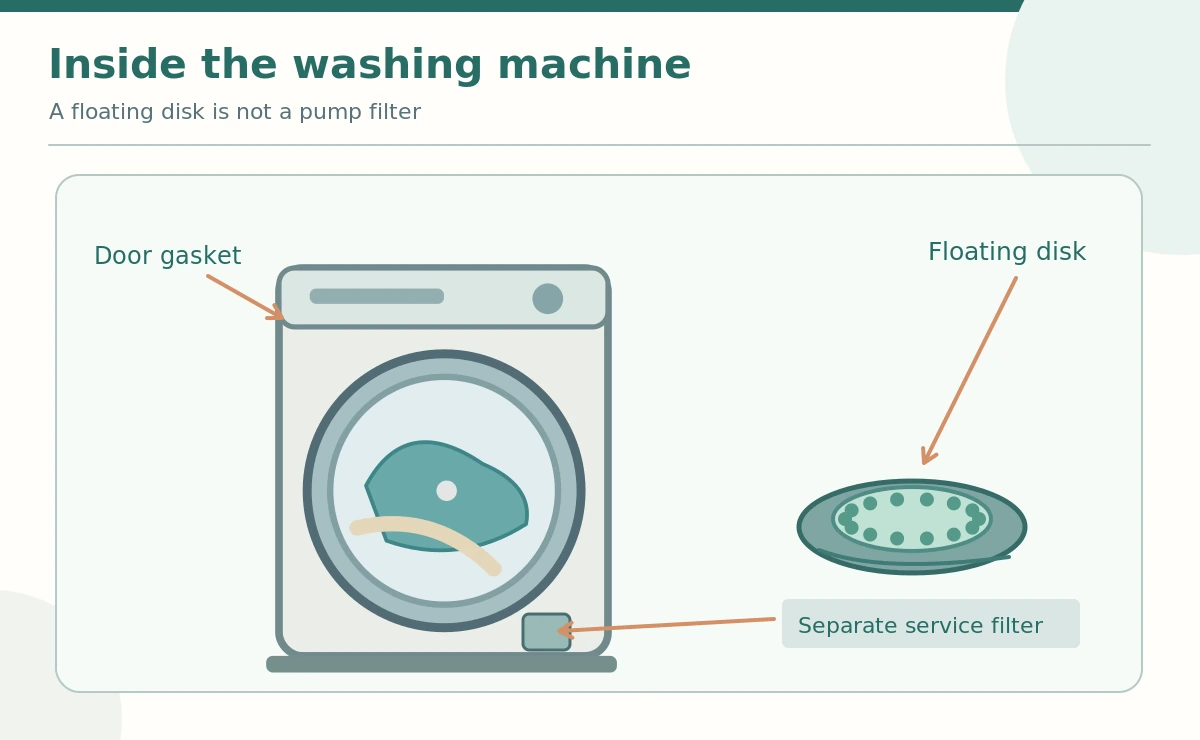
Understand why hair moves differently from lint
Pet fur may be long and flexible, short and stiff, or embedded deeply in fabric fibers. A soft disk may lift some loose strands but miss hairs trapped in fleece. Lint can suspend in wash water, while dense clumps may collect in folds. A tool can therefore look effective on one load and nearly clean on the next without demonstrating a defect. Marketing images showing a full catcher do not provide standardized performance tests. Compare your own before-and-after fabrics without assuming the gadget removes allergens or bacteria.
Remove major fur deposits before the load
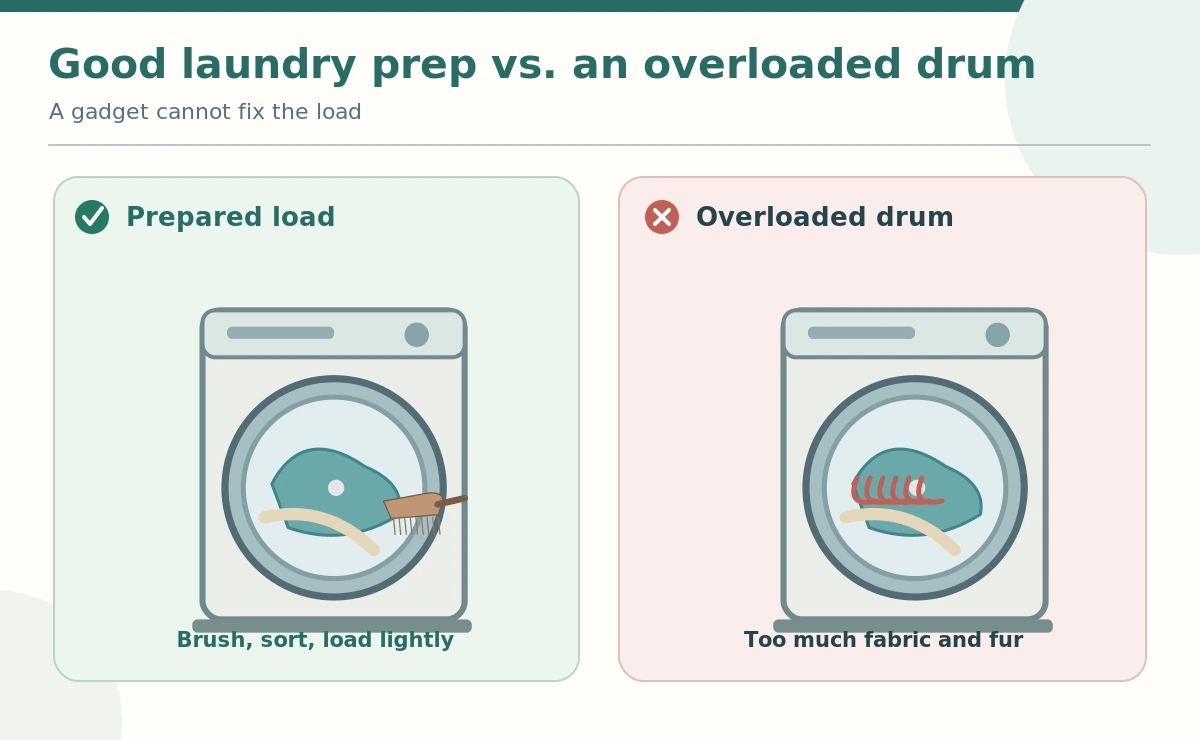
A lint brush, vacuum upholstery tool or suitable fabric roller can remove surface hair before the washer has to handle it. Consumer Reports specifically recommends removing pet hair from beds before washing and wiping residual hair from the washer afterward. Focus on seams and folds, then dispose of collected fur in a trash bag. Do not attempt to dissolve hair with chemicals or add unfamiliar products to the wash. Clear preparation is usually more reliable than hoping a floating object catches everything.
Balance the load and protect loose fabrics
A heavily stuffed drum leaves less space for articles to move and can trap a catcher between thick items. The American Cleaning Institute advises against overloaded loads and mixing heavy lint-shedding textiles with lint collectors. Follow the machine’s capacity and sorting instructions. Secure drawstrings and close zippers when fabric care labels call for it. Avoid trying a free-floating gadget with tiny pet blankets, fragile knits or highly textured clothes unless both the gadget maker and appliance instructions allow it.
Keep chemicals and gadgets away from pets
Laundry tools may be chewy or small enough for a dog or cat to carry away. Store them in a closed cabinet before and after use, particularly if the device has detachable parts. Do not leave detergent pods, dryer sheets, fabric softener or cleaning concentrates where a pet can reach them. Pet safety takes priority over a cleaner-looking drum. An accessory with a torn mesh, split soft fingers or loose plastic pieces belongs in the trash rather than back in a load.
Empty the catcher correctly after washing
If the manufacturer permits use and the gadget survives a cycle intact, remove it before transferring laundry to the dryer. Pull off collected fur over a trash container and rinse or dry the collector only as directed. Do not wash clumps of pet hair directly down a sink, where they may contribute to blockage. Inspect for snags, loose fibers and discoloration. Any unexpected wear to garments or the appliance is a reason to stop using the accessory and review the manual.
Do not confuse a pump filter with a hair catcher
Some washing machines provide a user-accessible drain pump filter. Others do not. Opening an unfamiliar service door can release water or expose electrical and mechanical hazards. Do not give generic advice to unscrew a filter or alter plumbing; follow the exact maintenance guide and unplug or isolate power as instructed. If drainage slows, a cycle stops with an error or water remains inside, use the maker’s troubleshooting procedure or service support. A floating catcher cannot repair a clogged pump.
Clean the empty drum and seals after heavy fur loads
Wipe visible hair from the gasket, door and other user-accessible surfaces using the washer guidance. Consumer Reports suggests an approved empty maintenance cycle followed by wiping the drum and seals. Clean dryer lint screens as their manuals require. Avoid harsh cleaners or mixing cleaning products. Keep pets away from the open washer and dryer: a curious animal can enter, and neither appliance is a safe hiding spot. Close the machines when the cleaning is complete.
Judge results conservatively
Test with an ordinary permitted load, then look at whether the garment still has visible hair, whether the gadget retained strands and whether any threads snagged. One successful cycle is not proof of reliable long-term performance. If there is no meaningful improvement, stop spending effort on the tool and concentrate on brushing, sorting and appropriate load size. A washer-safe device should make laundry simpler, not introduce new maintenance or safety concerns.
How We Research
We used independent health and cleaning guidance to evaluate household hygiene and manufacturer instructions for machine-specific limits. We did not run comparative appliance tests or verify marketing claims for named models. Manufacturer settings apply only to their own equipment. We reviewed these sources October 28, 2026. For methods see How HubPet works.
Sources
Consumer Reports, Don’t Let Pet Hair Ruin Your Washer. Read the original source.
American Cleaning Institute, Laundering Problems & Solutions. Read the original source.
CDC, About Cleaning and Disinfecting Pet Supplies. Read the original source.
Safety note: Keep pets away from running appliances, loose accessories, electrical cords and laundry products. Follow the exact appliance and fabric care instructions. This article provides general housekeeping information, not veterinary advice; see our disclaimer.
Some may capture loose strands in certain loads, but results vary. Do not rely on them to collect all fur or protect drain systems.
Only if both the washer instructions and accessory manufacturer permit that use; a small device may still be unsuitable.
No. A removable gadget and any built-in filter serve different functions. Follow the appliance maintenance instructions.
Do not improvise chemicals inside laundry appliances. Follow the manufacturer’s recommended procedures and obtain service when needed.
Remove dry fur before washing, sort heavy shedders, avoid overloading and clean accessible machine surfaces as directed.