
Bringing puppy home is less about a perfect welcome party than about making the new environment predictable. Start with one quiet area, a safe place to rest, familiar food and frequent opportunities to toilet. Let the puppy explore at its own pace. Then build a simple rhythm of rest, meals, gentle play and supervised trips outside. This first-day checklist keeps the essentials clear without expecting a young dog to know household rules immediately.
Educational information only; not a diagnosis or a substitute for care tailored to your pet. If your pet has pain, illness, persistent distress or a sudden change in behavior, contact a veterinarian. Read the veterinary disclaimer.
Set up a small, safe landing zone before pickup
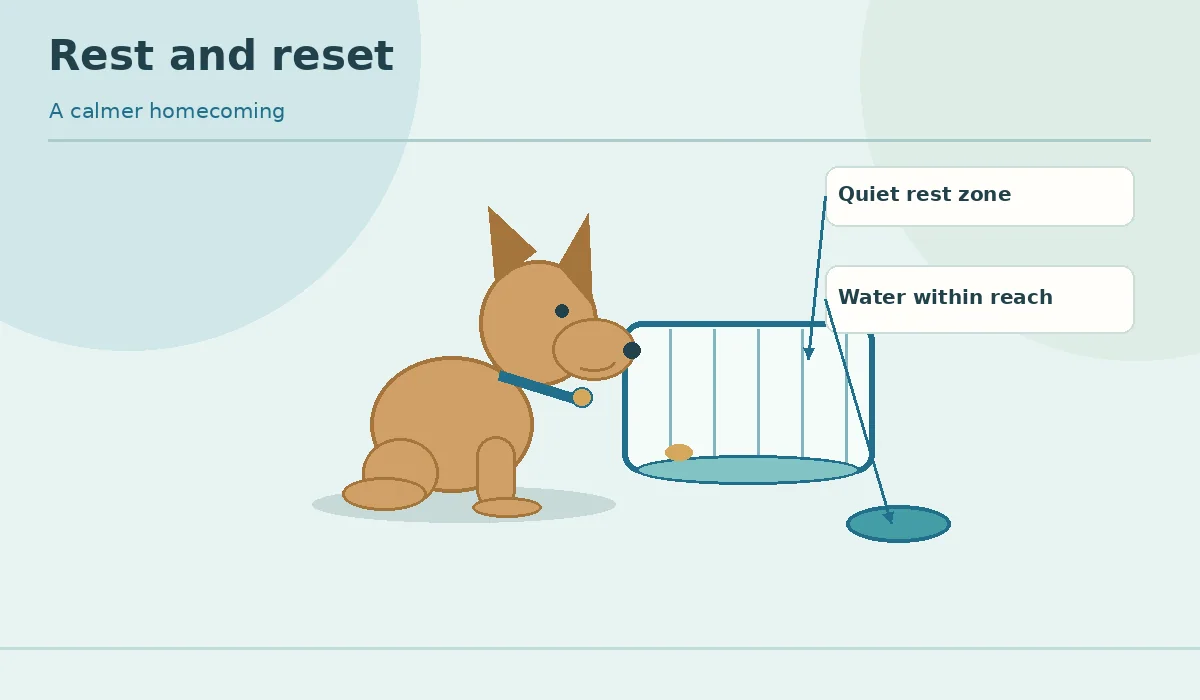
Choose a quiet room or gated section that you can supervise easily. Put down a washable resting surface, a water bowl, a suitable toy and a crate or open pen if you plan to use one. Remove cables, medicines, cleaning chemicals, loose objects and plants that the puppy might chew. Secure bins and gaps behind furniture. ASPCA and RSPCA both emphasize puppy-proofing before arrival; it is more effective than constant interruptions after the puppy reaches a hazard.
Keep the first space simple. A puppy does not need access to every room, dozens of toys or a crowd of guests. A few familiar items from the previous home, such as a safe blanket, may provide comfort. Ask the previous caregiver what food the puppy has been eating. Sudden dietary changes can upset digestion, so discuss any planned transition with your veterinarian. Arrange a quiet place where household members know not to disturb a sleeping puppy.
| Moment | What to do | What to avoid |
|---|---|---|
| Before pickup | Safe room, water, food history and transport | Loose wires and crowded welcome |
| On arrival | Offer a suitable toilet opportunity | Full-house free roaming |
| After food or nap | Supervised toilet break and quiet praise | Punishment for accidents |
| Before bed | Calm rest area, plan for nighttime needs | Forced prolonged confinement |
| Soon after arrival | Confirm vet care and vaccine schedule | Assuming exposure risks are identical everywhere |

Plan the journey and first outdoor break
Before leaving, arrange a secure carrier or suitable vehicle restraint appropriate for the puppy. Travel should not depend on someone holding the animal in their lap. Bring towels and cleanup supplies. When you reach home, lead the puppy to an appropriate toilet location before an indoor tour. Use a calm voice, wait without pressure, and reward after successful elimination. If your vet has advised restrictions because vaccines are incomplete, choose a low-risk toilet location they recommend.
Once inside, let the puppy sniff and investigate briefly. Show water and the resting area. Do not expect immediate play or affection; some puppies become quiet or clingy after a big change. Others bounce with nervous energy. Offer a short rest before any new visitors. If there are resident pets, manage introductions carefully and do not leave them unsupervised together.
Practical step-by-step plan
- Puppy-proof one quiet room and prepare a rest zone.
- Travel with a secure carrier or appropriate restraint.
- Offer a toilet opportunity promptly after arriving.
- Give familiar food, water and plenty of undisturbed sleep.
- Record routines and confirm the puppy’s veterinary plan.

Build a gentle first-day rhythm
Use the previous feeding schedule as a reference rather than changing everything at once. Arrange regular opportunities to toilet after waking, eating and play. Puppies need many naps, and overtired behavior can look like mischief. AKC recommends establishing a predictable routine, but the precise timing should suit the dog’s age and veterinary guidance. Record meals, toilet successes, accidents and sleep to see patterns without turning the day into a rigid minute-by-minute test.
Reward the behavior you want, such as settling near the bed, following you calmly or choosing a toy over furniture. Keep training bursts short and positive. Never punish toilet accidents or crying. Instead, clean accidents with a pet-safe enzymatic product and supervise more closely. Household consistency makes the routine easier: agree in advance on feeding, doors, sleeping space and the cues you will use.
Handle the first evening and veterinary follow-up
As evening approaches, lower household noise and return to the same rest spot. Make the puppy’s sleeping space comfortable and close enough that you can respond to distress. A crate can become a calm den through positive practice, not by forcing long confinement. Young puppies may still need overnight toilet opportunities, and some will vocalize in an unfamiliar place. Respond to genuine distress, check basic needs and build comfort gradually.
Contact a veterinarian to confirm the puppy’s examination, vaccination and parasite-prevention plan. VCA notes that young puppies need individual schedules based on age and risk. Do not assume an advertised vaccination series means the puppy can visit all public dog areas. Seek prompt veterinary advice if the puppy seems seriously lethargic, cannot keep water down, has repeated vomiting or diarrhea, struggles to breathe or shows other urgent signs.
When to Call Your Vet
Contact your veterinarian if your dog shows significant pain, injury, distress or a persistent new problem. Mouth bleeding, inability to chew, repeated gagging or possible choking need prompt advice; trouble breathing is an emergency. For a new puppy, repeated vomiting, severe diarrhea, marked weakness or breathing difficulty also deserve urgent assessment. A snack or home routine does not treat these problems.
Related HubPet reading
For practical background, see this published HubPet guide. The next step depends on the dog’s current needs. Review the related home-care article for another practical approach. Then use this follow-up checklist to decide what to prepare.
How We Research
We compare current guidance from independent veterinary and animal welfare organizations with manufacturer instructions where equipment or food labels matter. We distinguish tested dental claims from marketing and avoid invented rankings. See the HubPet editorial approach for how we prepare guides. These recommendations describe general choices; your veterinarian can adapt them to a particular dog.
Sources
ASPCA Pet Health Insurance, Bringing Home a New Puppy.
AKC, Schedules and a Routine for Your New Puppy.
VCA, New Puppy Veterinary Care.
Frequently Asked Questions
No. Begin with a small supervised space and gradually expand access after the puppy settles and the area is safe.
Offer a suitable toilet break, then introduce a calm resting space and water. Keep arrivals and greetings low-key.
Some can settle gradually, while others need reassurance and overnight toilet help. Avoid punitive or prolonged forced isolation.
Confirm an examination and vaccination plan promptly with your clinic. Timing depends on age, records and individual risk.
Clean calmly, increase supervision and offer more well-timed outdoor breaks. Punishment does not teach a safe routine.