
This article is general information, not veterinary advice. If your pet seems unwell, is in pain or may have eaten something harmful, contact your vet or an animal poison control line right away. Read our vet disclaimer. Why does my cat pee so much all of a sudden? The crucial distinction is between going to the litter box repeatedly but producing only small drops, making noticeably larger wet clumps, and peeing in different places outside the box. These patterns can look alike to an owner but they do not have the same urgency. A cat that strains and passes little or no urine could have a urinary blockage—a life-threatening emergency, especially in male cats. Do not wait to see whether changing litter fixes it. Other changes in urination also deserve a veterinary assessment before anyone calls them behavioral.
If your cat is repeatedly squatting with little or no urine, cries in the box, seems painful or deteriorates, go to an emergency veterinarian immediately. If there is clearly more urine than usual or new accidents but urine is still passing, arrange a prompt veterinary appointment. Observe actual urine output if you can safely do so, and note appetite, thirst, blood, discomfort and onset. Do not give human medications or try to press on the abdomen. Litter-box setup is worth reviewing only alongside medical evaluation, not instead of it.
Three different meanings of “peeing so much”
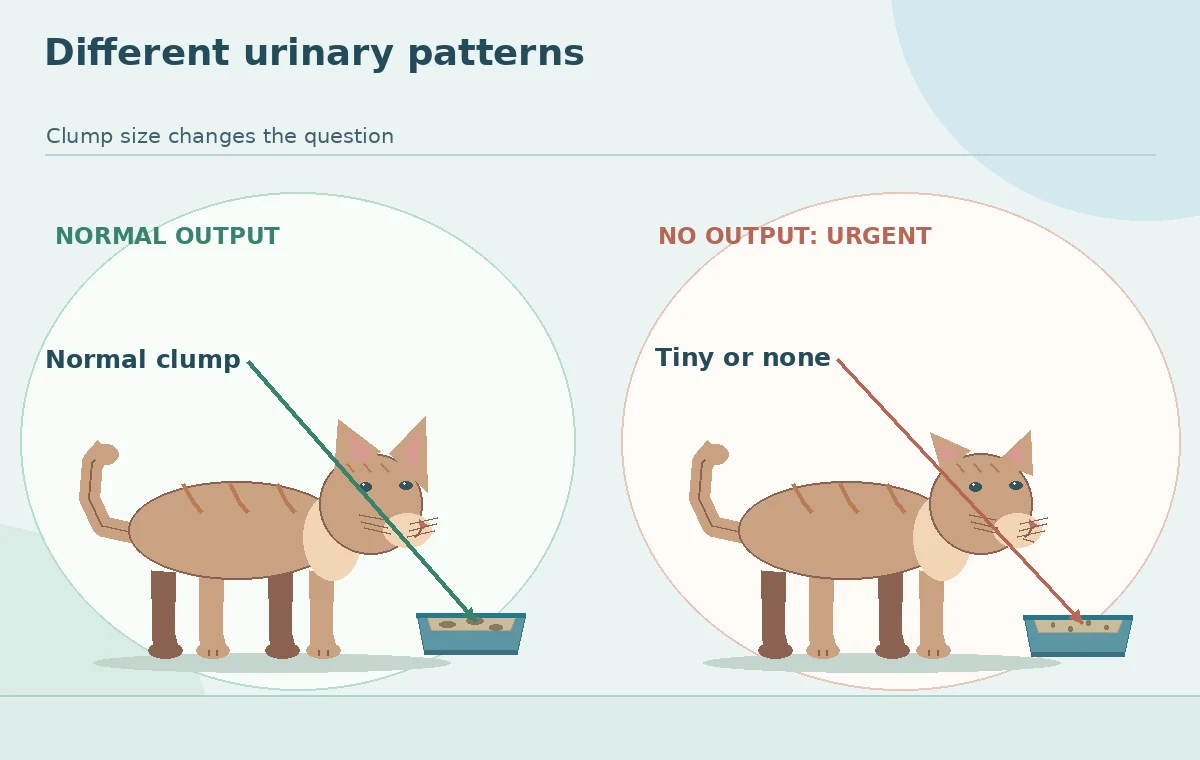
Many small attempts can indicate irritation or obstruction of the lower urinary tract; large clumps may reflect increased urine production and drinking; wet spots around the home may reflect pain, urgency, marking or a disliked box. Clump counts alone cannot identify the cause. Cornell explains that straining, frequent urination, blood, discomfort and out-of-box elimination may be lower urinary tract signs. Diseases that increase drinking and urination also need veterinary testing. Try to describe what you see without deciding the disease yourself.
| Observed pattern | Possible meaning—not diagnosis | What to do | Urgency |
|---|---|---|---|
| Repeated squats; little or no urine | Possible urinary obstruction or severe lower urinary tract trouble | Emergency veterinary care now | EMERGENCY |
| Frequent small wet spots with discomfort | Urinary tract irritation or pain possible | Same-day vet advice; emergency if little/no output | URGENT |
| Larger/heavier urine clumps, more drinking | Increased urine production can occur with illness | Arrange prompt vet assessment and record intake | PROMPT |
| Pees outside box but normally urinates too | Pain, box aversion or environmental stress possible | Vet check first, then assess box setup | PROMPT |
| Small spray on a vertical surface | Possible scent marking; medical causes still possible | Discuss veterinary evaluation and household triggers | BOOK VISIT |
Check the litter box without assuming the problem is behavioral
The details matter. In a multi-cat home, you may not know who made the clump. Watch quietly from a distance if you can do so without interrupting elimination. Photograph the box after use or keep a simple log of clump size and visit frequency; do not confine a distressed cat just to get perfect data. Ask whether one cat is guarding a box, whether a covered or high-sided box is hard to enter, and whether a sudden litter change coincided with accidents. Why Cats Use Litter Boxes explains normal digging, substrate and placement; it cannot substitute for urinary testing.
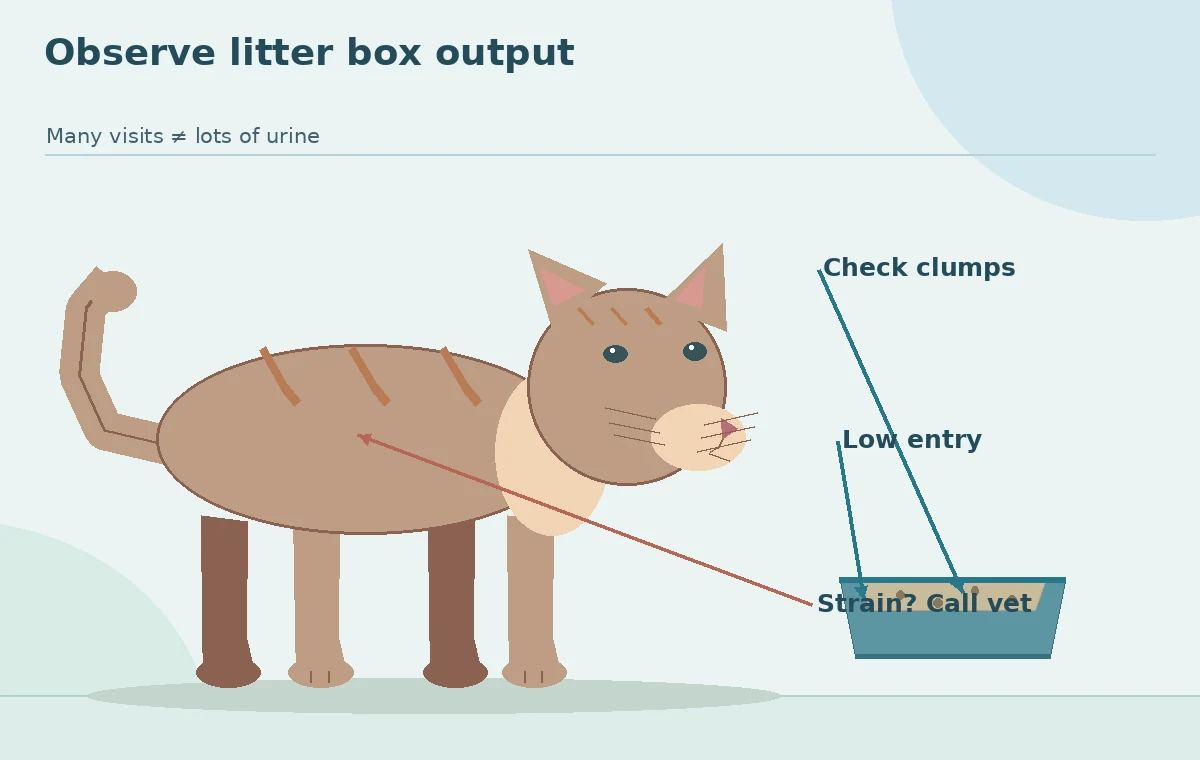
A safe, useful note to bring to the veterinary visit
- Write down when the increase in box visits or wet spots first appeared.
- Record whether urine is actually being passed or repeated attempts are unsuccessful.
- Look for vocalizing, blood, genital licking, vomiting, hiding and changes in appetite or activity.
- Note whether litter clumps are tiny and numerous or conspicuously larger than usual.
- Record whether water intake seems higher and whether accidents happen on floors, bedding or vertical surfaces.
- Call the clinic with these observations; use urgent or emergency care whenever urine output is minimal or absent.

Do not delay emergency care to collect samples or wait for a video. Your veterinarian may recommend examination and tests such as urinalysis based on the cat’s condition. An outdoor cat’s urine output can be harder to monitor, so changes in posture and repeated trips are still relevant. Never assume a cat straining in the box is merely constipated: the two may look similar. A new pattern of distressed yowling alongside urinary attempts needs medical attention, not a nighttime routine adjustment.
After medical assessment: fix the actual box barrier
| After the vet has ruled out or addressed illness | Low-stress environmental check | Avoid |
|---|---|---|
| Accidents near the box | Ensure easy entry and sufficient turning room | Punishment or forcing a cat into the box |
| Avoids a scented litter | Try an accessible box with a familiar unscented option | Abruptly removing all familiar boxes |
| Another cat blocks access | Separate boxes and resources in multiple quiet locations | Making one cat pass a guardian cat |
| Sprays near windows | Notice outside-cat triggers and stress | Assuming the cat is being spiteful |
| Old cat misses high box | Discuss mobility and lower entrance with vet | Ignoring pain or mobility change |
Cornell and VCA both emphasize that house soiling can have medical as well as environmental causes. For a cat newly peeing on everything, clean previously soiled sites thoroughly using a pet-safe enzymatic product as directed, while leaving safe toilet options available. Change only one aspect of litter, box or location at a time and avoid punishment. If a female cat pees on bedding or in the bath, do not infer the cause from the surface. The pattern may reflect urgency, discomfort or preferences that require individual evaluation.
When to Call Your Vet
Get emergency veterinary care immediately if your cat repeatedly strains with little or no urine. Severe urinary pain, collapse or distress also demand emergency attention. A blocked urethra can be fatal without timely treatment. Arrange a prompt veterinary assessment for increased urine volume, thirst, blood in urine, unusual frequency, new house soiling or genital overgrooming. Your vet—not an online chart—can distinguish obstruction, lower urinary tract disease, increased urine production and other conditions. Never manually express the bladder or give leftover antibiotics or pain medicines.
Use the symptom pattern to guide urgency, not self-treatment
The most important home decision is where and how quickly to seek care. If the cat is passing no urine, treat it as urgent rather than experimenting with water, diet or a new box. If urine is passing but quantity or location changed, document the pattern, book veterinary evaluation and keep the environment predictable. Once your veterinarian has addressed health questions, the HubPet article on cat social signals and boundaries can help with reading voluntary interaction when stress is part of a larger household issue; it is not a treatment for urinary disease. This article intentionally does not recommend diets, drug doses or home remedies.
How We Research
We prioritized Cornell Feline Health Center and Cats Protection descriptions of obstructive versus non-obstructive urinary signs, then used Cornell and VCA material for litter-box aversion and marking only after medical assessment. The chart distinguishes frequency of attempts, urine volume and location because these observations differ. It does not treat out-of-box urination as a behavioral issue by default. The emergency warning deliberately appears before routine box tips. For our editorial method, see About HubPet.
Sources
Cornell Feline Health Center: Feline Lower Urinary Tract Disease; Cornell Feline Health Center: House Soiling; Cats Protection: Urinary Problems in Cats; VCA: Why Cats Pee Outside the Litter Box. These are independent educational references, not personalized veterinary examinations.
Repeated attempts with very small amounts can signal serious urinary trouble. If output is minimal or absent, seek emergency veterinary care now.
Urinary discomfort, increased urgency, box access, stress or marking are possibilities. Rule out medical causes first.
The surface does not identify the cause. Watch for urinary signs and arrange a vet visit before changing box setup.
Large clumps may accompany increased drinking, but only a veterinarian can identify the reason after appropriate assessment.
No. If he repeatedly strains with little or no urine, treat it as an emergency immediately.