
Grass seed cat litter is a plant-based option with a fine, light texture in many products. That description says little about how a specific bag will perform in your home. Particle size, clump integrity, tracked grains, and your cat’s willingness to dig matter more than a single green claim. Use this guide to inspect a real sample, compare it with your current litter, and avoid changing a working box too abruptly. Read our veterinary information disclaimer before interpreting changes in toileting as a product issue.
What the label does and does not tell you
Grass seed litter commonly uses processed grass-derived material rather than lawn seed intended for planting. Check the ingredient statement instead of assuming that every bag has the same blend. Some formulas include other plant ingredients or additives. A clumping label describes a product goal, not a guarantee that every scoop will stay intact. Write down the named materials, recommended depth, and cleaning instructions before comparing brands. If the package gives no clear instructions, that uncertainty is worth considering.
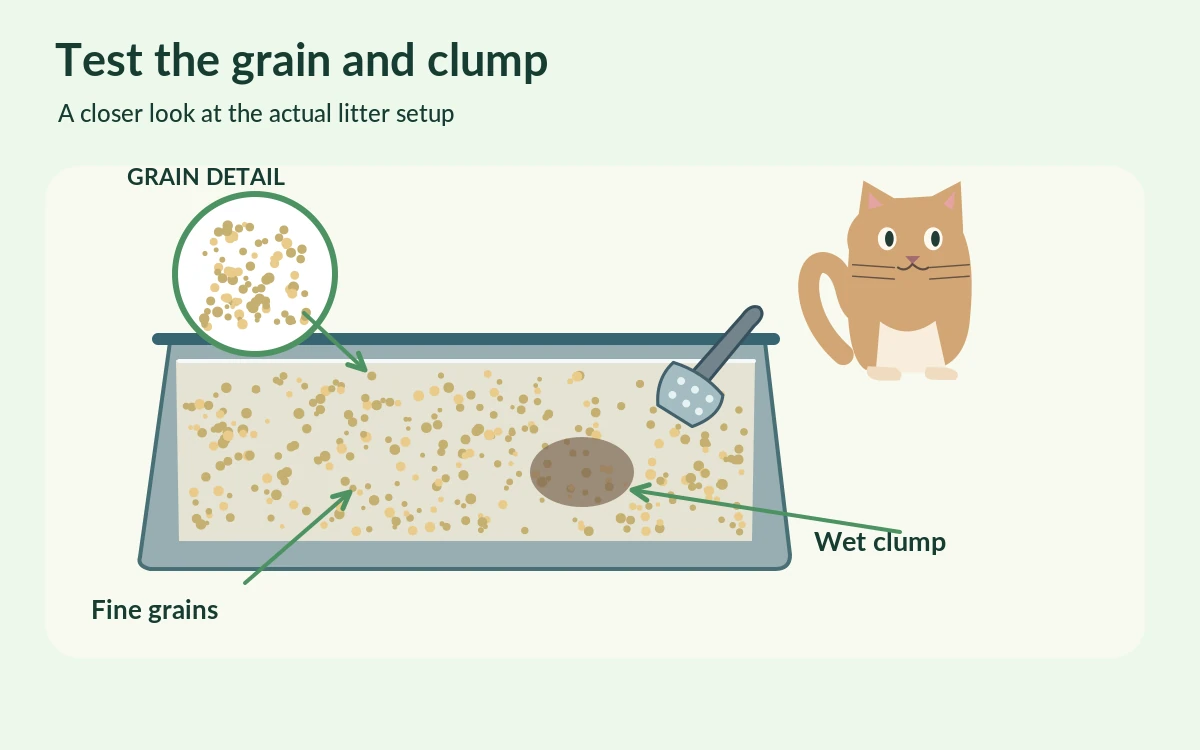
Feel the grains before measuring performance
Pour a small amount into a clean, dry cup and look closely at the granules. Some feel like coarse sand, while others appear more irregular or fluffy. A light grain may feel gentle under paws yet travel farther on fur or feet. Do not intentionally rub particles into your cat’s pads. Instead, observe ordinary digging and stepping out of a litter box. Look for hesitation, rapid exits, or preference for another available tray.
Test clump strength without disrupting the box
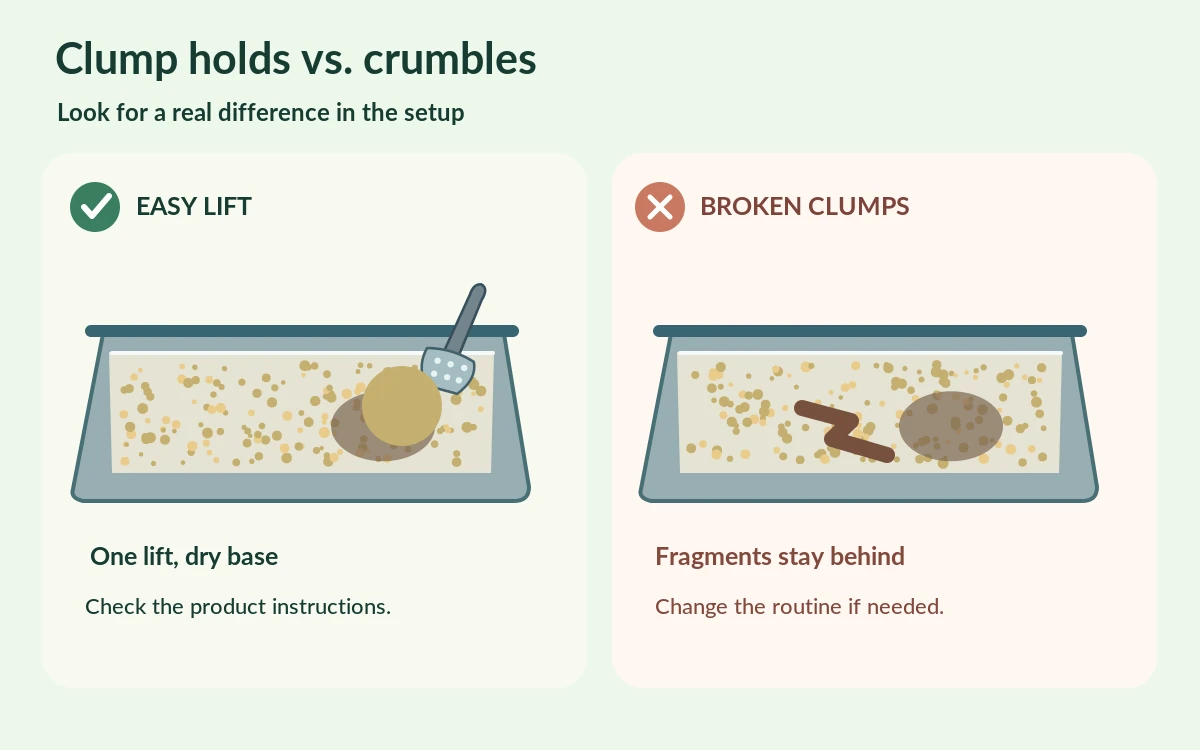
Use a spare container for a simple household comparison before offering the new litter to your cat. Add a small amount of water to a measured bed of granules, then follow the package waiting time. Slide a scoop under the damp area and lift once. Notice whether the clump holds or breaks into wet fragments. A simple handling check cannot predict every cat’s urine volume or the condition of a full box.
Understand light grains and tracking
A litter can control wet spots yet leave fine particles on the floor after every visit. Put a wide washable mat beside the entrance and watch the path your cat actually takes. Check whether grains lodge between paw pads or collect near a hallway. Avoid uncomfortable hard ridges or abrasive mats meant to scrape feet. A low-entry, generously sized uncovered box may be more helpful than a narrow tray with an elaborate lid.
Protect dry bags against humidity
Plant-derived granules should remain dry before use. Close the original bag tightly or put it in a clean container with a lid that does not leak. Store it off damp basement floors and away from spills, food, and curious pets. If granules become wet in storage, clump together unexpectedly, or develop an unusual odor, follow the manufacturer’s disposal directions rather than trying to dry and reuse a questionable batch.
Plan a cat-led comparison
Keep a familiar box available while placing a second large open box with the trial litter in a separate accessible location. Offer similar box sizes, litter depths, and cleaning routines so that texture is the main difference. Note which box gets used during normal routines over several days. Do not force the cat onto the new surface or remove the favored option to win a comparison. A cat’s consistent choice outweighs a bag’s sales promise.
Check cleanup costs, not bag weight alone
Compare how much clean litter leaves the tray during scooping, how much lands on the floor, and how often you need a complete refill. A lightweight bag may be easier to carry yet disappear faster if weak clumps fragment. Use a scoop that separates dry grains without aggressively shaking loose wet particles. Empty waste into a lined household trash receptacle according to local rules; a plant origin does not automatically make pet waste safe to compost or flush.

Notice signs that the trial is not working
Repeated scratching at the rim, reluctant entry, or elimination beside the box can signal dissatisfaction with texture or location. Restore the previously accepted litter and check cleanliness and access. Sudden changes in urination, straining, repeated trips, or distress call for prompt veterinary guidance, not another unplanned litter switch. The goal is a comfortable toileting routine, not persuading every cat to accept grass-based granules.
A practical buying and routine checklist
Before buying a large supply, record the exact ingredient list, whether the formula clumps, and its recommended depth. Check the weight of the bag you will carry and the storage space you have. Keep a washable mat and a scoop that matches the grain size. Most important, preserve your cat’s access to a familiar clean box during trials. Revisit the decision after a week of ordinary use instead of relying on a single enthusiastic visit.
What to record during a trial
For a fair shopping comparison, keep receipts and take a short photo of each product label before opening a trial bag. Record the date, scoop style, where grains travel on the floor, and how frequently the box needs topping up. These observations help you avoid treating a single unusually wet day as a reliable product test. If you share the home with several cats, look for use by each animal rather than assuming that one clean tray means everyone accepted the same litter.
How We Research
We reviewed cat litter guidance from the Ohio State Indoor Pet Initiative, ASPCA, Cats Protection, and RSPCA. Those sources support clean, accessible boxes, individual substrate preferences, and cautious litter changes. Product-specific grain behavior should be checked against the actual manufacturer label. Our illustrations explain practical checks rather than laboratory testing or brand endorsements. Read more about our approach on the About HubPet page.
Sources
Ohio State Indoor Pet Initiative: Litter Boxes — reference for cat litter preference, box hygiene, and safe comparison of substrates.
ASPCA: Litter Box Problems — reference for cat litter preference, box hygiene, and safe comparison of substrates.
Cats Protection: How to Choose Cat Litter — reference for cat litter preference, box hygiene, and safe comparison of substrates.
No. Grain processing, formula, moisture, and scoop timing all affect handling. Test the specific bag and follow its instructions.
No. Even products advertised as low dust can shed fine particles during pouring or scooping. Observe the actual product in good light.
Possibly. Fine, light grains may travel beyond the tray. A comfortable wide mat and a calm exit path can help contain cleanup.
Do not assume so. Follow local wastewater rules and the product directions; pet waste should generally go into household trash.
Offer a second box while keeping familiar litter available. Let your cat choose, monitor normal use, and return to the old option if avoidance appears.