
A stainless-steel cat water fountain may offer a sturdy washable drinking surface, but its material does not make the entire fountain stainless, sterile, or maintenance-free. The pump, tubing, gaskets, and filter housing often contain plastic parts. Surface finish and access to those hidden components shape the everyday cleaning experience. See the HubPet veterinary disclaimer for health and safety limits.
This article compares the actual advantages and tradeoffs of steel with plastic and ceramic. It focuses on finish, corrosion risks, noise, part access, and your cat’s willingness to drink. Keep a plain water bowl available and judge the design rather than a broad claim about premium metal.
Separate the steel bowl from the complete device
A stainless basin can feel solid and may tolerate routine cleaning well. Yet a fountain described as stainless steel can still have a plastic pump cover, rubber seal, and polymer filter. Product photos rarely show the entire water path or the joints around the spout.
Ask which components actually contact water and which can come apart for washing. A smooth metal tray offers limited value if a concealed plastic channel accumulates residue. Compare exploded diagrams or instruction manuals rather than judging a finish from promotional photographs. Material labels describe only part of the system.
Evaluate smoothness and finish quality
Examine rims, welds, drainage points, and holes around the outlet. Smooth surfaces without sharp seams are easier to scrub and more comfortable near a cat’s face. Rough polishing, tight joints, and poorly finished edges can hold residue or snag a cleaning cloth.
Stainless steel grades and finishes differ. A label that says rustproof without naming care restrictions is not enough to understand long-term performance. Salt, harsh cleaning agents, standing water, and scratches can contribute to surface problems. Follow cleaning instructions and avoid abrasive pads unless the manufacturer approves them.

Compare steel with ceramic and plastic fairly
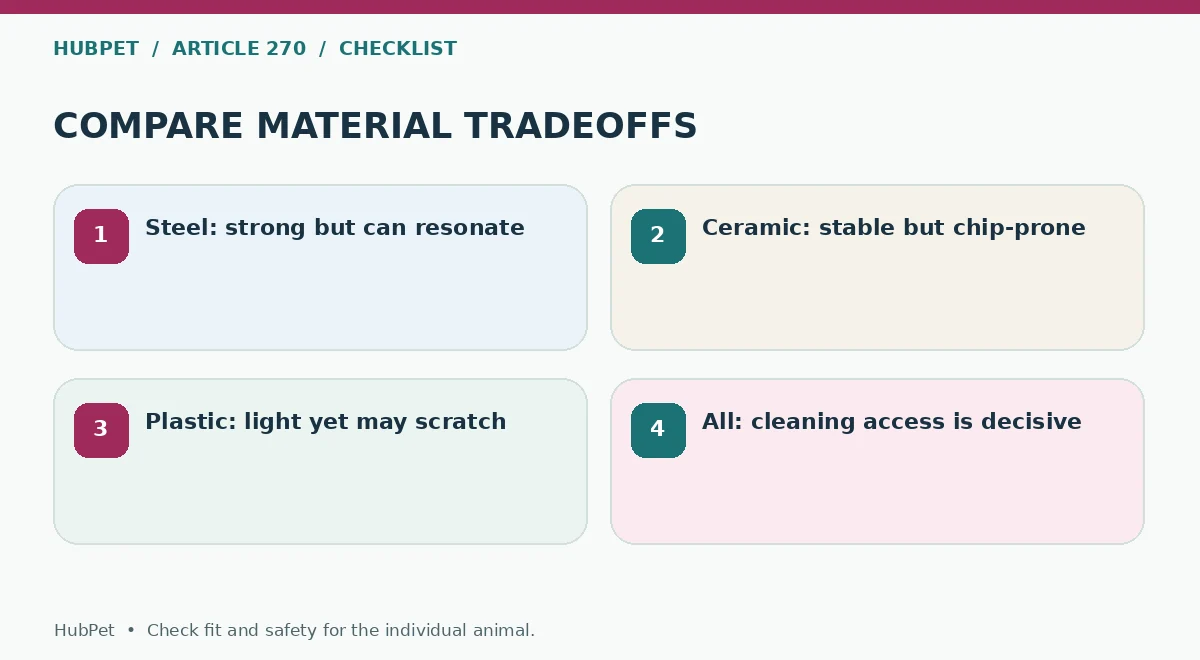
Stainless steel can be durable and less vulnerable to breakage than ceramic during ordinary handling. Ceramic may feel heavy and stable, but chips or cracks can create cleaning difficulties. Plastic tends to be lighter, although scratches and complex seams can retain residue over time.
None of these materials guarantees that a cat will prefer the fountain. VCA notes that cats may favor glass, metal, or ceramic bowls over plastic, but individual preferences vary. Basin width, noise, placement, and freshness remain major considerations. Choose an easy-to-clean design your cat uses willingly.
Check the real sanitation workload
Steel surfaces still need regular washing. Biofilm can develop around pump covers, rubber seals, spouts, and other wet parts. A metal bowl does not sterilize circulating water or prevent hair and mineral buildup. Filters likewise cannot replace physical cleaning.
Look for accessible corners, dishwasher information for removable pieces, and a clear pump-cleaning procedure. Disinfectants require label compliance and careful rinsing as instructed. CDC advises daily cleaning for water bowls. Design a schedule that addresses every water-contact surface rather than the visible metal basin alone.
Understand possible rust and discoloration
True surface corrosion differs from removable mineral scale, tea-colored deposits, or residue from a nearby object. Examine discoloration before scrubbing aggressively. A damaged weld or persistent rough patch may mean a part needs replacement rather than a polishing trick.
Check the manufacturer’s grade specification and warranty conditions. Avoid adding household acids or abrasive powders on speculation. Unapproved cleaning agents can damage finishes or create unsafe residues. If the fountain shows flaking, rough corrosion, or exposed sharp metal, stop using the affected component until resolved.
Listen for vibration and metal resonance
A metal basin can transmit pump vibration differently from a thick plastic or ceramic shell. A softly humming motor may sound louder when a steel lid or tray rattles against another piece. Check whether the manufacturer uses removable dampers or a stable pump mount.
During setup, fill to the permitted level and ensure the unit stands flat. A change in noise can signal low water, a loose component, or debris near the impeller. Turn off power before inspecting parts. Noise-sensitive cats may choose a quiet familiar bowl instead of any circulating device.

Inspect capacity and backup water access
Steel construction alone tells you little about the useful water volume. Measure how much remains reachable if electricity fails or the pump stops. A lid with only a tiny opening may limit access despite an ample hidden reservoir.
Keep an ordinary water bowl in a separate accessible spot. A backup helps during cleaning, travel, and outages. Multiple cats may also benefit from separated water stations. Do not rely on a premium metal fountain as the household’s single drinking source.
Plan for weight, handling, and placement
Heavy steel can add stability, but a large full reservoir may be awkward to lift. Check the wet weight and the way parts lock together. An overly tight lid may spill water when you remove it for washing. Non-slip feet help protect the floor.
Put the fountain on a level washable surface with cords out of reach. Prevent splashing toward outlets. Keep the drinking station away from litter and high-traffic corners. Ensure a cautious cat has an easy approach and exit. A stylish appliance belongs in a practical location, not merely an attractive photo.
Calculate upkeep before paying for a finish
Replacement filters, pump parts, seals, and adapters can create ongoing costs. Stainless steel does not eliminate these consumables. Verify part codes, current availability, and whether you can replace a failed pump without buying an entirely new fountain.
Compare the full routine: empty, separate, scrub, rinse, reassemble, and refill. If the design includes intricate channels, steel may not reduce cleaning time. A simple plastic or ceramic unit with excellent access could suit a household better. Avoid unsupported claims about lifetime hygiene savings.
Make a material-focused buying decision
Inspect grade information, surface finish, covered and exposed components, rim comfort, pump serviceability, sound, spare parts, and dishwasher restrictions. Choose by evidence in the current manual rather than broad claims about being antibacterial or medical-grade. No material alone makes drinking water sterile.
Introduce the device gradually alongside familiar bowls. Monitor voluntary drinking and clean-water availability. If a cat develops unusual thirst or avoids water, seek veterinary guidance rather than switching metals repeatedly. Proper maintenance and pet comfort remain essential whichever material you select.
How We Research
We checked this guide against the authoritative sources listed below on October 26, 2026. We reviewed practical differences, safety limits, and relevant home conditions rather than drawing conclusions from brand advertising. Specifications, warranty policies, and device capabilities change; check the manufacturer’s current manual. We did not purchase, laboratory-test, rank, or endorse individual products. Where a pet has pain, skin concerns, or fear, seek individual veterinary advice. See our approach at About HubPet.
Sources
VCA Animal Hospitals: Tips to Encourage Cats to Drink More Water. Accessed October 26, 2026.
CDC: About Cleaning and Disinfecting Pet Supplies. Accessed October 26, 2026.
Cornell Feline Health Center: Feeding Your Cat. Accessed October 26, 2026.
No. A steel drinking surface still needs cleaning, and hidden pump, seal, and filter parts can collect residue regardless of bowl material.
Some finishes and components may discolor or corrode under harsh conditions. Check the grade, manufacturer guidance, and signs of surface damage.
There is no universal guarantee. Cats respond differently to basin shape, location, noise, flow, and their own established preferences.
Only use the dishwasher for components that the current manual explicitly identifies as dishwasher-safe. Electrical pump parts need separate care.
Compare cleaning access, bowl width, pump noise, replacement filters, water access during outages, and your cat’s comfort, not metal alone.