
This article provides general pet product and home-care information, not a veterinary diagnosis or a safety certification. Check flooring and product instructions, and contact your veterinarian if your dog has pain, sudden mobility changes, unusual behavior, or symptoms of illness. Read our veterinary disclaimer.
Two dogs may happily nap near each other, but one oversized shared bed is not a substitute for individual resting choices. A shy dog may avoid it when another dog is there; a larger dog can occupy the only soft surface without obvious conflict. Set up separate places that each dog can reach, leave, and use without being pressured. The useful buying question is not how many animals can physically squeeze onto a cushion. It is whether the home offers enough comfortable, washable, low-stress rest options.
Start with separate comfortable choices
Provide each dog a resting location sized for its own body and sleeping style. Sharing may happen voluntarily, but separate beds should remain available. Watch the animals during quiet times rather than assuming closeness means everything is fine. One dog may leave when another approaches or wait for a favorite bed to become empty. That pattern tells you about access. Spread the locations so the second dog does not need to ask permission to rest. Preserve a quiet spot for the pet who prefers distance.
Avoid putting every bed in one tight corner
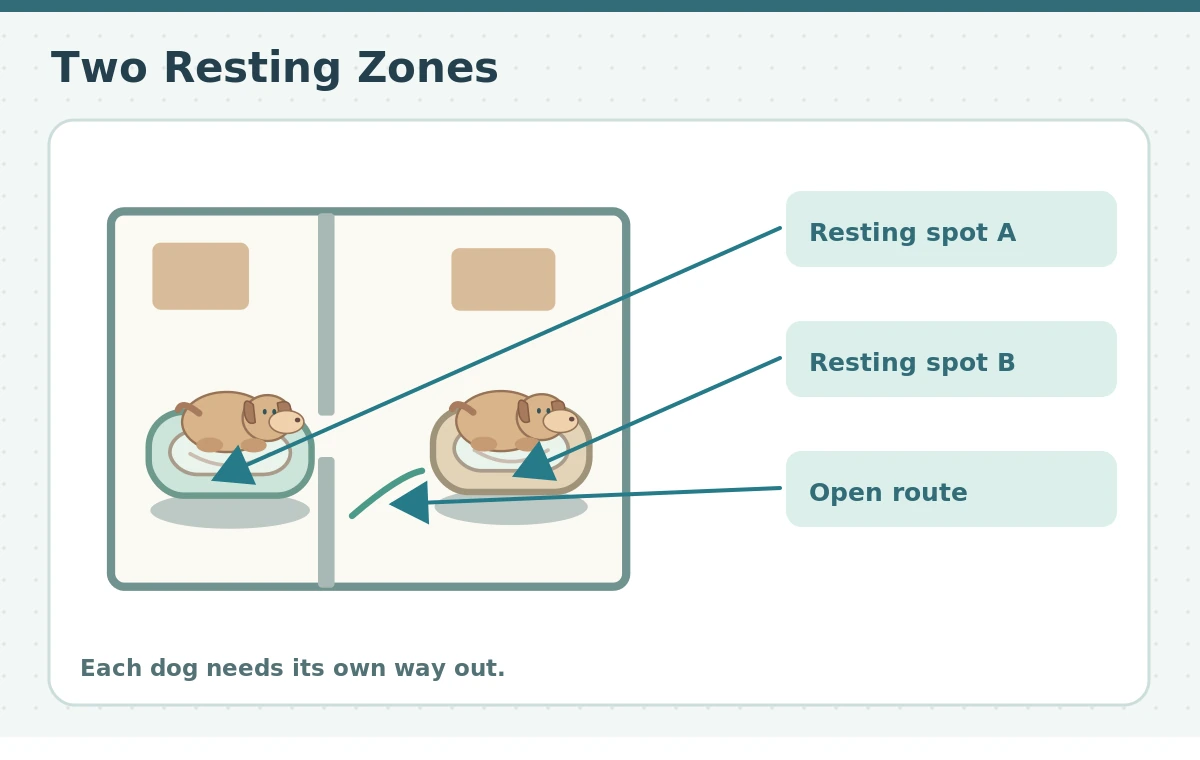
Two cushions touching each other do not provide meaningful separation when one dog can block the entire area. Use different corners or rooms where practical. Keep each location connected to a clear route without squeezing between furniture or passing through another dog’s space. A dog should be able to approach and retreat naturally. Do not crowd beds beside food bowls, favorite chews, or high-value toys that may create additional competition. Introduce a new layout gradually and watch both dogs respond.
Choose shapes that fit different resting styles
One dog may curl against a bolster while the other sprawls with legs straight. A single bed design is not automatically best for both. Measure each dog and compare usable interior space, edge height, and how the cushion compresses. A young nimble dog may handle a high pillow that an older or short-legged dog finds inconvenient. Let actual preference and safe entry guide the choice. For mobility concerns, consult a veterinarian about appropriate support rather than relying on marketing labels such as orthopedic.
Watch for quiet access problems before growling
Resource tension can look subtle: a dog freezes as another walks past, hovers near a cushion, repeatedly displaces a housemate, or leaves whenever approached. Avoid forcing the dogs to share and never punish warning signals. Increase distance and provide another quiet option. If guarding or aggression develops, consult a qualified reward-based behavior professional and your veterinarian. HubPet’s published guidance on pets getting along emphasizes space and managed access; it does not require pets to share valued resources to prove friendship.
Keep the approach and exit paths open
Position beds so dogs do not have to pass through a narrow bottleneck to enter or leave. Avoid dead-end areas behind doors, under crowded tables, or near unstable furniture. Check each path when another dog is resting nearby, not just while the room is empty. Give older dogs low-entry routes and adequate traction. VCA discusses comfortable resting spots and non-skid flooring for animals with mobility limitations. Even healthy dogs benefit from being able to step away without stepping over a companion.

Use a practical color or laundry system
Two similar covers can become confusing during washing. Label bedding storage bags if the fabrics have different instructions or if one dog needs a specific prescribed setup. Choose washable materials and dry them completely before replacing them. CDC suggests routine weekly cleaning of pet bedding, with more frequent cleaning when dirty. Keep a spare surface so one dog does not lose all comfortable options when a cover goes into the laundry. Avoid sharing soiled bedding during an illness; follow veterinary cleaning directions then.
Introduce new beds without competition
Set the new cushions in different locations before inviting the dogs to explore them. Allow each dog to inspect separately if one tends to hover or block access. Reward calm voluntary interest, but do not use food treats to make both dogs crowd a single bed at once. Keep valued chews and meals separate from the rest zone during introductions. Notice whether either dog is startled by the new location or sound of a crinkly cover. An extra bed should reduce pressure, not create a contest for a novelty item.

Adjust the setup as the household changes
Adding a dog, moving house, or changing furniture can alter which rest spots feel safe. Recheck each location after those changes and especially if a pet becomes less mobile. A dog who starts sleeping in a hallway instead of its usual bed may simply prefer the temperature, but sudden withdrawal, pain signs, or unusual behavior deserves veterinary attention. Do not try to force equal bed use. The real measure of success is that every dog has regular access to undisturbed rest and clean bedding.
How We Research
HubPet reviewed CDC guidance on washing pet bedding, ASPCA general dog-care recommendations for a quiet clean resting place, AKC guidance on bed size and care, and VCA advice on accessible beds and floor traction. We applied those principles to the specific product construction and room layouts in this guide. We did not test brands, certify safety or materials, conduct temperature studies, or replace a veterinarian’s individual recommendations. Product and flooring manuals take priority for compatibility.
Sources
CDC: Cleaning and Disinfecting Pet Supplies — guidance on routine cleaning, resting environments, fit, or floor traction.
ASPCA: General Dog Care — guidance on routine cleaning, resting environments, fit, or floor traction.
AKC: Choosing the Right Dog Bed — guidance on routine cleaning, resting environments, fit, or floor traction.
VCA: Creating a Comfortable Home for Your Mobility Compromised Dog — guidance on routine cleaning, resting environments, fit, or floor traction.
They may choose to cuddle, but each dog should also have an individually accessible resting option.
Not always. Separate locations or clear routes can help when one dog controls access or another prefers more distance.
Look for freezing, staring, blocking, moving away when approached, or repeated displacement, not just growling.
Yes, reward voluntary calm use, but avoid creating competition by offering high-value food to both dogs on one bed.
Follow care labels and clean regularly. CDC general guidance suggests washing pet bedding weekly, or sooner if dirty.