
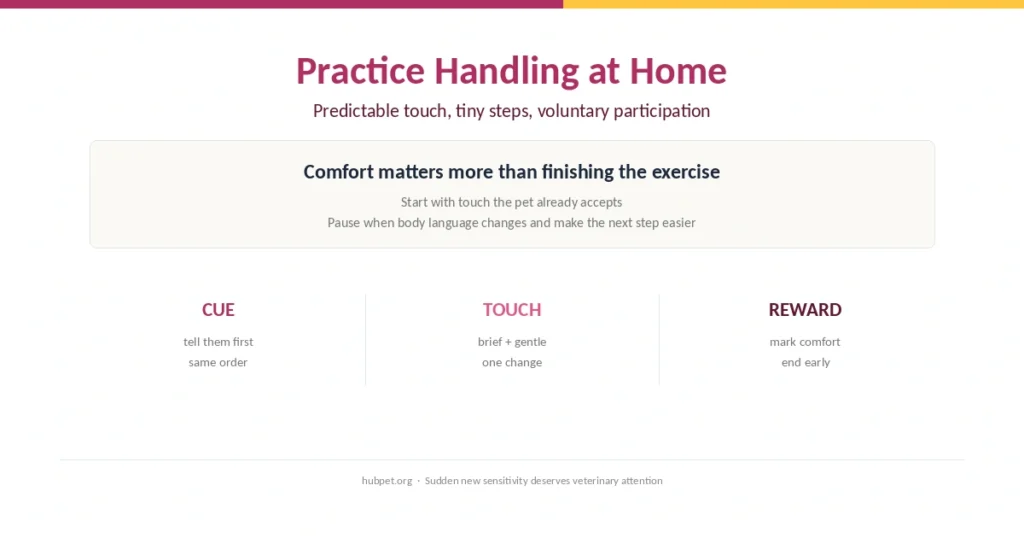
How to Practice Handling Your Pet at Home Without Forcing It
Practice handling in tiny, predictable steps. Reward relaxed participation, let your pet opt out, and stop if touch suddenly becomes uncomfortable.
Practice handling in tiny, predictable steps. Reward relaxed participation, let your pet opt out, and stop if touch suddenly becomes uncomfortable.
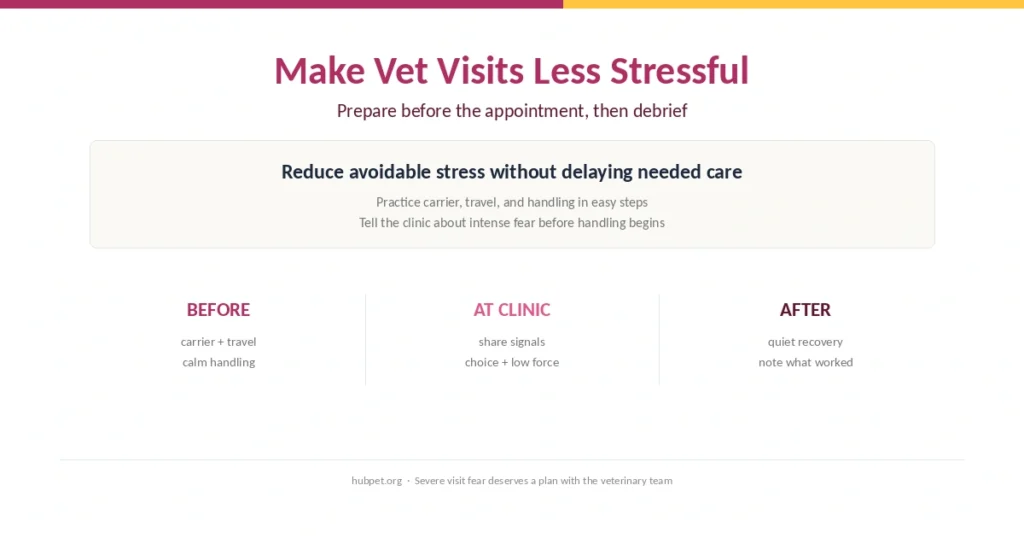
Reduce avoidable vet-visit stress with preparation at home, clear communication at the clinic, and a plan that respects your pet’s fear signals.
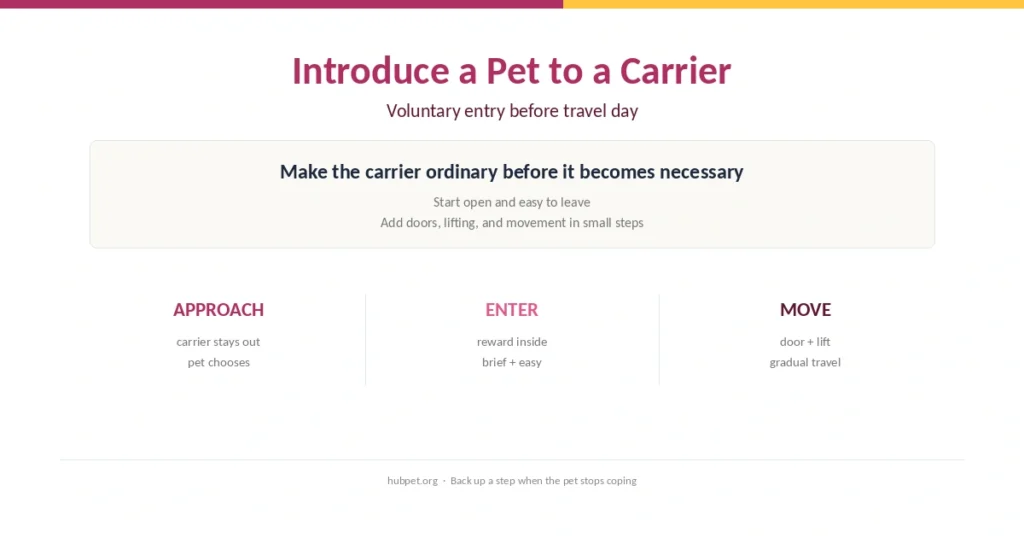
Carrier training works best before a trip is urgent. Build voluntary entry first, then add the door, movement, and travel in separate small steps.
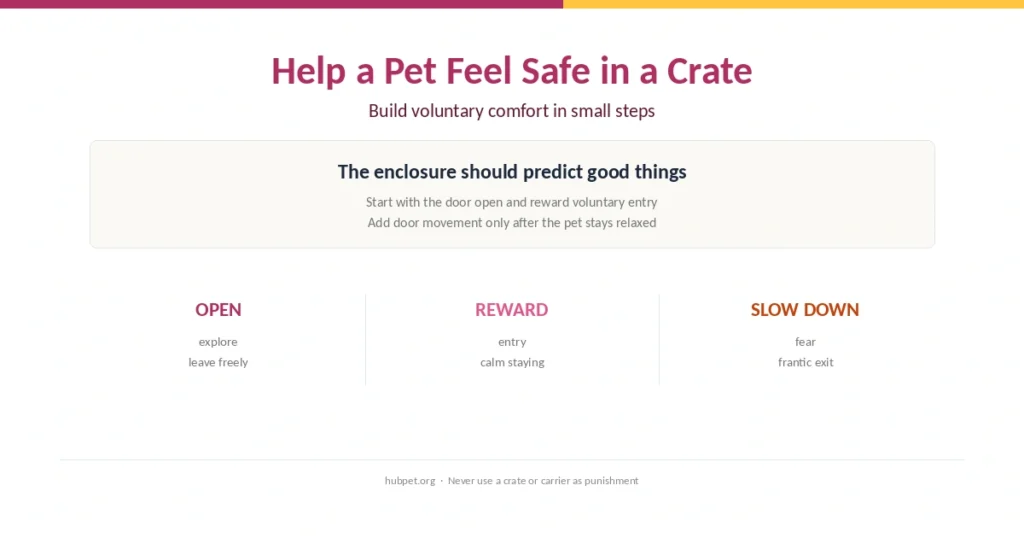
Build a positive crate or carrier association with voluntary entry, short steps, rewards, and a clear rule: never use confinement as punishment.
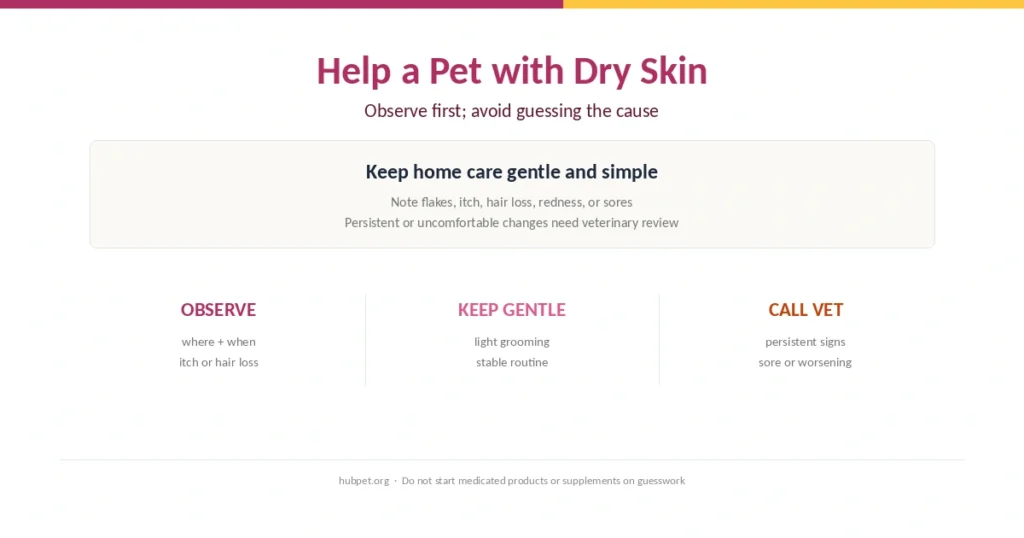
Dry-looking skin has many possible causes. Learn what to observe, which gentle care is reasonable, and when a veterinary exam is the safer next step.
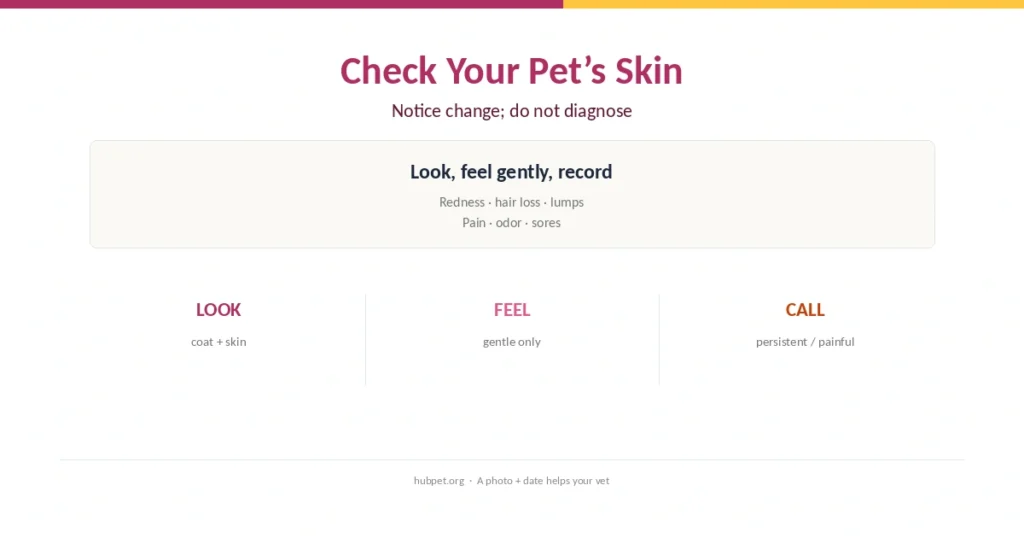
Use calm grooming time to notice skin and coat changes, record what you find, and contact your vet for persistent, painful, or changing problems.
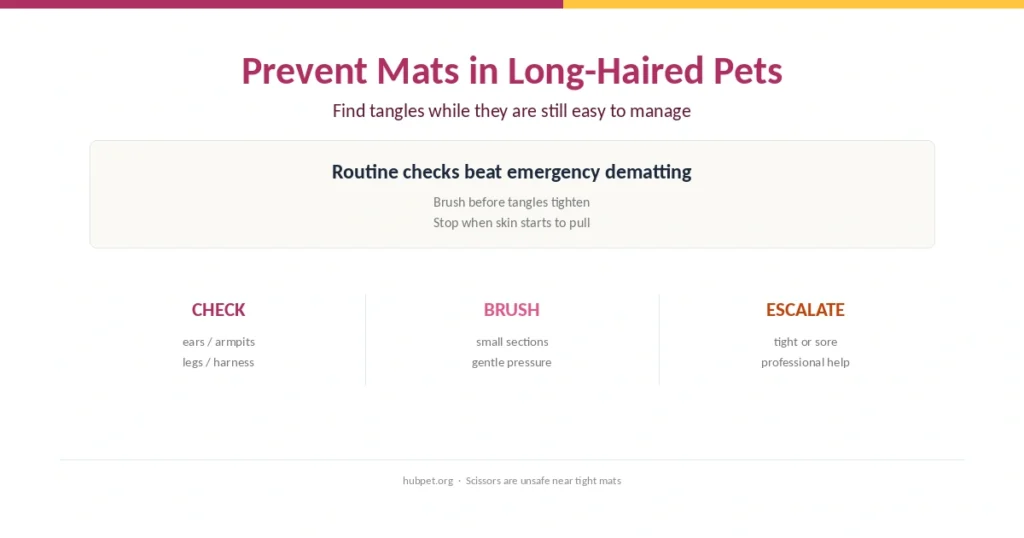
Regular gentle brushing and early tangle checks can prevent tight mats. Stop pulling when a mat is dense, painful, or close to irritated skin.
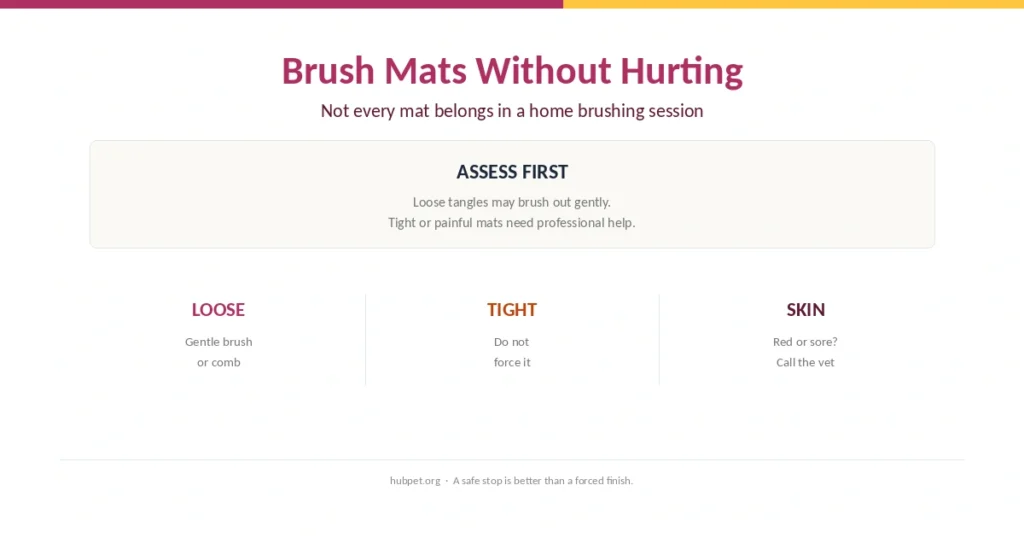
Small loose tangles may be brushed gently. Tight, painful, or extensive mats should not be forced out at home, and scissors are unsafe near matted skin.
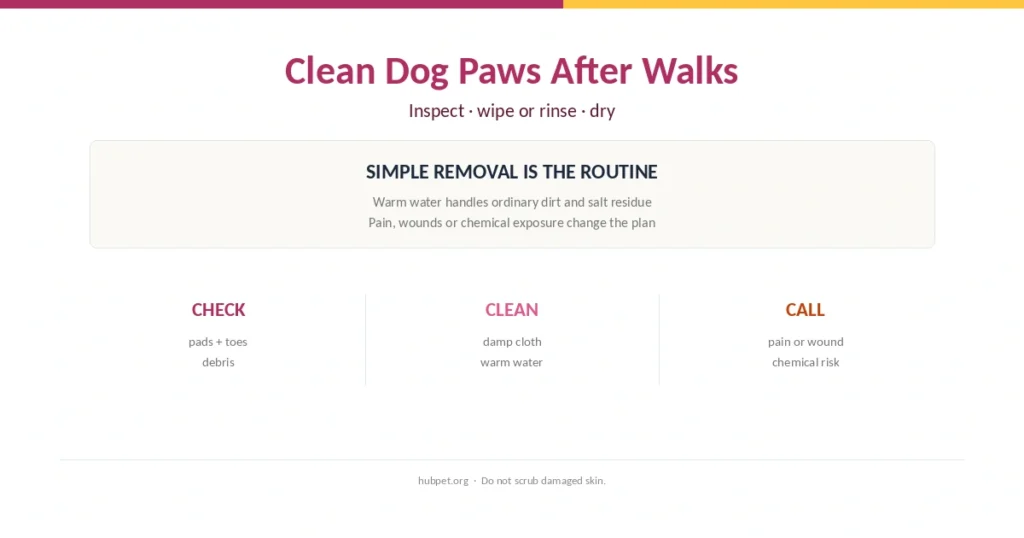
A quick post-walk paw routine removes dirt and winter residue without overcomplicating care. Learn what to inspect and which warning signs need a veterinarian.

Good hydration starts with accessible fresh water and knowing the pet’s normal pattern. Illness, heat, vomiting, or diarrhea can change the situation quickly.