
A litter box on carpet can rock, sink into soft pile, or let spilled moisture reach the fibers. Moving it onto an unstable plastic sheet is not always an improvement: curled edges and slippery surfaces can also make the cat hesitate. The goal is a flat, easy-to-clean station that preserves familiar access while protecting the floor. This guide explains the base layers, spill response, and ways to see whether a mat or board is making the box safer or less comfortable. The cat’s route matters as much as the carpet. For sudden changes in elimination, consult your veterinarian; our veterinary disclaimer explains the limits of general pet-care advice.
Check whether the box rocks on the carpet
Set the empty tray on the chosen spot and press lightly at its corners. Deep pile or a thick rug pad can make a narrow base wobble. Add normal litter and repeat the test without allowing the tray to tip. A stable, wide flat base is preferable to a small footprint that sinks at the edges. If the tray changes angle whenever the cat steps in, try a different location or a rigid waterproof floor protector. Do not wedge objects beneath one corner to level it.
Make the protective layer larger than the tray
A waterproof mat should extend beyond the tray’s footprint so scattered litter and small spills stay on a washable surface. Choose a material that lies flat and does not develop an easy-to-trip raised lip where the cat enters. If the carpet is thick, a firm smooth backing can help distribute the load. Avoid flimsy shower-curtain plastic that bunches into folds or slides underfoot. Use a protector meant for floors and check the manufacturer’s instructions for compatibility with the carpet underneath.

Keep the entrance low and grippy
Some trays already have a high threshold; a stiff floor platform can effectively make that step taller. Place the floor protector flush with the walking surface where possible. If your cat is older or has mobility limitations, prioritize a low-entry box over a raised spill-containment platform. A washable textured landing surface can catch litter after the cat exits, but rough honeycomb grates may be uncomfortable for sensitive paws. Watch an ordinary entry and exit to confirm the setup feels secure.
Separate litter scatter from liquid leaks
Dry grains can usually be collected with a dedicated hand brush or appropriate vacuum tool, depending on carpet and litter type. Liquid reaching the carpet needs prompt cleaning according to the floor material, not simply another layer of litter on top. Check the tray for cracks or a poor-fitting guard if moisture regularly appears beneath it. A waterproof layer protects only the area it actually covers. It cannot repair a leaking tray or replace hygiene. Persistent dampness under mats can damage flooring and encourage odor.
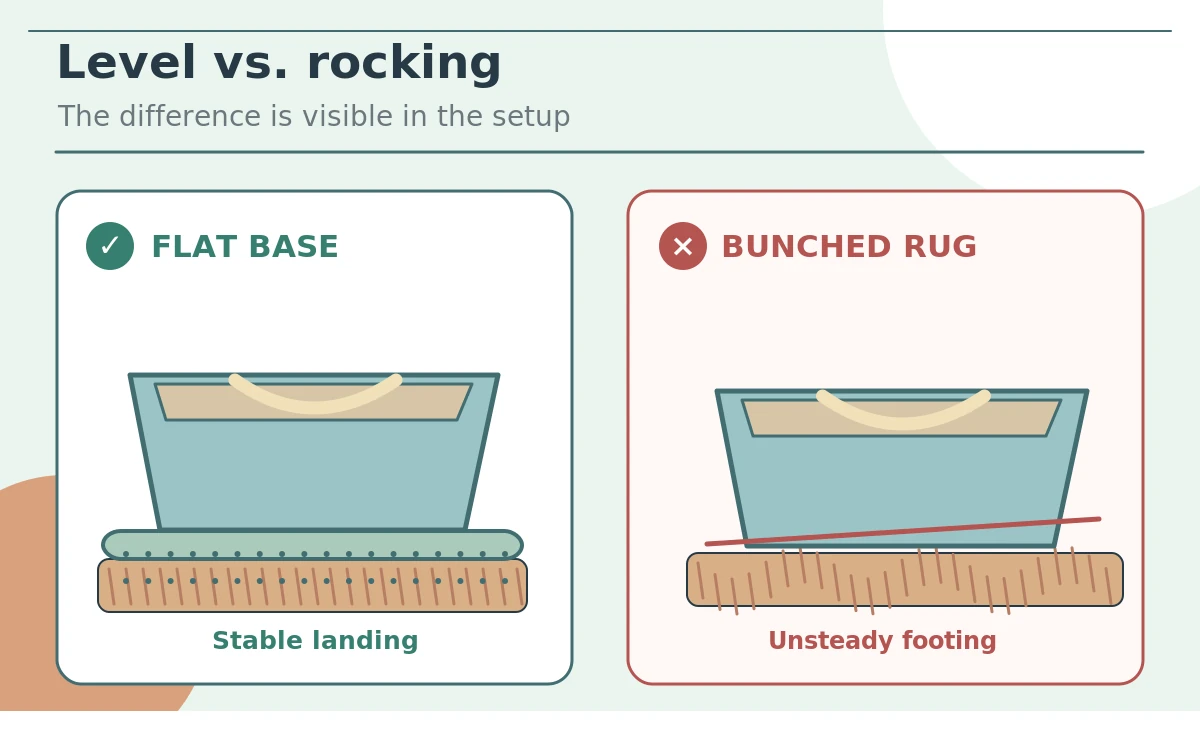
Compare a flat station with a sagging station
Imagine the same cat entering two setups. One uses a level pan on a smooth rigid protector with a clear low doorway. The other uses a narrow pan balanced on a bunched soft rug; the front tips, litter piles at one end, and the landing mat curls. The second arrangement may make the cat wary even when the litter itself is familiar. Use this simple side-by-side test before buying decorative furniture for the corner. Visual neatness does not compensate for a moving floor beneath paws.
Place the station away from doors and machines
A quiet corner can work if the cat has a reliable approach and is not trapped by a shutting door. Avoid a spot where a washing machine or dryer suddenly starts, where the vacuum is stored, or where another pet can block the only route. Keep the tray away from food and water. A stable floor protects the cat mechanically; a quiet location makes the station worth visiting. Several separated litter stations may be needed in larger or multi-cat homes.
Scoop without dragging the pan across fibers
Keep a dedicated scoop and a covered waste container nearby but outside the cat’s entrance path. Lift or stabilize the tray while scooping so a flexible base does not scrape over carpet. Wipe any spilled grains from the protective mat regularly. For full washes, move the tray carefully and inspect underneath it for dampness, grit, and odor. Allow both tray and protector to dry before returning them. Moisture trapped against carpet can remain hidden until the smell becomes noticeable.
Use cleaners that suit both surfaces
For a carpet accident, follow the carpet maker’s care instructions and use a suitable pet-stain cleaner as labeled. Test an inconspicuous area first where appropriate. Keep the cat away from wet cleaning chemicals until the area is fully dry and safe. Avoid saturating underlay with repeated water treatments or mixing cleaning products. Wash the litter pan separately with mild, unscented soap. The aim is complete cleanup with no harsh residual odor near the toilet area.
Observe whether the cat accepts the new base
If the litter box was previously on bare floor, do not add a large rustling mat and a tall platform in one abrupt step. Place the new protector flat, then watch for hesitation or paw testing. If the cat avoids the station, check the sounds, texture, and slope of the new material. Leave an established accessible option available during the change. Sudden elimination outside the box warrants veterinary assessment even if the new carpet setup seems like an obvious trigger.

Inspect after every deeper cleaning
Look for curling protector corners, damp patches, pressure dents, and cracks in the pan. Check that the base has not migrated into the doorway or beneath a heater. Replace a warped protector rather than taping down a loose edge inside the cat’s path. Keep the box spacious enough for turning and maintain regular scooping. A washable station succeeds when it is easy for the cat to use every day and easy for you to restore to a clean, dry condition.
How We Research
We reviewed guidance from veterinary and established cat-welfare organizations about litter box size, hygiene, placement, and changes in toileting behavior. We distinguished general cat preferences from product-specific claims and from the needs of an individual cat. Measurements and diagrams are practical aids, not guarantees that a cat will accept a tray. We prioritize access, choice, and prompt veterinary evaluation for new elimination problems. Read more about our editorial approach.
Sources
Ohio State University Indoor Pet Initiative, Litter Boxes — https://indoorpet.osu.edu/cats/basic-indoor-cat-needs/litter-boxes (accessed October 2026).
VCA Animal Hospitals, Housetraining for Kittens and Cats — https://vcahospitals.com/know-your-pet/litter-box-training (accessed October 2026).
ASPCA, Litter Box Problems — https://www.aspca.org/pet-care/cat-care/common-cat-behavior-issues/litter-box-problems (accessed October 2026).
Cats Protection, Preparing Your Home for a Cat — https://www.cats.org.uk/help-and-advice/getting-a-cat/preparing-for-a-cat (accessed October 2026).
VCA Animal Hospitals, Inappropriate Elimination Disorders in Cats — https://vcahospitals.com/pets-are-people-too-roswell/know-your-pet/inappropriate-elimination-disorders-in-cats (accessed October 2026).
Health and safety note: Straining to urinate, repeated attempts with little or no urine, blood, obvious pain, or sudden elimination changes need prompt veterinary assessment. Inability to pass urine is an emergency. Never punish a cat for avoiding a litter box.
It is possible, but a firm, flat washable protector helps with stability and spill cleanup. Check whether the tray rocks on deep pile.
Not always. Some catch dry grains but are not waterproof. Use a suitable moisture barrier when protecting the carpet is important.
Usually a low, stable setup is easier to access. A platform can create a difficult step or rocking surface.
Remove the tray, clean the area according to carpet and cleaner directions, and dry thoroughly. Check the pan for leaks.
Try a flatter, quieter surface while retaining an accepted litter option. Seek veterinary advice for sudden toileting changes.