
Cat cave beds appeal to people because the roof looks cozy, but their value for a cat is a choice of sheltered resting space. Many cats seek a place where they can retreat from traffic, watch one approach, and leave on their own terms. Others prefer an open bolster or a high shelf instead. Notice where your cat currently naps: tucked behind cushions, underneath furniture, or stretched out where everyone walks past. Use that pattern to decide whether a fully covered cave suits this particular cat. Do not replace every existing nap site with an enclosed bed.
Measure the entrance before the overall footprint
The entrance is the feature your cat must negotiate several times each day. Check its clear width and height after fitting the lining or cushion; do not rely on the exterior product diameter. Your cat should enter without squeezing the shoulders, ducking painfully, or dragging a foot across a stiff seam. Check the threshold height from the floor, especially for a cat with limited mobility. An opening that flops that falls shut may appeal less than a firm portal, even if the catalog photographs look similar. Compare the actual opening to places your cat enters comfortably at home.
Allow room to turn but keep the retreat inviting
Inside dimensions matter more than broad claims such as ‘fits most cats.’ Look for enough clear floor space for your cat to turn, curl up, reposition the paws, and leave without backing into a fabric wall. Measure your cat while resting in a favorite position, then compare that space with the interior rather than adding a random number of inches. A cave can be snug without being restrictive. Cats Protection notes that cats value comfortable, protected sleeping spots, but cats do not universally prefer one shape. If you have two cats, offer more than one private resting place rather than planning that they must share one cave.

Check the roof, seams, and ventilation
Press lightly on the roof and release it: does the structure return to shape, or does the entry fold down onto the cushion? Look for firm stitched supports fully hidden by fabric so a curious cat cannot chew or hook a claw on exposed wire. Inspect interior seams for long threads, detachable décor, and loops. The entrance should remain clear in normal use and allow air circulation; avoid closing the front with improvised blankets. Thick fabric can become stuffy in direct sun or near heaters. Do not describe a covered bed as a substitute for a cool, accessible resting option elsewhere in the home.
Choose a washable lining rather than decorative fringe
A removable flat cushion is easier to inspect and wash than a permanently stuffed cave with deep hidden folds. Look for a care label that explains how to clean and thoroughly dry the lining, outer shell, or both. If the fabric pills heavily, sheds fibers, or contains loose tassels that your cat mouths, choose a simpler design. Clean only with products appropriate for the fabric and keep the cat away until the material has dried. Rotating a clean spare lining can preserve a familiar resting scent. Strong fragrance or repeated deep cleaning may make the bed less appealing to some cats.
Place the cave where it supports privacy
A hidden bed in the middle of a noisy hallway will not become quiet merely because it has a roof. Start in a sheltered corner where your cat already chooses to rest, away from litter trays, food bowls, cleaning supplies, and slamming doors. Position the opening so the cat can see a normal approach without feeling trapped. If another pet can block the sole entrance, offer a second hideaway or an open alternative in a different area. Cats Protection recommends undisturbed hideouts and options at different heights; choose accessible heights that match the cat’s mobility and your ability to secure the surface.
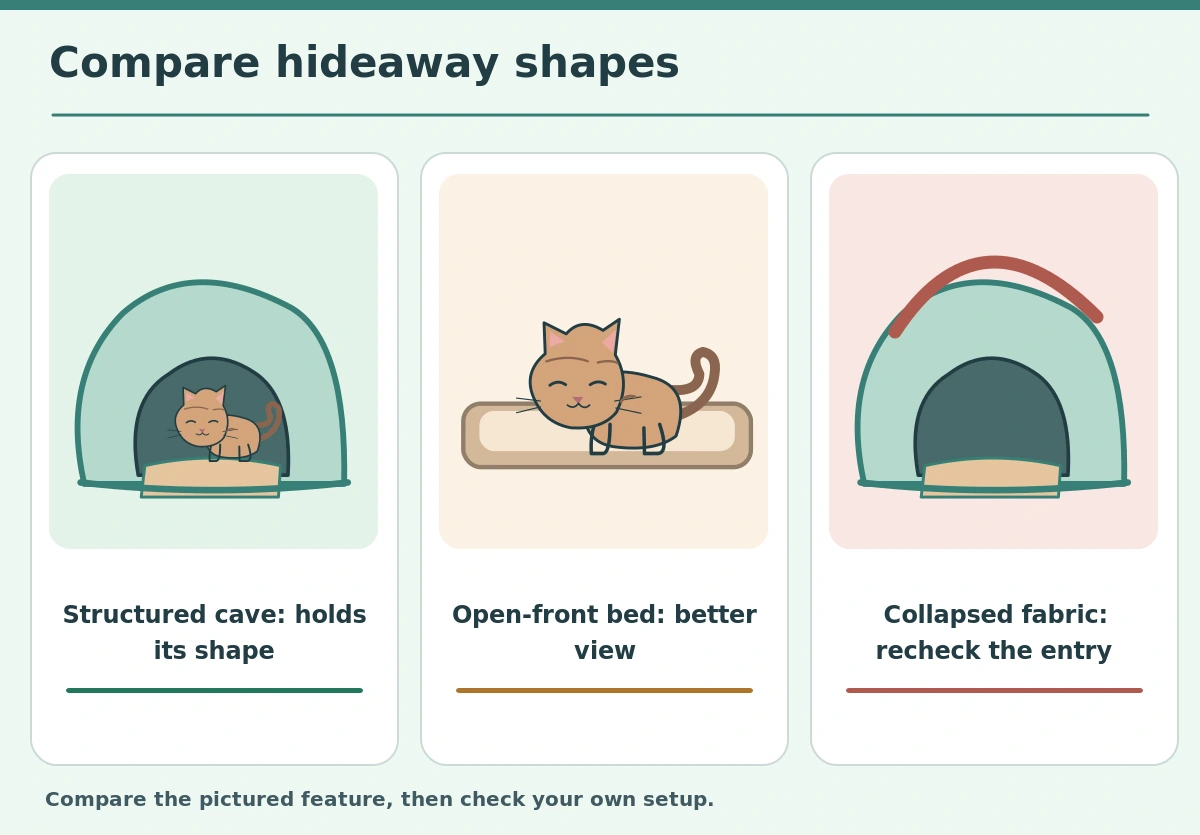
Test whether your cat wants a view
Some cats like to disappear completely, while others settle only if they can see people moving through the room. Compare a closed cave, a partially covered pod, and an ordinary open bed in familiar positions. Let the cat investigate each one without anyone placing it inside. If the cat sniffs the new cave and walks away, that is useful feedback, not a training failure. A blanket draped loosely over a stable cardboard box may offer a low-cost supervised trial, provided there are no strings, staples, or collapse hazards. Never block a cat inside to convince it that the spot is safe.
Use familiar scent and low-pressure invitations
Leave the cave open in its selected position for several days. Place a small amount of clean, familiar bedding at the entrance or just inside, then let the cat approach when the room is quiet. A treat nearby can encourage voluntary exploration, but avoid baiting a reluctant cat deep into a space with no easy retreat. If the cat enters, give it uninterrupted time rather than reaching in to pet it. If other pets compete for the bed, distribute additional resting choices around the home. Acceptance often depends more on location and freedom of choice than on the price of the cushion.
Watch for changes in comfort and health
A cat that suddenly hides much more than usual, refuses favorite resting places, or hesitates to enter an opening it previously used may need a veterinary assessment. Do not assume that a new bed will resolve pain, stress, or illness. For senior cats, the transition over a high lip may become difficult even when the interior remains comfortable. Offer a ground-level alternative with a shallow entrance and non-slip approach. Keep any enclosed cave away from direct heater output, and make sure the cat can step out and choose a cooler space whenever it wishes.
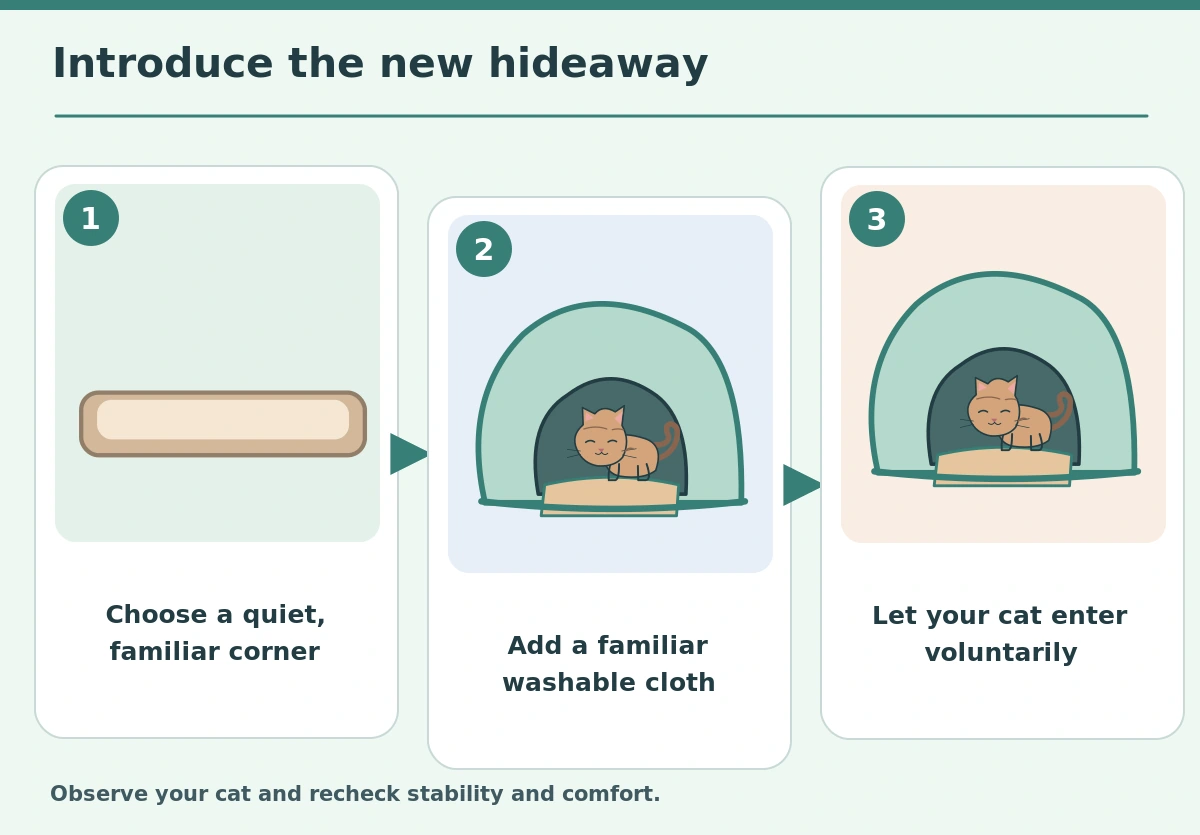
Use an inspection routine that protects the retreat
Once a week, check that the frame has not sagged over the doorway, the fabric is intact, and the interior is dry. Vacuum or wash according to the label, returning the clean bed only when it is thoroughly dry. If you notice chewed foam, broken supports, or detachable parts, retire the bed until you resolve the hazard. Avoid repeatedly moving the cave between rooms to ‘find the perfect spot’ while your cat is using it. A good cave bed is one the cat can leave easily, rest in comfortably, and trust as a stable, undisturbed option.
How We Research
We evaluated the article against Cats Protection guidance on hiding and sleep, VCA explanations of resting choices, and cat welfare recommendations about control over safe spaces. We use manufacturer dimensions and a cat-specific fit check instead of invented numbers. For broader editorial methods, read About HubPet.
Sources
Battersea — Why Is My Cat Hiding?: Read the source. Accessed October 27, 2026.
Cats Protection — How to Create the Perfect Cat Sleeping Spot: Read the source. Accessed October 27, 2026.
Cats Protection — How to Choose the Perfect Cat Bed: Read the source. Accessed October 27, 2026.
VCA Animal Hospitals — Why Do Cats Sleep in Weird Places?: Read the source. Accessed October 27, 2026.
RSPCA NSW — Meeting the Needs of Cats: Read the source. Accessed October 27, 2026.
Safety note: This selection guide is not individual veterinary advice. Seek a veterinarian for sudden behavioral changes, pain, injury, or suspected swallowed material; see the HubPet veterinary disclaimer.
Some enjoy the shelter and limited sight lines; others choose open beds or elevated perches. Follow your cat’s existing sleeping preferences and provide alternatives.
Large enough for your cat to walk in and out freely with the lining installed. Compare the clear opening with passages your cat uses comfortably.
Bonded cats may choose to rest together, but do not assume they will. Provide separate resting options so neither cat can block the other’s only hideaway.
Try a quiet, familiar corner away from litter trays, noisy appliances, drafts, and concentrated heat. Keep the entrance visible and accessible to your cat.
Keep familiar sleeping spots available, adjust the location, and try a partially open design. Do not force your cat inside or close off the exit.