
A felt cat cave looks simple, yet the entrance and shell shape determine whether your cat can use it comfortably. A cave should let a cat turn around, look out, and leave without squeezing through a collapsing rim. The felt must also withstand claw contact without shedding tempting strings. Here is a practical inspection routine for a cozy cave that remains an optional retreat, not a place where a cat gets trapped. For changes in mobility, hiding, or comfort, ask your veterinarian; see our veterinary disclaimer.
Start with the usable interior, not the outside diameter
Look at the floor inside the cave when the shell stands naturally. A thick felt wall steals room from the dimensions on the label. Your cat needs space to curl, shift position, and turn toward the exit. If the floor puckers or the entrance pulls inward when the cat enters, the structure may be too soft. A photograph of a cat inside a product is not a reliable size measurement. Instead, compare the actual internal footprint with a spot your cat already chooses for resting.
Check whether the entrance stays open
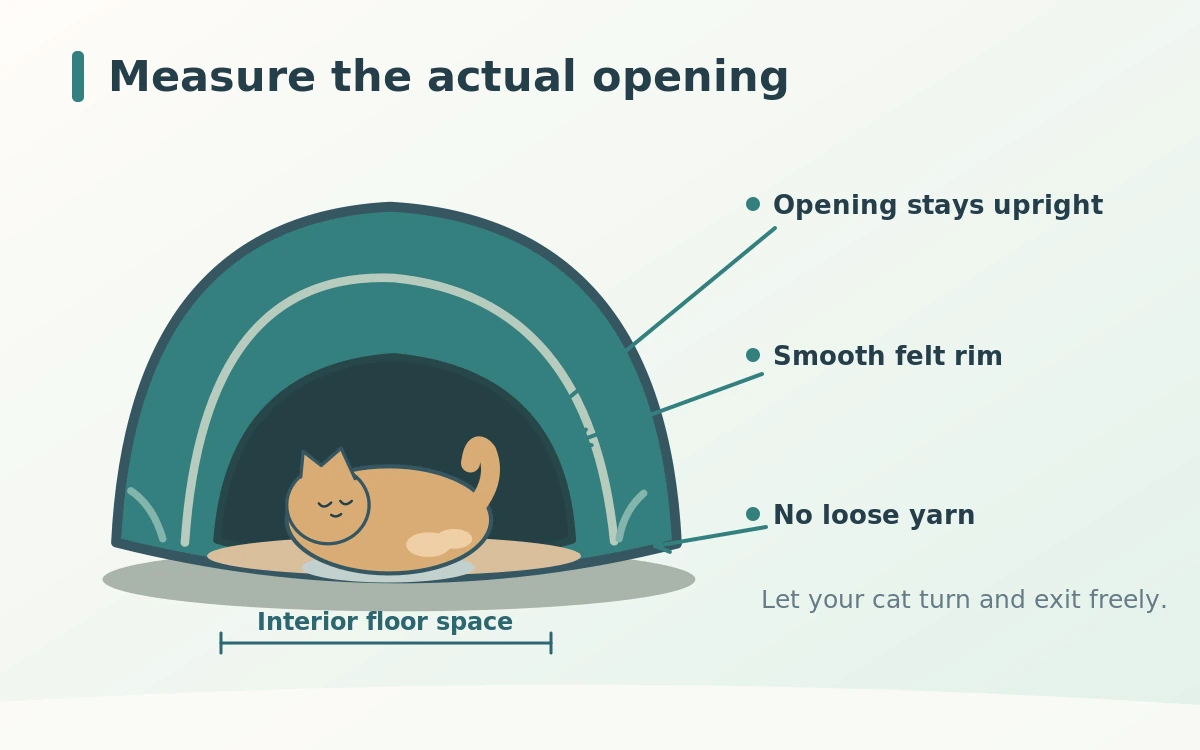
Set the cave on a firm surface and press the rim lightly with your hand. It should recover without leaving a narrow slit. Watch how the opening sits when a cushion is inside: thick bedding can raise the cat toward the roof. An entrance that faces a room gives the cat an easy line of sight; pointing it toward a wall may remove that advantage. However, some cats prefer deeper concealment. Offer a second open bed so the cat can choose.
Look closely at the wool or synthetic felt surface
Inspect the inside seam, any decorative ears, and the edge of the opening. Pull gently on an exposed tuft; loose clumps, dangling yarn, and glued trim create a chewing concern. Cornell notes that swallowing pieces of fabric can cause serious intestinal problems in cats that chew textiles. If your cat mouths wool or threads, avoid a fuzzy cave and choose a simpler washable resting surface. Do not assume that a natural fiber label makes a product safe to swallow.
Compare a structured cave with a floppy shell
A structured dome holds the roof above the cat, while an overly soft shell can fold over the entrance. Neither material alone guarantees the right choice. A floppy style can work as an open nest when you fold it down, yet it cannot provide a reliable enclosed space. Check whether the manufacturer intends the item to convert between shapes. Make the comparison with the actual cave on the floor, rather than relying on styling photos. Your cat should never need to push through a tightly closed mouth.
Choose a calm location that preserves an exit route
Put the opening toward an easy path through the room, not into a narrow passage. Avoid the swing of a door and the path of a vacuum or rolling chair. Cats Protection recommends quiet hiding places away from food, water, and litter trays. If children or other pets are present, protect the space from unwanted visits. A cave can feel private without sitting in a completely hidden corner. For a multi-cat home, provide additional separated resting choices.
Keep a familiar scent without crowding the cave
A thin, clean blanket with a familiar smell may make a new bed more inviting. Fold it flat, and check that it does not block the entrance. Some cats prefer the unlined texture, so try the cave without extra bedding too. Avoid dangling toys inside or tying a lure to the roof. Let the cat explore while it is free to walk away. Moving the cat into the opening can create an unpleasant association with what should be a voluntary retreat.

Test how the felt responds to cleaning
Read the care label before purchase. Some felt products may shrink, warp, or lose their form in a machine wash. If only spot cleaning is allowed, consider whether you can remove daily hair and an occasional stain without soaking the core. Use a mild cleaning method that suits the fiber and dry the cave completely. A damp, dense shell can hold odors longer than an open cushion. Do not cover wet felt with new bedding or put it back in service before the center dries.
Check floor grip and heat exposure
A lightweight felt dome can slide on smooth flooring as a cat steps out. Try it on a washable non-slip surface without raised edges that could catch paws. Keep it away from direct heater output, fireplaces, and electrical cords. Felt insulation does not mean the bed regulates temperature or replaces access to a cooler area. The cat must be free to leave, stretch, and select another nap location. Choose a spot with ordinary room ventilation and reliable floor stability.
Notice what your cat actually does
A cat may sniff the cave, enter briefly, and sleep somewhere else. That is useful feedback, not a failure to train the cat. Try turning the entrance toward the room or moving the bed near a familiar resting place. Change one thing at a time and give the cat time. If the cat repeatedly bats at the rim or avoids stepping inside, review the opening and floor texture. A sudden increase in hiding, especially with other behavior changes, merits a veterinary conversation.

Inspect the cave after routine use
During weekly cleaning, look for a bowed roof, separated seam, peeled trim, or loose fibers. Run your fingers along the inside floor to find sharp fragments or snagging points. Discard or repair a damaged item outside the cat’s reach; never leave exposed adhesive where paws or tongues can reach it. If the bed starts retaining moisture or an odor that cleaning cannot remove, replace it. A comfortable cave should remain a clean and predictable choice.
Make a final fit-and-safety decision
Before keeping the cave, check four real conditions: the cat can turn inside, the opening remains clear, the surface does not shed chewable pieces, and cleaning is realistic. Then offer the cat a separate open resting area nearby. Both beds may get used at different times of day. Cats commonly rotate napping spots, so there is no need to force regular cave use. An uncomplicated alternative is a stable cardboard box on its side with washable bedding.
How We Research
We reviewed feline welfare guidance about secure resting places, access to separate resources, normal sleep choices, and material safety. We then evaluated the practical product details that owners can inspect: usable dimensions, stability, pathways, seams, and cleaning. The drawings show the intended checks rather than a promise that a product is approved or suitable for every cat. We do not treat marketing labels as evidence of comfort. Read more about our editorial approach.
Sources
Cats Protection — Preparing Your Home for a Cat — Cats Protection — Preparing Your Home for a Cat (reviewed October 2026).
Cats Protection — Bringing a Cat Home — Cats Protection — Bringing a Cat Home (reviewed October 2026).
AAFP/ISFM — Feline Environmental Needs Guidelines — AAFP/ISFM — Feline Environmental Needs Guidelines (reviewed October 2026).
Cornell Feline Health Center — Feline Behavior Problems: Destructive Behavior — Cornell Feline Health Center — Feline Behavior Problems: Destructive Behavior (reviewed October 2026).
Safety note: Remove bedding with exposed stuffing, wires, detached trim, or chewable strands. For sudden changes in hiding, movement, sleep, or appetite, contact a veterinarian. Never force a cat into a sleeping space.
A sound cave with a stable entrance and intact fibers can be a useful optional rest spot. Inspect for loose strands, collapse, and your cat’s chewing habits.
The opening should let your cat walk in, turn around, and come out without compressing the rim. Check the actual usable opening with the cushion installed.
Only when the manufacturer allows it. Some felt loses shape when wet or agitated, so follow the care label and dry it thoroughly.
The location, scent, texture, or entrance may be unfamiliar. Offer it without pressure beside another comfortable resting choice.
No. Place it away from direct heat and cords. Your cat needs an easy route to a cooler resting spot whenever it chooses.