
A good carrier liner offers traction and absorbs small accidents without stealing the cat’s limited floor space. A thick cushion may look cozy but bunch against the door or block a vent, while a slippery pad can leave a cat bracing through every turn. Match the pad to the carrier’s actual interior, keep layers flat, and choose material you can wash thoroughly. A familiar scent may help a cat approach the carrier, yet heavily perfumed laundry products can make it less inviting. For pet health concerns, read our veterinary disclaimer.
Measure the usable inside floor
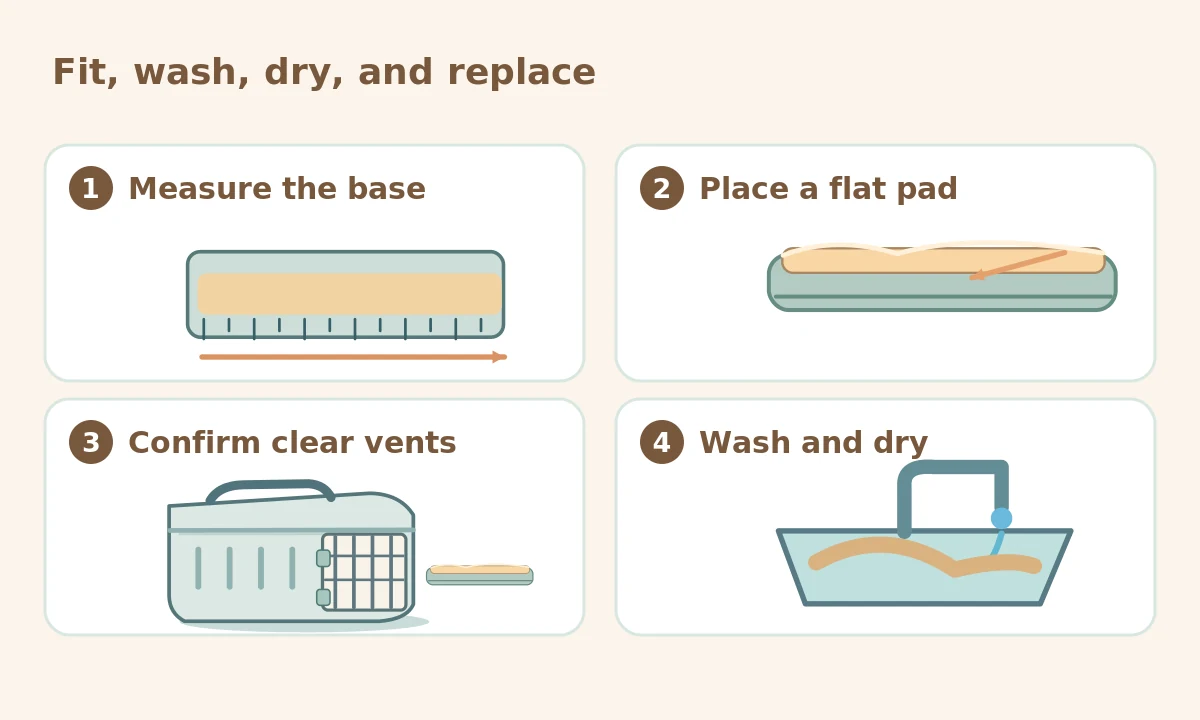
Remove any old insert and measure the flat bottom between the interior walls, not the carrier’s advertised outside footprint. Note whether the floor slopes, narrows at the front, or contains raised fastening points. A pad should lie inside those borders without curling up over the door track. Test the exact shape with a sheet of paper or a cardboard template before buying a replacement. Avoid cutting materials that shed loose fibers or expose foam beads. A correct fit leaves the cat enough room to stand, turn, and lie in a natural position.
Choose a stable, low-profile layer
Start with a thin, smooth, washable towel or liner on a stable base. Add absorbency when needed without piling up blankets. Thick bedding may reduce useful height, and a slippery waterproof backing can slide on shiny plastic. Check the lower corners as you tilt the empty carrier slightly by hand. A pad that bunches in a corner may be uncomfortable once occupied. Select soft but durable fabric with no dangling loops, fringe, or loose stuffing that a cat might chew. A towel carrying familiar home scents often provides useful comfort without an expensive specialty insert.
Separate traction from absorption
Traction and absorption solve different problems. For grip, a woven towel helps the cat; an absorbent layer beneath can catch fluid from an accident. Some ready-made pads combine both features, but the top must remain dry enough to be comfortable. Do not add a thick plastic bag that the cat can reach and chew. If using a waterproof lower layer, follow the product’s instructions and ensure it stays flat underneath a safe top layer. Always remove and replace a heavily soiled liner after a journey rather than leaving moisture trapped against fur.

Compare a flat pad with loose bedding
The useful example shows a flat liner covering the carrier’s floor while the vents and door remain clear. A caution example shows folded fabric piled near the front latch and a corner curling upward. That extra material can trap a paw or prevent a door from shutting smoothly. During a dry run, open and close the empty door to confirm nothing catches. Press the pad gently around the base to find raised edges. Do not fasten bedding with exposed safety pins, loose strings, or adhesive hooks where an animal can reach them.
Avoid thick layers for short-nosed pets
Animals with breathing difficulty need particular attention to airflow and posture. The AVMA cautions against thick, fluffy bedding that can cover the nose in travel crates, especially for short-nosed dogs. For cats, the same general principle supports keeping nose and vents unobstructed, though individual medical requirements belong with a veterinarian. Do not position a blanket so it covers the entire doorway or forces a cat into a curled posture. If your cat has respiratory disease, ask the veterinary team about an appropriate transport setup rather than experimenting with special pillows.
Use familiar scent without strong fragrances
Place a clean towel from a calm resting area inside the carrier several days ahead of the trip. Familiar smells can help the carrier feel less novel, according to feline welfare guidance. Avoid saturating the pad with perfume, essential oils, or household deodorizers. Cats may avoid intense smells, and some substances are not safe around animals. A carrier does not need to smell like scented detergent to be clean. Keep the door open during practice and let the cat explore voluntarily. Replace a soiled fabric promptly so the smell does not become a lasting negative association.

Build a spare-liner travel kit
For appointments, pack one clean folded towel or pad plus a closable bag for a used one. Keep supplies outside the occupied carrier so they cannot reduce breathing space. If your cat vomits or urinates during travel, stop only in a secure location and follow veterinary advice about distress or repeated illness. Never open the carrier outdoors to swap a liner. Wait for a closed vehicle with doors and windows secured, a clinic room, or another escape-proof space. A spare liner is useful, but preventing escape is the first priority during a stressful trip.
Wash the carrier and bedding separately
Remove the pad before cleaning the hard shell. Cats Protection recommends mild, non-toxic soap and water for the carrier, followed by rinsing and thorough drying. Launder fabric according to its care label, using a product suitable for your household and avoiding excess fragrance. Check seams, backing, and fasteners after each wash. If a pad shrinks into a curled shape or its waterproof layer peels, replace it. Do not put a pet into a damp enclosed carrier. Drying time and airflow matter as much as removing visible dirt.
Check fit after every wash
Set the dry pad back into the empty carrier and run a hand along all corners. Confirm the latch operates, the lower ventilation slots remain clear, and the pad cannot shift across the floor. Some washable materials stretch, curl, or shrink with laundering. A previously good fit may change over time. Keep the carrier stored with a clean, flat insert so you can check it quickly before appointments. However, remove pads that could encourage chewing in a household with a cat that eats fabric, and ask your veterinarian about that behavior.
Know when to replace a liner
Discard bedding with torn stitching, exposed foam, lingering odor after proper washing, mold, or loose threads. Never try to cover dangerous damage with another layer. If a cat repeatedly soils a carrier, the solution may involve travel stress or a medical problem rather than a more absorbent purchase. Discuss repeated accidents, motion sickness, panting, or severe fear with your veterinarian. Favor a simple pad that fits, stays flat, and cleans easily over a bulky product with many layers and promotional claims. The best liner is the one that supports safe transport for your particular cat.
How We Research
We used veterinary association, animal welfare, and public-health guidance to separate established transport precautions from practical home inspections. Product dimensions, load limits, attachment methods, and care instructions differ, so the instructions supplied with your particular carrier take priority. HubPet did not independently crash-test, heat-test, or certify any carrier or accessory. We reviewed sources in October 2026; confirm any current airline requirements directly before travel. Learn more on our About HubPet page.
Sources
Cats Protection — Choosing and Using a Cat Carrier (reviewed October 2026).
VCA — Reducing the Stress of Veterinary Visits for Cats (reviewed October 2026).
Battersea — Helping Nervous Cats at the Vets (reviewed October 2026).
Safety note: If your pet has a health condition, breathing difficulty, injury, severe travel distress, or symptoms of overheating, contact a veterinarian. A buying or maintenance guide cannot replace individual veterinary advice.
Not necessarily. A thick cushion can reduce space or bunch near the door. A flat washable towel often provides enough comfort and traction.
Yes, if the layers remain flat and the cat cannot chew exposed backing. Check both the door track and ventilation openings.
Measure the usable interior floor, including any narrowed corners. Do not buy solely from the carrier’s outside dimensions.
No. Choose clean, lightly scented or fragrance-free bedding according to safe household use, and avoid perfumes or essential oils.
Replace it when torn, curling, persistently soiled, moldy, or exposing foam or loose threads that a pet might swallow.