
This article is general information, not veterinary advice. If your pet seems unwell, is in pain or may have eaten something harmful, contact your vet or an animal poison control line right away. Read our vet disclaimer.
How to pet-proof your home starts with removing access to hazards pets can swallow, chew, tip over, or escape through. AVMA highlights foods, garbage, medications, cleaners, pest-control products, cords, small objects, plants, and garage chemicals (AVMA, 2020). In addition, ASPCA warns that some corrosive cleaners and laundry products can injure tissue after exposure (ASPCA, 2026).
How to Pet-Proof Your Home: Start With Access
The best pet-proofing question is not whether an item looks dangerous to a person. Instead, ask whether a dog or cat can reach, chew, swallow, lick, pull, or knock it over. This approach catches dropped medication, open trash, dangling cords, unsecured windows, toxic plants, and low cleaners (ASPCA, 2021; AVMA, 2020). In practice, how to pet-proof your home means controlling access before relying on supervision.
| Area | Pet-proofing action | Source |
|---|---|---|
| Kitchen | Secure trash and keep hazardous foods out of reach | AVMA 2020 |
| Bathroom / storage | Keep medications and cleaners in closed storage | AVMA 2020 / ASPCA 2021 |
| Living areas | Block cords, pick up small swallowable objects, secure windows | AVMA 2020 / ASPCA 2021 |
| Plants / yard | Identify plants and remove or block access to toxic ones | AVMA 2020 / ASPCA 2021 |
| Garage / utility areas | Secure antifreeze, pesticides and other chemicals | AVMA 2020 |
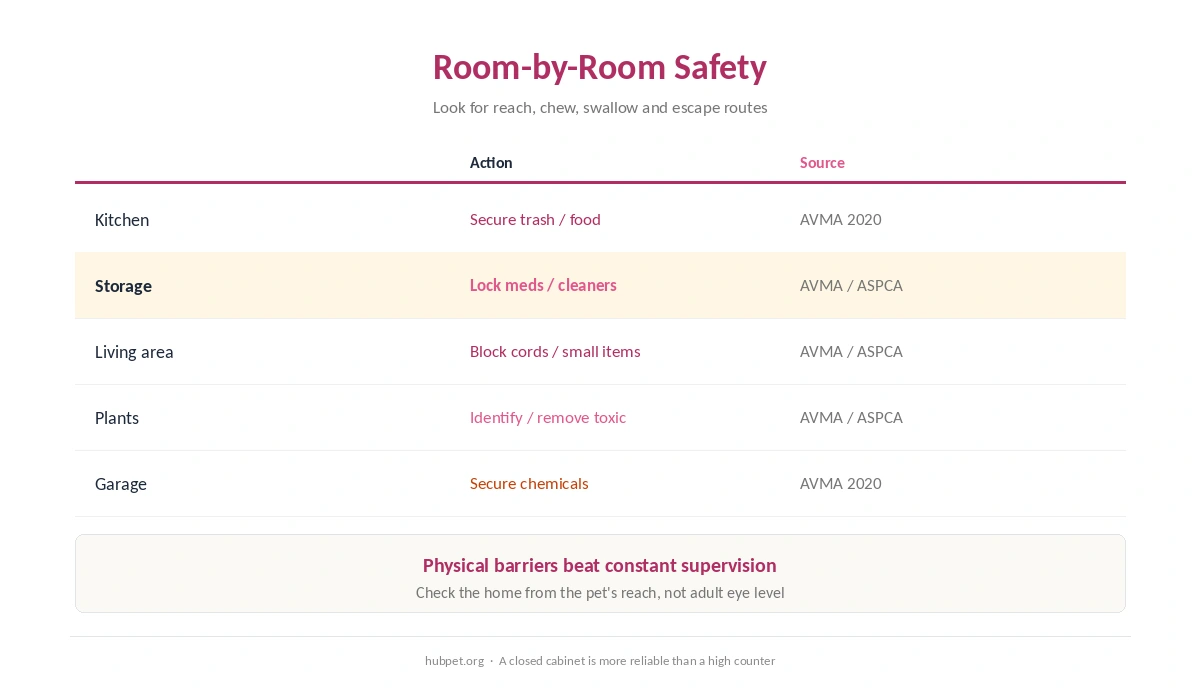
How to Pet-Proof Your Home Room by Room
- Kitchen: secure garbage and keep hazardous foods out of reach (AVMA, 2020).
- Bathroom and storage: keep human and pet medications in closed storage (AVMA, 2020; ASPCA, 2021).
- Laundry: follow labels and keep cleaners, detergents, fabric softeners, and dryer sheets inaccessible (AVMA, 2020; ASPCA, 2026).
- Living spaces: block electrical cords and remove small swallowable objects (AVMA, 2020; ASPCA, 2021). Secure windows and screens.
- Plants and yard: identify plants and remove toxic species from accessible areas (AVMA, 2020; ASPCA, 2021).
- Garage: secure antifreeze, pesticides, fertilizers, fuels, and other chemicals (AVMA, 2020).
Food and plant hazards have dedicated HubPet guides. See foods that are toxic to dogs. For cats, use foods that are toxic to cats. Finally, check the toxic houseplants guide for plant-specific risks.
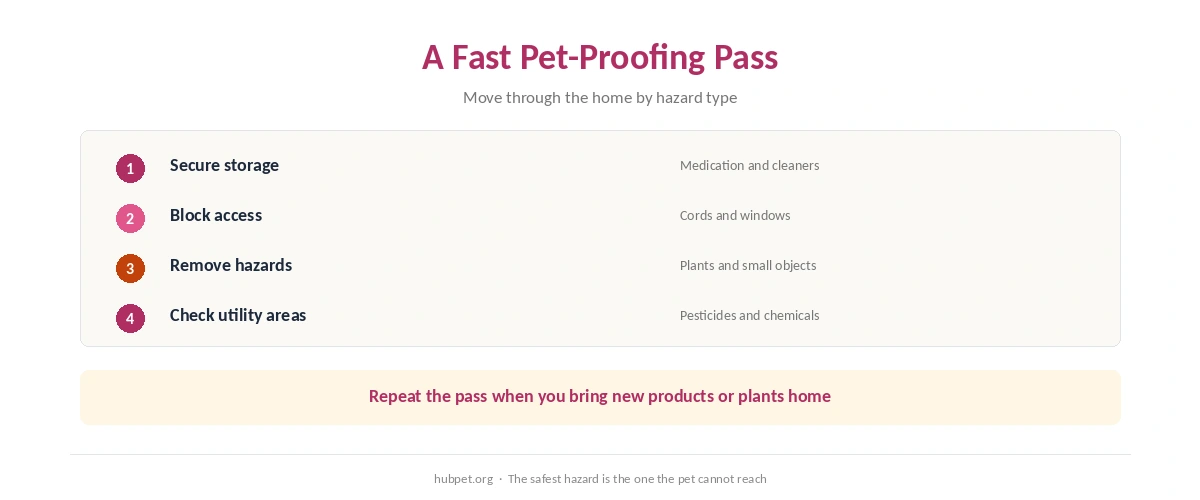
Household Products That Need Extra Caution
ASPCA’s 2026 guidance highlights several corrosive household products (ASPCA, 2026). Examples include some dryer sheets, fabric softeners, drain cleaners, pool chemicals, and battery contents. The risk depends on the product and exposure. Therefore, do not use a generic home remedy after contact. Keep the product label and call for veterinary or poison-control guidance (ASPCA, 2026; AVMA, 2020).
AVMA also lists medications, essential oils, mothballs, small objects, cords, pest-control products, and garage chemicals as hazards (AVMA, 2020). Therefore, check cabinets, drawers, trash storage, floors, and utility areas. Do not focus only on food bowls and furniture. This broader sweep is a practical way to pet-proof your home before a new animal arrives.
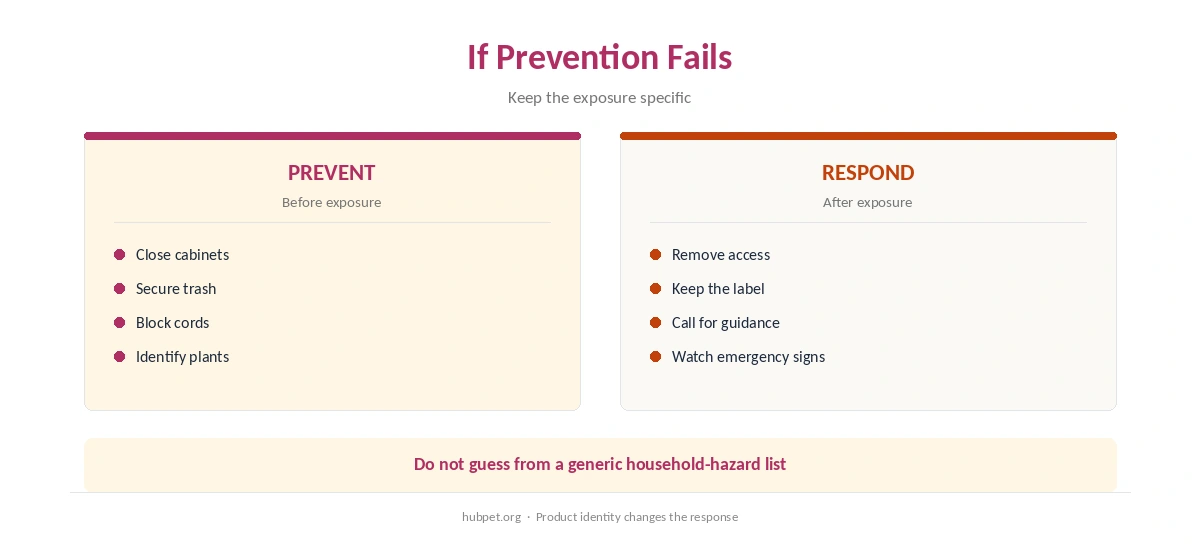
When to Call Your Vet After a Household Exposure
Call promptly after a possible exposure to medication, toxic food, a plant, cleaner, pesticide, antifreeze, chemical, or unknown object (AVMA, 2020; ASPCA, 2026). Keep the package, label, or plant identification available. Go now for trouble breathing, collapse, seizures, severe bleeding, or rapidly worsening signs. For more red flags, see pet emergency signs.
How We Research
HubPet uses published veterinary and animal-welfare guidance rather than personal anecdotes. First, we read AVMA Household Hazards brochure (2020). We also checked ASPCA corrosive household products guidance (2026). For arrival safety, we read ASPCA puppy and kitten home-safety guidance (2021). HubPet read every source on October 11, 2026. Finally, see How We Research for our method.
Pet-Proofing FAQ
Start with anything a pet can reach and swallow, chew, lick, pull down, or escape through. AVMA and ASPCA both emphasize access control for common household hazards.
Closed storage is safer. ASPCA recommends keeping medications in an enclosed cupboard, and AVMA advises secure storage out of reach.
Follow label directions for normal use. However, concentrated or corrosive products can injure pets after exposure (AVMA, 2020; ASPCA, 2026).
AVMA warns that chewing plugged-in cords can cause burns or electrocution. Block access to cords and wires where possible (AVMA, 2020).
Keep the product container, ingredient label, or plant identification. Then a veterinary or poison-control team can assess the hazard (AVMA, 2020).
The Bottom Line
How to pet-proof your home is mainly about removing access before curiosity becomes an emergency. Secure medications, cleaners, trash, cords, small objects, hazardous foods, toxic plants, pesticides, and garage chemicals. In addition, how to pet-proof your home includes keeping emergency contacts and product information easy to find. Prevention comes first, but good information helps if prevention fails.